
Defense Industrial Base Under Siege

Over the past decade, the traditional understanding of military conflict has shifted. No longer confined to kinetic confrontations and physical engagements, modern strategic competition extends deeply into cyberspace. In an era where digital infrastructure underpins critical military capabilities, the defense industrial base (DIB) has become one of the most contested arenas in global security.
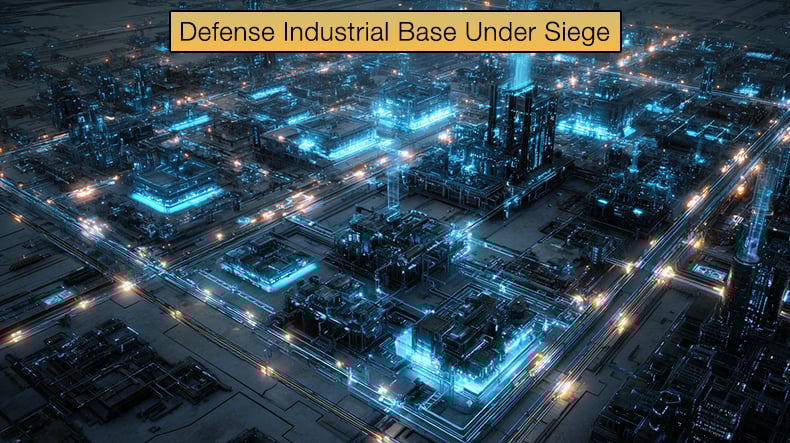
Analyses by cybersecurity researchers, including those at the Google Threat Intelligence Group (GTIG), and reporting by Dark Reading reveal that state-sponsored cyber operations and increasingly sophisticated criminal groups are mounting relentless attacks against defense contractors, their personnel, and the broader supply chain.
This transition reflects the emergence of cyber espionage, sabotage, and influence operations as central features of national security strategies. Defense firms are no longer insulated by corporate perimeters or geopolitical neutrality; instead, they are enmeshed in a web of digital threats that can compromise intellectual property, disrupt production, and erode trust in critical systems.
The DIB encompasses a vast network of entities, from large prime contractors to small suppliers and emerging technology firms. In modern conflict environments, these organizations supply everything from unmanned aerial systems (UAS) to secure communications platforms. GTIG reports show that adversaries are conducting a "relentless barrage of cyber operations" against this sector, blending state-sponsored espionage with financially motivated crimes and hacktivist activity.
Much of this targeting is linked to ongoing conflicts such as the Russia-Ukraine War, where Russian-nexus threat actors have directed operations not just at battlefield systems but at defense contractors supporting allied forces. These operations extend to the digital infrastructure of drone manufacturers and unmanned systems firms, with lures and intrusions designed to mimic familiar military products and engineering workflows.
Moreover, attackers are increasingly exploiting vulnerabilities beyond hardened enterprise networks. Rather than relying solely on brute-force attacks or well-known malware signatures, adversaries are focusing on pathways that evade traditional detection tools, such as exploiting zero-day vulnerabilities in network edge devices (like VPN appliances and firewalls) to establish persistent footholds and laterally expand access.
One of the most striking trends identified in the GTIG report is the direct targeting of defense sector employees, a tactic that significantly expands the attack surface. Instead of solely assaulting corporate infrastructure, threat actors are exploiting personal devices, hiring processes, professional networks, and email accounts to bypass organizational security controls.
North Korean groups have adopted a hybrid espionage and revenue-generation strategy that involves embedding operatives in the private sector as "remote IT workers." These individuals have secured real jobs at defense contractors, thereby obtaining legitimate credentials that can be misused to siphon sensitive information or disrupt operations. In some cases, courts have even prosecuted facilitators who helped install such covert workers across numerous US companies.
Iranian threat actors have taken a different angle by spoofing job portals and emailing fake recruitment offers or résumé-builder applications to lure personnel into deploying malware or revealing credentials. Similarly, Chinese cyber espionage groups have crafted sophisticated phishing campaigns targeting both work and personal addresses, using lures tailored to professional roles and personal interests, such as invitations to industry events or local community activities.
These personalized campaigns blur the line between traditional IT security and human resources management, making it far more challenging for organizations to detect and mitigate attacks that originate outside the corporate network yet ultimately compromise sensitive systems and proprietary data.
Zero-Day Exploits and the Advantage of Stealth
Another fundamental shift in tactics involves the exploitation of zero-day vulnerabilities, particularly on devices at the edges of enterprise networks. These devices often serve as gateways for network traffic but are slower to receive patches and may not be monitored by advanced detection technologies. By exploiting such vulnerabilities, threat actors can establish covert, persistent access without triggering common alarms or automated defenses.
China-linked threat groups, for example, have been observed using zero-day exploits against routers, firewalls, and other perimeter appliances to infiltrate defense and aerospace networks. Once inside, they can move laterally to gather intelligence over long periods, potentially compromising critical defense plans and technologies before detection.
This strategic exploitation of network vulnerabilities underscores a broader challenge: relying solely on perimeter defenses such as firewalls and endpoint detection systems is insufficient. Attackers who gain access at the edge can often escalate their privileges and roam freely within networks, extracting valuable data or positioning themselves for future disruptive operations.
While state-sponsored operations often dominate headlines, financially motivated cybercrime targeting the DIB underscores another layer of risk. Extortion campaigns, ransomware attacks, and hack-and-leak operations against the broader manufacturing sector, which includes many defense suppliers, pose significant threats to supply chain integrity. These incidents can disrupt production timelines, leak sensitive design information, or undermine confidence in defense partnerships.
For smaller manufacturers and dual-use suppliers, even a cyber incident affecting only their IT systems can ripple outward, delaying deliveries, compromising component availability, and creating vulnerabilities in systems crucial to national security. Some ransomware intrusions have already caused wide-scale disruptions, affecting thousands of organizations and illustrating how closely linked the industrial base is to broader economic and defense stability.
In addition to state actors and organized cybercriminal syndicates, hacktivist groups have begun playing a more pronounced role in the DIB threat environment. Ideologically motivated actors often engage in distributed denial-of-service (DDoS) attacks, doxxing, and public leak campaigns aimed at shaming or destabilizing defense firms associated with geopolitical conflicts.
While hacktivists may lack the sophistication or resources of nation-state teams, their disruptive activities can still expose vulnerabilities, leak sensitive data, and force defensive responses that divert attention from other critical threats.
Such hacktivism, at times aligned with geopolitical narratives, highlights how complex and multifaceted the threat landscape has become. Defense organizations no longer contend solely with state adversaries focused on strategic intelligence; they must also mitigate threats that aim to influence public perception, erode trust, and expose personal information.
The contemporary threat environment confronting the defense industrial base is both relentless and evolving. Governments, security teams, and industry partners must adopt strategies that extend beyond reactive defense to embrace holistic resilience. This includes continuous threat intelligence sharing, proactive threat hunting, identity-centric security practices, and improved visibility into adversary behavior.
In this contested cyber domain, the ability to protect intellectual property, maintain supply chain integrity, and defend personnel against sophisticated threats has become as vital as the ability to field advanced military hardware. For the defense industrial base and the nations it supports, effective cybersecurity is no longer simply an operational requirement; it is a strategic imperative.
Share:
 Facebook
 X.com
X.com
 LinkedIn
 Copy Link

Karolis Liucveikis
Experienced software engineer, passionate about behavioral analysis of malicious apps
Author and general operator of PCrisk's News and Removal Guides section. Co-researcher working alongside Tomas to discover the latest threats and global trends in the cyber security world. Karolis has experience of over 8 years working in this branch. He attended Kaunas University of Technology and graduated with a degree in Software Development in 2017. Extremely passionate about technical aspects and behavior of various malicious applications.
PCrisk security portal is brought by a company RCS LT.
Joined forces of security researchers help educate computer users about the latest online security threats. More information about the company RCS LT.
Our malware removal guides are free. However, if you want to support us you can send us a donation.
DonatePCrisk security portal is brought by a company RCS LT.
Joined forces of security researchers help educate computer users about the latest online security threats. More information about the company RCS LT.
Our malware removal guides are free. However, if you want to support us you can send us a donation.
Donate
▼ Show Discussion