

Get free scan and check if your device is infected.
Remove it nowTo use full-featured product, you have to purchase a license for Combo Cleaner. Seven days free trial available. Combo Cleaner is owned and operated by RCS LT, the parent company of PCRisk.com.
What is ZoomEx?
The ZoomEx browser extension enhances users' Internet browsing experience by enlarging Facebook photos (when the user hovers over them).
Whilst on first inspection this browser plug-in appears legitimate, it has a downside: this extension displays unwanted ads (pop-ups and text link ads). ZoomEx is one of a number of adware-related browser add-ons used by free software developers to monetize their free programs.
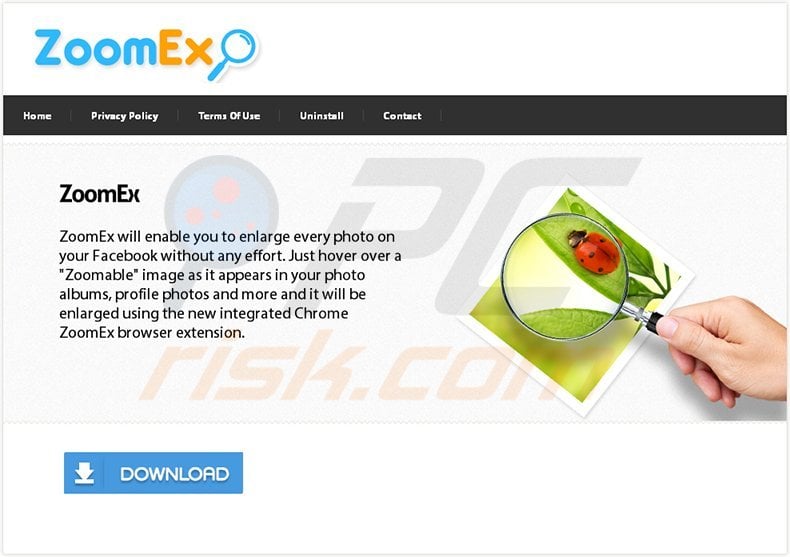
Many computer users report that they did not willingly install this browser add-on and yet it appeared on their Internet browsers (Internet Explorer, Google Chrome, Mozilla FireFox). These situations can occur if computer users install freeware, such as, for example, PrivitizeVPN.
The ZoomEx add-on can then be inadvertently installed with it during the installation phase, especially if the user is not vigilent. This browser add-on can be categorized as adware since it is installed on users' systems using deceptive promotion methods (bundling with free software), and it displays unwanted ads, which may lead to installation of malware and viruses.
The ZoomEx browser add-on alone is not technically a virus or spyware, however, it is an unwanted browser add-on which diminishes Internet browser performance, tracks users' Internet browsing habit, and displays unwanted ads.
If you feel that this extension was installed on your computer without your consent, use the removal guide provided to eliminate this unwanted browser plug-in.
Instant automatic malware removal:
Manual threat removal might be a lengthy and complicated process that requires advanced IT skills. Combo Cleaner is a professional automatic malware removal tool that is recommended to get rid of malware. Download it by clicking the button below:
DOWNLOAD Combo CleanerBy downloading any software listed on this website you agree to our Privacy Policy and Terms of Use. To use full-featured product, you have to purchase a license for Combo Cleaner. 7 days free trial available. Combo Cleaner is owned and operated by RCS LT, the parent company of PCRisk.com.
Quick menu:
- What is ZoomEx?
- STEP 1. Uninstall ZoomEx application using Control Panel.
- STEP 2. Remove ZoomEx add-on from Internet Explorer.
- STEP 3. Remove ZoomEx plugin from Google Chrome.
- STEP 4. Remove ZoomEx extension from Mozilla Firefox.
- STEP 5. Remove ZoomEx extension from Safari.
- STEP 6. Remove rogue plug-ins from Microsoft Edge.
ZoomEx adware removal:
Windows 11 users:
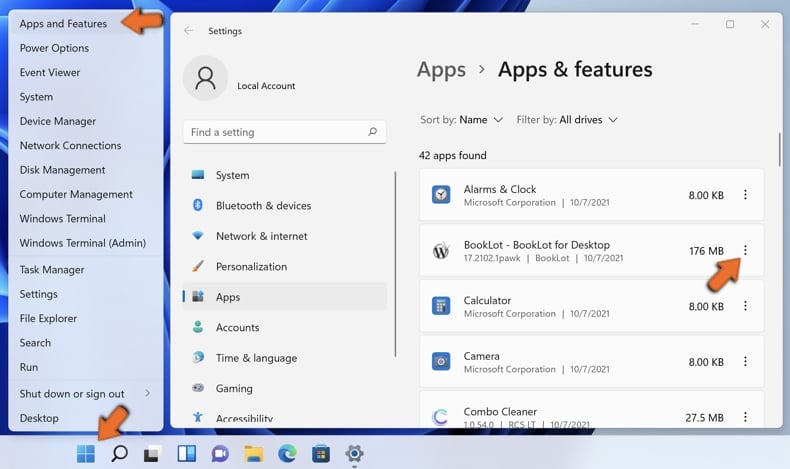
Right-click on the Start icon, select Apps and Features. In the opened window search for the application you want to uninstall, after locating it, click on the three vertical dots and select Uninstall.
Windows 10 users:
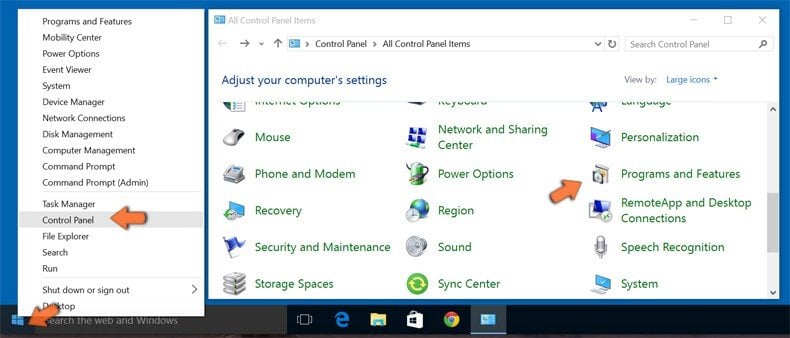
Right-click in the lower left corner of the screen, in the Quick Access Menu select Control Panel. In the opened window choose Programs and Features.
Windows 7 users:
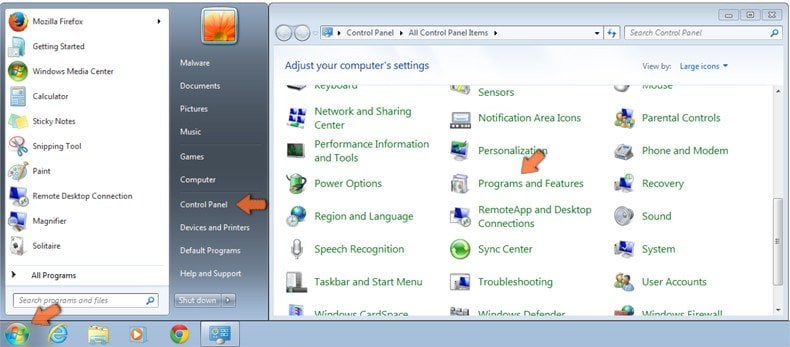
Click Start (Windows Logo at the bottom left corner of your desktop), choose Control Panel. Locate Programs and click Uninstall a program.
macOS (OSX) users:
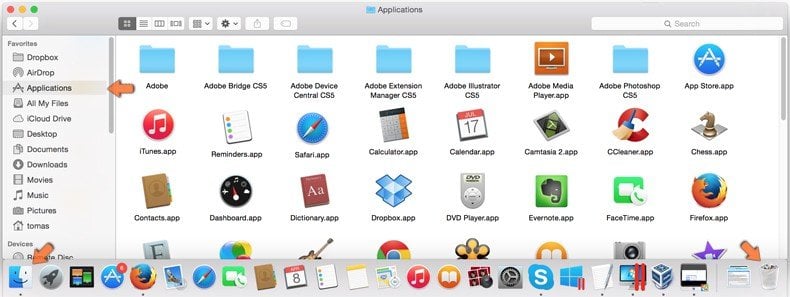
Click Finder, in the opened screen select Applications. Drag the app from the Applications folder to the Trash (located in your Dock), then right click the Trash icon and select Empty Trash.
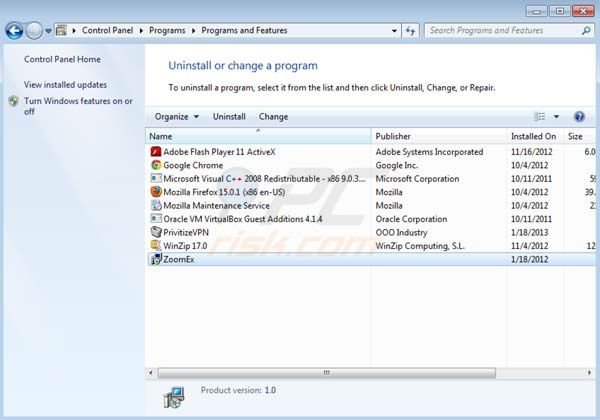
In the uninstall programs window, look for "ZoomEx", select this entry and click " Uninstall" or "Remove"
DOWNLOAD remover for malware infections
Combo Cleaner checks if your computer is infected with malware. To use full-featured product, you have to purchase a license for Combo Cleaner. 7 days free trial available. Combo Cleaner is owned and operated by RCS LT, the parent company of PCRisk.com.
Remove ZoomEx from Internet browsers:
Video showing how to remove potentially unwanted browser add-ons:
 Remove malicious add-ons from Internet Explorer:
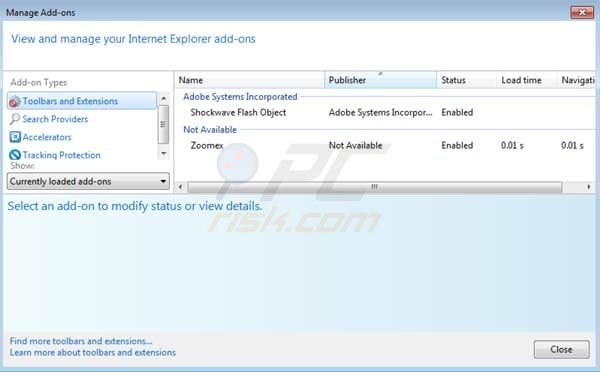
Click on the "gear" icon  (at the top right corner of Internet Explorer) select "Manage Add-ons". Look for "Zoomex", select it and disable this entry.
Optional method:
If you continue to have problems with removal of the zoomex virus, reset your Internet Explorer settings to default.
Windows XP users: Click Start, click Run, in the opened window type inetcpl.cpl In the opened window click the Advanced tab, then click Reset.
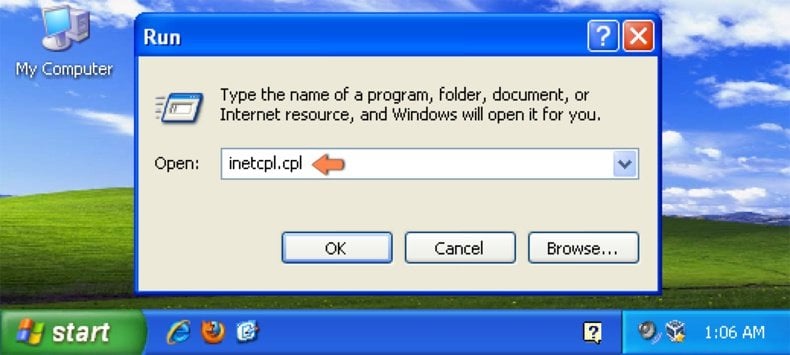
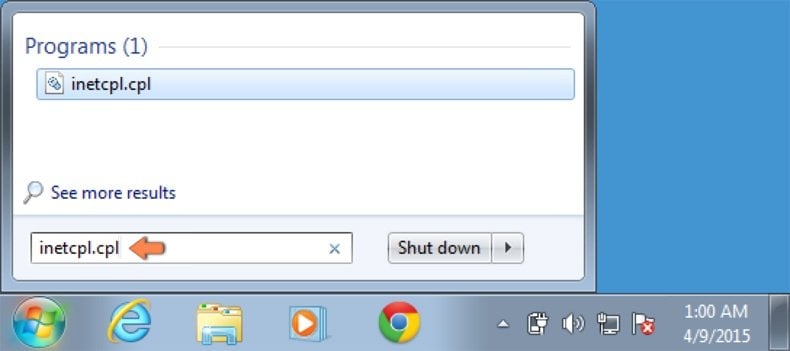
Windows Vista and Windows 7 users: Click the Windows logo, in the start search box type inetcpl.cpl and click enter. In the opened window click the Advanced tab, then click Reset.
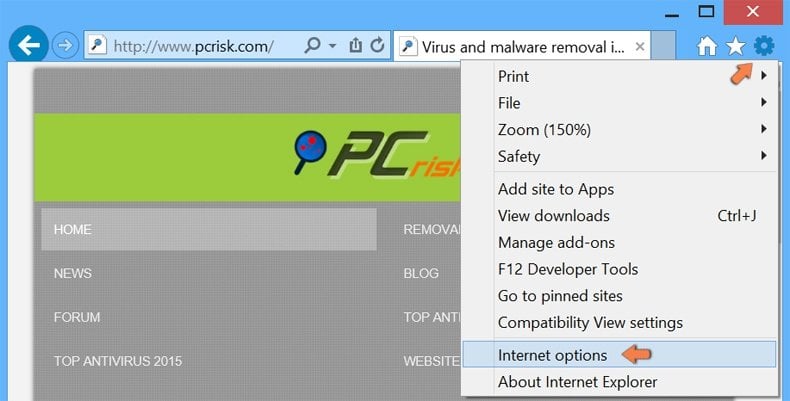
Windows 8 users: Open Internet Explorer and click the gear icon. Select Internet Options.
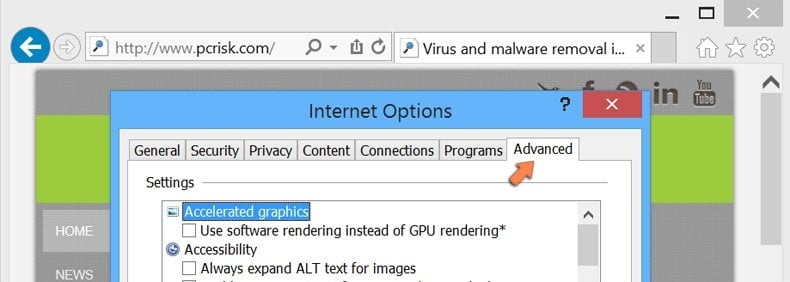
In the opened window, select the Advanced tab.
Click the Reset button.
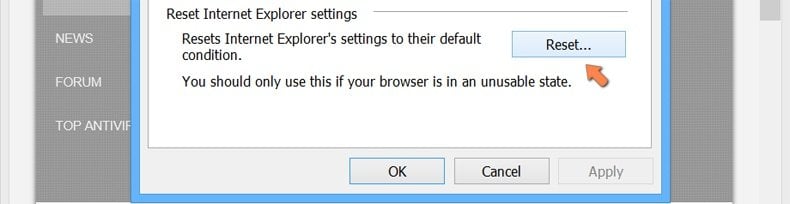
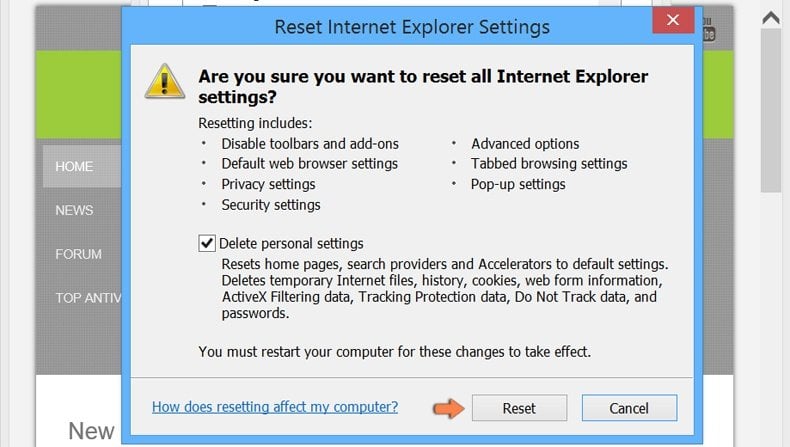
Confirm that you wish to reset Internet Explorer settings to default by clicking the Reset button.
 Remove malicious extensions from Google Chrome:
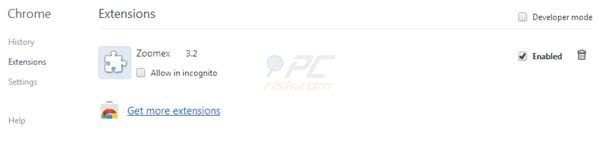
Click the Chrome menu icon  (at the top right corner of Google Chrome) select "Tools" and click on "Extensions". Locate: "Zoomex" select this entry and click on the trash can icon.
Optional method:
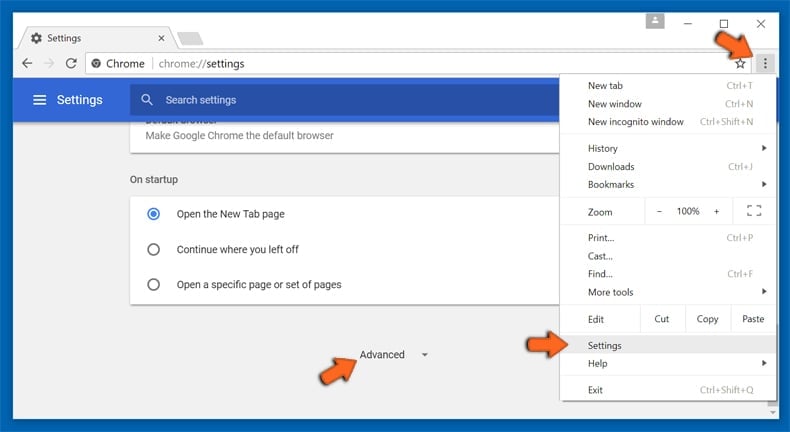
If you continue to have problems with removal of the zoomex virus, reset your Google Chrome browser settings. Click the Chrome menu icon  (at the top right corner of Google Chrome) and select Settings. Scroll down to the bottom of the screen. Click the Advanced… link.
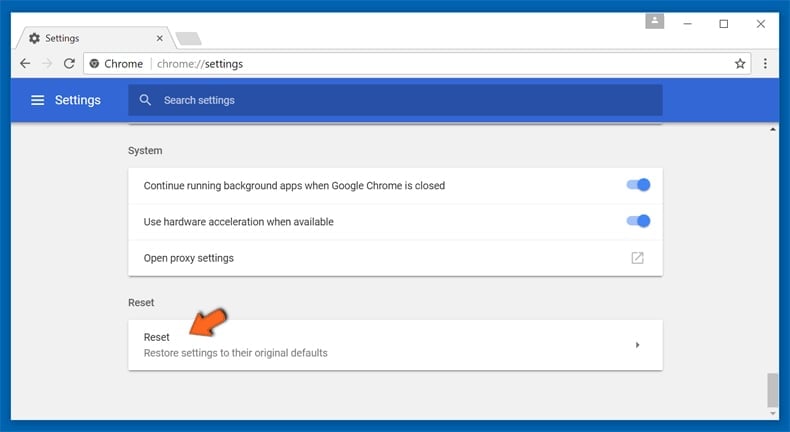
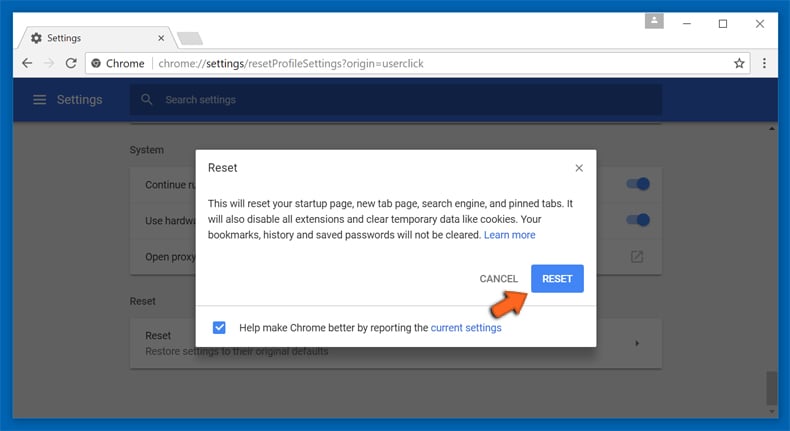
After scrolling to the bottom of the screen, click the Reset (Restore settings to their original defaults) button.
In the opened window, confirm that you wish to reset Google Chrome settings to default by clicking the Reset button.
 Remove malicious plugins from Mozilla Firefox:
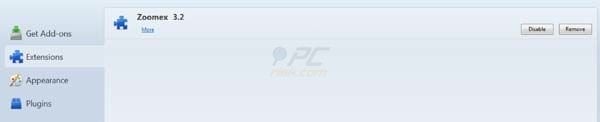
Click on the Firefox menu  (at the top right corner of the main window) select "Add-ons". Click on "Extensions" and disable this add-on: "Zoomex".
Optional method:
Computer users who have problems with zoomex virus removal can reset their Mozilla Firefox settings.
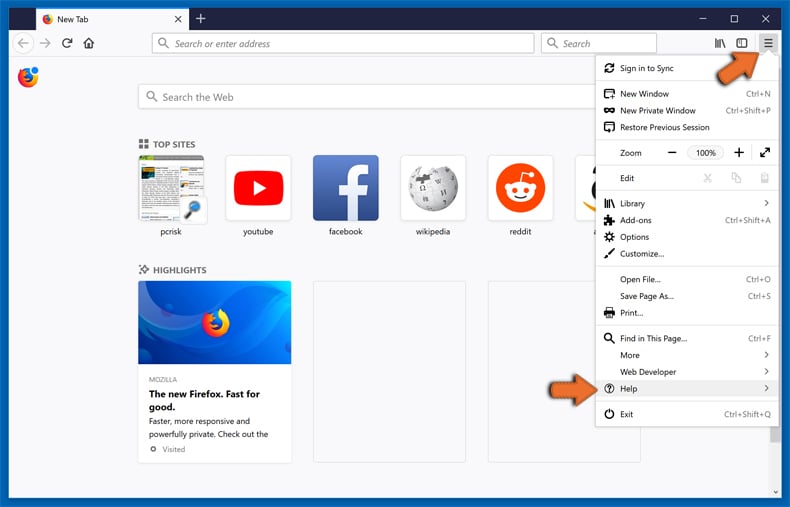
Open Mozilla Firefox, at the top right corner of the main window, click the Firefox menu, in the opened menu, click Help.
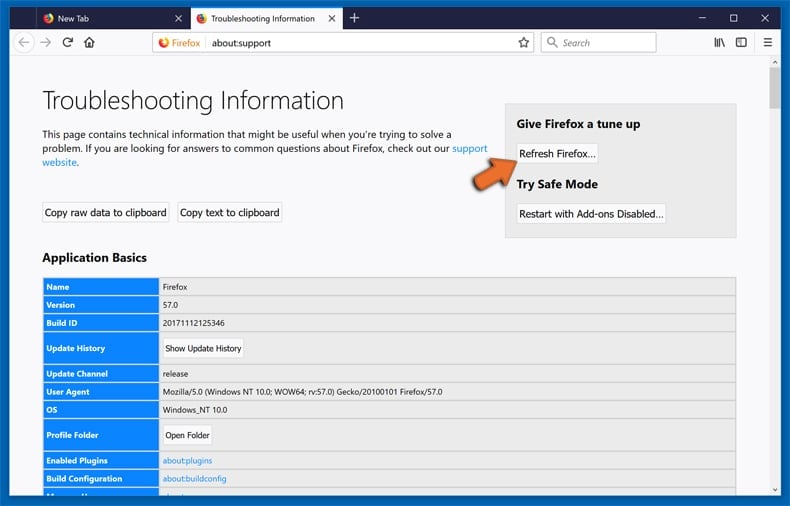
Select Troubleshooting Information.
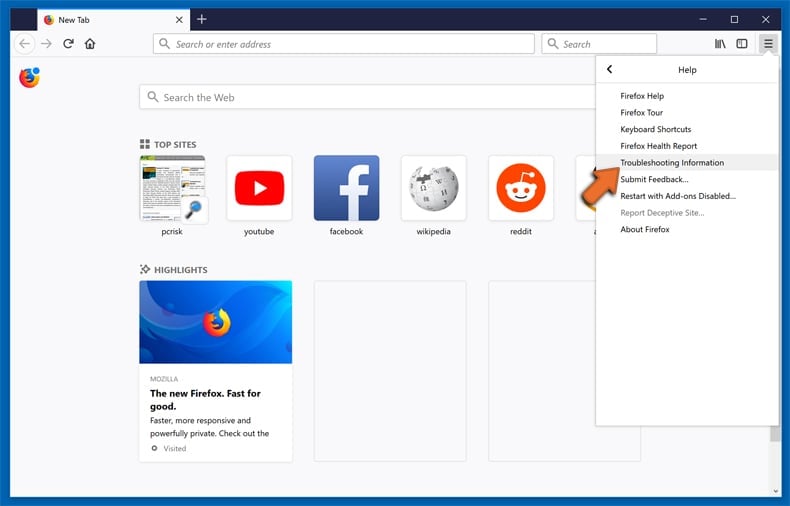
In the opened window, click the Refresh Firefox button.
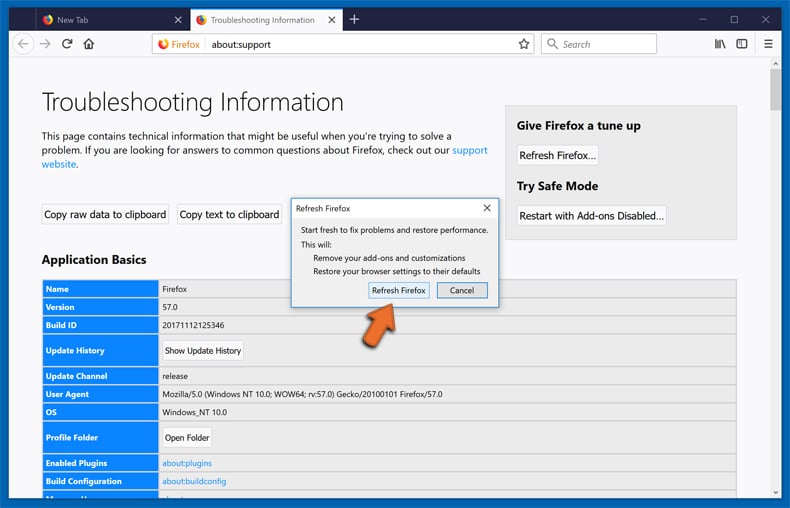
In the opened window, confirm that you wish to reset Mozilla Firefox settings to default by clicking the Refresh Firefox button.
 Remove malicious extensions from Safari:
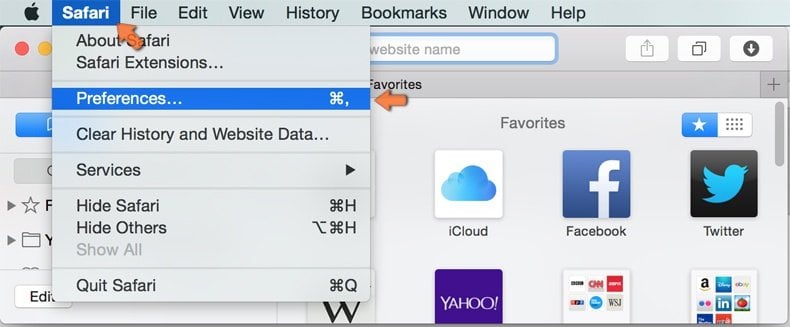
Make sure your Safari browser is active, click Safari menu, and select Preferences....
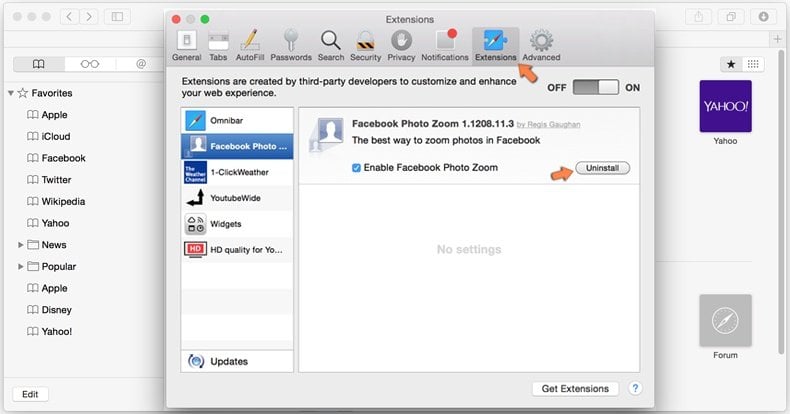
In the opened window click Extensions, locate any recently installed suspicious extension, select it and click Uninstall.
Optional method:
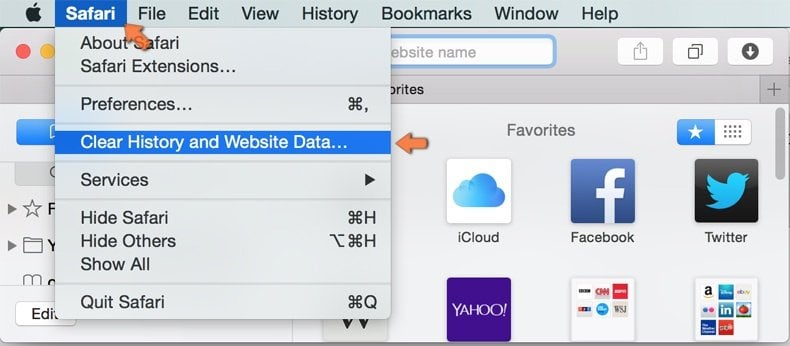
Make sure your Safari browser is active and click on Safari menu. From the drop down menu select Clear History and Website Data...
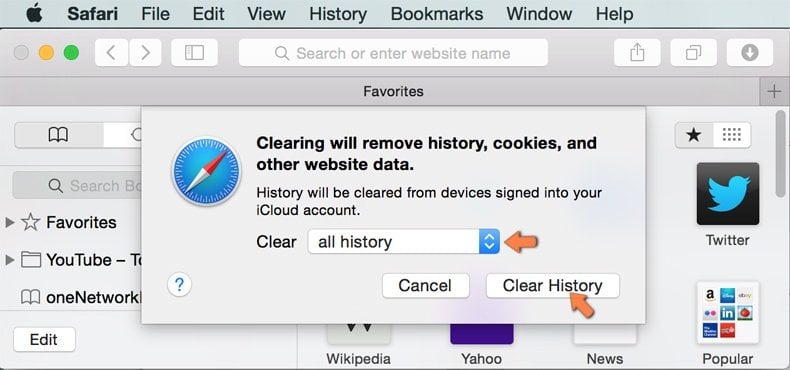
In the opened window select all history and click the Clear History button.
 Remove malicious extensions from Microsoft Edge:
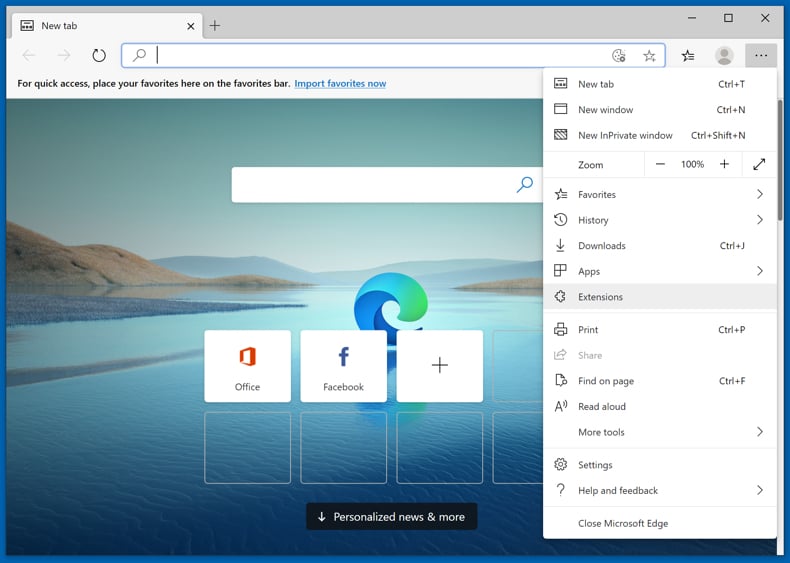
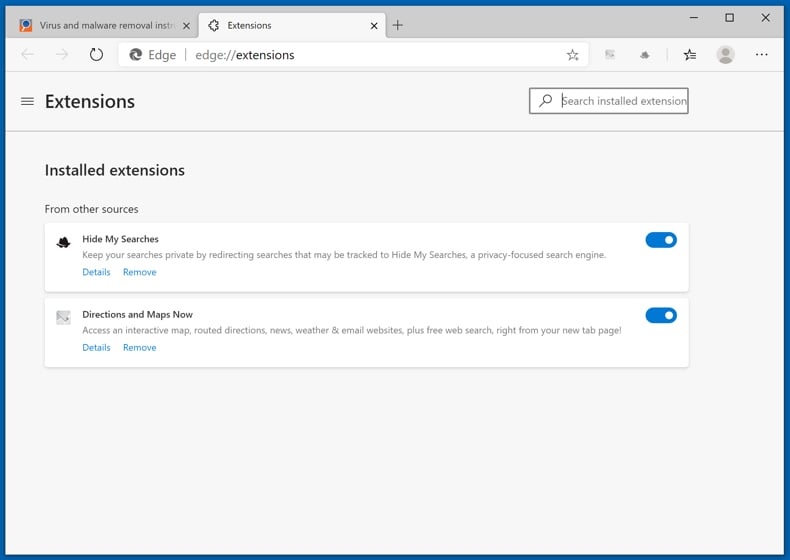
Click the Edge menu icon  (at the upper-right corner of Microsoft Edge), select "Extensions". Locate all recently-installed suspicious browser add-ons and click "Remove" below their names.
Optional method:
If you continue to have problems with removal of the zoomex virus, reset your Microsoft Edge browser settings. Click the Edge menu icon (at the top right corner of Microsoft Edge) and select Settings.
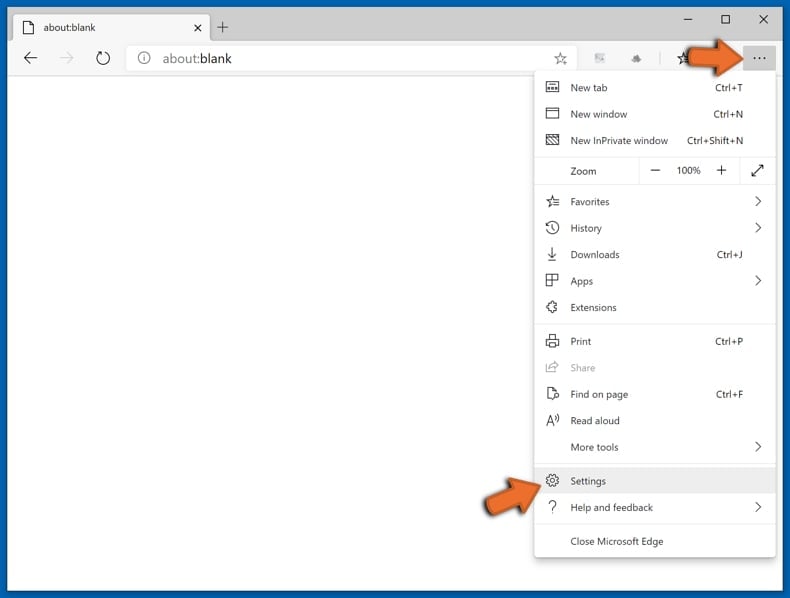
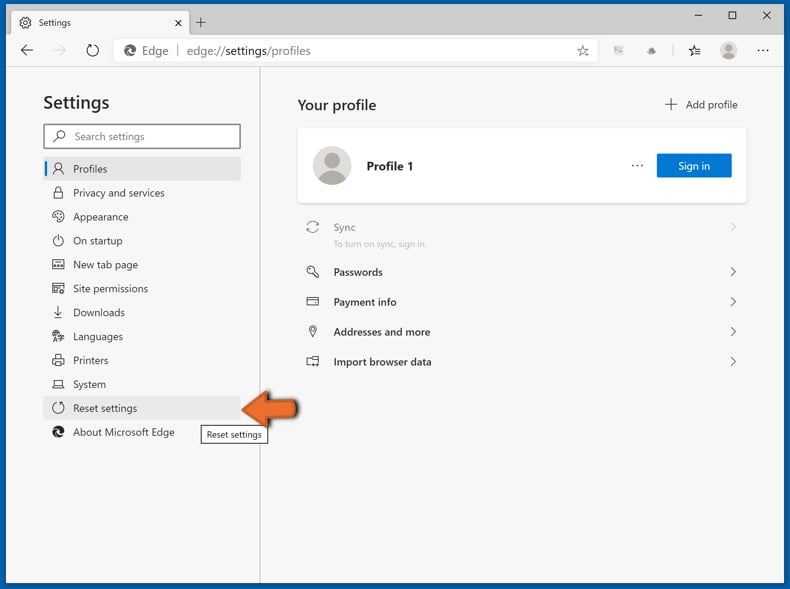
In the opened settings menu select Reset settings.
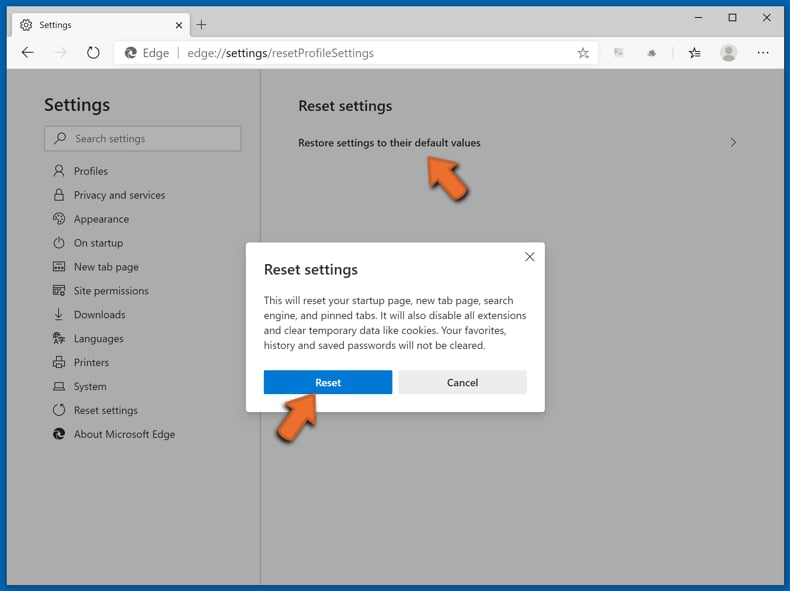
Select Restore settings to their default values. In the opened window, confirm that you wish to reset Microsoft Edge settings to default by clicking the Reset button.
- If this did not help, follow these alternative instructions explaining how to reset the Microsoft Edge browser.
Summary:
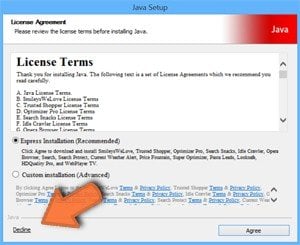 Commonly, adware or potentially unwanted applications infiltrate Internet browsers through free software downloads. Note that the safest source for downloading free software is via developers' websites only. To avoid installation of adware, be very attentive when downloading and installing free software. When installing previously-downloaded free programs, choose the custom or advanced installation options – this step will reveal any potentially unwanted applications listed for installation together with your chosen free program.
Post a comment:
If you have additional information on zoomex virus or it's removal please share your knowledge in the comments section below.
Share:
 Facebook
 X.com
X.com
 LinkedIn
 Copy Link

Tomas Meskauskas
Expert security researcher, professional malware analyst
I am passionate about computer security and technology. I have an experience of over 10 years working in various companies related to computer technical issue solving and Internet security. I have been working as an author and editor for pcrisk.com since 2010. Follow me on Twitter and LinkedIn to stay informed about the latest online security threats.
PCrisk security portal is brought by a company RCS LT.
Joined forces of security researchers help educate computer users about the latest online security threats. More information about the company RCS LT.
Our malware removal guides are free. However, if you want to support us you can send us a donation.
DonatePCrisk security portal is brought by a company RCS LT.
Joined forces of security researchers help educate computer users about the latest online security threats. More information about the company RCS LT.
Our malware removal guides are free. However, if you want to support us you can send us a donation.
Donate
▼ Show Discussion