

Get free scan and check if your device is infected.
Remove it nowTo use full-featured product, you have to purchase a license for Combo Cleaner. Seven days free trial available. Combo Cleaner is owned and operated by RCS LT, the parent company of PCRisk.com.
What kind of malware is Xillen?
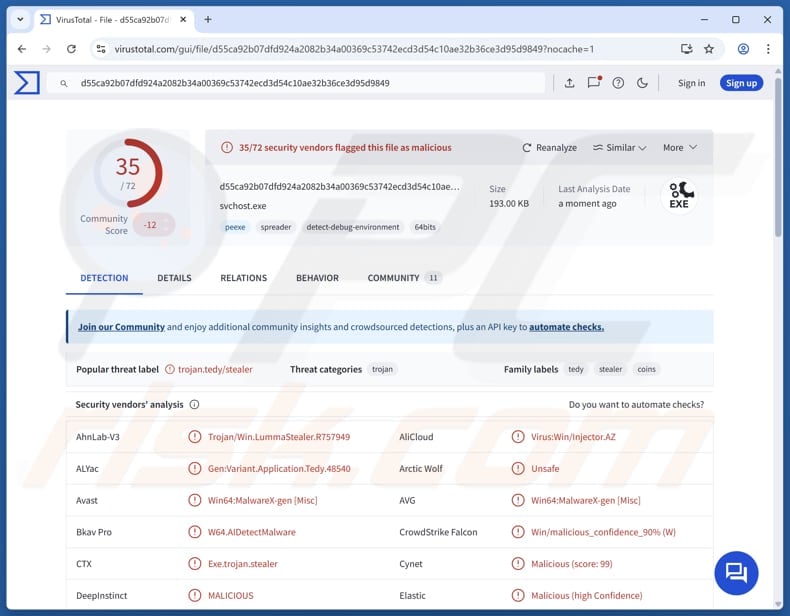
Xillen is an information stealer often distributed through other malware, such as Amadey. Once executed on the device, it gathers various information and sends it to cybercriminals. Having the system infected with Xillen can result in issues such as identity theft and financial loss. Thus, if detected, the stealer should be removed immediately.
More about Xillen
Information stealers like Xillen are designed to collect sensitive data from an infected system and send it to an attacker. Their main goal is to harvest information that can be used for malicious purposes, such as account takeover, financial theft, or identity fraud. These threats usually run silently in the background.
The data stolen by Xillen can include login credentials saved in web browsers, such as usernames and passwords for email, social media, banking, and other services. Information stealers also target browser data, such as cookies, autofill entries, and browsing history. Some stealers collect data from password managers, FTP clients, VPN software, and messaging applications.
Also, Xillen can target cryptocurrency wallet data, private keys, seed phrases, and browser-based wallet extensions. It can also attempt to gather credit card details, clipboard data, system information such as IP address, operating system, installed software, and hardware identifiers.
It is also worth noting that Xillen can be designed to use evasion and persistence techniques to remain undetected and continue stealing data. It may disable security features, check for virtual machines and sandboxes before running, and add itself to startup locations, scheduled tasks, or registry keys so it automatically relaunches after a system reboot.
| Name | Xillen information stealer |
| Threat Type | Stealer |
| Detection Names | Avast (Win64:MalwareX-gen [Misc]), Combo Cleaner (Trojan.GenericKD.78803720), ESET-NOD32 (Win64/Spy.Agent.ZV Trojan), Kaspersky (Trojan-PSW.Win64.Coins.djr), Microsoft (Trojan:Win32/Zusy.HAK!MTB), Full List (VirusTotal) |
| Symptoms | Stealers are designed to stealthily infiltrate the victim's computer and remain silent, and thus no particular symptoms are clearly visible on an infected machine. |
| Possible distribution methods | Amadey, infected email attachments, malicious online advertisements, social engineering, software vulnerabilities, software 'cracks'. |
| Damage | Stolen passwords and banking information, identity theft, the victim's computer added to a botnet. |
| Malware Removal (Windows) |
To eliminate possible malware infections, scan your computer with legitimate antivirus software. Our security researchers recommend using Combo Cleaner. Download Combo CleanerTo use full-featured product, you have to purchase a license for Combo Cleaner. 7 days free trial available. Combo Cleaner is owned and operated by RCS LT, the parent company of PCRisk.com. |
Conclusion
In conclusion, information stealers like Xillen are dangerous because they can quietly collect a wide range of sensitive information from an infected system. They give attackers the ability to commit fraud, steal identities, access accounts, and more. If a system is infected, users should run a security tool to remove malware.
Additional examples of information stealers are DotStealer 2.0, Evelyn, and AuraStealer.
How did Xillen infiltrate my computer?
Xillen is known to be distributed using Amadey, a type of malware cybercriminals often use to deploy malicious payloads. The initial infection vector could be a malicious file or link in a deceptive email, a technical support scam, pirated software, a cracking tool, or a key generator.
Cybercriminals can also use malicious advertisements, compromised or deceptive websites, P2P networks, vulnerabilities in outdated software, third-party downloaders, and similar channels. Usually, infections occur after opening malicious executables, documents, or other files (or taking additional steps).
How to avoid installation of malware?
Keep your operating system and applications up to date and avoid using pirated software, cracks, or key generators, and always download programs from official websites or app stores. Be careful with unexpected emails or messages, and do not open links or attachments unless you are sure they are safe.
Block notification requests from suspicious websites, and avoid clicking on ads, pop-ups, or buttons and links presented on questionable pages. If you believe that your computer is already infected, we recommend running a scan with Combo Cleaner Antivirus for Windows to automatically eliminate infiltrated malware.
Instant automatic malware removal:
Manual threat removal might be a lengthy and complicated process that requires advanced IT skills. Combo Cleaner is a professional automatic malware removal tool that is recommended to get rid of malware. Download it by clicking the button below:
DOWNLOAD Combo CleanerBy downloading any software listed on this website you agree to our Privacy Policy and Terms of Use. To use full-featured product, you have to purchase a license for Combo Cleaner. 7 days free trial available. Combo Cleaner is owned and operated by RCS LT, the parent company of PCRisk.com.
Quick menu:
How to remove malware manually?
Manual malware removal is a complicated task - usually it is best to allow antivirus or anti-malware programs to do this automatically. To remove this malware we recommend using Combo Cleaner Antivirus for Windows.
If you wish to remove malware manually, the first step is to identify the name of the malware that you are trying to remove. Here is an example of a suspicious program running on a user's computer:
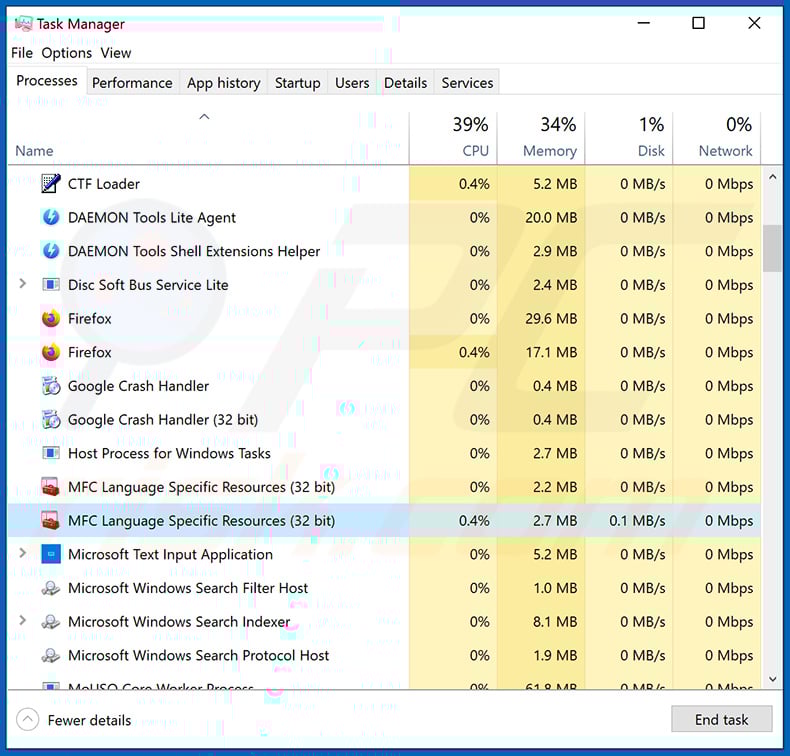
If you checked the list of programs running on your computer, for example, using task manager, and identified a program that looks suspicious, you should continue with these steps:
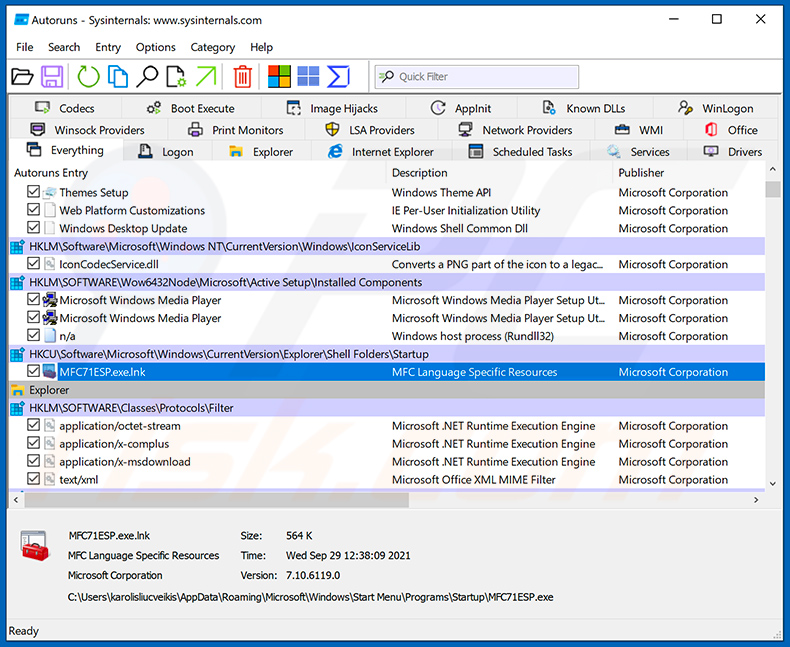
 Download a program called Autoruns. This program shows auto-start applications, Registry, and file system locations:
 Restart your computer into Safe Mode:
Windows XP and Windows 7 users: Start your computer in Safe Mode. Click Start, click Shut Down, click Restart, click OK. During your computer start process, press the F8 key on your keyboard multiple times until you see the Windows Advanced Option menu, and then select Safe Mode with Networking from the list.
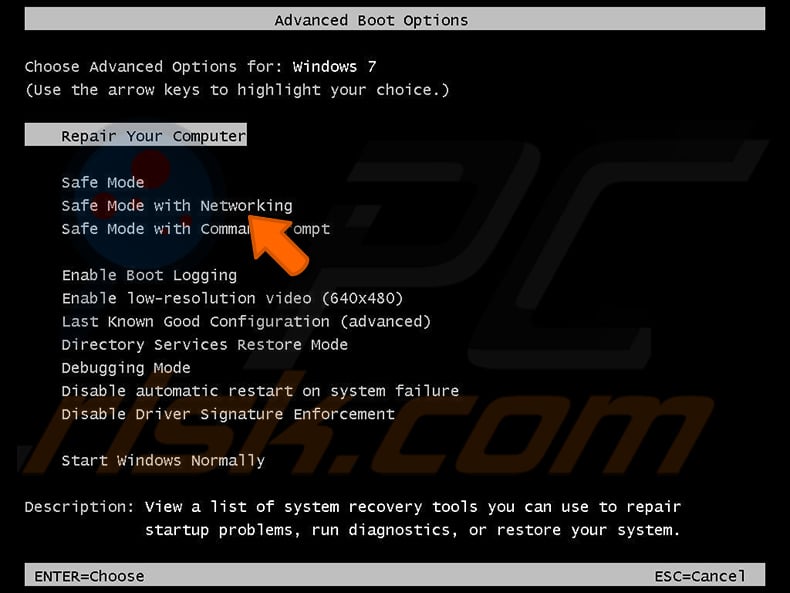
Video showing how to start Windows 7 in "Safe Mode with Networking":
Windows 8 users: Start Windows 8 is Safe Mode with Networking - Go to Windows 8 Start Screen, type Advanced, in the search results select Settings. Click Advanced startup options, in the opened "General PC Settings" window, select Advanced startup.
Click the "Restart now" button. Your computer will now restart into the "Advanced Startup options menu". Click the "Troubleshoot" button, and then click the "Advanced options" button. In the advanced option screen, click "Startup settings".
Click the "Restart" button. Your PC will restart into the Startup Settings screen. Press F5 to boot in Safe Mode with Networking.
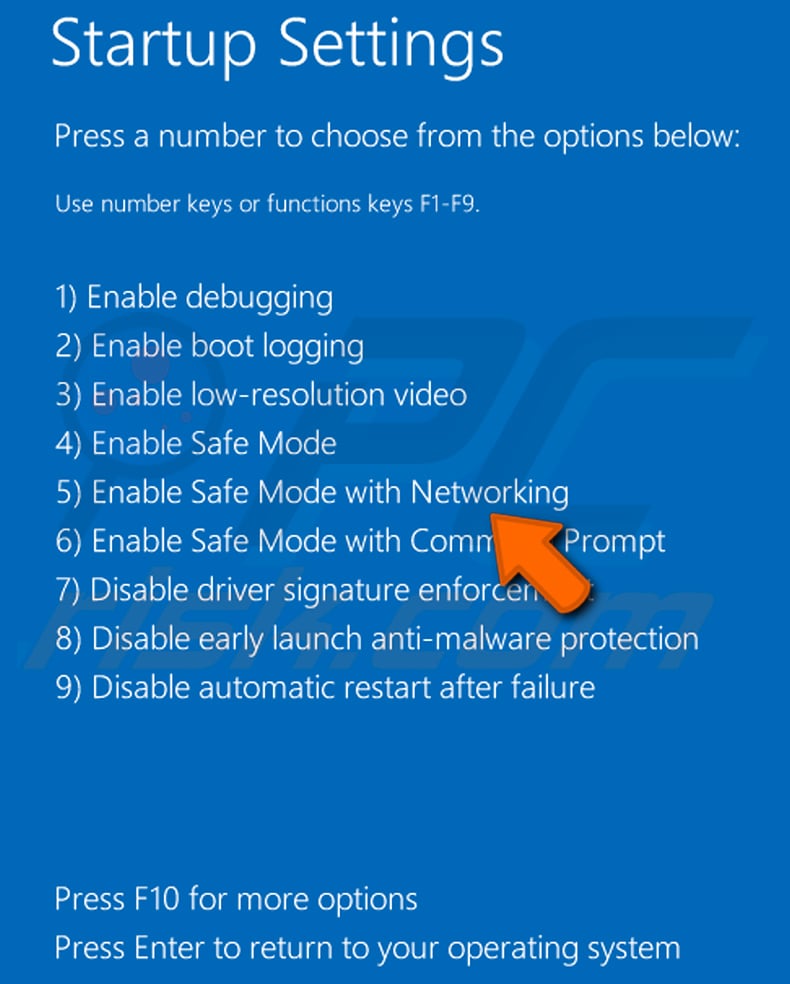
Video showing how to start Windows 8 in "Safe Mode with Networking":
Windows 10 users: Click the Windows logo and select the Power icon. In the opened menu click "Restart" while holding "Shift" button on your keyboard. In the "choose an option" window click on the "Troubleshoot", next select "Advanced options".
In the advanced options menu select "Startup Settings" and click on the "Restart" button. In the following window you should click the "F5" button on your keyboard. This will restart your operating system in safe mode with networking.
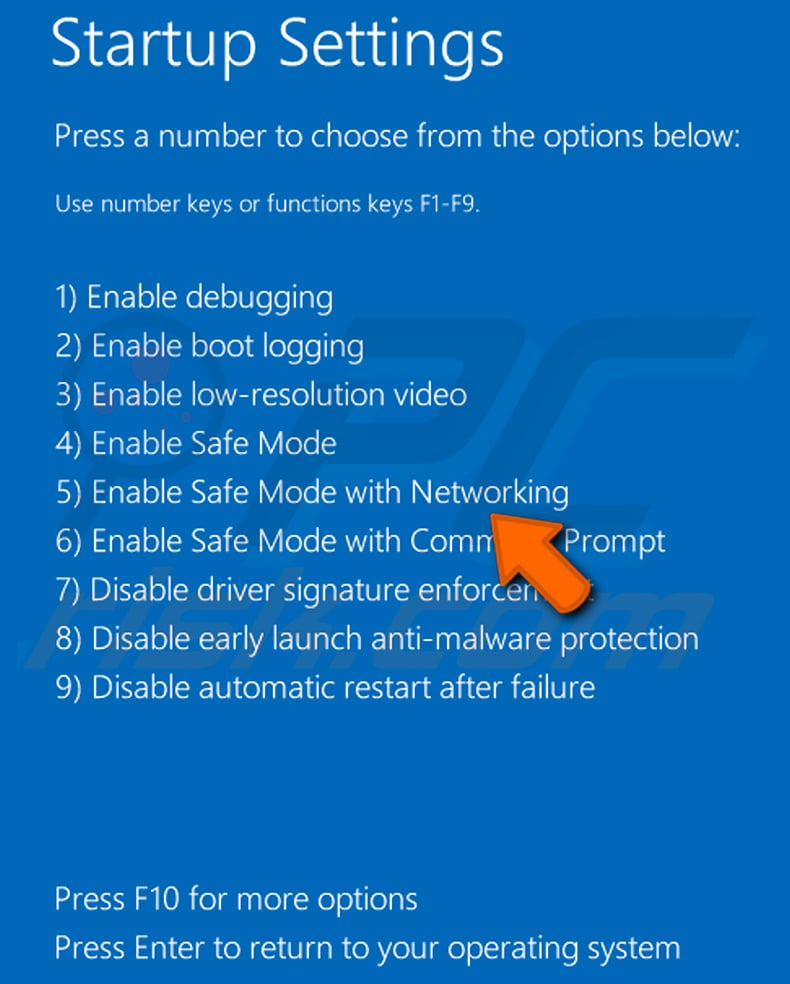
Video showing how to start Windows 10 in "Safe Mode with Networking":
 Extract the downloaded archive and run the Autoruns.exe file.
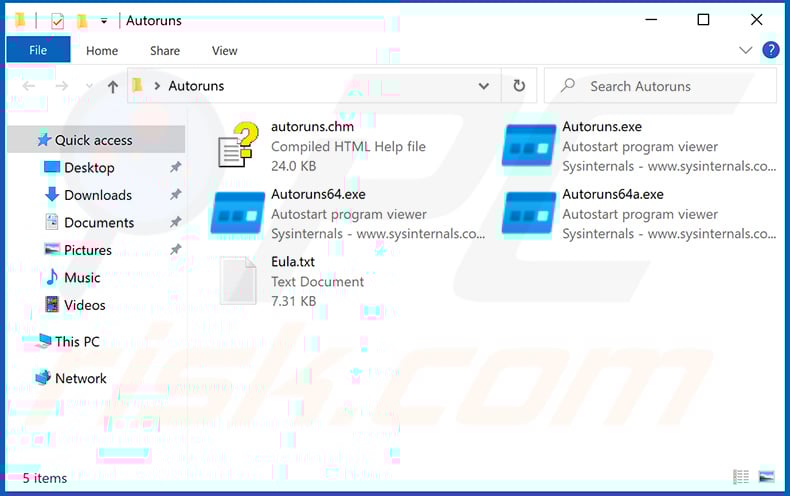
 In the Autoruns application, click "Options" at the top and uncheck "Hide Empty Locations" and "Hide Windows Entries" options. After this procedure, click the "Refresh" icon.
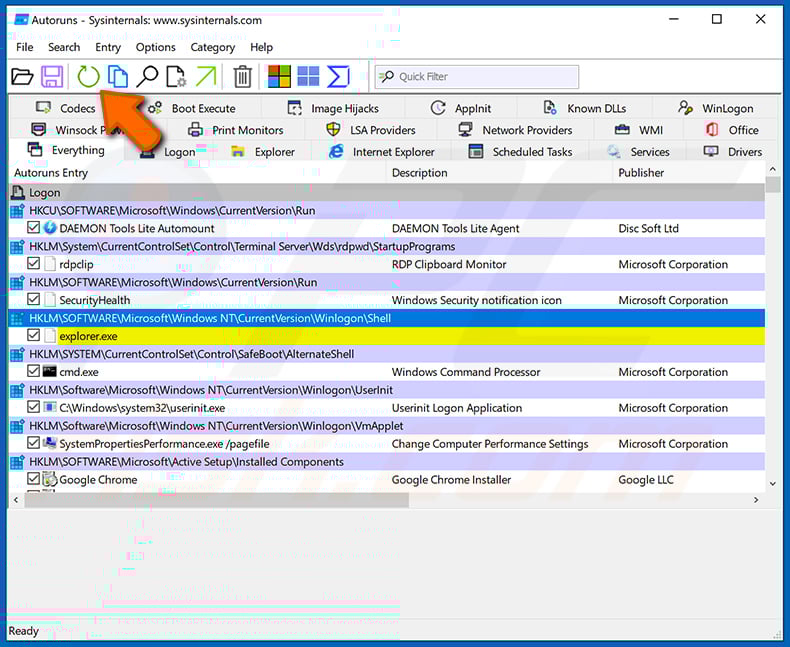
 Check the list provided by the Autoruns application and locate the malware file that you want to eliminate.
You should write down its full path and name. Note that some malware hides process names under legitimate Windows process names. At this stage, it is very important to avoid removing system files. After you locate the suspicious program you wish to remove, right click your mouse over its name and choose "Delete".
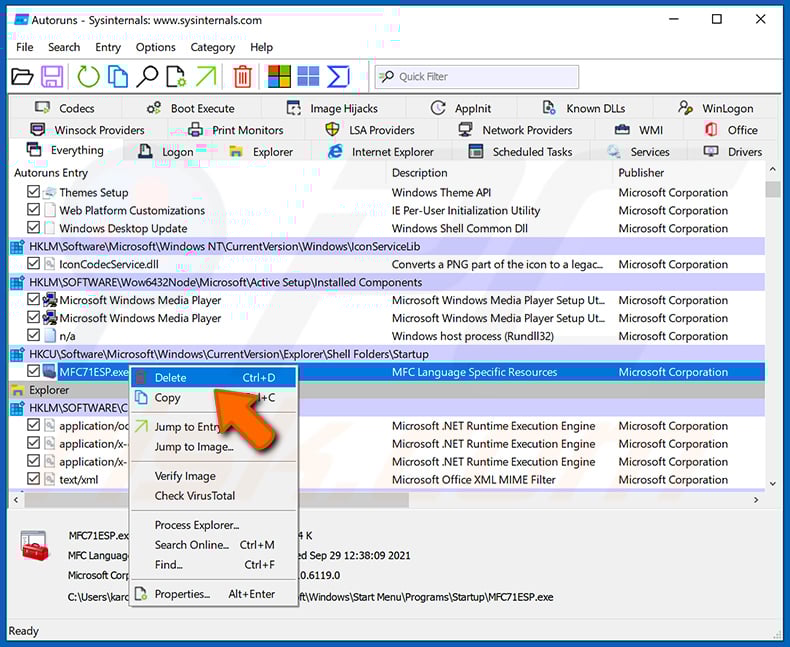
After removing the malware through the Autoruns application (this ensures that the malware will not run automatically on the next system startup), you should search for the malware name on your computer. Be sure to enable hidden files and folders before proceeding. If you find the filename of the malware, be sure to remove it.
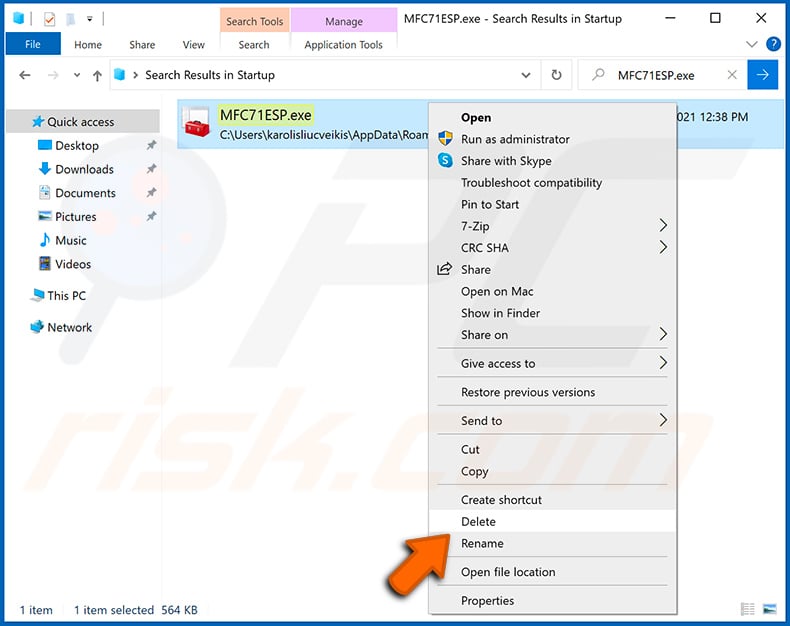
Reboot your computer in normal mode. Following these steps should remove any malware from your computer. Note that manual threat removal requires advanced computer skills. If you do not have these skills, leave malware removal to antivirus and anti-malware programs.
These steps might not work with advanced malware infections. As always it is best to prevent infection than try to remove malware later. To keep your computer safe, install the latest operating system updates and use antivirus software. To be sure your computer is free of malware infections, we recommend scanning it with Combo Cleaner Antivirus for Windows.
Frequently Asked Questions (FAQ)
My computer is infected with Xillen malware, should I format my storage device to get rid of it?
Completely formatting your storage device can remove Xillen, but it will also delete all your data. A safer approach is to use trusted security software, such as Combo Cleaner, which can detect and remove various types of malware.
What are the biggest issues that malware can cause?
The impact of malware can include stolen identities, monetary losses, file encryption, slower computer performance, system crashes, and the risk of further infections.
What is the purpose of Xillen?
The purpose of Xillen is to secretly steal sensitive information from an infected system and send it to an attacker. This data can include login credentials, browser data, financial information, cryptocurrency wallets, and system details.
How did Xillen infiltrate my computer?
Xillen is typically spread through Amadey and other malware delivery methods. Common infection vectors include malicious emails, scams, pirated software, cracks, key generators, compromised websites, malicious ads, P2P networks, outdated software vulnerabilities, and third-party downloaders.
Will Combo Cleaner protect me from malware?
Yes, Combo Cleaner can detect and remove nearly all known malware. However, advanced malware often hides deep within the system, so performing a full system scan is essential.
Share:
 Facebook
 X.com
X.com
 LinkedIn
 Copy Link

Tomas Meskauskas
Expert security researcher, professional malware analyst
I am passionate about computer security and technology. I have an experience of over 10 years working in various companies related to computer technical issue solving and Internet security. I have been working as an author and editor for pcrisk.com since 2010. Follow me on Twitter and LinkedIn to stay informed about the latest online security threats.
PCrisk security portal is brought by a company RCS LT.
Joined forces of security researchers help educate computer users about the latest online security threats. More information about the company RCS LT.
Our malware removal guides are free. However, if you want to support us you can send us a donation.
DonatePCrisk security portal is brought by a company RCS LT.
Joined forces of security researchers help educate computer users about the latest online security threats. More information about the company RCS LT.
Our malware removal guides are free. However, if you want to support us you can send us a donation.
Donate
▼ Show Discussion