

Get free scan and check if your device is infected.
Remove it nowTo use full-featured product, you have to purchase a license for Combo Cleaner. Seven days free trial available. Combo Cleaner is owned and operated by RCS LT, the parent company of PCRisk.com.
What kind of malware is StreamSpy?
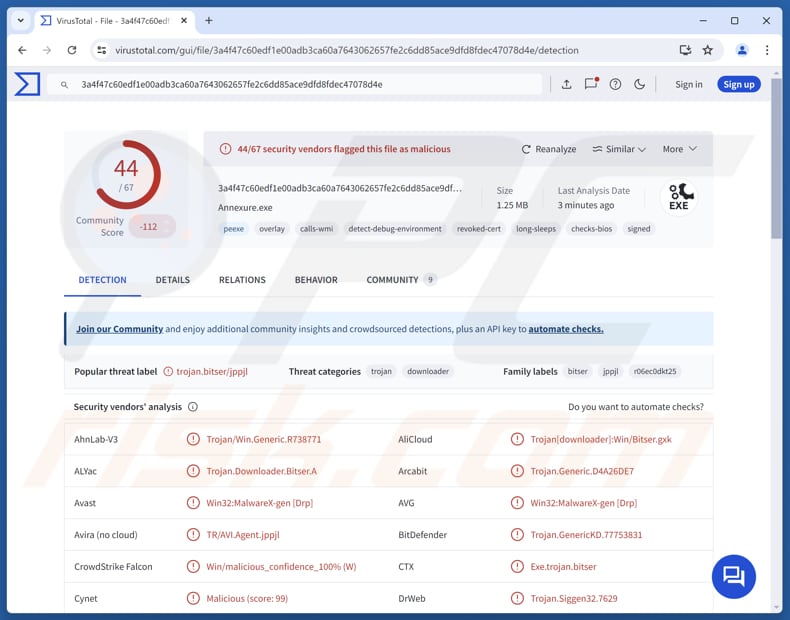
StreamSpy is a newly identified Trojan used by the Patchwork (APT-Q-36) threat group. It communicates with its command server using both WebSocket and HTTP, utilizing WebSocket for receiving instructions and sending results, and HTTP for tasks such as file transfers. StreamSpy has similarities with the Spyder downloader.
More about StreamSpy
StreamSpy begins by unlocking its hidden settings, which instruct it on how to communicate with its command server, how to identify itself, and how to maintain its presence on the system. Next, it scans the device and collects a wide range of system details, like the computer name, user name, operating system version, antivirus software, and hardware IDs.
It combines this data to create a unique identifier for the infected machine and sends it to the attacker's server. To ensure it remains active after reboots, StreamSpy sets up persistence using methods such as scheduled tasks, special registry keys, or shortcuts placed in the startup folder.
StreamSpy supports various commands. It can execute arbitrary shell commands through both cmd.exe and PowerShell, giving attackers full access to system-level functions. The malware can download and execute payloads, including encrypted ZIP archives that it decrypts and runs locally to deploy additional tools.
It also has the capability to transfer files, which allows cybercriminals to upload new files to the system or exfiltrate chosen files. Additionally, the malware is capable of deleting or renaming files, enabling cleanup, data tampering, or preparation for further stages.
Finally, it can enumerate all disks connected to the infected device - it can collect details such as total and available capacity, file system type, and whether a device is removable.
| Name | StreamSpy malware |
| Threat Type | Trojan |
| Detection Names | Avast (Win32:MalwareX-gen [Drp]), Combo Cleaner (Trojan.GenericKD.77753831), ESET-NOD32 (Win32/Agent.VTY Trojan), Kaspersky (Trojan-Downloader.Win32.Bitser.gry), Microsoft (Trojan:Win32/Amadey.SPR!MTB), Full List (VirusTotal) |
| Symptoms | Trojans are designed to stealthily infiltrate the victim's computer and remain silent, and thus no particular symptoms are clearly visible on an infected machine. |
| Possible distribution methods | Infected email attachments, malicious online advertisements, social engineering, software vulnerabilities, software 'cracks'. |
| Damage | Stolen information, identity theft, additional infections, monetary loss, and more. |
| Malware Removal (Windows) |
To eliminate possible malware infections, scan your computer with legitimate antivirus software. Our security researchers recommend using Combo Cleaner. Download Combo CleanerTo use full-featured product, you have to purchase a license for Combo Cleaner. 7 days free trial available. Combo Cleaner is owned and operated by RCS LT, the parent company of PCRisk.com. |
Conclusion
Overall, StreamSpy is a Trojan allowing threat actors to steal information and perform various actions on the infected device. This threat can cause issues like identity theft, additional infections, account hijacking, monetary loss, and other problems. If detected, StreamSpy should be eliminated from the system as soon as possible.
Additional examples of malware classified as Trojans include Vidar 2.0, Efimer, and SilentRoute.
How did StreamSpy infiltrate my computer?
It is known that StreamSpy is delivered through a malicious ZIP archive. In one observed case, the attackers hosted a file named "OPS‑VII‑SIR.zip" on a remote server. Inside this ZIP file, they included the StreamSpy executable, but disguised it with a PDF-style icon to make it appear harmless.
They also bundled real lure PDF documents to deceive the victim into thinking that the archive is legitimate. When a user opens the ZIP and runs the executable, StreamSpy malware infiltrates the system. This method is known as social engineering, where the attacker tricks the victim into manually launching the malware.
It is unknown exactly how cybercriminals trick users into downloading a malicious ZIP file, but it could be through a fraudulent website, a deceptive email, a malicious advertisement, a messaging application, a social media platform, or a similar channel.
How to avoid installation of malware?
Be cautious with email attachments or links in unexpected or irrelevant messages from unknown senders. Always get software from official sources, such as trusted websites or app stores, and avoid pirated programs, key generators, and cracking tools. Use dependable security software and perform regular system scans.
Keep your operating system and applications up to date. Decline notifications from questionable websites. Refrain from clicking on pop-ups, ads, buttons, or links on unofficial or suspicious sites. If you believe that your computer is already infected, we recommend running a scan with Combo Cleaner Antivirus for Windows to automatically eliminate infiltrated malware.
Instant automatic malware removal:
Manual threat removal might be a lengthy and complicated process that requires advanced IT skills. Combo Cleaner is a professional automatic malware removal tool that is recommended to get rid of malware. Download it by clicking the button below:
DOWNLOAD Combo CleanerBy downloading any software listed on this website you agree to our Privacy Policy and Terms of Use. To use full-featured product, you have to purchase a license for Combo Cleaner. 7 days free trial available. Combo Cleaner is owned and operated by RCS LT, the parent company of PCRisk.com.
Quick menu:
- What is StreamSpy?
- STEP 1. Manual removal of StreamSpy malware.
- STEP 2. Check if your computer is clean.
How to remove malware manually?
Manual malware removal is a complicated task - usually it is best to allow antivirus or anti-malware programs to do this automatically. To remove this malware we recommend using Combo Cleaner Antivirus for Windows.
If you wish to remove malware manually, the first step is to identify the name of the malware that you are trying to remove. Here is an example of a suspicious program running on a user's computer:
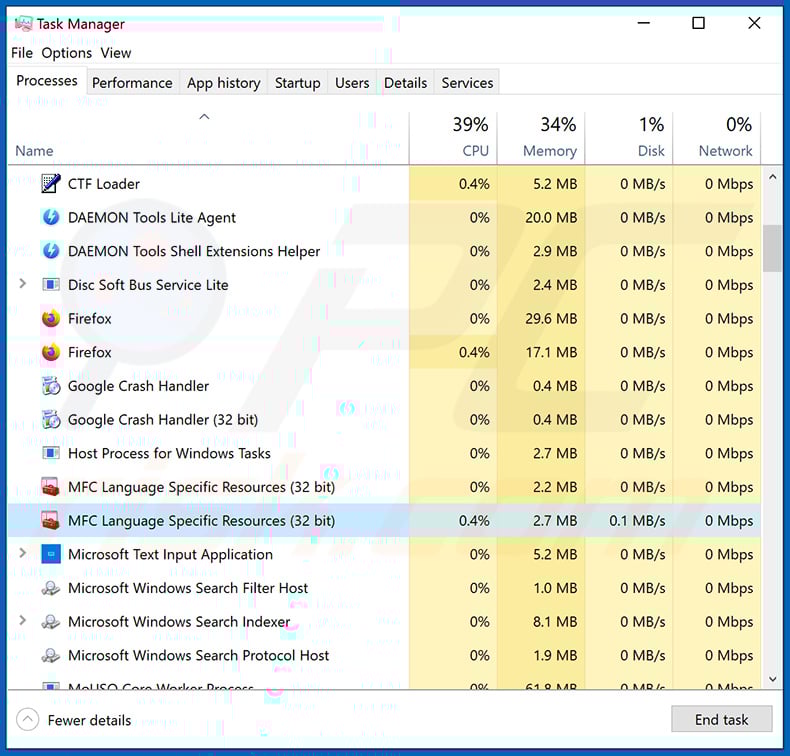
If you checked the list of programs running on your computer, for example, using task manager, and identified a program that looks suspicious, you should continue with these steps:
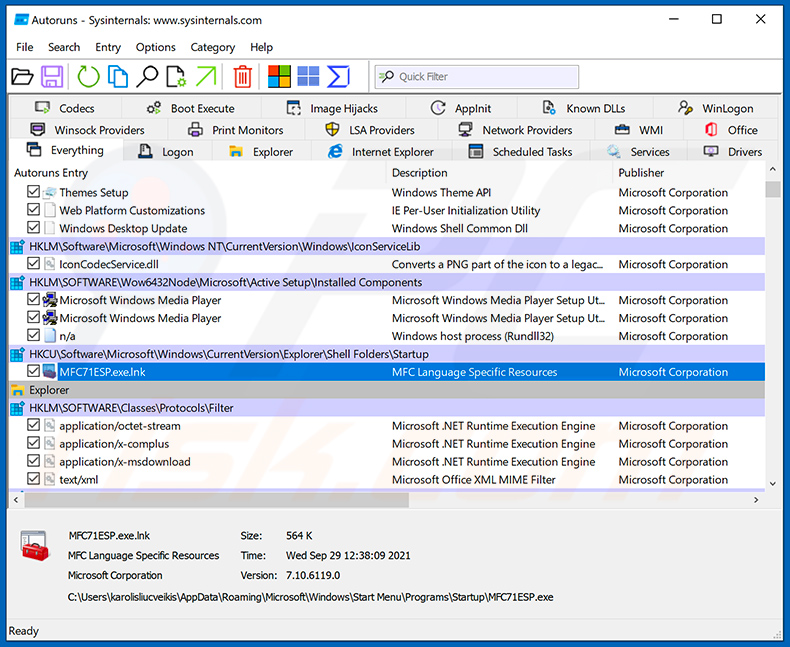
 Download a program called Autoruns. This program shows auto-start applications, Registry, and file system locations:
 Restart your computer into Safe Mode:
Windows XP and Windows 7 users: Start your computer in Safe Mode. Click Start, click Shut Down, click Restart, click OK. During your computer start process, press the F8 key on your keyboard multiple times until you see the Windows Advanced Option menu, and then select Safe Mode with Networking from the list.
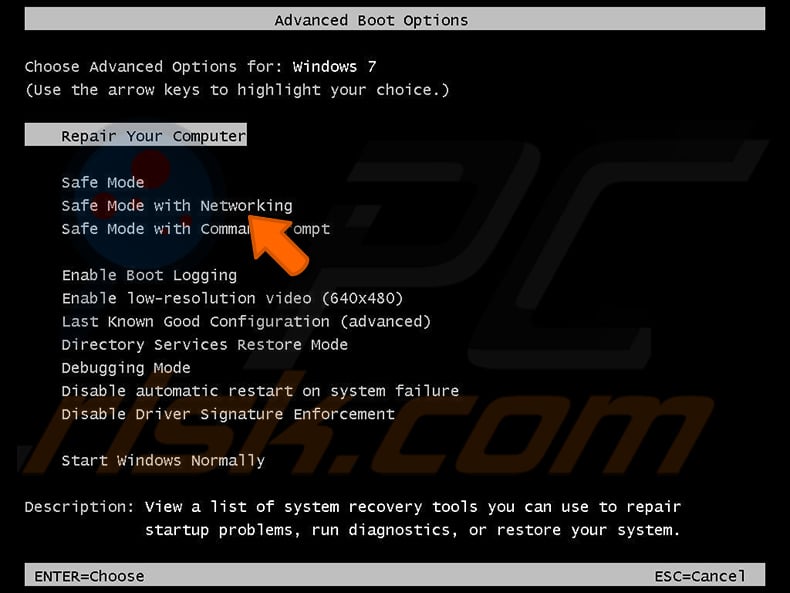
Video showing how to start Windows 7 in "Safe Mode with Networking":
Windows 8 users: Start Windows 8 is Safe Mode with Networking - Go to Windows 8 Start Screen, type Advanced, in the search results select Settings. Click Advanced startup options, in the opened "General PC Settings" window, select Advanced startup.
Click the "Restart now" button. Your computer will now restart into the "Advanced Startup options menu". Click the "Troubleshoot" button, and then click the "Advanced options" button. In the advanced option screen, click "Startup settings".
Click the "Restart" button. Your PC will restart into the Startup Settings screen. Press F5 to boot in Safe Mode with Networking.
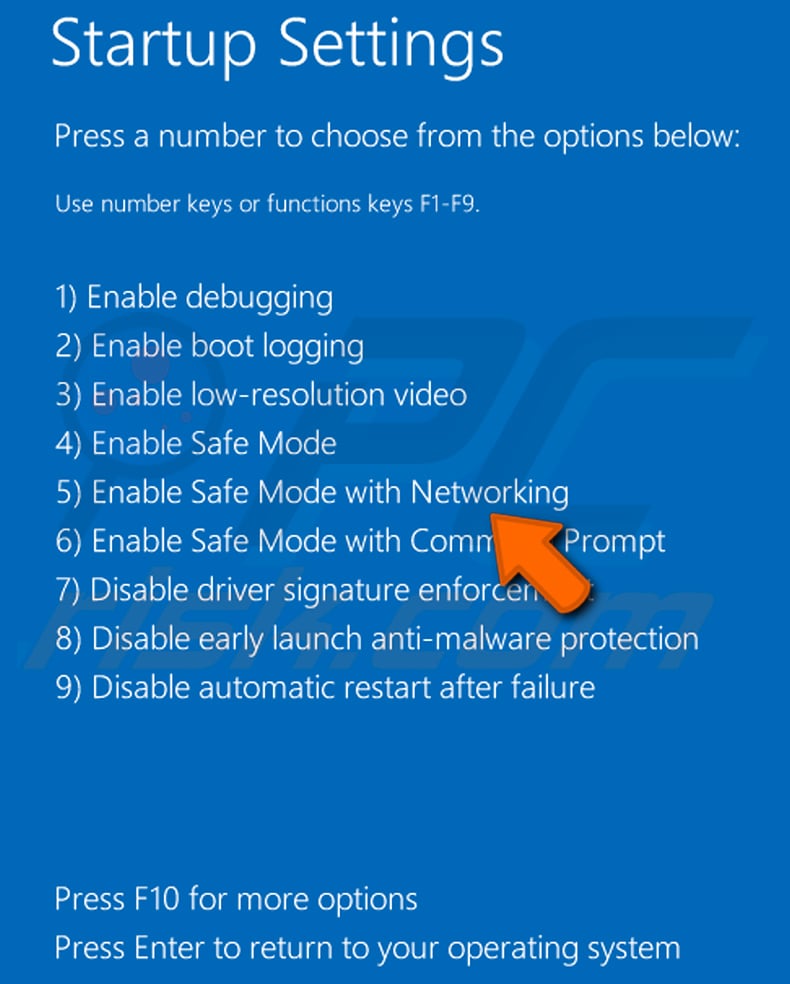
Video showing how to start Windows 8 in "Safe Mode with Networking":
Windows 10 users: Click the Windows logo and select the Power icon. In the opened menu click "Restart" while holding "Shift" button on your keyboard. In the "choose an option" window click on the "Troubleshoot", next select "Advanced options".
In the advanced options menu select "Startup Settings" and click on the "Restart" button. In the following window you should click the "F5" button on your keyboard. This will restart your operating system in safe mode with networking.
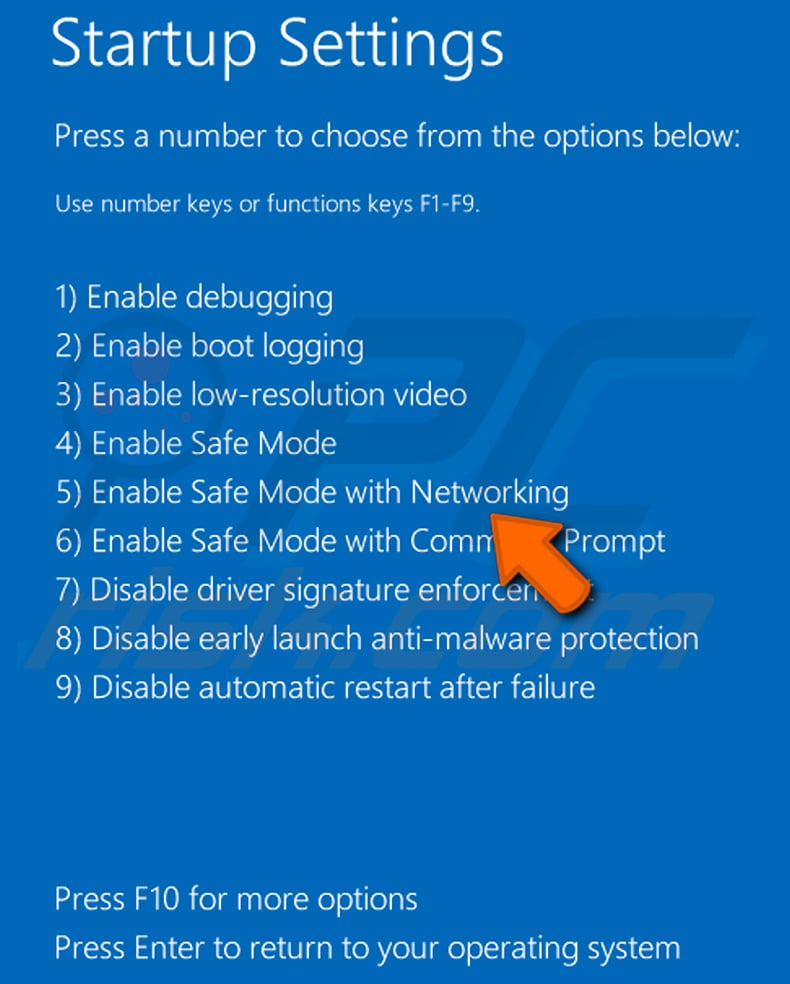
Video showing how to start Windows 10 in "Safe Mode with Networking":
 Extract the downloaded archive and run the Autoruns.exe file.
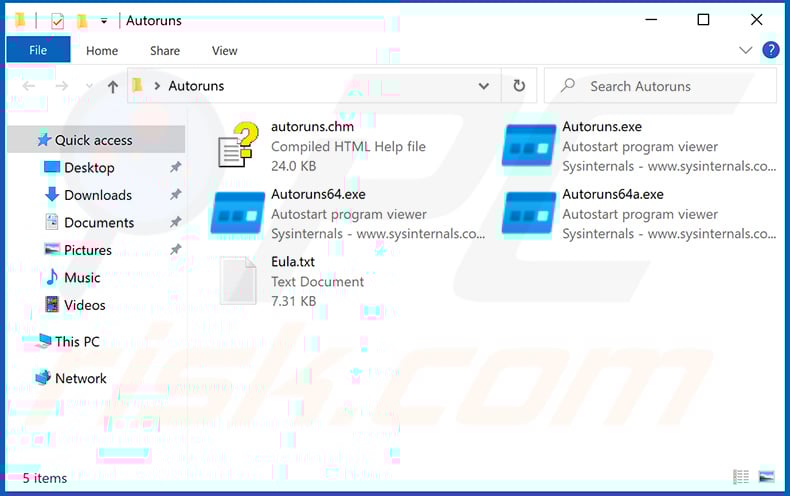
 In the Autoruns application, click "Options" at the top and uncheck "Hide Empty Locations" and "Hide Windows Entries" options. After this procedure, click the "Refresh" icon.
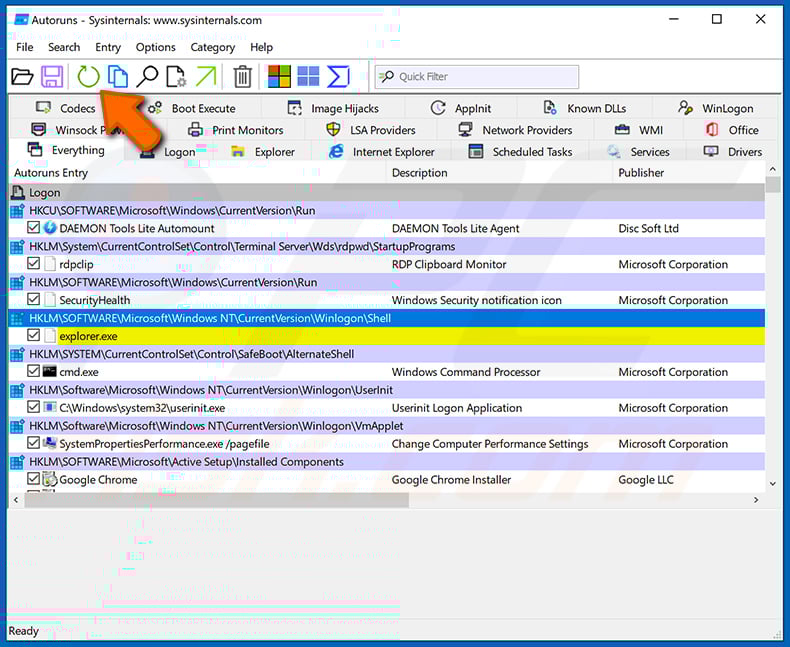
 Check the list provided by the Autoruns application and locate the malware file that you want to eliminate.
You should write down its full path and name. Note that some malware hides process names under legitimate Windows process names. At this stage, it is very important to avoid removing system files. After you locate the suspicious program you wish to remove, right click your mouse over its name and choose "Delete".
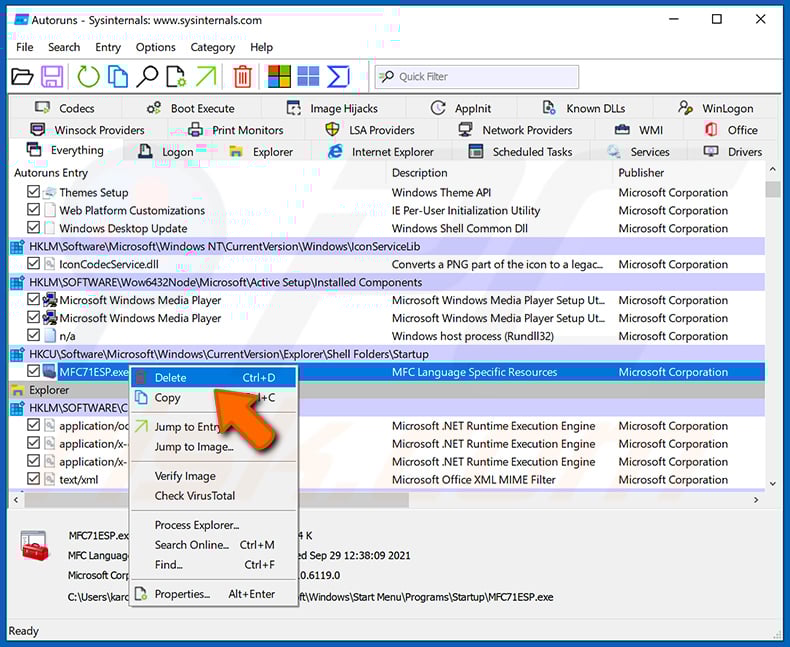
After removing the malware through the Autoruns application (this ensures that the malware will not run automatically on the next system startup), you should search for the malware name on your computer. Be sure to enable hidden files and folders before proceeding. If you find the filename of the malware, be sure to remove it.
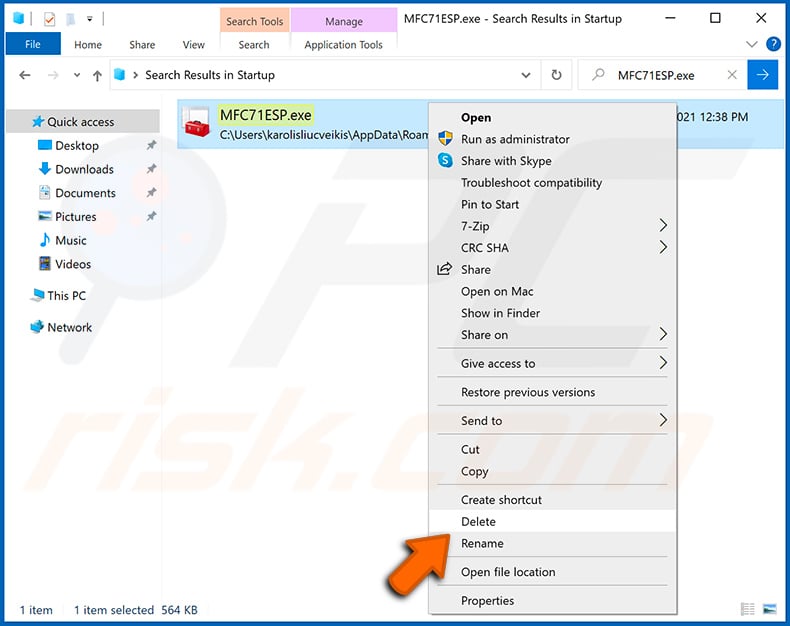
Reboot your computer in normal mode. Following these steps should remove any malware from your computer. Note that manual threat removal requires advanced computer skills. If you do not have these skills, leave malware removal to antivirus and anti-malware programs.
These steps might not work with advanced malware infections. As always it is best to prevent infection than try to remove malware later. To keep your computer safe, install the latest operating system updates and use antivirus software. To be sure your computer is free of malware infections, we recommend scanning it with Combo Cleaner Antivirus for Windows.
Frequently Asked Questions (FAQ)
My computer is infected with StreamSpy malware, should I format my storage device to get rid of it?
Formatting the storage device is not always necessary. Users are recommended to run a trusted antivirus or anti-malware program, such as Combo Cleaner, to detect and remove StreamSpy.
What are the biggest issues that malware can cause?
Through malware, cybercriminals can damage files or systems, hijack accounts, commit identity theft, and steal money. Also, they can infect computers with additional malware, encrypt files, and perform other malicious actions.
What is the purpose of StreamSpy?
StreamSpy lets attackers gather system information, run commands, steal or modify files, and deploy additional malware.
How did StreamSpy infiltrate my computer?
StreamSpy is delivered through a malicious ZIP file that contains the trojan disguised as a PDF‑like executable, along with real decoy documents to make it look legitimate. When the victim opens the archive and runs the disguised file, the malware infiltrates. While the exact lure method is unclear, attackers may distribute the ZIP through fake websites, deceptive emails, malicious ads, or similar channels.
Will Combo Cleaner protect me from malware?
Yes, Combo Cleaner can detect and remove nearly all known malware. However, advanced malware often hides deeply within the system, so performing a full system scan is essential.
Share:
 Facebook
 X.com
X.com
 LinkedIn
 Copy Link

Tomas Meskauskas
Expert security researcher, professional malware analyst
I am passionate about computer security and technology. I have an experience of over 10 years working in various companies related to computer technical issue solving and Internet security. I have been working as an author and editor for pcrisk.com since 2010. Follow me on Twitter and LinkedIn to stay informed about the latest online security threats.
PCrisk security portal is brought by a company RCS LT.
Joined forces of security researchers help educate computer users about the latest online security threats. More information about the company RCS LT.
Our malware removal guides are free. However, if you want to support us you can send us a donation.
DonatePCrisk security portal is brought by a company RCS LT.
Joined forces of security researchers help educate computer users about the latest online security threats. More information about the company RCS LT.
Our malware removal guides are free. However, if you want to support us you can send us a donation.
Donate
▼ Show Discussion