
How to eliminate BankBot from compromised devices
TrojanAlso Known As: BankBot remote access trojan

Get free scan and check if your device is infected.
Remove it nowTo use full-featured product, you have to purchase a license for Combo Cleaner. Seven days free trial available. Combo Cleaner is owned and operated by RCS LT, the parent company of PCRisk.com.
What is BankBot RAT?
BankBot is an Android RAT that takes full control of infected devices. It exploits accessibility services to obtain various permissions, automate the device's UI, steal sensitive data, and execute unauthorized operations. If a device is infected with BankBot, the malware should be removed immediately.
BankBot RAT in detail
BankBot detects if it is running in an emulator or sandbox to avoid analysis. It checks the device's make, model, and ROM, and adapts its behavior accordingly, allowing it to target or skip specific devices. These checks enable BankBot to run only on selected real devices and remain hidden from automated analysis.
Also, the malware collects device information, such as Android version, OS release, brand, model, manufacturer, hardware ID, build ID, and product name. This information is logged for profiling, targeting specific devices, and avoiding execution on unsupported devices.
Furthermore, BankBot mutes the phone so the victims will not hear alerts. When active, the malware utilizes system controls to silence music, ringtones, and notifications. That stops sounds for calls, messages, and other alerts so the user will notice the malicious activity.
BankBot can send a command to open the device's Accessibility Settings, tricking the user into enabling its accessibility service. This gives it extra permissions to control the device and perform actions automatically. It works on Android up to version 13, but Android 14 blocks this kind of permission bypass.
Also, the malware maintains persistence by scheduling a task. This runs roughly every 30 seconds, requires a network connection, and is set to persist through device reboots, allowing the malware to operate continuously.
Remote access capabilities
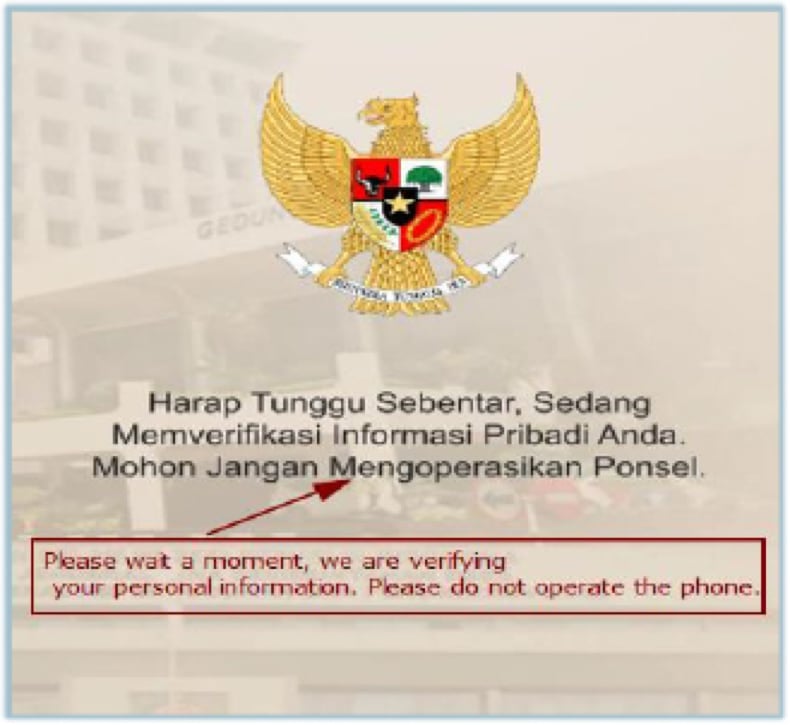
BankBot can enable and disable accessibility services and get device administrator privileges. For example, once it gains Accessibility permission, it can display a full-screen fake "Personal Information Verification" to distract the victim. While the victim is deceived, it silently enables required permissions, starts its services, and adds itself as a device administrator.
Also, the malware can install or uninstall APKs, refresh screens, open apps, set or cancel call forwarding, and send SMS. It can also steal contacts, SMS, installed app list, device status, and location, and can unlock the screen, simulate clicks, and swipes.
Moreover, BankBot can turn the screen on and off, download files, take photos (and screenshots), hide windows, and set text in input fields. This allows the malware to fully control the device, spy on the user, and manipulate the interface.
Furthermore, the malware can read the Android clipboard and capture sensitive data, like passwords, crypto keys, and other personal information. It also targets crypto wallets by using Android Accessibility to open wallet apps, automate the UI, and read data (like seed phrases, private keys, or transaction details).
The targeted cryptocurrencies and wallets include AUTOS, Bitcoin, BitKeep, Blockchain wallet, Coin98 Super Wallet, Coinomi, Exodus, imToken, Krystal, MetaMask, MeWallet, SafePal, Status (Ethereum Crypto Wallet), TokenPocket, Trust Wallet, and Valor.
It is essential to note that BankBot can masquerade as Google News by altering its name and icon, then loading news.google.com within a WebView to deceive victims into believing it is the genuine app, thereby reducing their suspicion while the malware executes malicious activities.
Also, the malware communicates with its server to get a list of apps to target for theft or fraud. All of these apps are primarily financial or banking apps, including money transfer apps, mobile banking apps, digital wallets, and some browsers. This allows the malware to identify and potentially steal data, credentials, or perform actions in those apps on the infected device.
| Name | BankBot remote access trojan |
| Threat Type | Android malware, Remote Access Trojan |
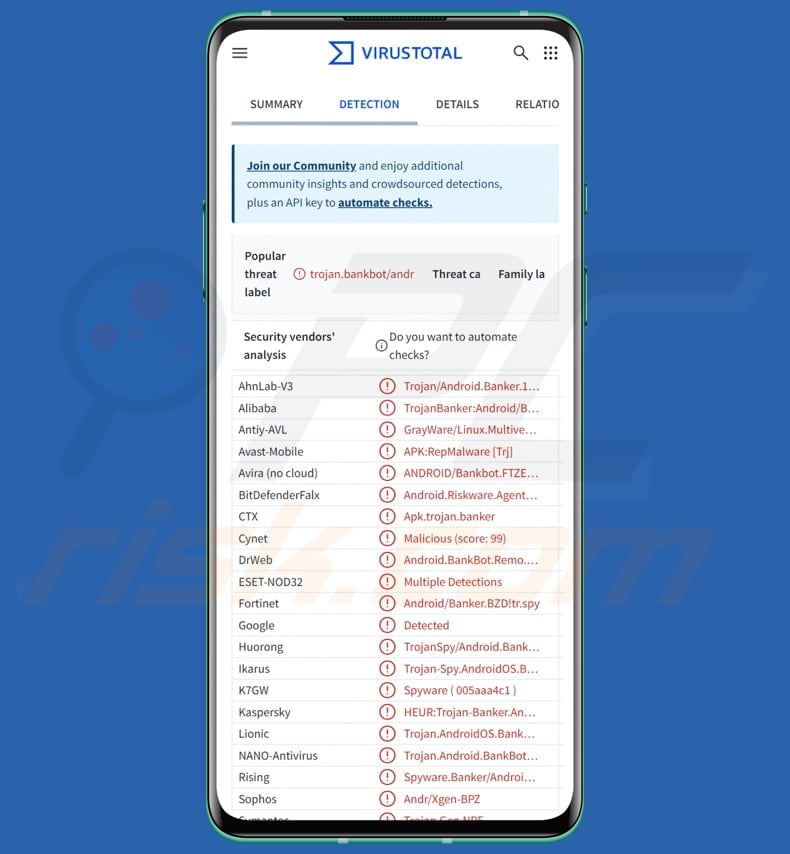
| Detection Names | Avast (APK:RepMalware [Trj]), Combo Cleaner (Android.Riskware.Agent.aFJD), ESET-NOD32 (Multiple Detections), Kaspersky (HEUR:Trojan-Banker.AndroidOS.Agent.md), Full List (VirusTotal) |
| Symptoms | Device control signs, notifications and sounds muted. |
| Distribution methods | Infected email attachments, malicious online advertisements, social engineering, deceptive applications, scam websites. |
| Damage | Stolen personal information (private messages, logins/passwords, etc.), decreased device performance, battery is drained quickly, decreased Internet speed, huge data losses, monetary losses, stolen identity. |
| Malware Removal (Windows) |
To eliminate possible malware infections, scan your computer with legitimate antivirus software. Our security researchers recommend using Combo Cleaner. Download Combo CleanerTo use full-featured product, you have to purchase a license for Combo Cleaner. 7 days free trial available. Combo Cleaner is owned and operated by RCS LT, the parent company of PCRisk.com. |
Conclusion
BankBot is a stealthy Android malware that uses accessibility abuse, device checks, and persisted tasks to gain full control, steal data (including from banking and crypto apps), and perform remote financial fraud. It can hide as trusted apps and mute the device to avoid detection.
This malware can cause issues like account hijacking, identity theft, monetary loss, and other issues. Thus, if a device is compromised, it should be scanned using a reliable security tool immediately. Some examples of other Android malware are GhostGrab, Herodotus, and ClayRat.
How did BankBot RAT infiltrate my device?
BankBot is delivered as a sideloaded APK from attacker-controlled websites. Malware can also enter systems via fake apps on third-party app stores, malicious advertisements, fake advertisements, and pop-ups on dubious sites, links in deceptive messages (or emails), and similar channels.
Generally, cybercriminals use social engineering or similar techniques to trick users into downloading and running malware on their devices.
How to avoid installation of malware?
Only get apps from trusted sources, such as the Google Play Store or official websites, and check ratings and reviews. Refrain from clicking links in suspicious emails, texts, or social media messages. Also, avoid interacting with ads, links, pop-ups, etc., on questionable web pages.
Update your operating system and applications regularly, and use Google Play Protect along with a reputable security app.
A fake screen displayed by the malware while it enables permissions in the background:
Quick menu:
- Introduction
- How to delete browsing history from the Chrome web browser?
- How to disable browser notifications in the Chrome web browser?
- How to reset the Chrome web browser?
- How to delete browsing history from the Firefox web browser?
- How to disable browser notifications in the Firefox web browser?
- How to reset the Firefox web browser?
- How to uninstall potentially unwanted and/or malicious applications?
- How to boot the Android device in "Safe Mode"?
- How to check the battery usage of various applications?
- How to check the data usage of various applications?
- How to install the latest software updates?
- How to reset the system to its default state?
- How to disable applications that have administrator privileges?
Delete browsing history from the Chrome web browser:
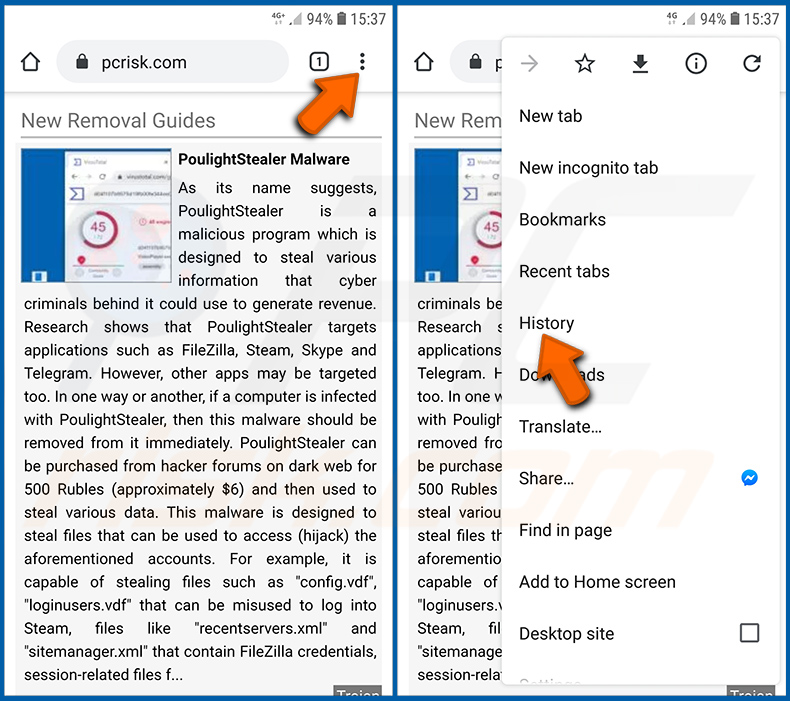
Tap the "Menu" button (three dots on the right-upper corner of the screen) and select "History" in the opened dropdown menu.
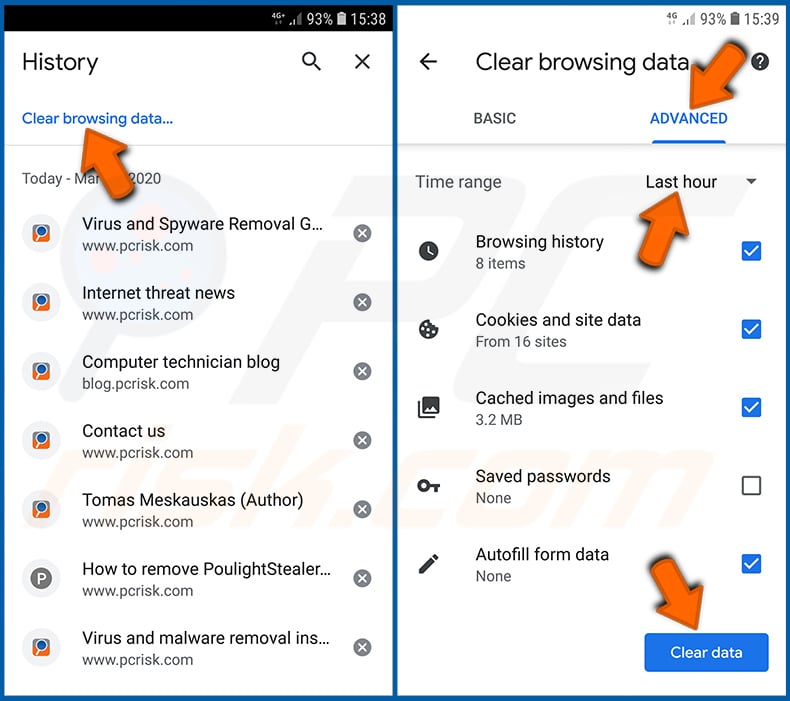
Tap "Clear browsing data", select "ADVANCED" tab, choose the time range and data types you want to delete and tap "Clear data".
Disable browser notifications in the Chrome web browser:
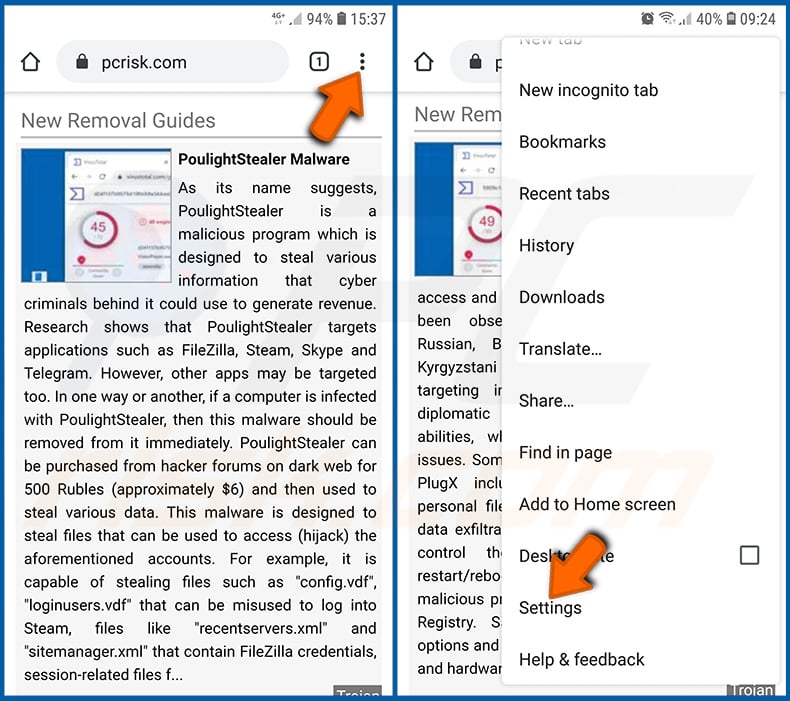
Tap the "Menu" button (three dots on the right-upper corner of the screen) and select "Settings" in the opened dropdown menu.
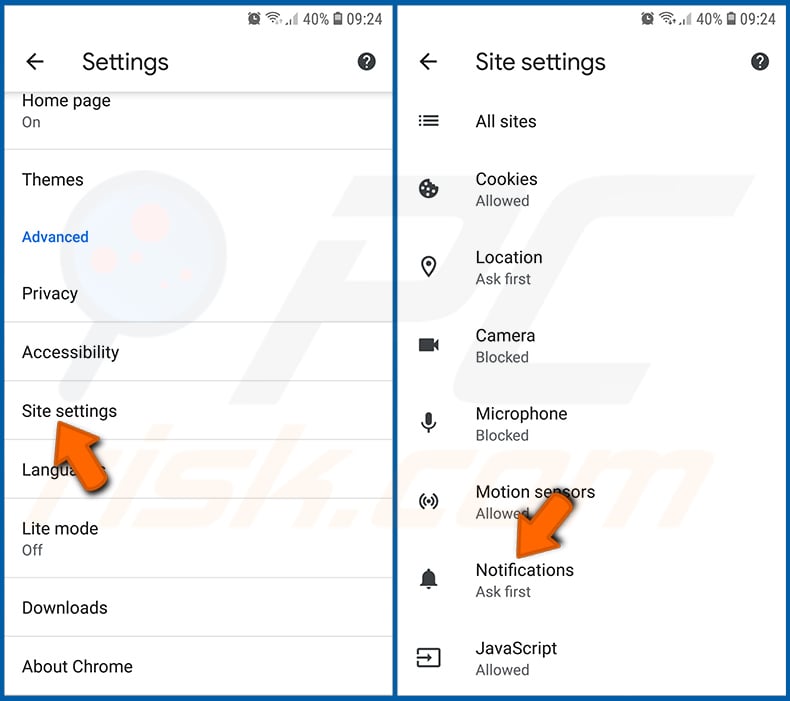
Scroll down until you see "Site settings" option and tap it. Scroll down until you see "Notifications" option and tap it.
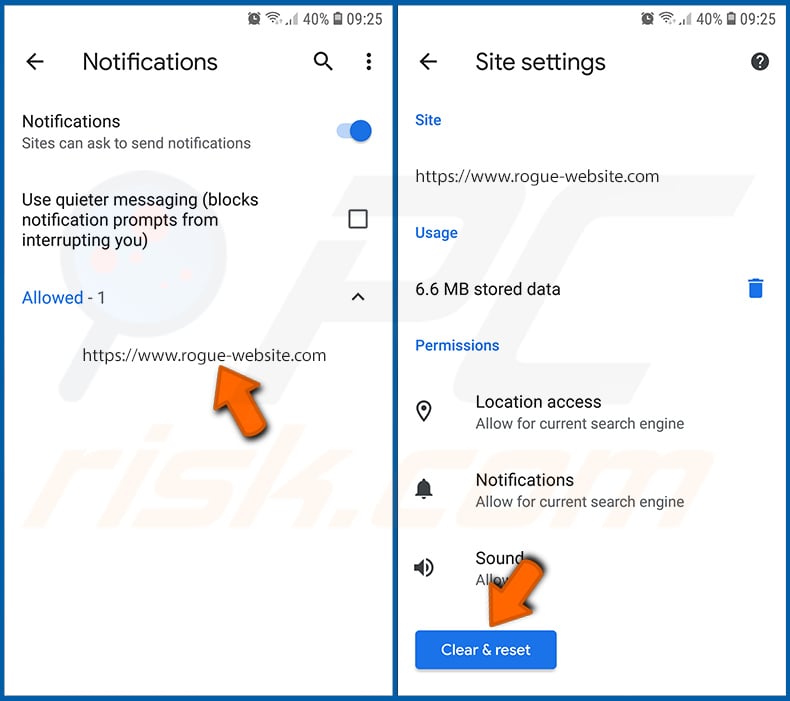
Find the websites that deliver browser notifications, tap on them and click "Clear & reset". This will remove permissions granted for these websites to deliver notifications. However, once you visit the same site again, it may ask for a permission again. You can choose whether to give these permissions or not (if you choose to decline the website will go to "Blocked" section and will no longer ask you for the permission).
Reset the Chrome web browser:
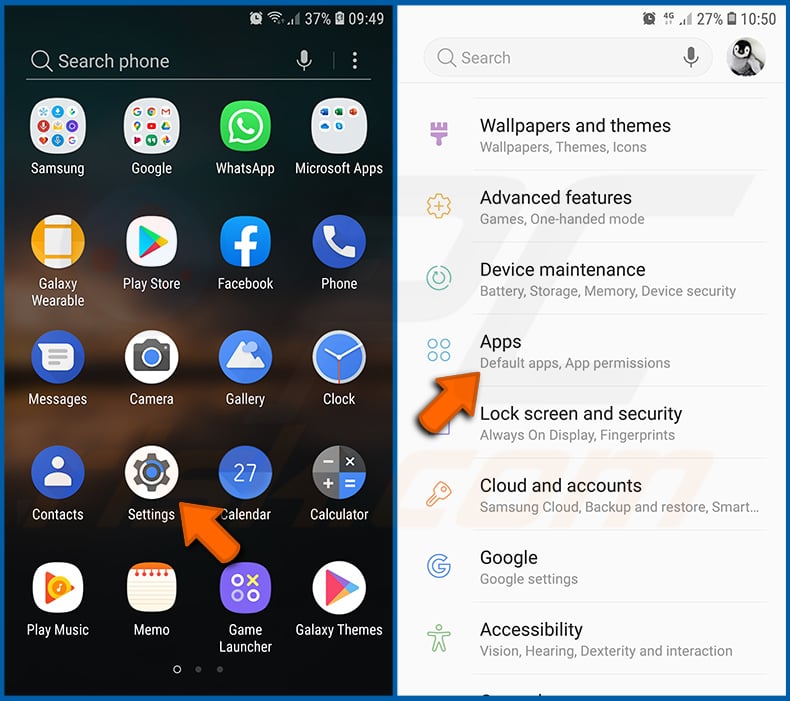
Go to "Settings", scroll down until you see "Apps" and tap it.
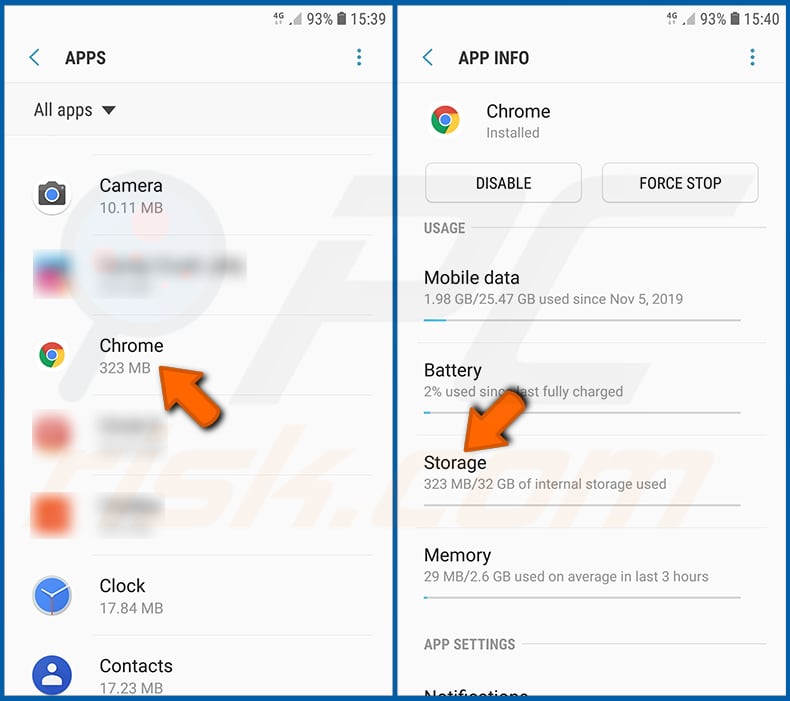
Scroll down until you find "Chrome" application, select it and tap "Storage" option.
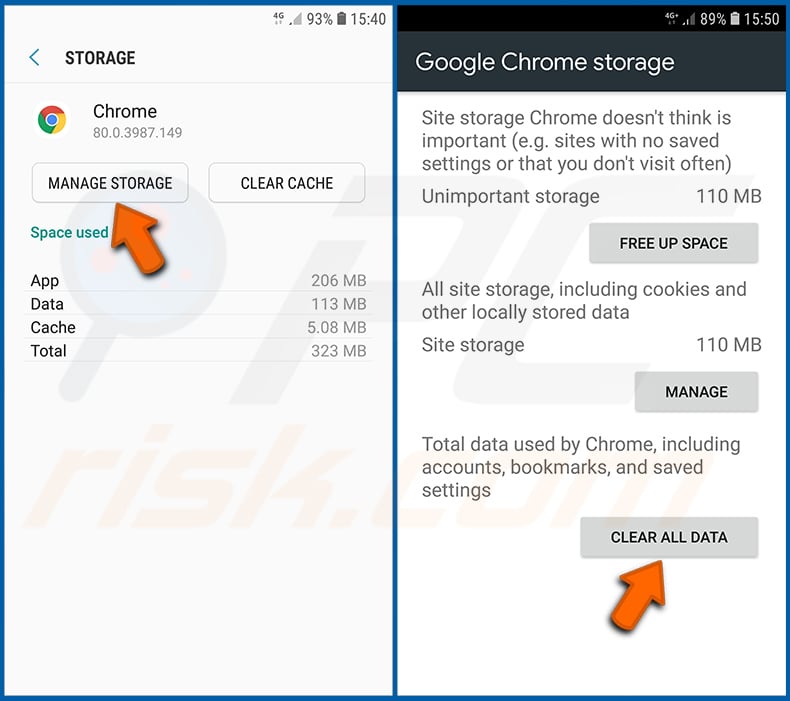
Tap "MANAGE STORAGE", then "CLEAR ALL DATA" and confirm the action by taping "OK". Note that resetting the browser will eliminate all data stored within. This means that all saved logins/passwords, browsing history, non-default settings and other data will be deleted. You will also have to re-login into all websites as well.
Delete browsing history from the Firefox web browser:
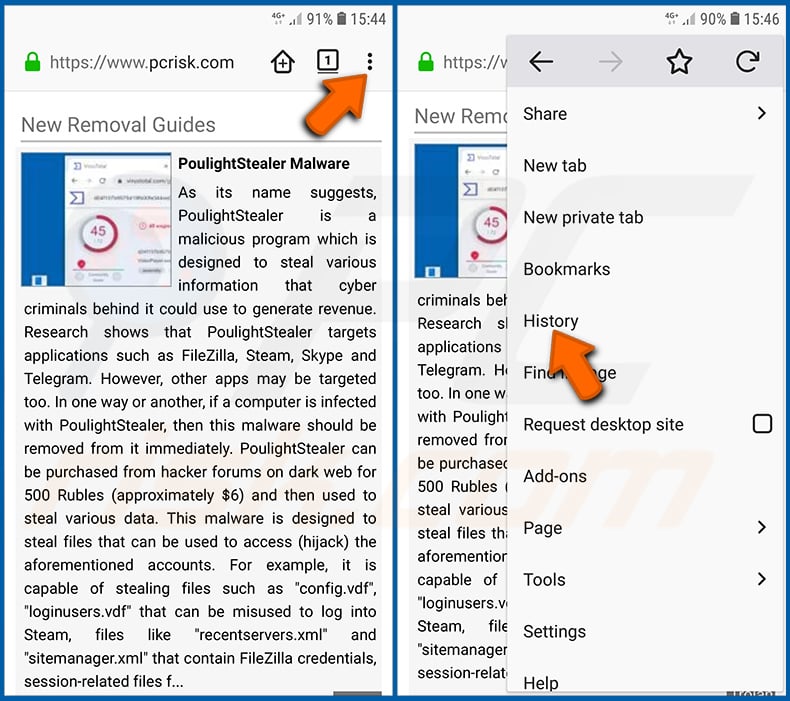
Tap the "Menu" button (three dots on the right-upper corner of the screen) and select "History" in the opened dropdown menu.
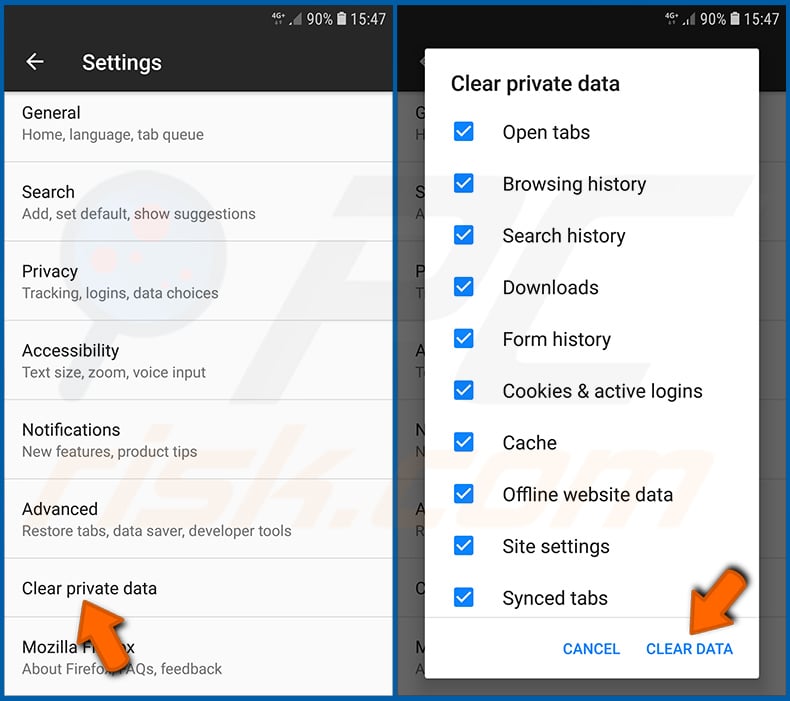
Scroll down until you see "Clear private data" and tap it. Select data types you want to remove and tap "CLEAR DATA".
Disable browser notifications in the Firefox web browser:
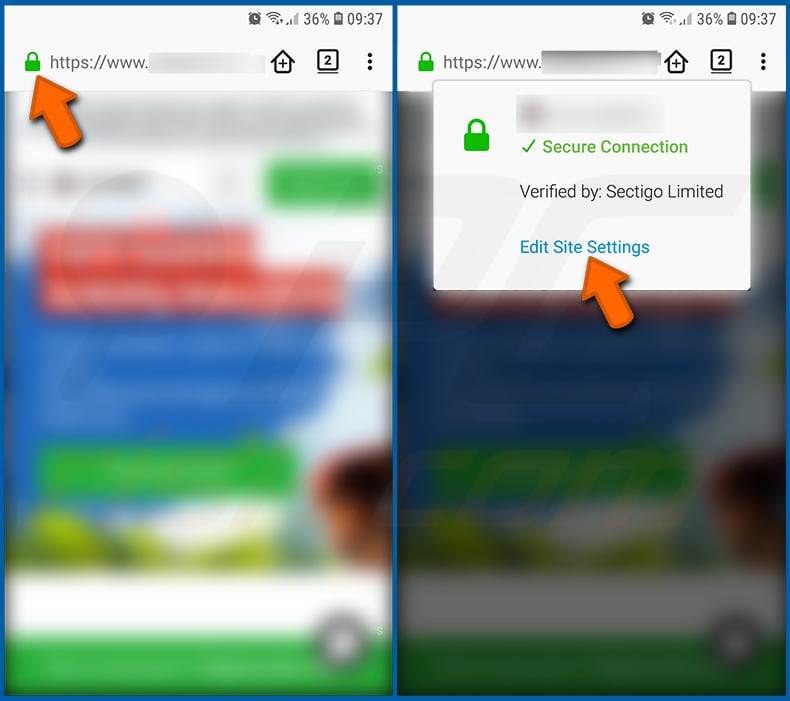
Visit the website that is delivering browser notifications, tap the icon displayed on the left of URL bar (the icon will not necessarily be a "Lock") and select "Edit Site Settings".
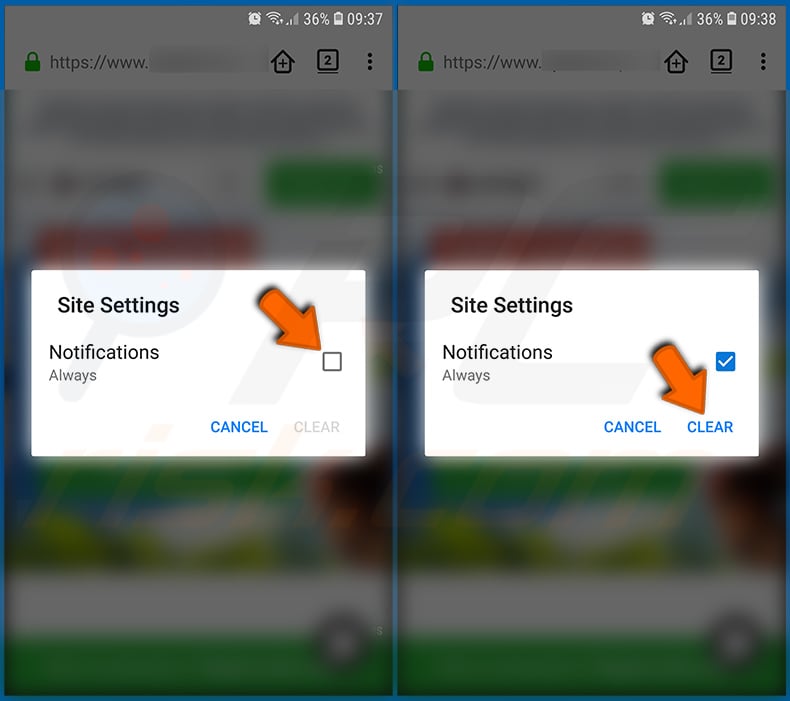
In the opened pop-up opt-in the "Notifications" option and tap "CLEAR".
Reset the Firefox web browser:
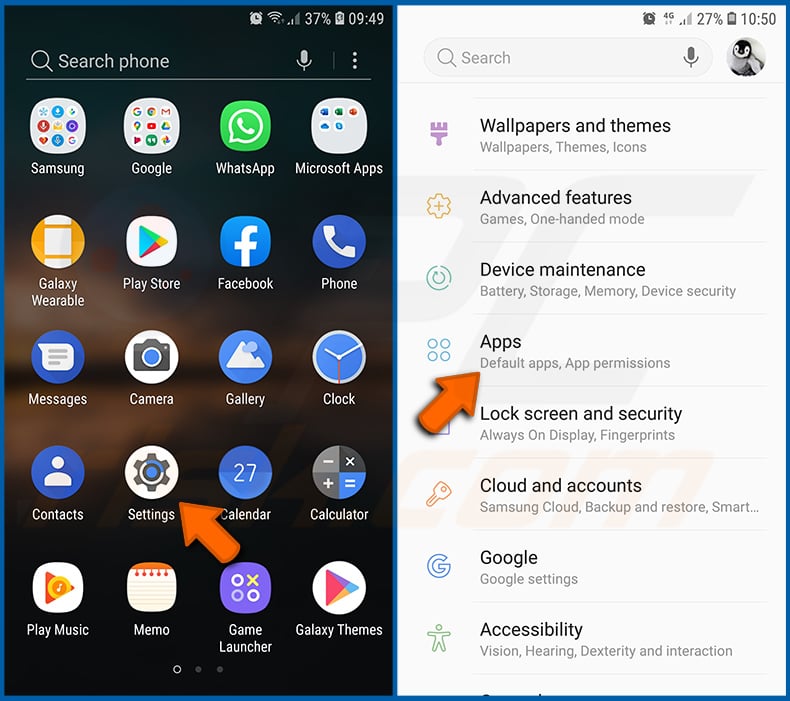
Go to "Settings", scroll down until you see "Apps" and tap it.
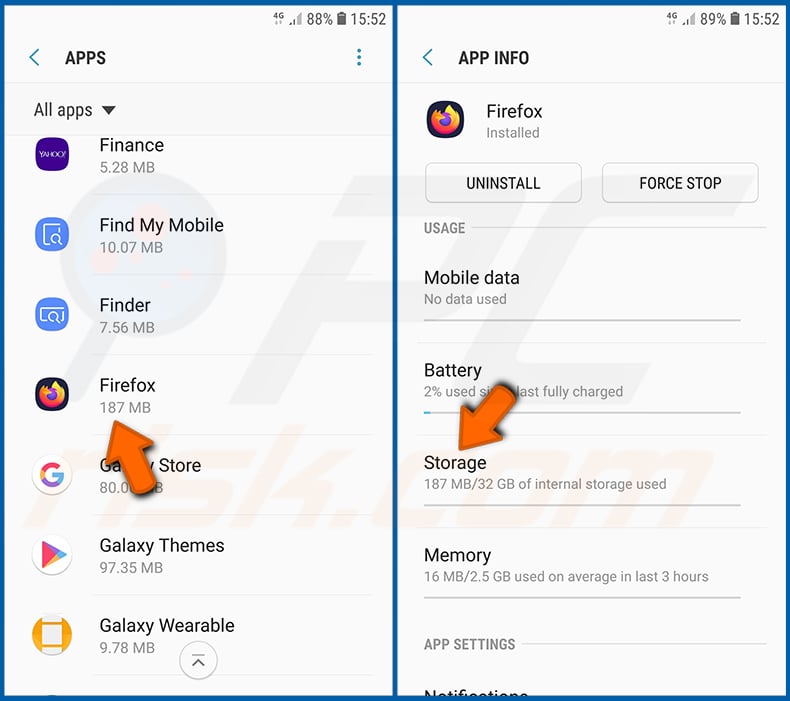
Scroll down until you find "Firefox" application, select it and tap "Storage" option.
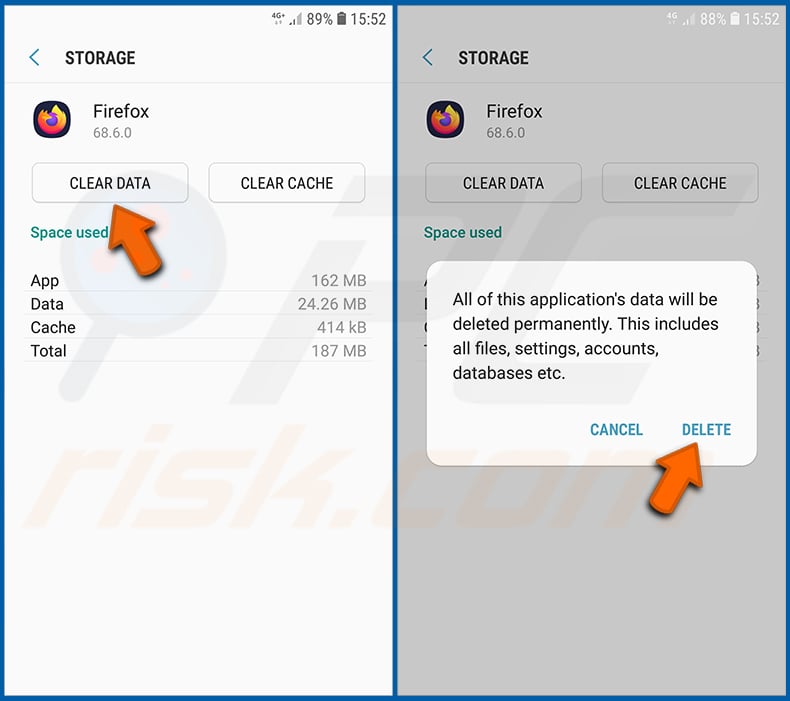
Tap "CLEAR DATA" and confirm the action by taping "DELETE". Note that resetting the browser will eliminate all data stored within. This means that all saved logins/passwords, browsing history, non-default settings and other data will be deleted. You will also have to re-login into all websites as well.
Uninstall potentially unwanted and/or malicious applications:
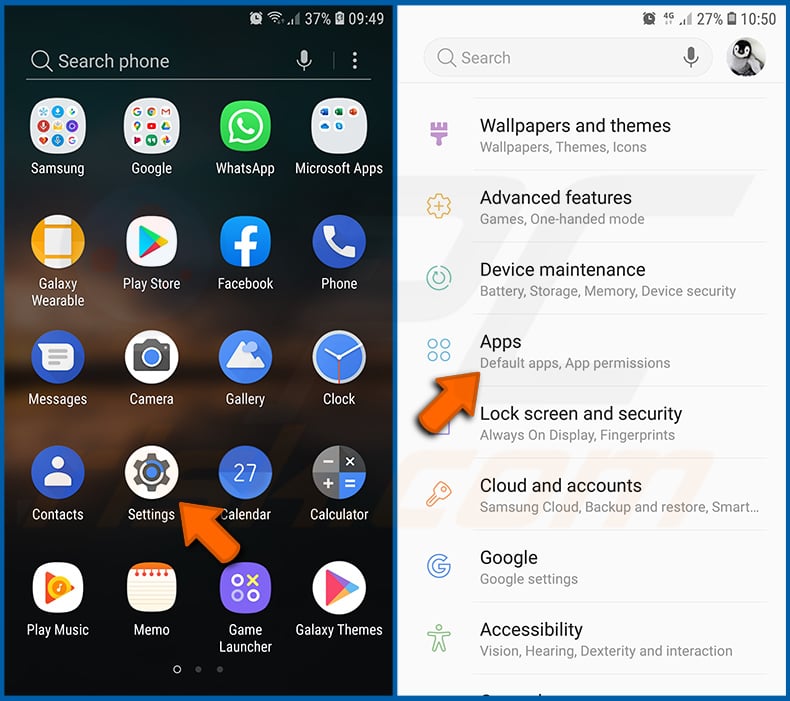
Go to "Settings", scroll down until you see "Apps" and tap it.
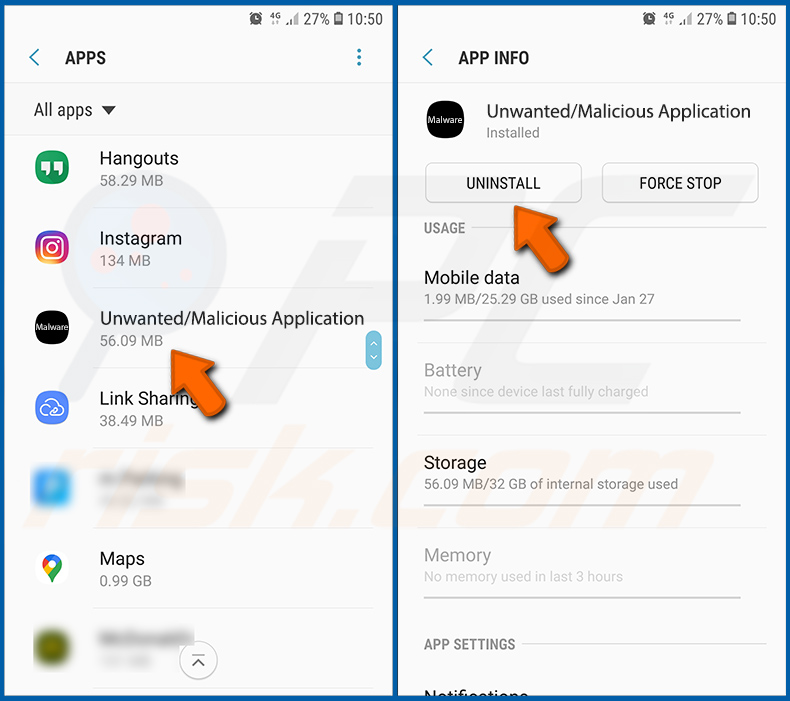
Scroll down until you see a potentially unwanted and/or malicious application, select it and tap "Uninstall". If, for some reason, you are unable to remove the selected app (e.g., you are prompted with an error message), you should try using the "Safe Mode".
Boot the Android device in "Safe Mode":
The "Safe Mode" in Android operating system temporarily disables all third-party applications from running. Using this mode is a good way to diagnose and solve various issues (e.g., remove malicious applications that prevent users you from doing so when the device is running "normally").
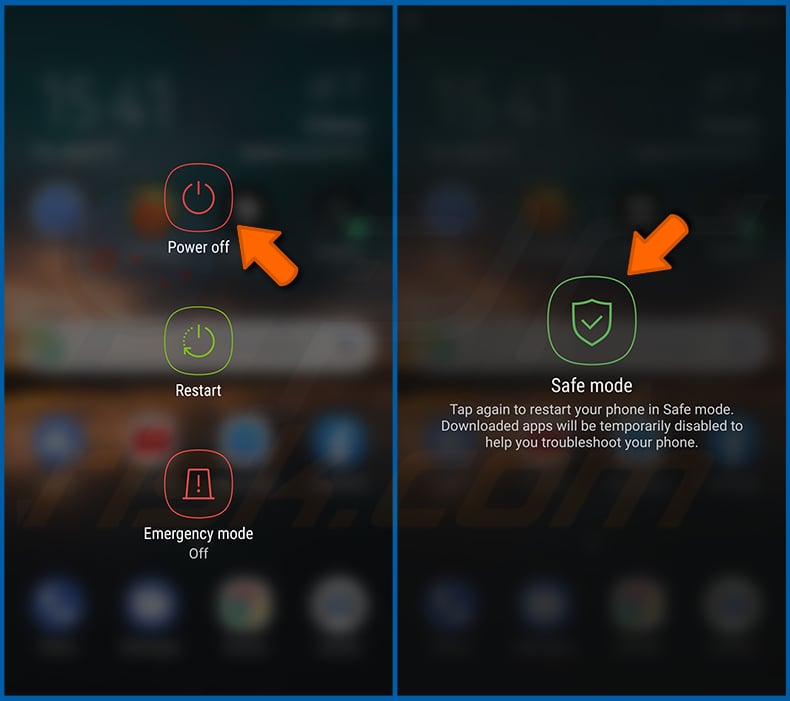
Push the "Power" button and hold it until you see the "Power off" screen. Tap the "Power off" icon and hold it. After a few seconds the "Safe Mode" option will appear and you'll be able run it by restarting the device.
Check the battery usage of various applications:
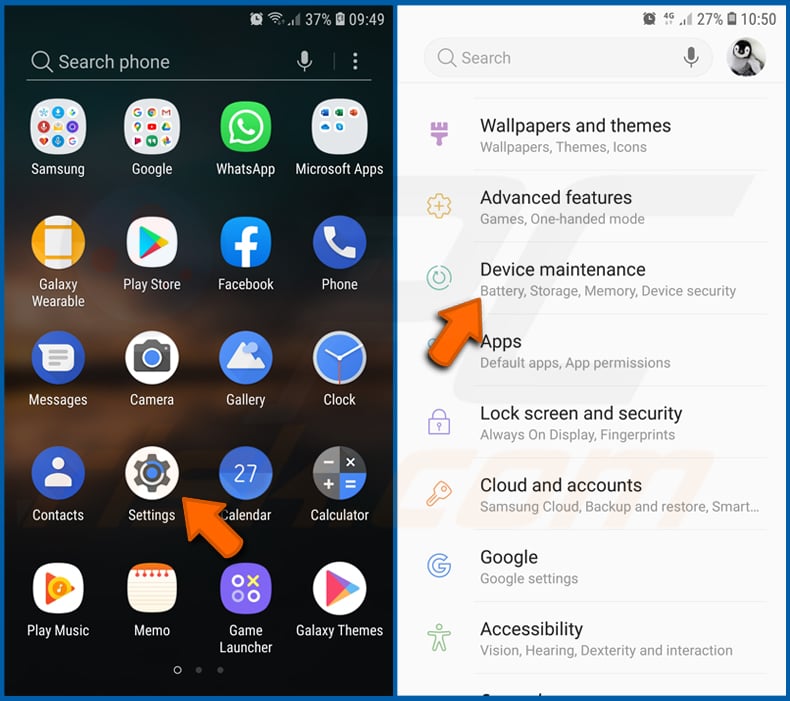
Go to "Settings", scroll down until you see "Device maintenance" and tap it.
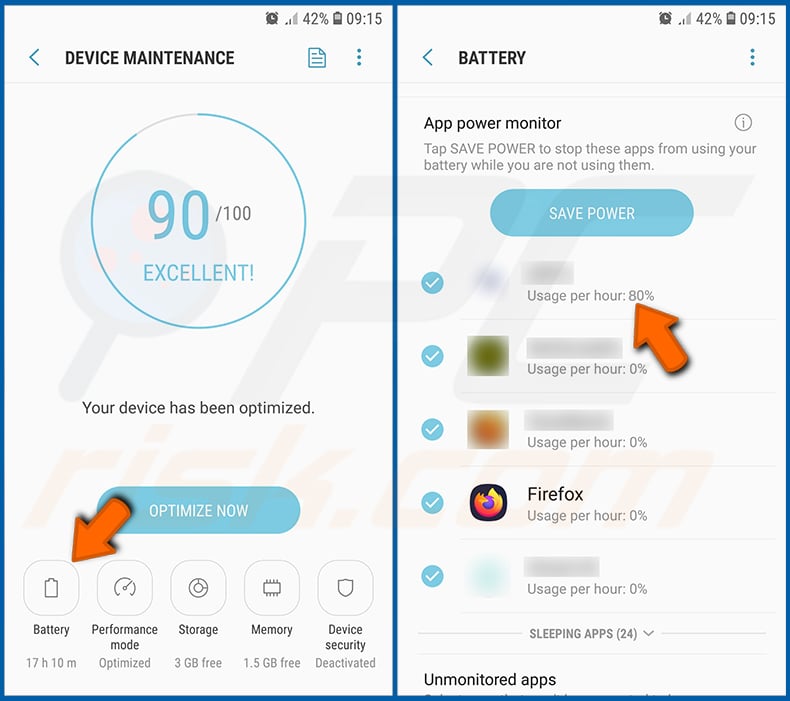
Tap "Battery" and check the usage of each application. Legitimate/genuine applications are designed to use as low energy as possible in order to provide the best user experience and to save power. Therefore, high battery usage may indicate that the application is malicious.
Check the data usage of various applications:
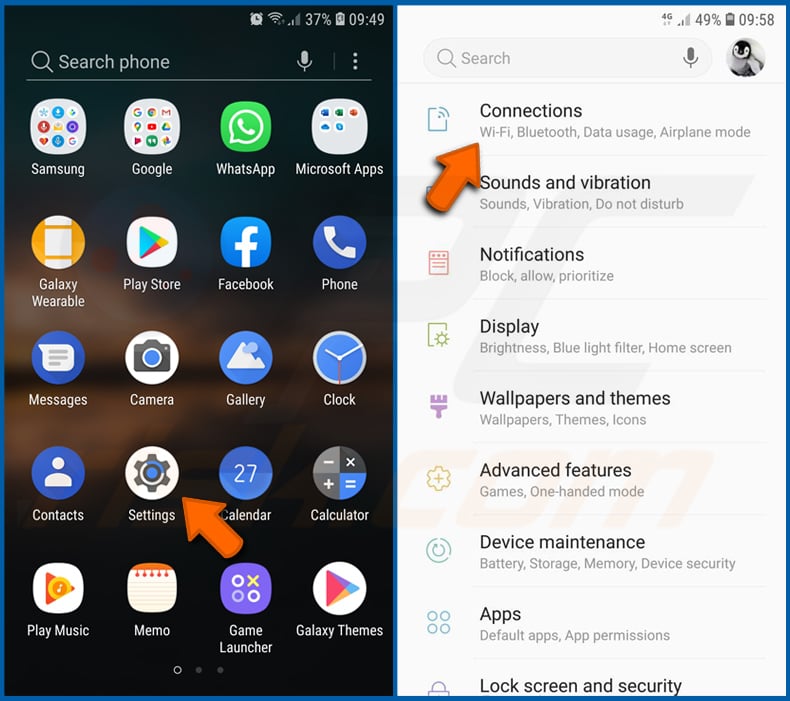
Go to "Settings", scroll down until you see "Connections" and tap it.
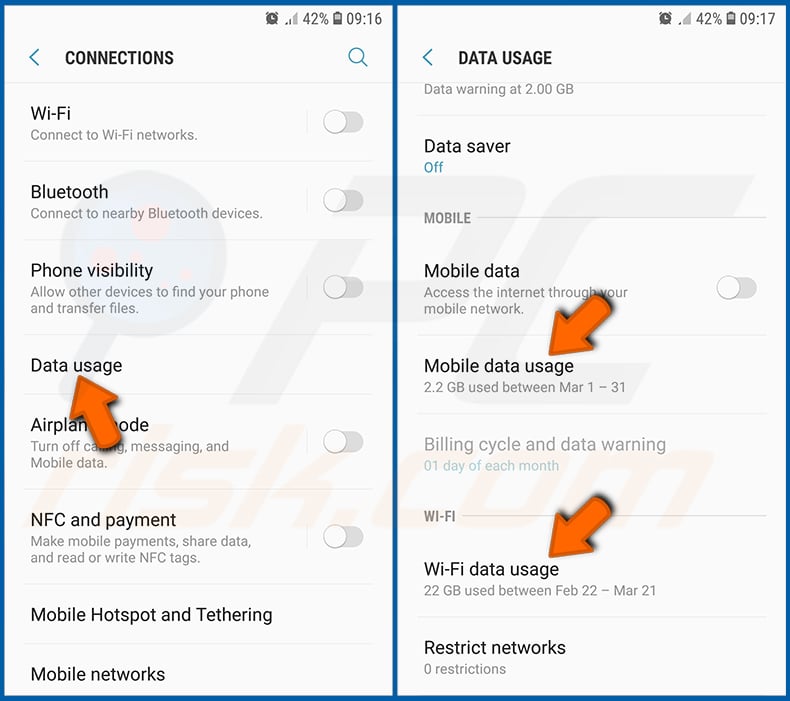
Scroll down until you see "Data usage" and select this option. As with battery, legitimate/genuine applications are designed to minimize data usage as much as possible. This means that huge data usage may indicate presence of malicious application. Note that some malicious applications might be designed to operate when the device is connected to wireless network only. For this reason, you should check both Mobile and Wi-Fi data usage.
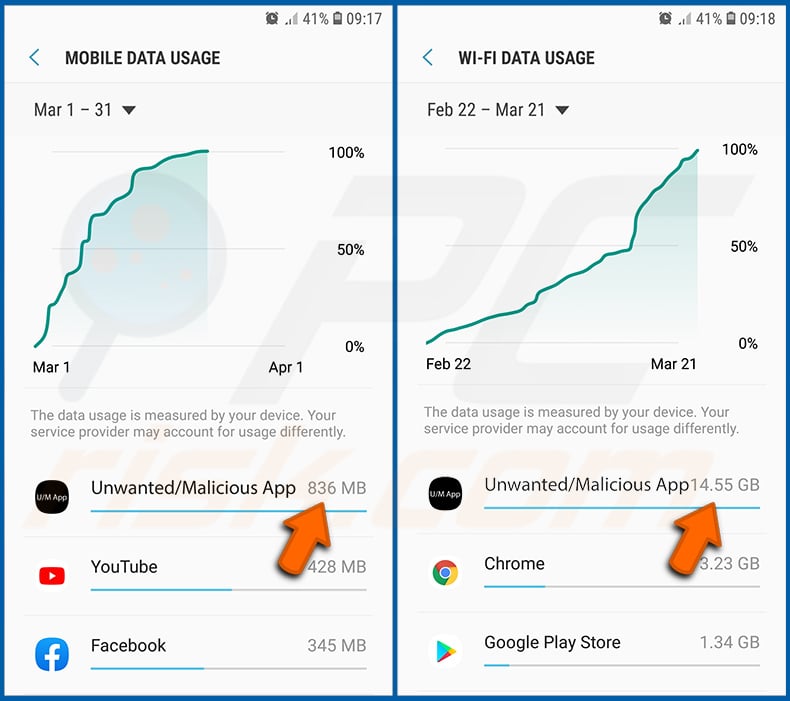
If you find an application that uses a lot of data even though you never use it, then we strongly advise you to uninstall it as soon as possible.
Install the latest software updates:
Keeping the software up-to-date is a good practice when it comes to device safety. The device manufacturers are continually releasing various security patches and Android updates in order to fix errors and bugs that can be abused by cyber criminals. An outdated system is way more vulnerable, which is why you should always be sure that your device's software is up-to-date.
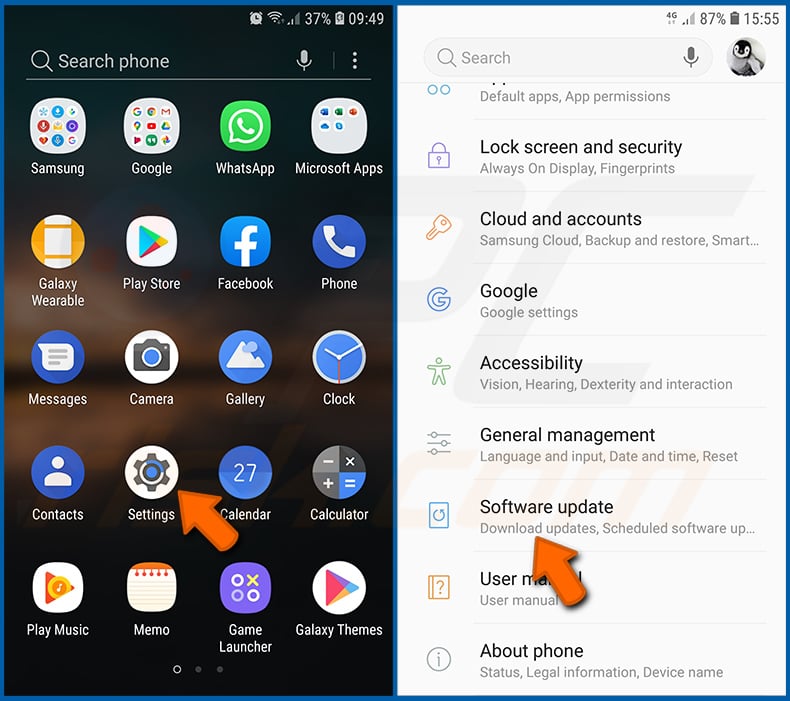
Go to "Settings", scroll down until you see "Software update" and tap it.
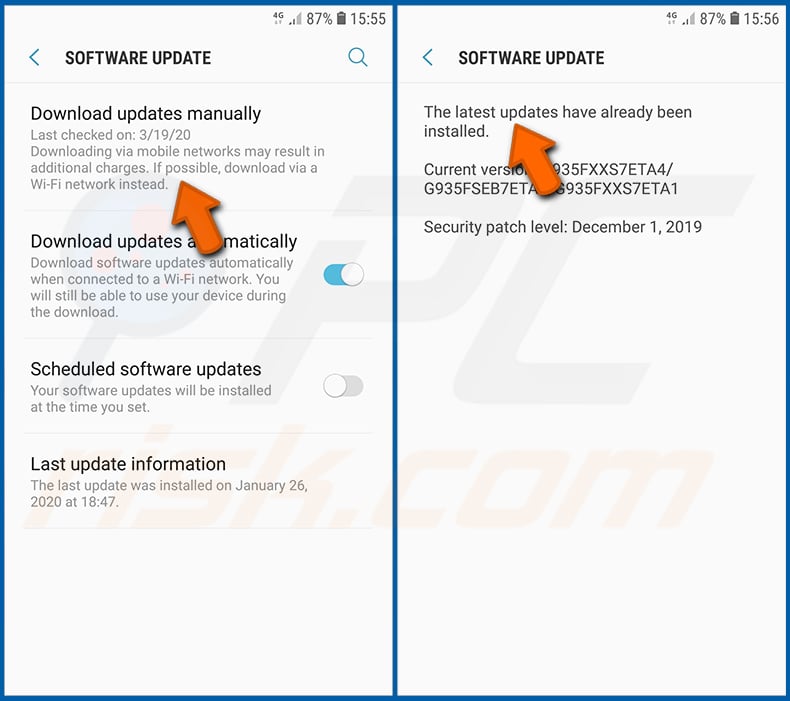
Tap "Download updates manually" and check if there are any updates available. If so, install them immediately. We also recommend to enable the "Download updates automatically" option - it will enable the system to notify you once an update is released and/or install it automatically.
Reset the system to its default state:
Performing a "Factory Reset" is a good way to remove all unwanted applications, restore system's settings to default and clean the device in general. However, you must keep in mind that all data within the device will be deleted, including photos, video/audio files, phone numbers (stored within the device, not the SIM card), SMS messages, and so forth. In other words, the device will be restored to its primal state.
You can also restore the basic system settings and/or simply network settings as well.
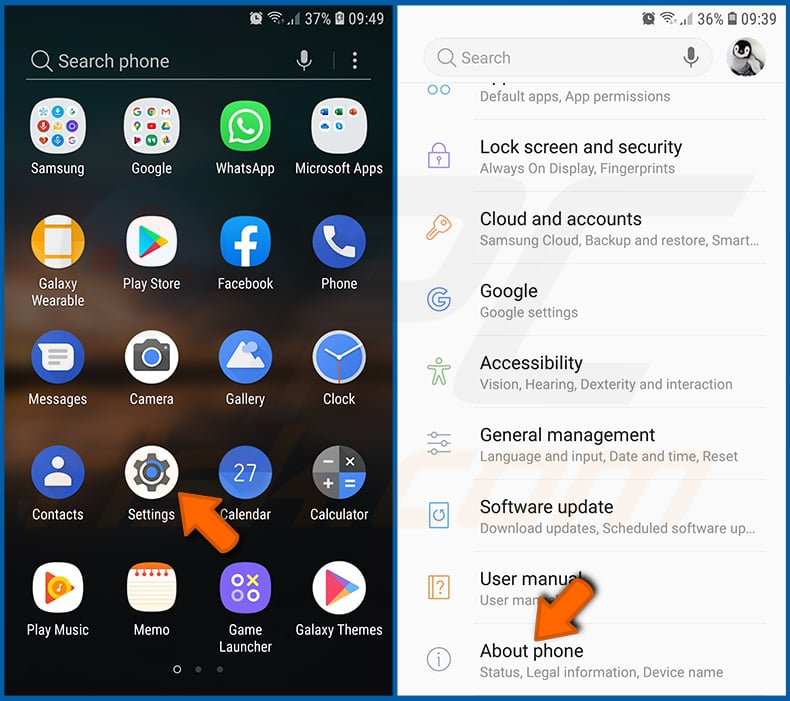
Go to "Settings", scroll down until you see "About phone" and tap it.
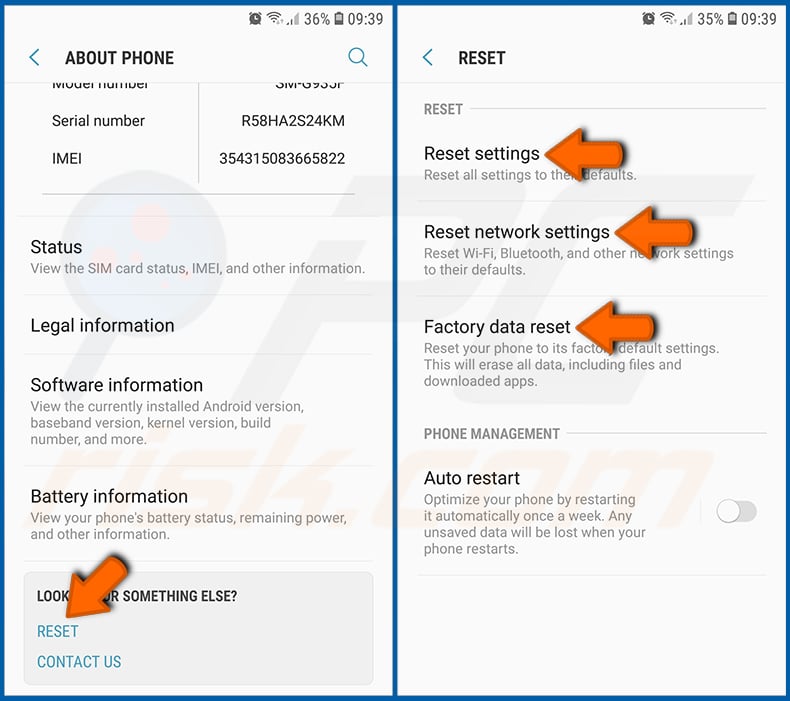
Scroll down until you see "Reset" and tap it. Now choose the action you want to perform:
"Reset settings" - restore all system settings to default;
"Reset network settings" - restore all network-related settings to default;
"Factory data reset" - reset the entire system and completely delete all stored data;
Disable applications that have administrator privileges:
If a malicious application gets administrator-level privileges it can seriously damage the system. To keep the device as safe as possible you should always check what apps have such privileges and disable the ones that shouldn't.
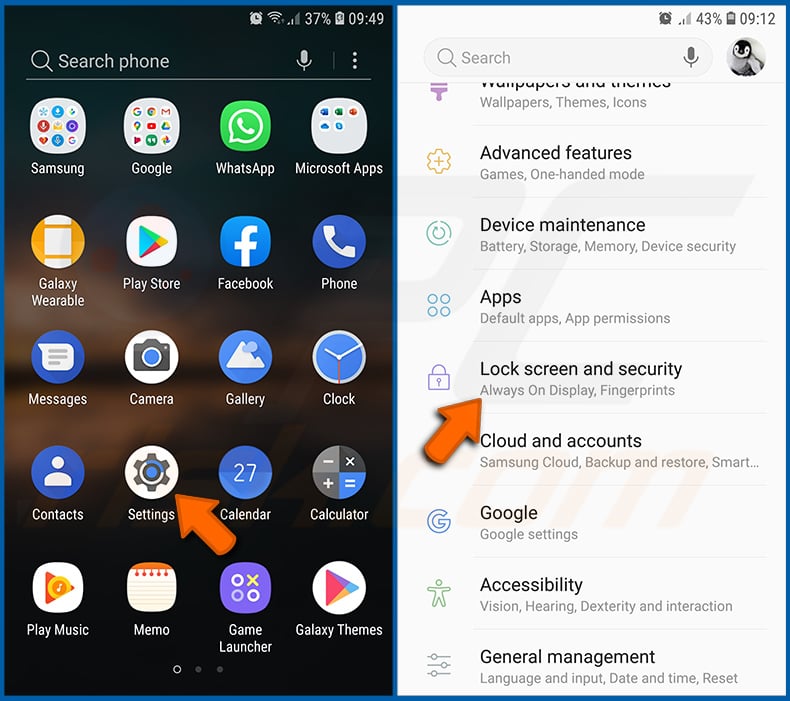
Go to "Settings", scroll down until you see "Lock screen and security" and tap it.
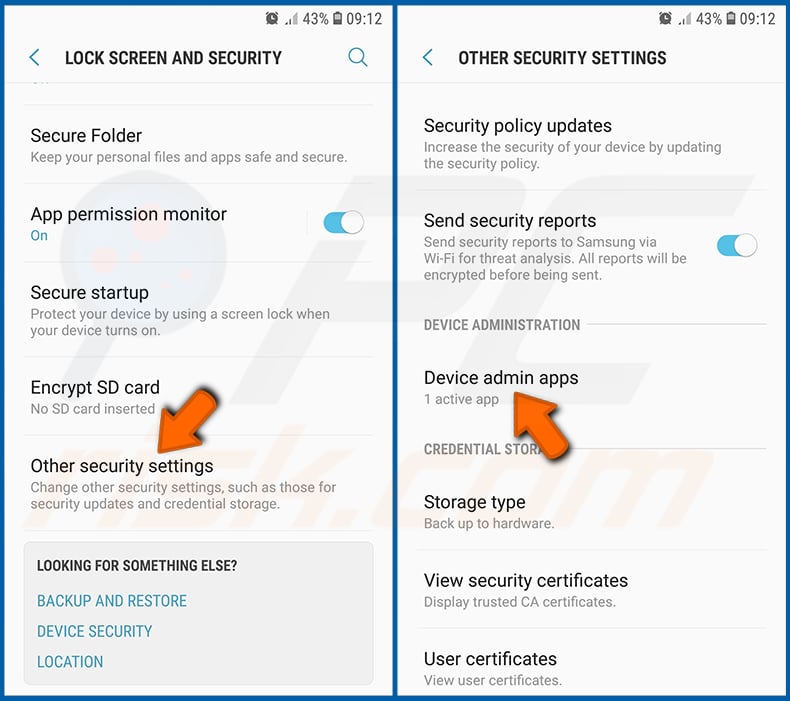
Scroll down until you see "Other security settings", tap it and then tap "Device admin apps".
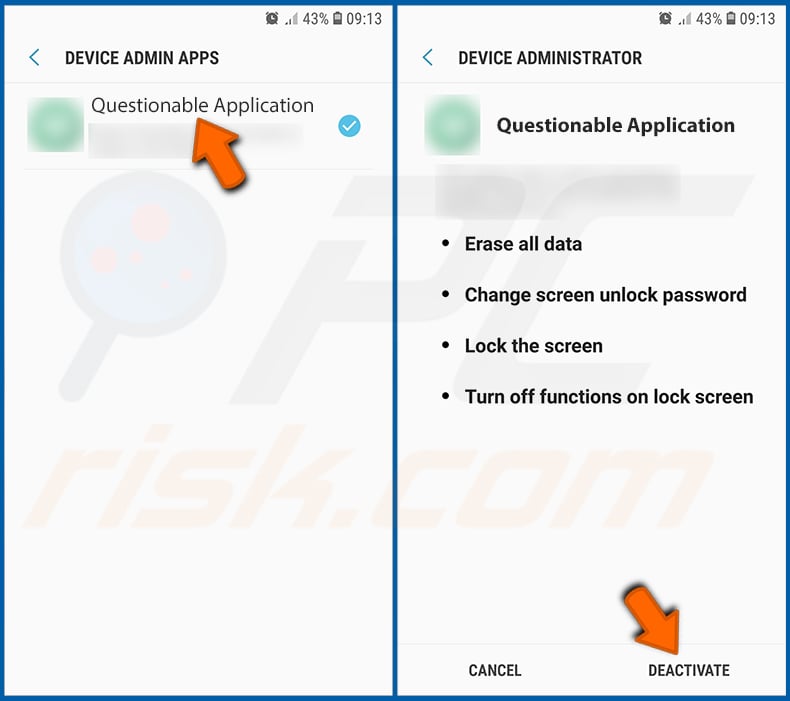
Identify applications that should not have administrator privileges, tap them and then tap "DEACTIVATE".
Frequently Asked Questions (FAQ)
My device is infected with BankBot malware, should I format my storage device to get rid of it?
Formatting the device will remove BankBot, but it will also erase all stored information. Alternatively, you can scan the device with a reliable antivirus app, such as Combo Cleaner, without taking drastic steps.
What are the biggest issues that malware can cause?
Malware may encrypt files, install additional malicious tools, give attackers remote access, steal personal details, damage systems, and ultimately cause identity theft, financial loss, data loss, and other problems.
What is the purpose of BankBot?
The purpose of BankBot is to gain full control of infected Android devices in order to steal sensitive information, such as banking credentials, cryptocurrency keys, contacts, SMS, and device data, and to perform unauthorized actions, including financial fraud, account takeover, and remote manipulation of apps and the device itself.
How did BankBot infiltrate my device?
Malware spreads mainly through sideloaded APKs from attacker-controlled sites, fake apps on third-party stores, malicious ads, and links in deceptive messages.
Will Combo Cleaner protect me from malware?
Combo Cleaner can detect and eliminate most known malware, but advanced threats may hide deep in the system, so users should run a full device scan to remove malware without leaving any of its components in the system.
Share:
 Facebook
 X.com
X.com
 LinkedIn
 Copy Link

Tomas Meskauskas
Expert security researcher, professional malware analyst
I am passionate about computer security and technology. I have an experience of over 10 years working in various companies related to computer technical issue solving and Internet security. I have been working as an author and editor for pcrisk.com since 2010. Follow me on Twitter and LinkedIn to stay informed about the latest online security threats.
PCrisk security portal is brought by a company RCS LT.
Joined forces of security researchers help educate computer users about the latest online security threats. More information about the company RCS LT.
Our malware removal guides are free. However, if you want to support us you can send us a donation.
DonatePCrisk security portal is brought by a company RCS LT.
Joined forces of security researchers help educate computer users about the latest online security threats. More information about the company RCS LT.
Our malware removal guides are free. However, if you want to support us you can send us a donation.
Donate
▼ Show Discussion