

Get free scan and check if your device is infected.
Remove it nowTo use full-featured product, you have to purchase a license for Combo Cleaner. Seven days free trial available. Combo Cleaner is owned and operated by RCS LT, the parent company of PCRisk.com.
What kind of malware is ChimeraWire?
ChimeraWire is a type of malware (a Trojan) that runs on Windows computers. It uses the functionality of open-source tools called zlsgo and Rod, which are normally used to automate actions on websites. This malware controls Chrome to simulate human browsing behavior, making websites appear more popular, while using advanced techniques to evade antivirus programs.

More about ChimeraWire
Once the ChimeraWire malware is executed on a computer, it downloads a file called "chrome-win.zip". Inside this file, a copy of the Google Chrome browser for Windows is placed. The website hosting the "chrome-win.zip" file also hosts archives with Chrome versions for other operating systems, such as Linux and macOS (and for different hardware platforms).
After downloading the browser, ChimeraWire attempts to add two extensions, "NopeCHA" and "Buster", to it. These tools are designed to bypass CAPTCHA tests automatically, and malware utilizes them in its malicious activities.
ChimeraWire then starts the browser in a special developer mode and keeps the window hidden, allowing its actions to run unnoticed. Once the browser is active, the malware opens a connection to a randomly chosen developer port using the WebSocket communication method.
At this stage, the malware contacts its command-and-control server to get instructions. The server sends back an encoded message that contains a JSON settings file. The settings file includes the tasks the malware should perform and the details needed for each one.
It specifies which search engine to use, such as Google or Bing, the search terms the malware should use to find and open the targeted sites It also sets the number of pages the malware should navigate in sequence, how often and where it should click on links, how long to wait for pages to load, and which websites to target.
To make its actions appear more authentic and avoid detection, the file includes instructions for taking gaps between sessions. Furthermore, ChimeraWire can simulate mouse clicks to appear as if a real person is browsing. It clicks on search results and opens links in new tabs.
After searching for the websites listed in its settings, it gathers all the links on the page, changes their order to avoid bot detection, and checks which ones match its targets. If it finds enough good matches, it sorts them by relevance and clicks the best ones.
If not, it switches to a model that imitates human randomness, choosing how many links to open based on probabilities. Each time it opens a link, it moves between tabs as needed and repeats this process until it reaches the click limit set in its instructions.
| Name | ChimeraWire clicker |
| Threat Type | Trojan |
| Detection Names | AhnLab-V3 (Malware/Win.Generic.C5785589), CTX (Exe.trojan.artemis), ESET-NOD32 (WinGo/Packed.Obfuscated.D Suspicious Application), Kingsoft (Win32.Troj.gracing.v), Symantec (ML.Attribute.HighConfidence), Full List (VirusTotal) |
| Symptoms | Trojans are designed to stealthily infiltrate the victim's computer and remain silent, and thus no particular symptoms are clearly visible on an infected machine. |
| distribution methods | Malicious downloaders hosted on websites operated by cybercriminals. |
| Damage | Information theft, possible monetary loss and identity theft, high CPU or other hardware usage, and similar issues. |
| Malware Removal (Windows) |
To eliminate possible malware infections, scan your computer with legitimate antivirus software. Our security researchers recommend using Combo Cleaner. Download Combo CleanerTo use full-featured product, you have to purchase a license for Combo Cleaner. 7 days free trial available. Combo Cleaner is owned and operated by RCS LT, the parent company of PCRisk.com. |
Conclusion
Generally, ChimeraWire is malware designed to mimic real user behavior. Using its settings, the malware can perform realistic browsing actions, such as searching, opening pages, and clicking links, to artificially boost the visibility and ranking of targeted websites. It is essential to note that cybercriminals may utilize it to complete online forms, participate in advertising surveys, or even capture content on websites and screenshots for data collection purposes.
How did ChimeraWire infiltrate my computer?
ChimeraWire is delivered through malware downloaders. In one known delivery method, cybercriminals use a downloader called "Python.Downloader.208", which may be placed inside a ZIP archive hosted on an attacker's server. After being executed, it extracts several files and attempts to obtain administrator privileges.
To achieve this, the downloader exploits a Windows vulnerability known as DLL Search Order Hijacking, enabling it to load a malicious library in place of a legitimate one. Once elevated privileges are gained, it retrieves another ZIP archive from a malicious remote server. This archive contains the ChimeraWire malware.
A second known infection method involves a different downloader named "Trojan.DownLoader48.61444", which follows a similar approach. It also leverages vulnerabilities to escalate privileges and then downloads and plants the ChimeraWire trojan.
How to avoid installation of malware?
Keep your operating system and applications up to date at all times, and be cautious with files or links in unsolicited emails from unknown sources. Only download software from trusted sources or official app stores, and steer clear of pirated programs, cracks, or key generators.
Decline notifications from unfamiliar websites, and avoid clicking on pop-ups, ads, buttons, links, or any suspicious content online. Additionally, use a reliable security program and perform regular system scans to help safeguard your computer.
If you believe that your computer is already infected, we recommend running a scan with Combo Cleaner Antivirus for Windows to automatically eliminate infiltrated malware.
Examples of websites the trojan was instructed to interact with based on commands from its C2 server (source: drweb.com):



Instant automatic malware removal:
Manual threat removal might be a lengthy and complicated process that requires advanced IT skills. Combo Cleaner is a professional automatic malware removal tool that is recommended to get rid of malware. Download it by clicking the button below:
DOWNLOAD Combo CleanerBy downloading any software listed on this website you agree to our Privacy Policy and Terms of Use. To use full-featured product, you have to purchase a license for Combo Cleaner. 7 days free trial available. Combo Cleaner is owned and operated by RCS LT, the parent company of PCRisk.com.
Quick menu:
- What is ChimeraWire?
- STEP 1. Manual removal of ChimeraWire malware.
- STEP 2. Check if your computer is clean.
How to remove malware manually?
Manual malware removal is a complicated task - usually it is best to allow antivirus or anti-malware programs to do this automatically. To remove this malware we recommend using Combo Cleaner Antivirus for Windows.
If you wish to remove malware manually, the first step is to identify the name of the malware that you are trying to remove. Here is an example of a suspicious program running on a user's computer:
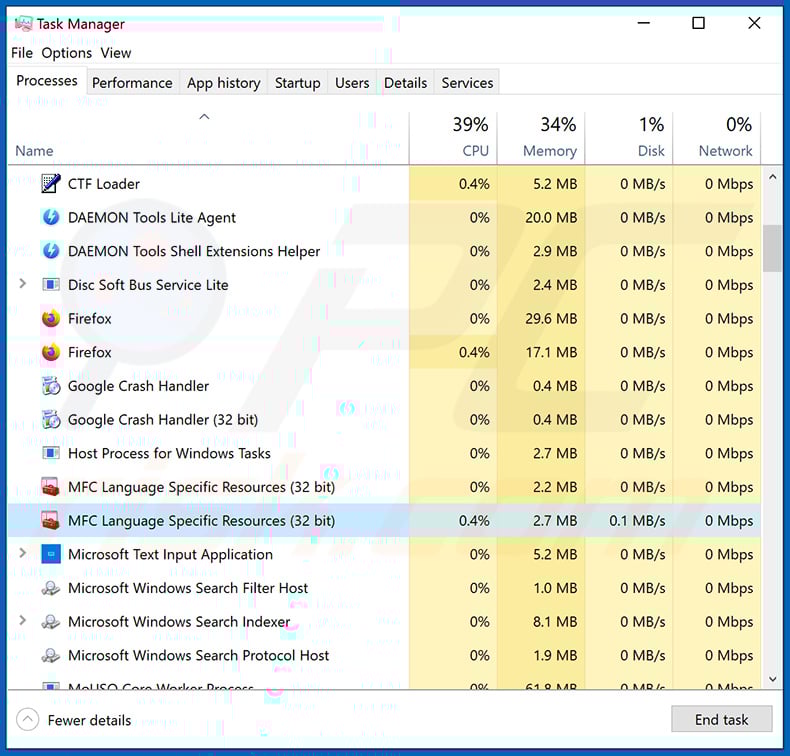
If you checked the list of programs running on your computer, for example, using task manager, and identified a program that looks suspicious, you should continue with these steps:
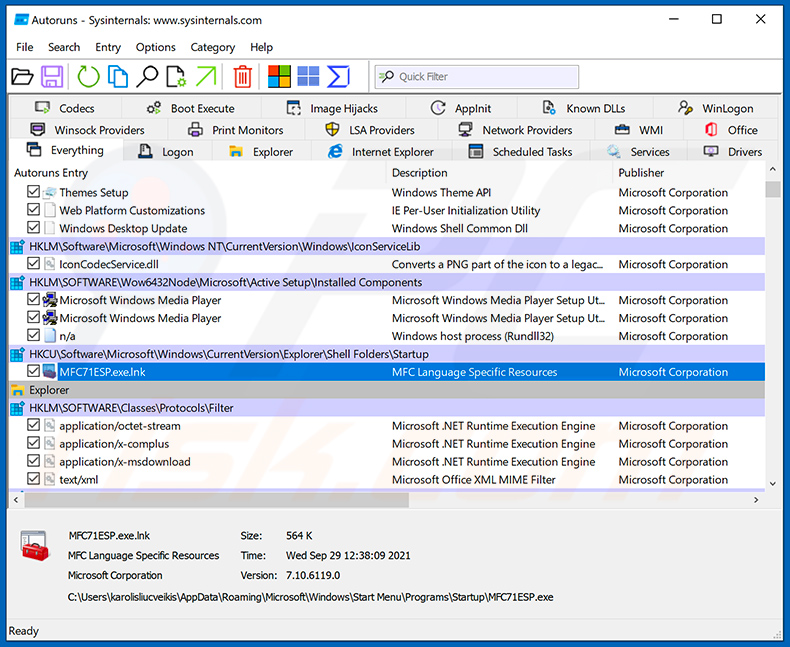
 Download a program called Autoruns. This program shows auto-start applications, Registry, and file system locations:
 Restart your computer into Safe Mode:
Windows XP and Windows 7 users: Start your computer in Safe Mode. Click Start, click Shut Down, click Restart, click OK. During your computer start process, press the F8 key on your keyboard multiple times until you see the Windows Advanced Option menu, and then select Safe Mode with Networking from the list.
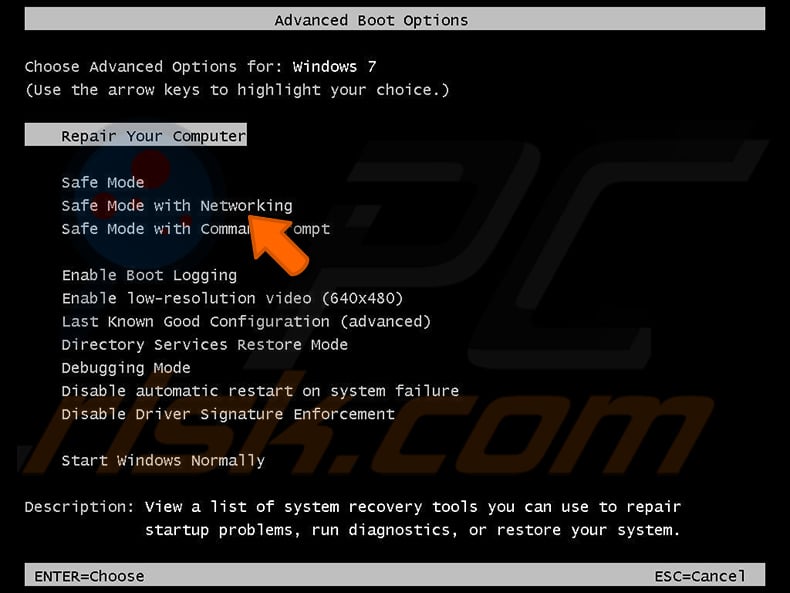
Video showing how to start Windows 7 in "Safe Mode with Networking":
Windows 8 users: Start Windows 8 is Safe Mode with Networking - Go to Windows 8 Start Screen, type Advanced, in the search results select Settings. Click Advanced startup options, in the opened "General PC Settings" window, select Advanced startup.
Click the "Restart now" button. Your computer will now restart into the "Advanced Startup options menu". Click the "Troubleshoot" button, and then click the "Advanced options" button. In the advanced option screen, click "Startup settings".
Click the "Restart" button. Your PC will restart into the Startup Settings screen. Press F5 to boot in Safe Mode with Networking.
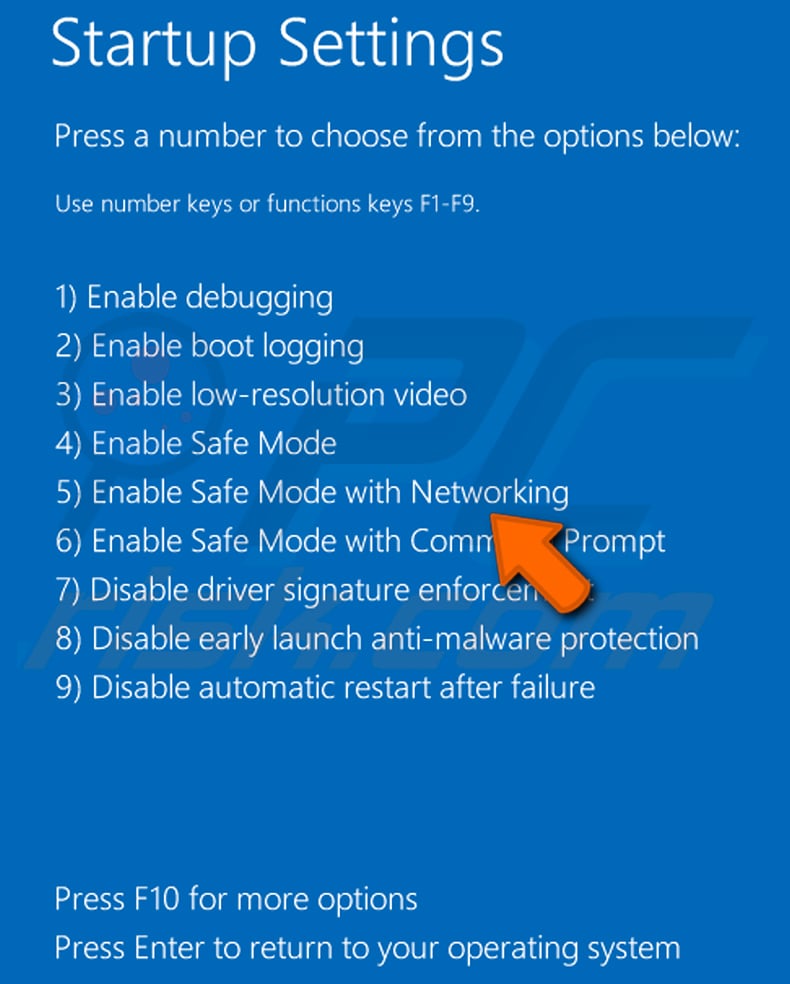
Video showing how to start Windows 8 in "Safe Mode with Networking":
Windows 10 users: Click the Windows logo and select the Power icon. In the opened menu click "Restart" while holding "Shift" button on your keyboard. In the "choose an option" window click on the "Troubleshoot", next select "Advanced options".
In the advanced options menu select "Startup Settings" and click on the "Restart" button. In the following window you should click the "F5" button on your keyboard. This will restart your operating system in safe mode with networking.
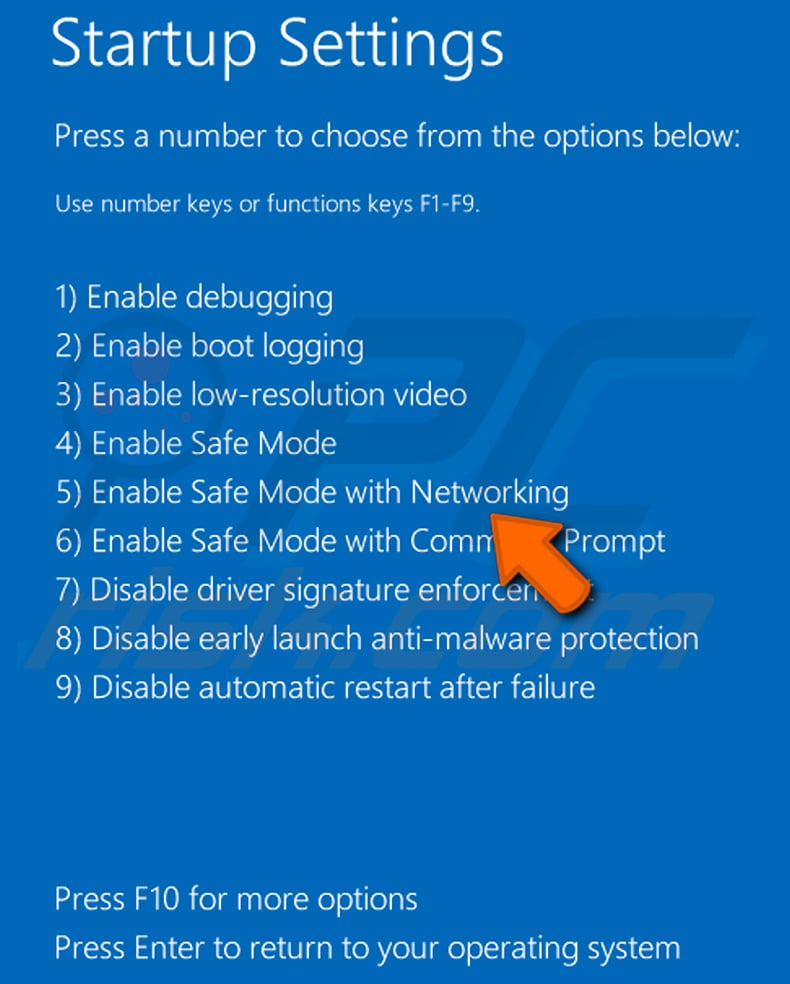
Video showing how to start Windows 10 in "Safe Mode with Networking":
 Extract the downloaded archive and run the Autoruns.exe file.
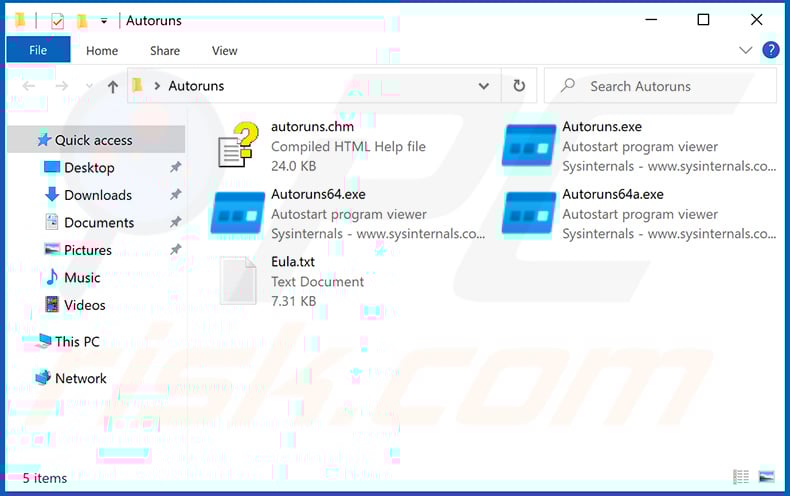
 In the Autoruns application, click "Options" at the top and uncheck "Hide Empty Locations" and "Hide Windows Entries" options. After this procedure, click the "Refresh" icon.
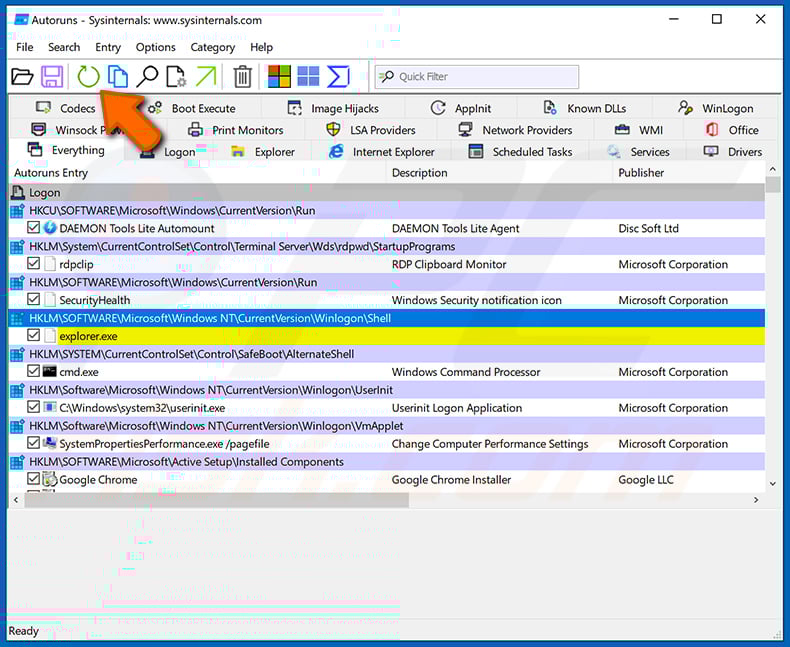
 Check the list provided by the Autoruns application and locate the malware file that you want to eliminate.
You should write down its full path and name. Note that some malware hides process names under legitimate Windows process names. At this stage, it is very important to avoid removing system files. After you locate the suspicious program you wish to remove, right click your mouse over its name and choose "Delete".
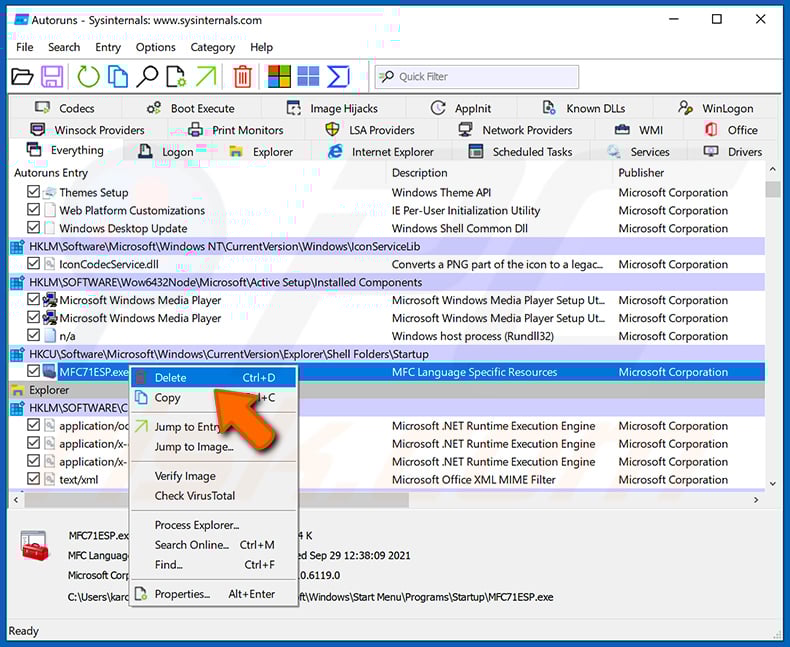
After removing the malware through the Autoruns application (this ensures that the malware will not run automatically on the next system startup), you should search for the malware name on your computer. Be sure to enable hidden files and folders before proceeding. If you find the filename of the malware, be sure to remove it.
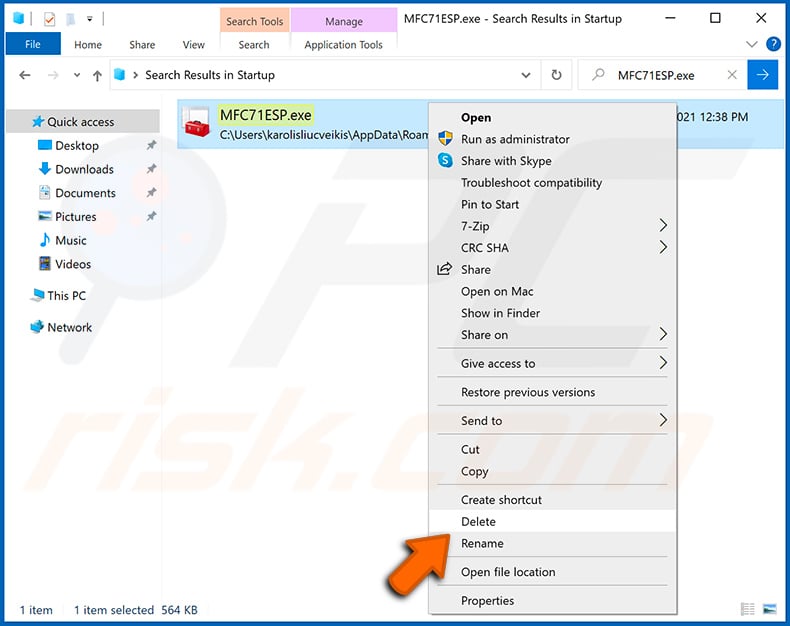
Reboot your computer in normal mode. Following these steps should remove any malware from your computer. Note that manual threat removal requires advanced computer skills. If you do not have these skills, leave malware removal to antivirus and anti-malware programs.
These steps might not work with advanced malware infections. As always it is best to prevent infection than try to remove malware later. To keep your computer safe, install the latest operating system updates and use antivirus software. To be sure your computer is free of malware infections, we recommend scanning it with Combo Cleaner Antivirus for Windows.
Frequently Asked Questions (FAQ)
My computer is infected with ChimeraWire malware, should I format my storage device to get rid of it?
Fully erasing a storage device is generally unnecessary. Malware like ChimeraWire can typically be removed using reputable antivirus or anti-malware software, such as Combo Cleaner.
What are the biggest issues that malware can cause?
Depending on its type, malware can slow down the infected system, interfere with operations, inject other malware, steal sensitive data, encrypt and delete files, or allow cybercriminals to control an infected device remotely.
What is the purpose of ChimeraWire?
ChimeraWire's main purpose is to imitate real user browsing behavior in order to artificially boost the visibility and ranking of specific websites. ChimeraWire can also be adapted for data collection, form submission, screenshot capturing, and other tasks.
How did ChimeraWire infiltrate my computer?
ChimeraWire likely entered your device through a malicious downloader. Attackers use malware downloaders like which often arrive in ZIP files. Once run, they exploit Windows vulnerabilities to gain high privileges and then download and plant the ChimeraWire malware from a remote server.
Will Combo Cleaner protect me from malware?
Yes, Combo Cleaner can detect and remove nearly all known types of malware. However, advanced malware often conceals itself deep within the system, so it is important to perform a full system scan.
Share:
 Facebook
 X.com
X.com
 LinkedIn
 Copy Link

Tomas Meskauskas
Expert security researcher, professional malware analyst
I am passionate about computer security and technology. I have an experience of over 10 years working in various companies related to computer technical issue solving and Internet security. I have been working as an author and editor for pcrisk.com since 2010. Follow me on Twitter and LinkedIn to stay informed about the latest online security threats.
PCrisk security portal is brought by a company RCS LT.
Joined forces of security researchers help educate computer users about the latest online security threats. More information about the company RCS LT.
Our malware removal guides are free. However, if you want to support us you can send us a donation.
DonatePCrisk security portal is brought by a company RCS LT.
Joined forces of security researchers help educate computer users about the latest online security threats. More information about the company RCS LT.
Our malware removal guides are free. However, if you want to support us you can send us a donation.
Donate
▼ Show Discussion