

Get free scan and check if your device is infected.
Remove it nowTo use full-featured product, you have to purchase a license for Combo Cleaner. Seven days free trial available. Combo Cleaner is owned and operated by RCS LT, the parent company of PCRisk.com.
What kind of malware is ZeroDayRAT?
ZeroDayRAT is a remote access trojan (RAT) sold through Telegram channels. The RAT alows cybercriminals to control infected devices remotely. It targets various versions of both Android and iOS systems. ZeroDayRAT supports activities such as live monitoring, data extraction, and financial exploitation.
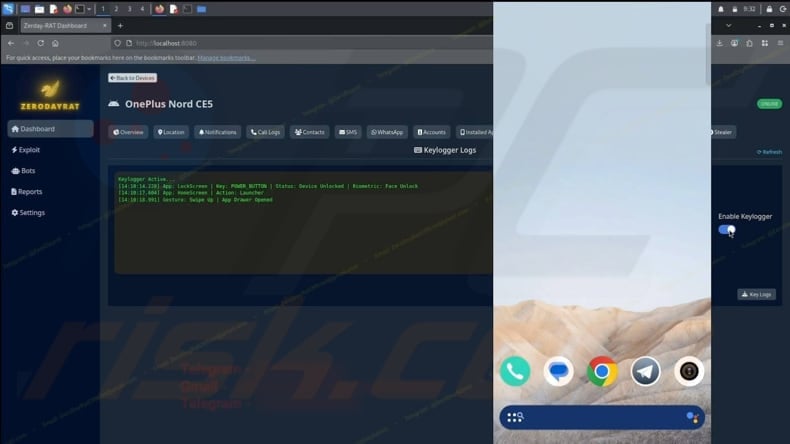
ZeroDayRAT in detail
ZeroDayRAT can provide information about the infected device, including model, operating system, battery level, location (country), and lock status. Threat actors can also view SIM and carrier data, including phone numbers on dual-SIM devices. ZeroDayRAT's panel also shows how long specific apps (e.g., messaging, cryptocurrency-related, or banking apps) are used.
Furthermore, the RAT can collect GPS coordinates, allowing cybercriminals to see both the victim's current location and location history. The malware can also capture and log incoming notifications, including the app name, message title, content preview, and timestamp.
Alerts from apps such as WhatsApp, Instagram, Telegram, and YouTube can be viewed directly from the control panel. This allows the RAT to provide information about messages, calls, account activity, and system events without opening apps on the device.
Also, ZeroDayRAT can list every account registered on the device, including services such as Amazon, Facebook, Flipkart, Google, Instagram, Paytm, PhonePe, Spotify, Telegram, and WhatsApp, along with the associated email addresses or usernames. This makes it easier to make password resets, intercept verification codes, or craft phishing messages.
Moreover, the RAT can read all received SMS, search through messages, and monitor newly received messages. This capability can be used to steal one-time passcodes (OTP) from various platforms. ZeroDayRAT also allows threat actors to send SMS messages from the victim's number.
In addition to the aforementioned capabilities, the malware can turn on the phone's front or back camera, activate the microphone, and record the screen in real time. It also includes a keylogger that records everything typed or tapped on the device, including passwords and messages.
ZeroDayRAT also includes a crypto module that checks for installed wallet apps such as Binance, Coinbase, MetaMask, and Trust Wallet, and records wallet details. It can also monitor the clipboard and replace a copied wallet address with the attacker's address.
Another module the RAT has focuses on finance apps and payment services such as Apple Pay, Google Pay, PayPal, and PhonePe. It uses fake login screens (overlays) placed over legitimate apps to trick victims into entering their credentials.
| Name | ZeroDayRAT remote access trojan |
| Threat Type | Android malware, Remote Access Trojan |
| Symptoms | The device is running slow, system settings are modified without user's permission, questionable applications appear, data and battery usage is increased significantly, browsers redirect to questionable websites, intrusive advertisements are delivered. |
| Distribution methods | Deceptive texts, messages on Telegram or WhatsApp, fraudulent emails, unofficial app stores. |
| Damage | Stolen personal information (private messages, logins/passwords, etc.), decreased device performance, battery is drained quickly, decreased Internet speed, huge data losses, monetary losses, stolen identity. |
| Malware Removal (Windows) |
To eliminate possible malware infections, scan your computer with legitimate antivirus software. Our security researchers recommend using Combo Cleaner. Download Combo CleanerTo use full-featured product, you have to purchase a license for Combo Cleaner. 7 days free trial available. Combo Cleaner is owned and operated by RCS LT, the parent company of PCRisk.com. |
Conclusion
Overall, ZeroDayRAT lets attackers see almost everything on an infected device, including messages, accounts, location, and how the device is used. Threat actors can spy on the victim, steal passwords and verification codes, and access both banking and cryptocurrency apps.
Victims of such attacks can experience issues like monetary loss, identity theft, loss of access to various personal accounts, and other problems. Thus, if ZeroDayRAT is detected on a device, it should be removed immediately. More examples of Android malware are Arsink, GhostChat, and Phantom.
How did ZeroDayRAT infiltrate my device?
Cybercriminals distribute ZeroDayRAT by tricking users into running an infected app. They send fraudulent text messages that contain a link to a supposedly legitimate application. Once installed, the malicious app deploys ZeroDayRAT.
Other delivery methods include deceptive emails, unofficial/third-party app stores, or malicious links shared through messaging platforms like WhatsApp and Telegram. In each case, the infection occurs when users execute malware themselves.
How to avoid installation of malware?
Be cautious when browsing the internet - avoid clicking suspicious ads, pop-ups, or links, especially on untrusted websites, and deny notification requests from questionable pages. Treat unexpected emails with care, particularly those containing attachments or links, and do not open anything that seems unusual or suspicious.
Always get apps from official websites or trusted app stores. Keep your operating system and applications up to date and use reputable security software to perform regular scans and remove potential threats.
Quick menu:
- Introduction
- How to delete browsing history from the Chrome web browser?
- How to disable browser notifications in the Chrome web browser?
- How to reset the Chrome web browser?
- How to delete browsing history from the Firefox web browser?
- How to disable browser notifications in the Firefox web browser?
- How to reset the Firefox web browser?
- How to uninstall potentially unwanted and/or malicious applications?
- How to boot the Android device in "Safe Mode"?
- How to check the battery usage of various applications?
- How to check the data usage of various applications?
- How to install the latest software updates?
- How to reset the system to its default state?
- How to disable applications that have administrator privileges?
Delete browsing history from the Chrome web browser:
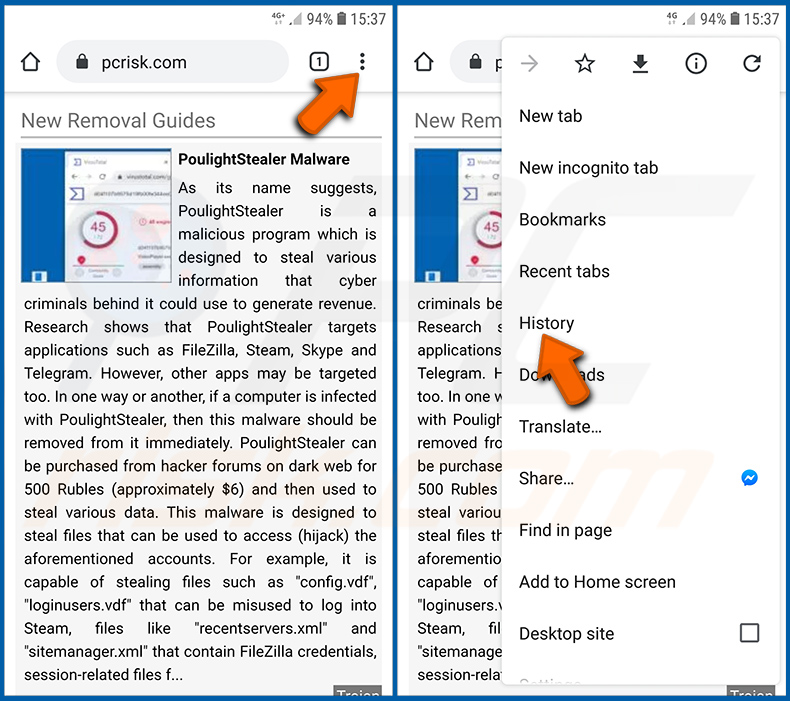
Tap the "Menu" button (three dots on the right-upper corner of the screen) and select "History" in the opened dropdown menu.
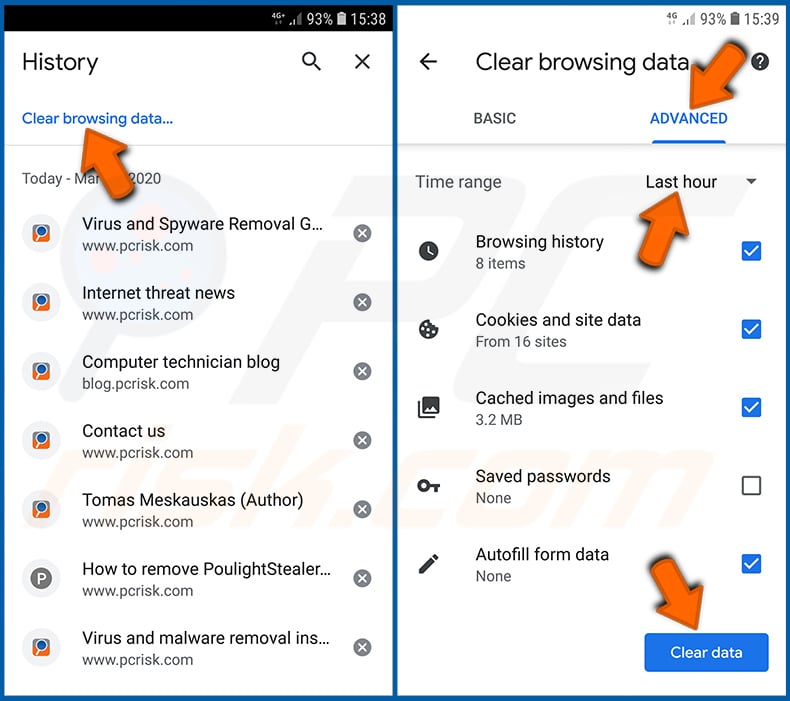
Tap "Clear browsing data", select "ADVANCED" tab, choose the time range and data types you want to delete and tap "Clear data".
Disable browser notifications in the Chrome web browser:
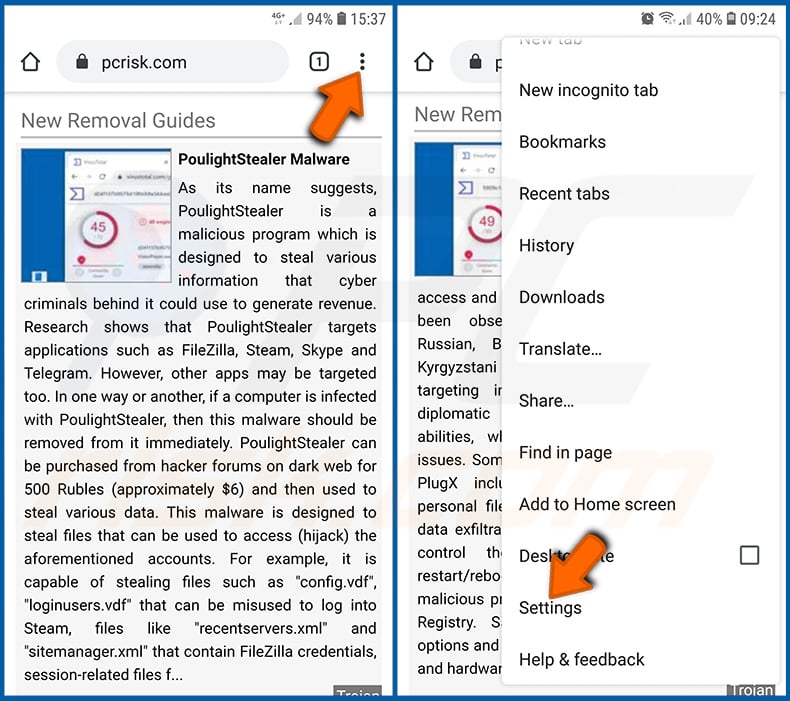
Tap the "Menu" button (three dots on the right-upper corner of the screen) and select "Settings" in the opened dropdown menu.
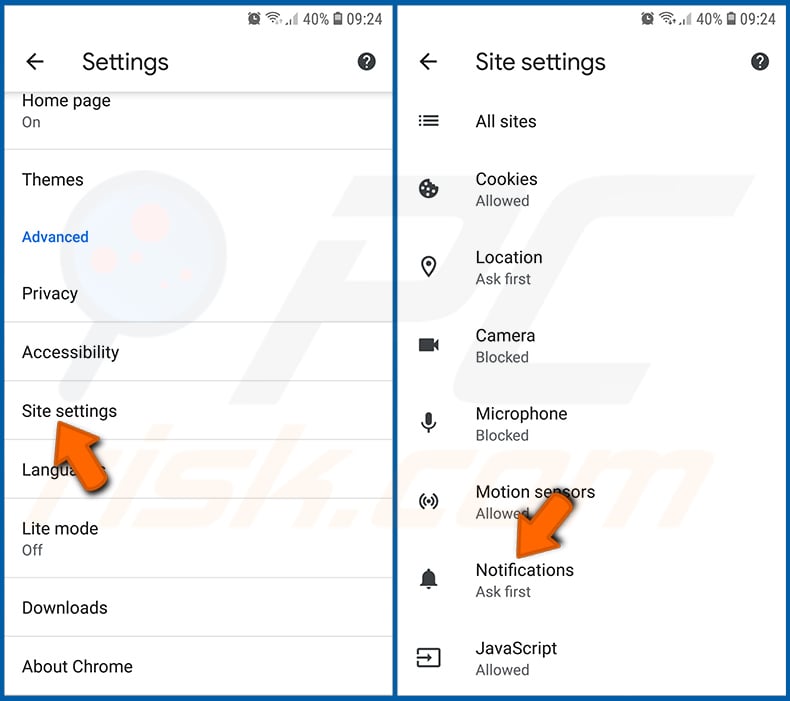
Scroll down until you see "Site settings" option and tap it. Scroll down until you see "Notifications" option and tap it.
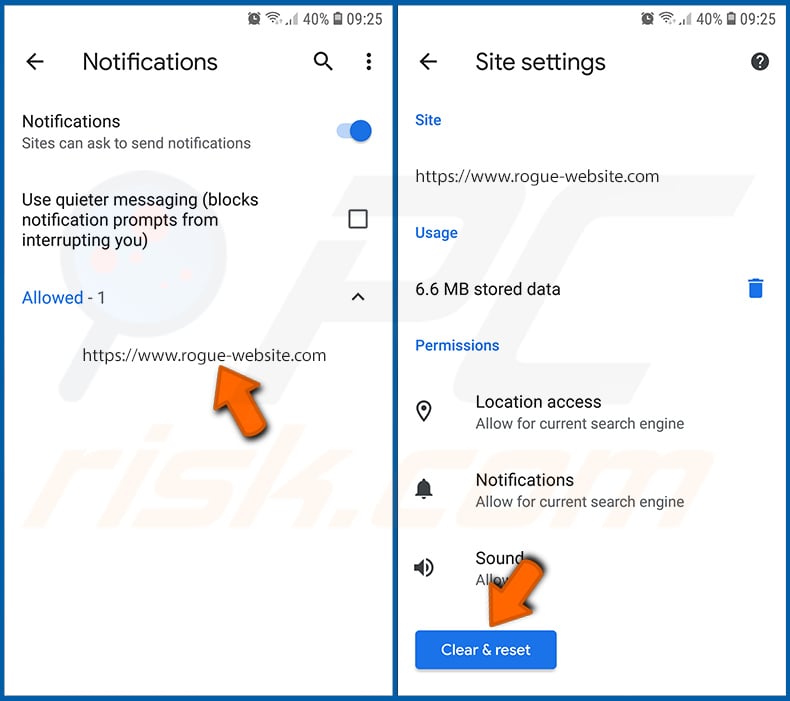
Find the websites that deliver browser notifications, tap on them and click "Clear & reset". This will remove permissions granted for these websites to deliver notifications. However, once you visit the same site again, it may ask for a permission again. You can choose whether to give these permissions or not (if you choose to decline the website will go to "Blocked" section and will no longer ask you for the permission).
Reset the Chrome web browser:
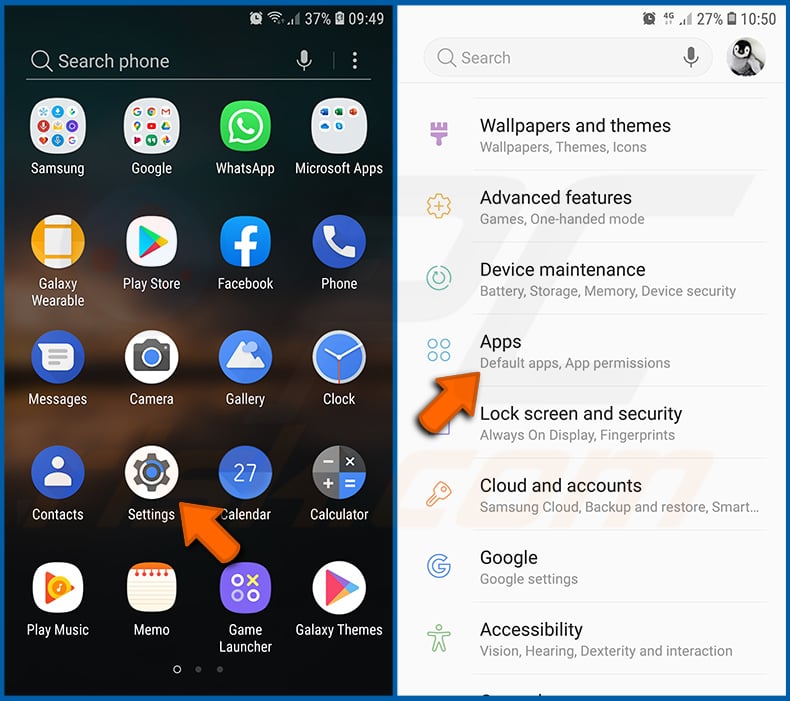
Go to "Settings", scroll down until you see "Apps" and tap it.
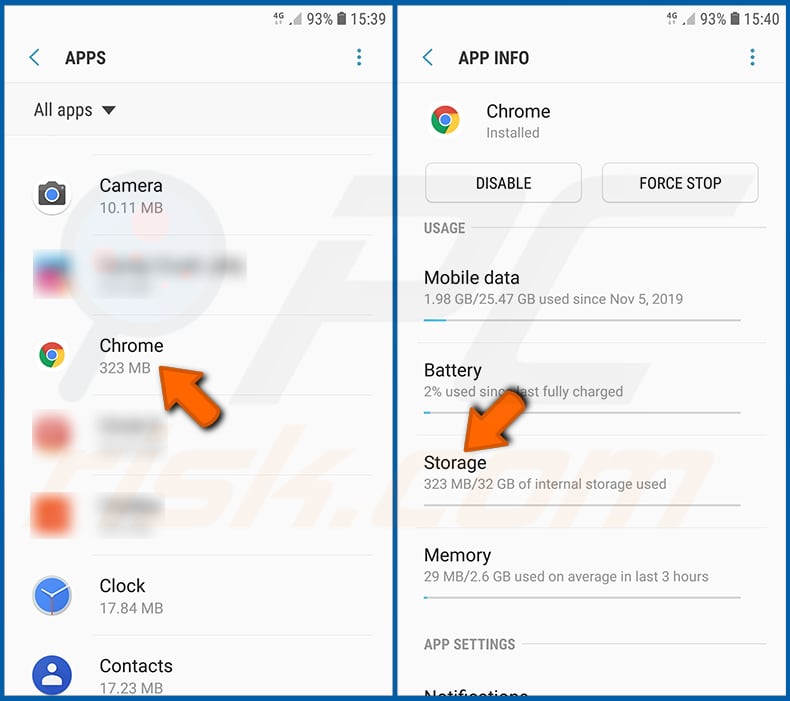
Scroll down until you find "Chrome" application, select it and tap "Storage" option.
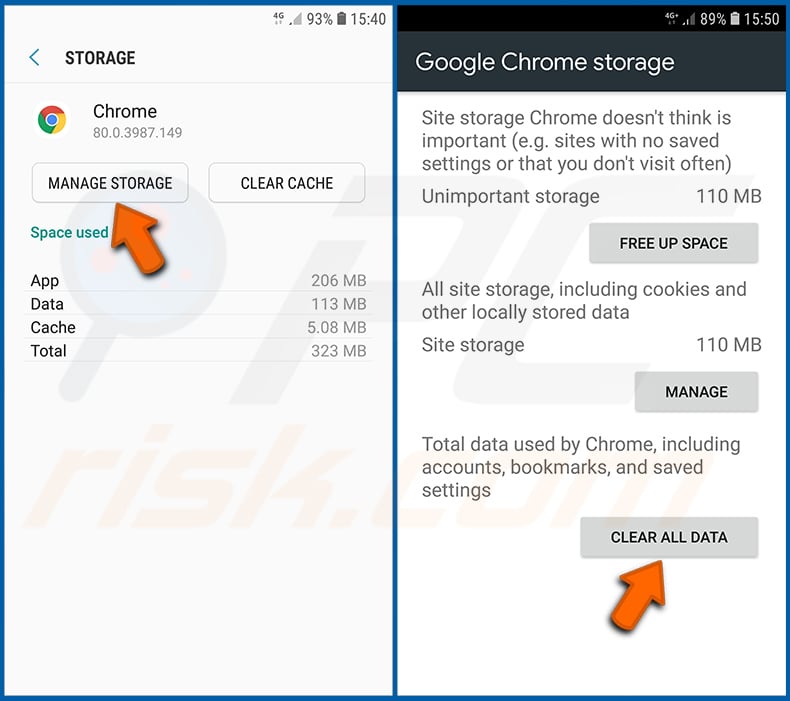
Tap "MANAGE STORAGE", then "CLEAR ALL DATA" and confirm the action by taping "OK". Note that resetting the browser will eliminate all data stored within. This means that all saved logins/passwords, browsing history, non-default settings and other data will be deleted. You will also have to re-login into all websites as well.
Delete browsing history from the Firefox web browser:
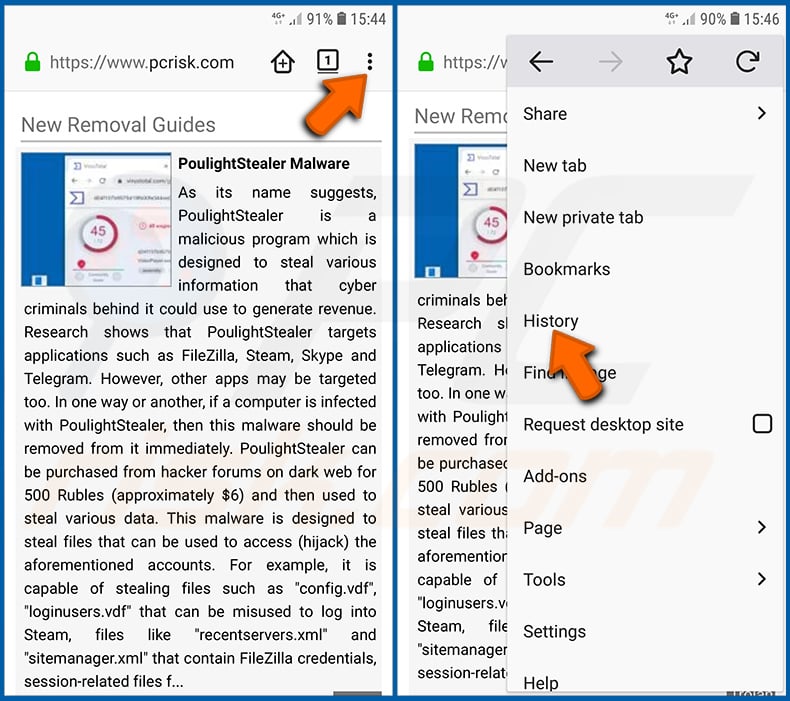
Tap the "Menu" button (three dots on the right-upper corner of the screen) and select "History" in the opened dropdown menu.
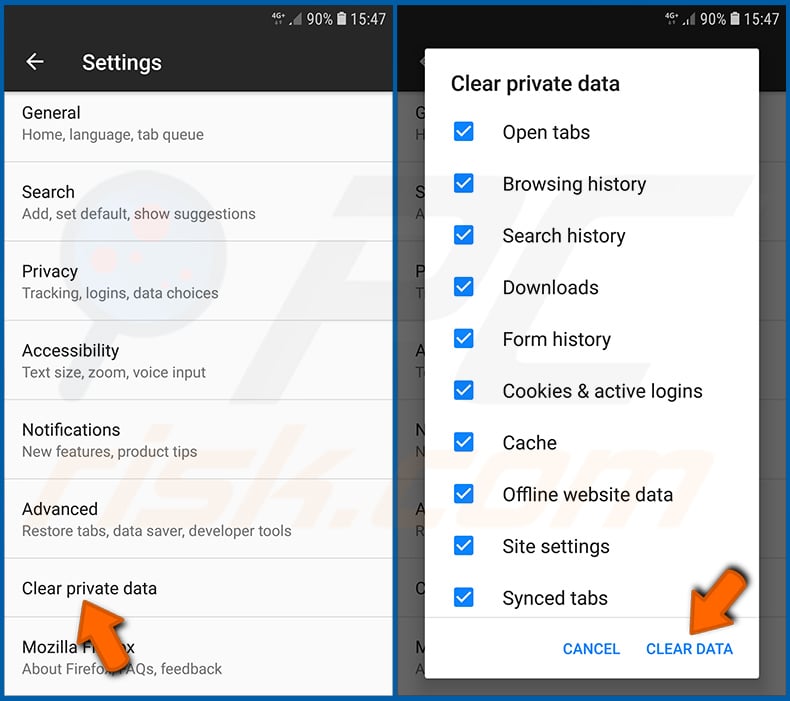
Scroll down until you see "Clear private data" and tap it. Select data types you want to remove and tap "CLEAR DATA".
Disable browser notifications in the Firefox web browser:
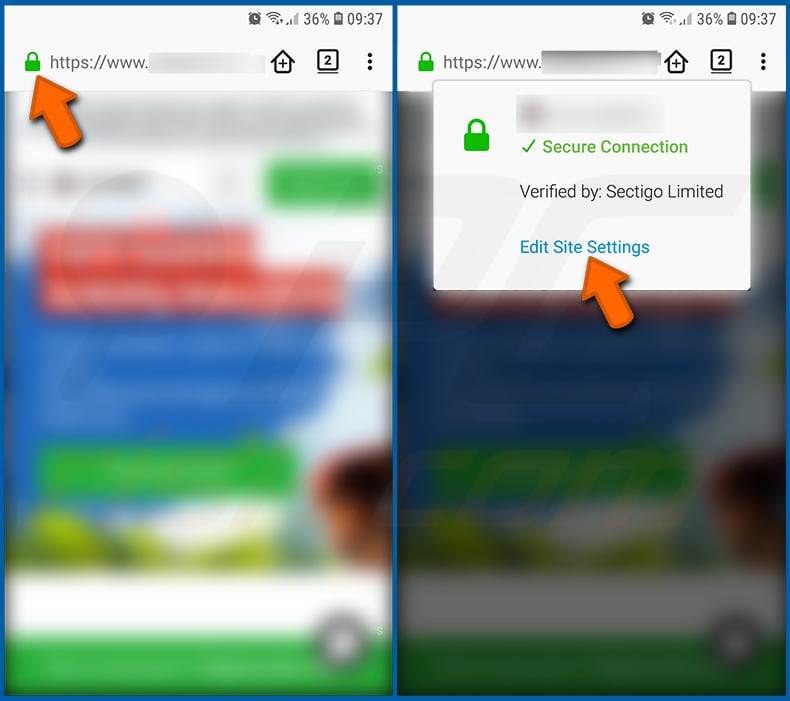
Visit the website that is delivering browser notifications, tap the icon displayed on the left of URL bar (the icon will not necessarily be a "Lock") and select "Edit Site Settings".
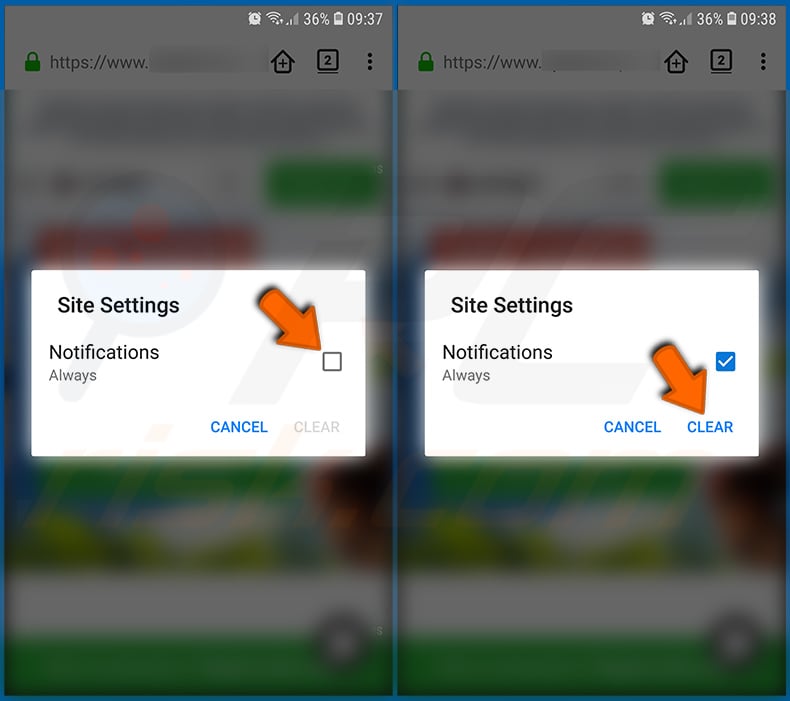
In the opened pop-up opt-in the "Notifications" option and tap "CLEAR".
Reset the Firefox web browser:
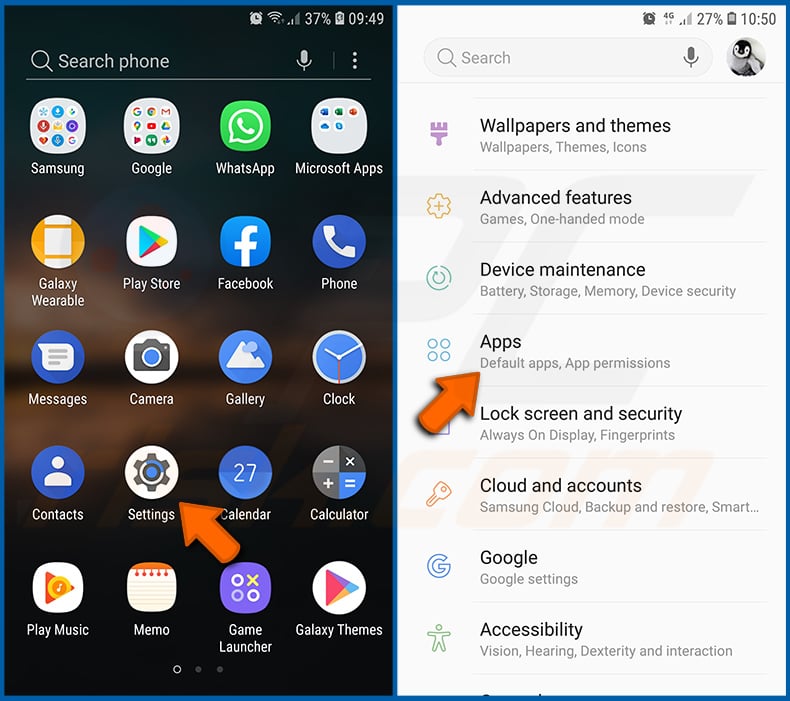
Go to "Settings", scroll down until you see "Apps" and tap it.
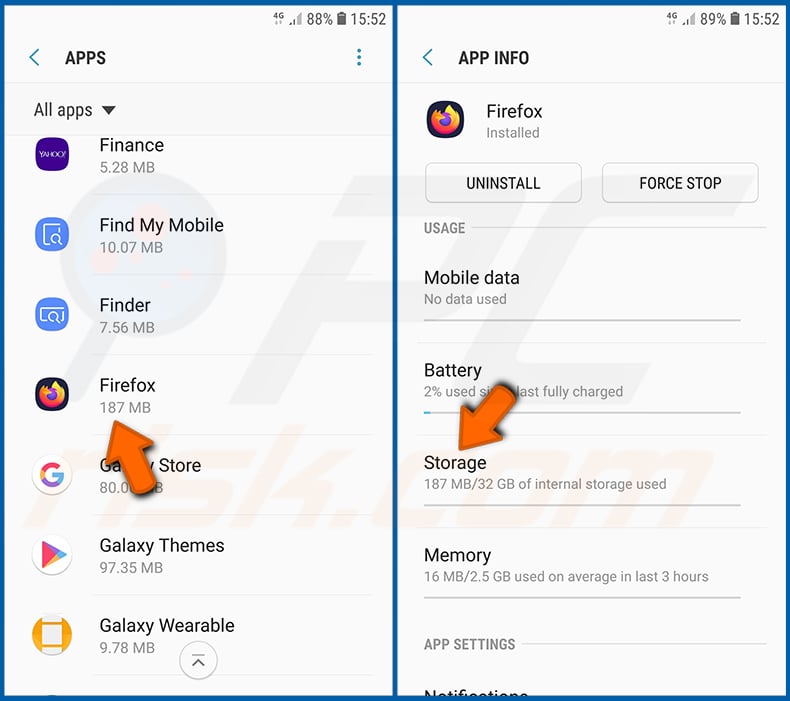
Scroll down until you find "Firefox" application, select it and tap "Storage" option.
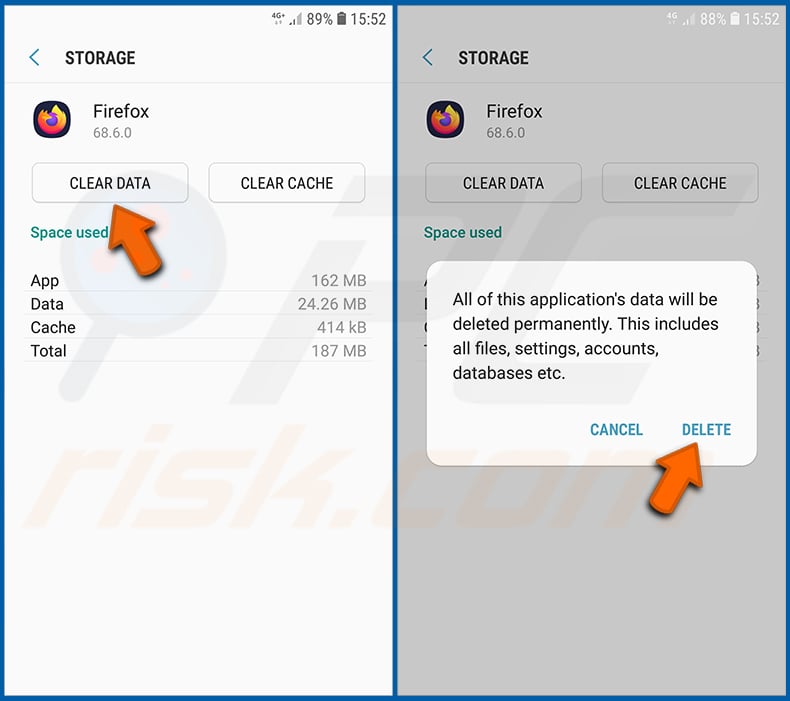
Tap "CLEAR DATA" and confirm the action by taping "DELETE". Note that resetting the browser will eliminate all data stored within. This means that all saved logins/passwords, browsing history, non-default settings and other data will be deleted. You will also have to re-login into all websites as well.
Uninstall potentially unwanted and/or malicious applications:
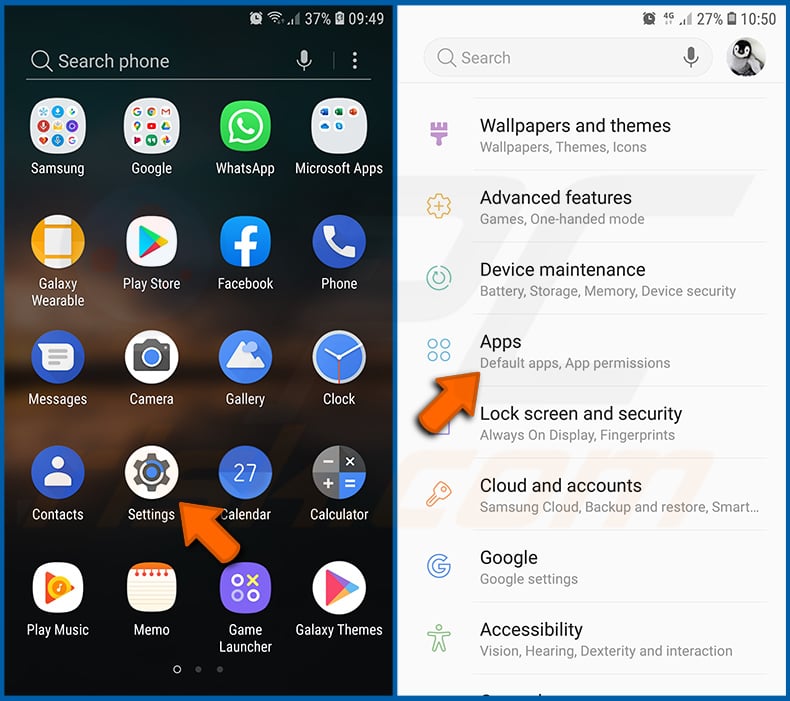
Go to "Settings", scroll down until you see "Apps" and tap it.
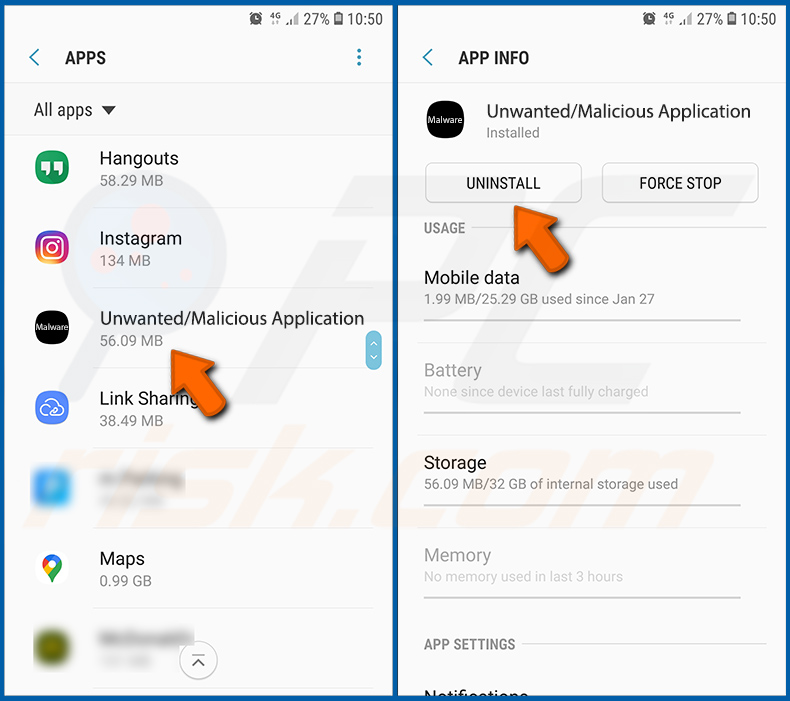
Scroll down until you see a potentially unwanted and/or malicious application, select it and tap "Uninstall". If, for some reason, you are unable to remove the selected app (e.g., you are prompted with an error message), you should try using the "Safe Mode".
Boot the Android device in "Safe Mode":
The "Safe Mode" in Android operating system temporarily disables all third-party applications from running. Using this mode is a good way to diagnose and solve various issues (e.g., remove malicious applications that prevent users you from doing so when the device is running "normally").
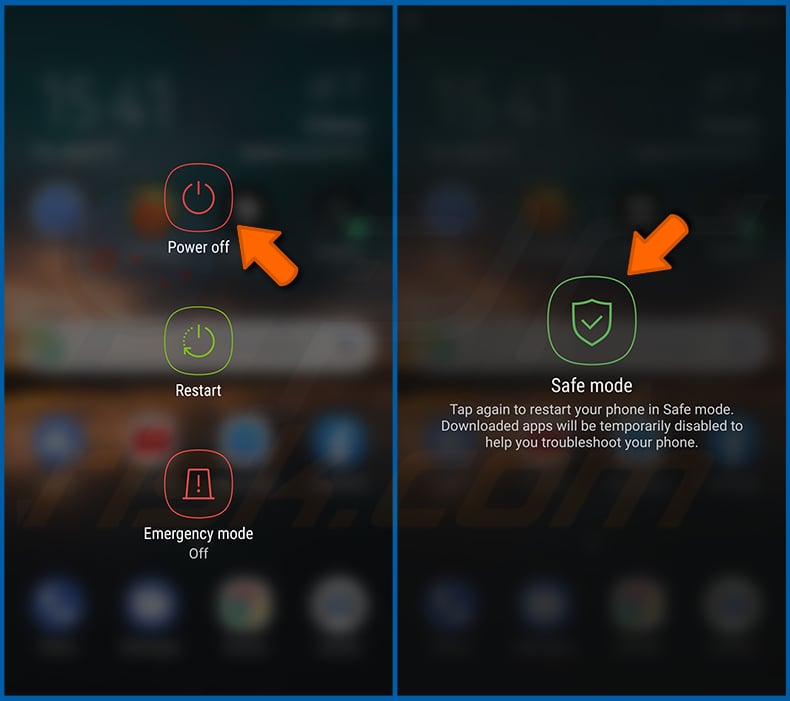
Push the "Power" button and hold it until you see the "Power off" screen. Tap the "Power off" icon and hold it. After a few seconds the "Safe Mode" option will appear and you'll be able run it by restarting the device.
Check the battery usage of various applications:
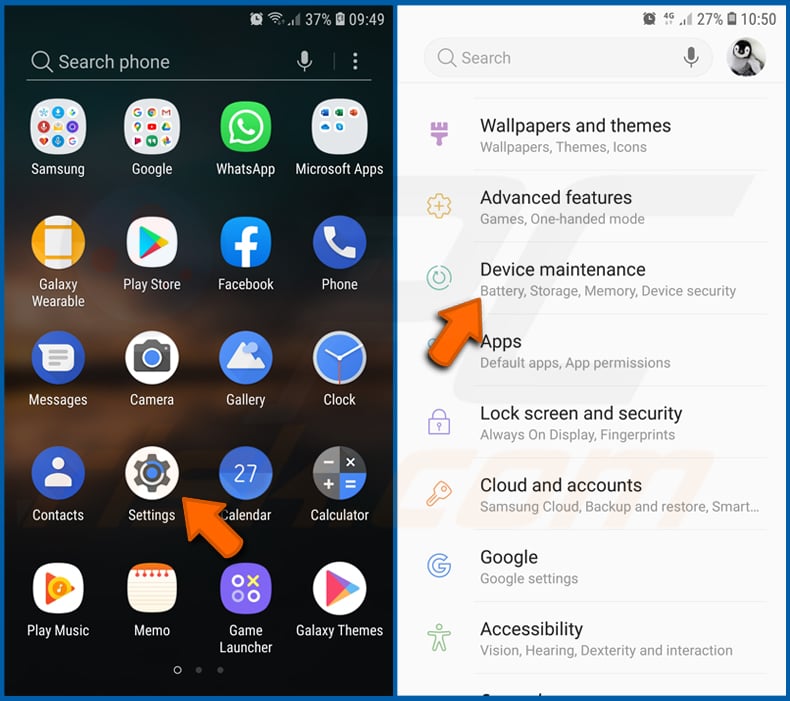
Go to "Settings", scroll down until you see "Device maintenance" and tap it.
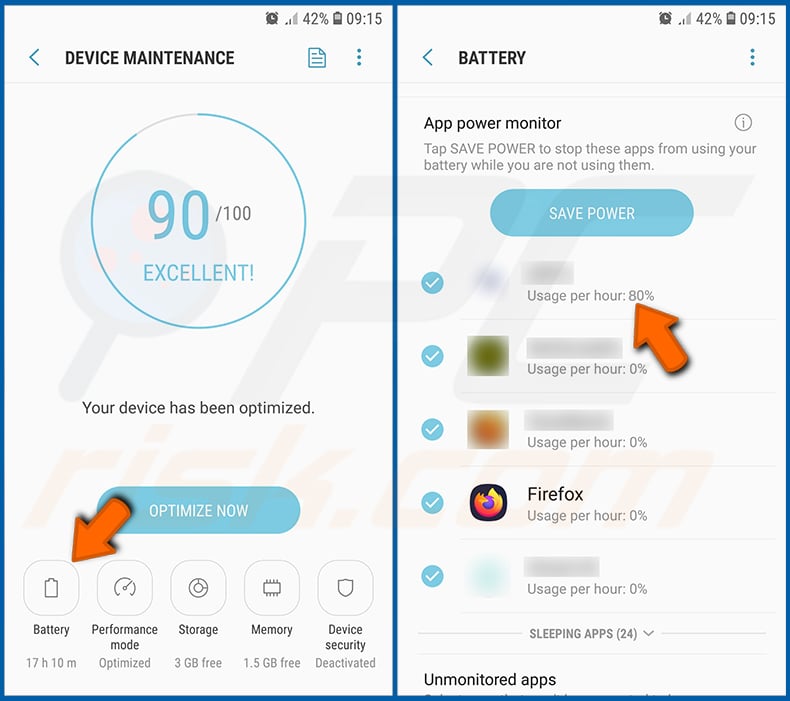
Tap "Battery" and check the usage of each application. Legitimate/genuine applications are designed to use as low energy as possible in order to provide the best user experience and to save power. Therefore, high battery usage may indicate that the application is malicious.
Check the data usage of various applications:
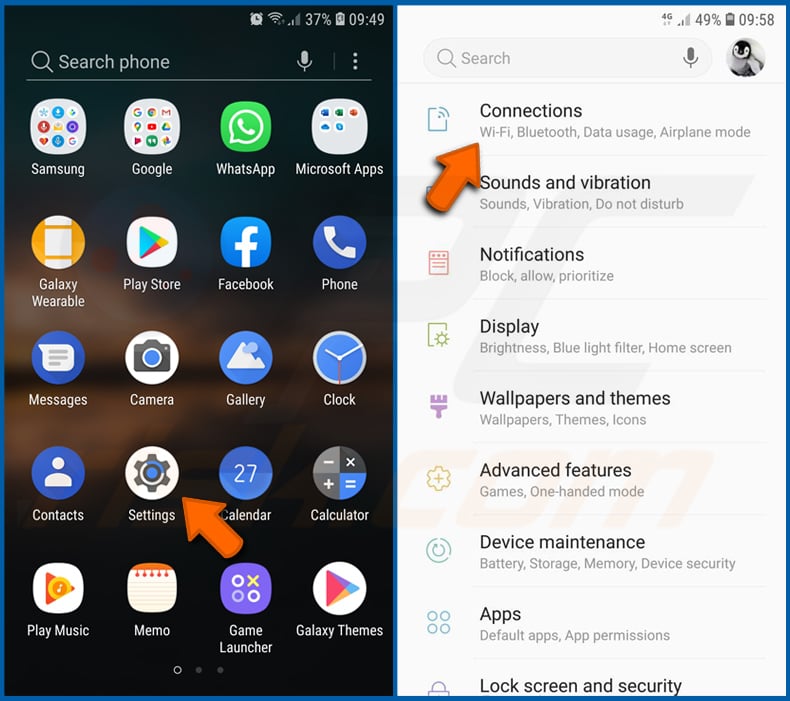
Go to "Settings", scroll down until you see "Connections" and tap it.
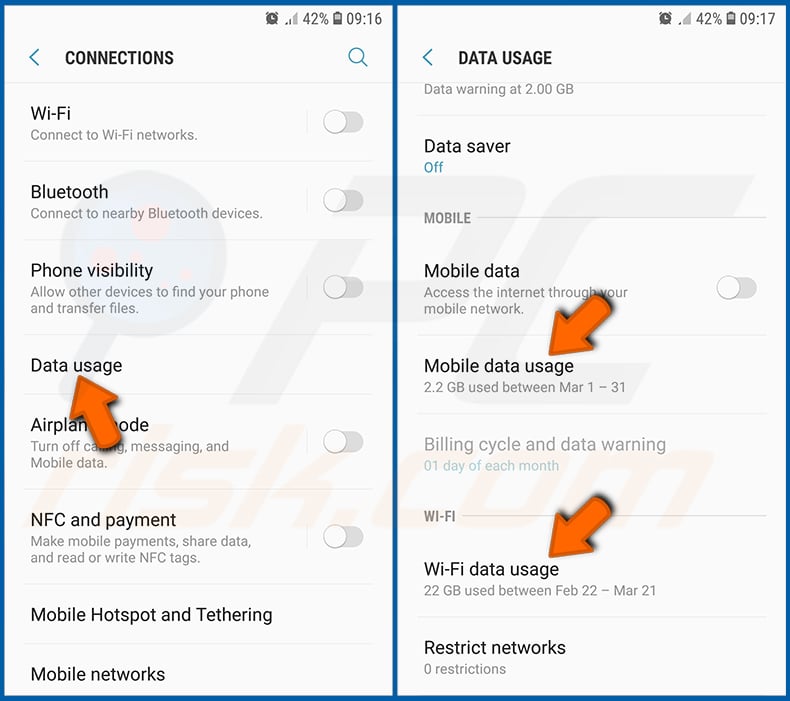
Scroll down until you see "Data usage" and select this option. As with battery, legitimate/genuine applications are designed to minimize data usage as much as possible. This means that huge data usage may indicate presence of malicious application. Note that some malicious applications might be designed to operate when the device is connected to wireless network only. For this reason, you should check both Mobile and Wi-Fi data usage.
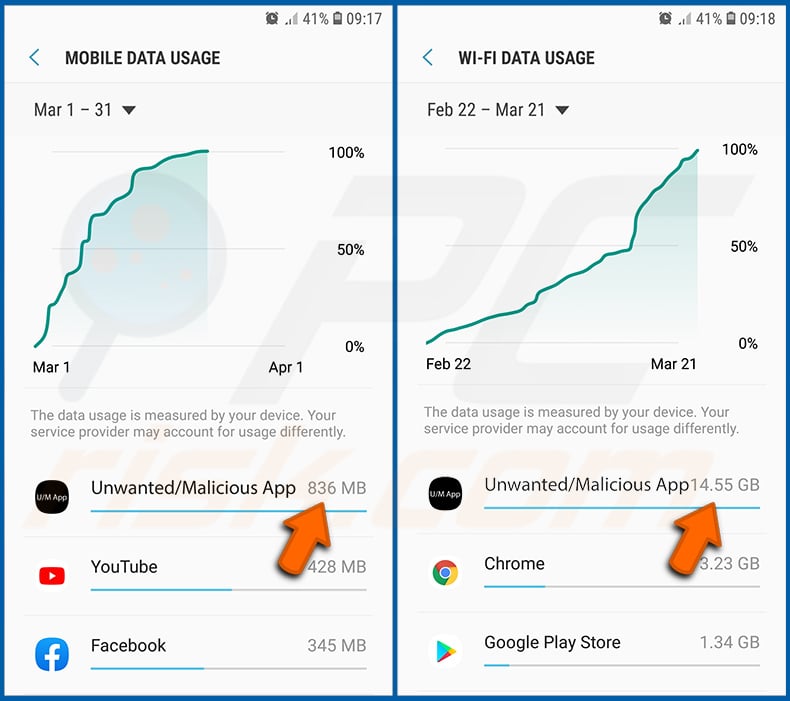
If you find an application that uses a lot of data even though you never use it, then we strongly advise you to uninstall it as soon as possible.
Install the latest software updates:
Keeping the software up-to-date is a good practice when it comes to device safety. The device manufacturers are continually releasing various security patches and Android updates in order to fix errors and bugs that can be abused by cyber criminals. An outdated system is way more vulnerable, which is why you should always be sure that your device's software is up-to-date.
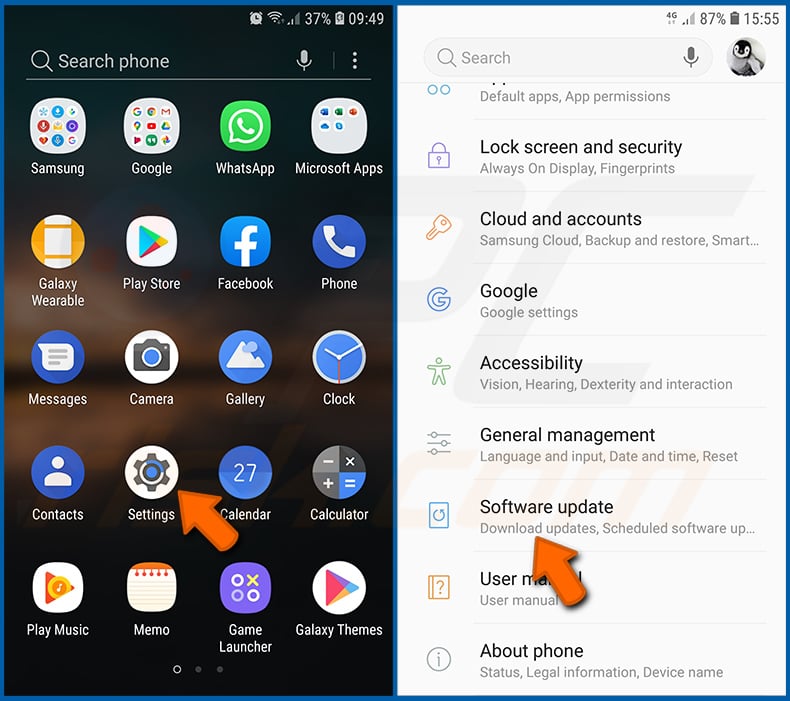
Go to "Settings", scroll down until you see "Software update" and tap it.
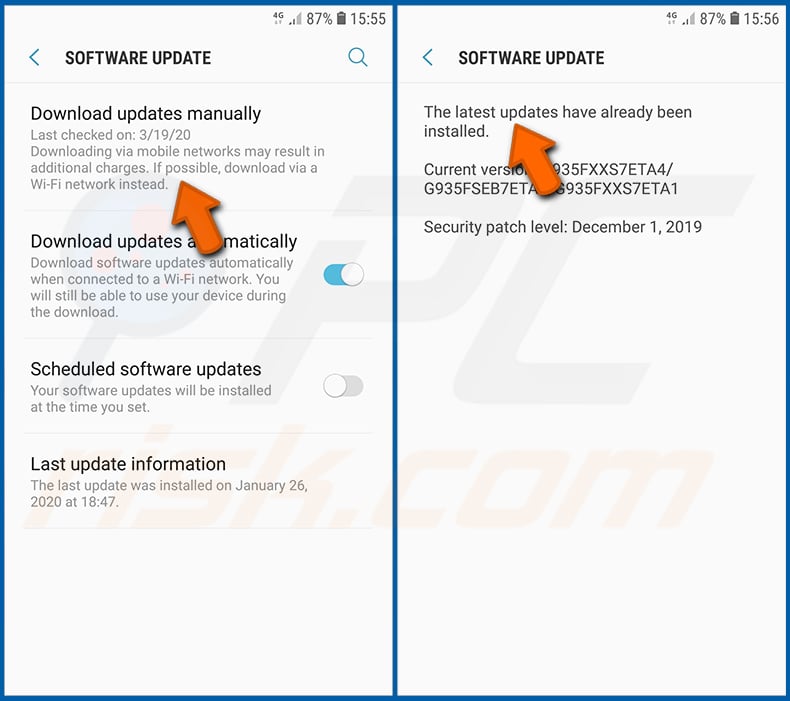
Tap "Download updates manually" and check if there are any updates available. If so, install them immediately. We also recommend to enable the "Download updates automatically" option - it will enable the system to notify you once an update is released and/or install it automatically.
Reset the system to its default state:
Performing a "Factory Reset" is a good way to remove all unwanted applications, restore system's settings to default and clean the device in general. However, you must keep in mind that all data within the device will be deleted, including photos, video/audio files, phone numbers (stored within the device, not the SIM card), SMS messages, and so forth. In other words, the device will be restored to its primal state.
You can also restore the basic system settings and/or simply network settings as well.
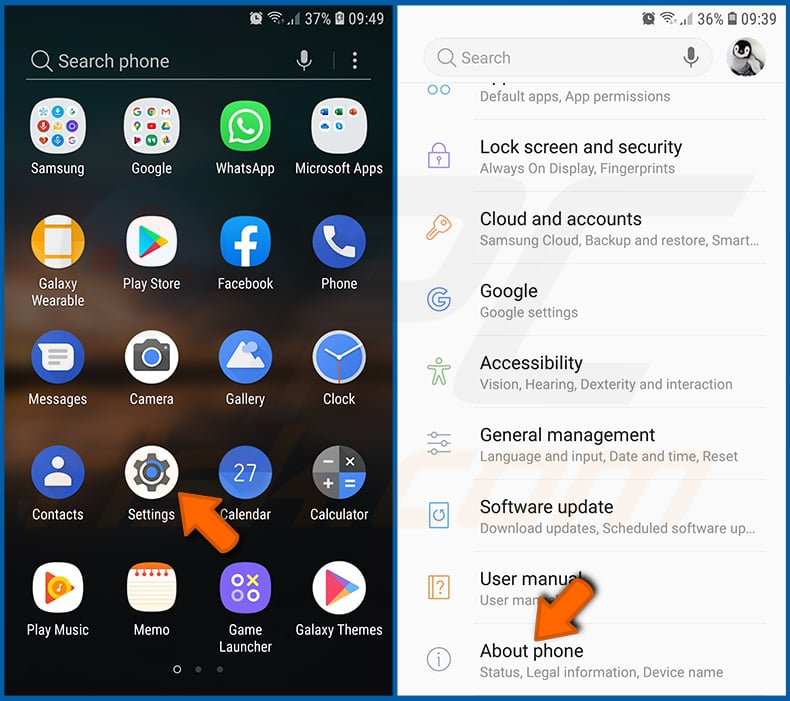
Go to "Settings", scroll down until you see "About phone" and tap it.
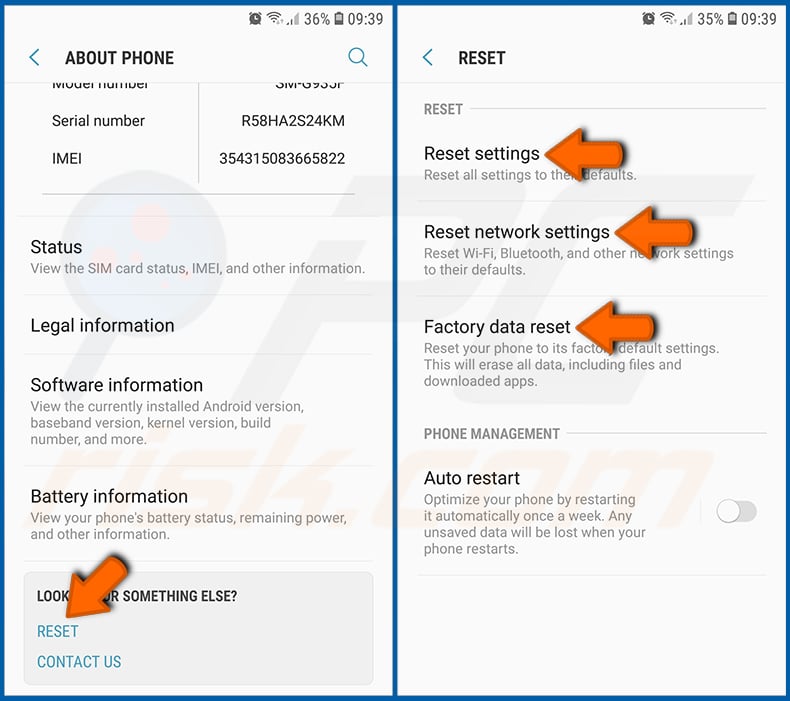
Scroll down until you see "Reset" and tap it. Now choose the action you want to perform:
"Reset settings" - restore all system settings to default;
"Reset network settings" - restore all network-related settings to default;
"Factory data reset" - reset the entire system and completely delete all stored data;
Disable applications that have administrator privileges:
If a malicious application gets administrator-level privileges it can seriously damage the system. To keep the device as safe as possible you should always check what apps have such privileges and disable the ones that shouldn't.
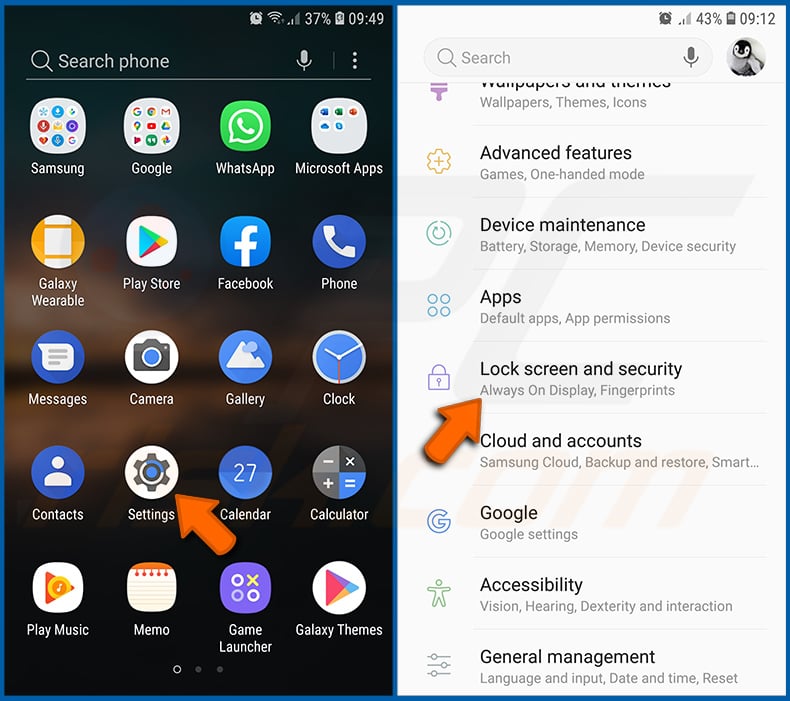
Go to "Settings", scroll down until you see "Lock screen and security" and tap it.
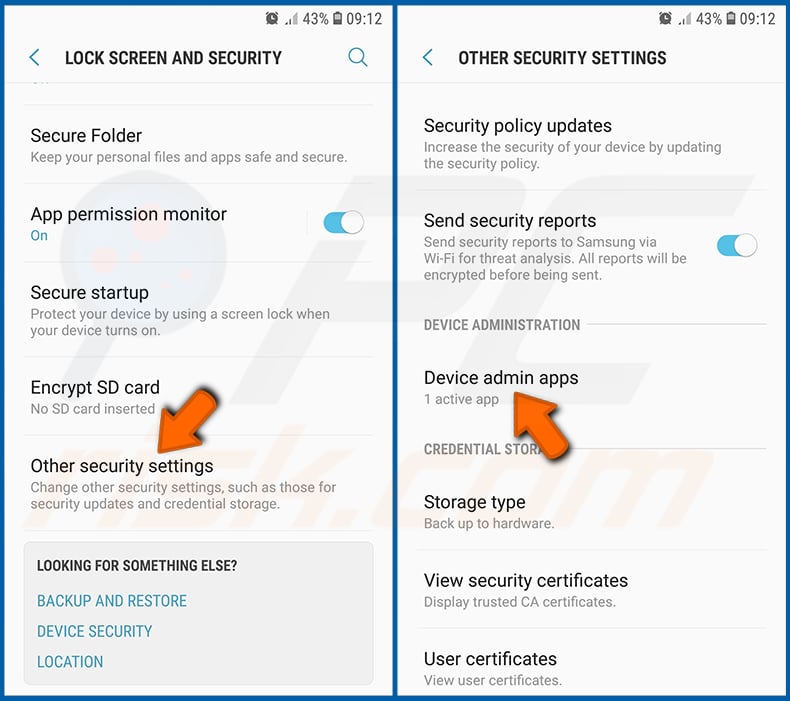
Scroll down until you see "Other security settings", tap it and then tap "Device admin apps".
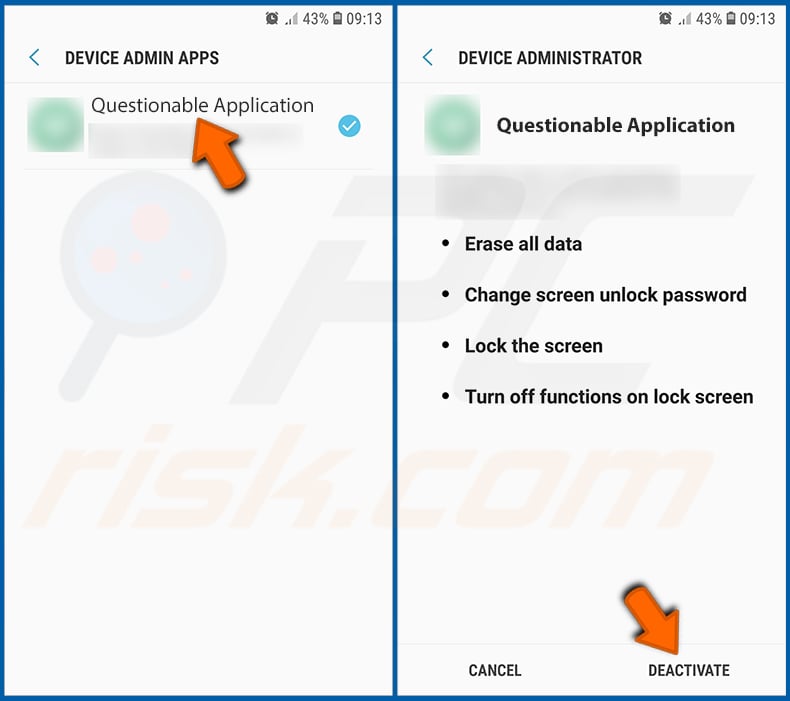
Identify applications that should not have administrator privileges, tap them and then tap "DEACTIVATE".
Frequently Asked Questions (FAQ)
My device is infected with ZeroDayRAT malware, should I format my storage device to get rid of it?
Reformatting your storage device can eliminate ZeroDayRAT, but this is a drastic measure and should only be considered as a final option. Before taking that step, it is recommended to perform a full system scan using an app like Combo Cleaner.
What are the biggest issues that malware can cause?
Malware can give attackers remote access to a device, collect personal information, install additional malicious programs, delete or corrupt files, cause the device to run slowly, and lead to other issues.
What is the purpose of ZeroDayRAT?
It is designed to spy on the victim, collect sensitive information like messages, accounts, and location, and steal credentials, one-time codes, and financial data from banking or cryptocurrency apps. Essentially, it is a tool for surveillance, identity theft, and financial exploitation.
How did ZeroDayRAT infiltrate my device?
Cybercriminals spread ZeroDayRAT by tricking users into installing a malicious app, often through deceptive text messages with links to seemingly legitimate downloads. It is also delivered via phishing emails, third-party app stores, or harmful links shared on platforms like WhatsApp and Telegram.
Will Combo Cleaner protect me from malware?
Yes, Combo Cleaner can identify and remove most known malware. Since some advanced threats can hide deep in the system, running a full system scan is recommended to make sure that they are detected.
Share:
 Facebook
 X.com
X.com
 LinkedIn
 Copy Link

Tomas Meskauskas
Expert security researcher, professional malware analyst
I am passionate about computer security and technology. I have an experience of over 10 years working in various companies related to computer technical issue solving and Internet security. I have been working as an author and editor for pcrisk.com since 2010. Follow me on Twitter and LinkedIn to stay informed about the latest online security threats.
PCrisk security portal is brought by a company RCS LT.
Joined forces of security researchers help educate computer users about the latest online security threats. More information about the company RCS LT.
Our malware removal guides are free. However, if you want to support us you can send us a donation.
DonatePCrisk security portal is brought by a company RCS LT.
Joined forces of security researchers help educate computer users about the latest online security threats. More information about the company RCS LT.
Our malware removal guides are free. However, if you want to support us you can send us a donation.
Donate
▼ Show Discussion