

Get free scan and check if your device is infected.
Remove it nowTo use full-featured product, you have to purchase a license for Combo Cleaner. Seven days free trial available. Combo Cleaner is owned and operated by RCS LT, the parent company of PCRisk.com.
What kind of page is recheck[.]co.in?
Our research team discovered recheck[.]co.in while examining dubious websites. After inspecting this page, we determined that it promotes browser notification spam and generates redirects to other (likely unreliable or harmful) sites. Most visitors reach recheck[.]co.in through redirects triggered by websites that use rogue advertising networks.
![recheck[.]co.in ads](/images/stories/screenshots202606/recheck-co-in-ads-main.jpg)
Recheck[.]co.in in detail
Recheck[.]co.in presents visitors with an almost entirely black page. At the center sits a fake reCAPTCHA widget - a white box with a checkbox labeled "I'm not a robot" - while text at the top of the page instructs visitors to click "Allow" to confirm they are not a robot.
Clicking "Allow" does not verify anything - it simply grants recheck[.]co.in permission to send browser notifications. It is also worth noting that sites like recheck[.]co.in often serve different content depending on the subdomain or URL path, so the fake CAPTCHA lure may not be the only version visitors encounter.
Once permission is granted, recheck[.]co.in sends notifications that impersonate Windows security alerts and invoke the McAfee brand. These notifications claim that an infected item was found on the user's network, display alarming headlines, and include buttons labeled "Update Windows" and "Check Security".
Clicking these notifications can take users to tech support scam pages, fake antivirus download sites, or phishing pages designed to steal login credentials and financial information. Some linked pages push users into purchasing unnecessary or harmful software.
Notifications from recheck[.]co.in may also point to pages that distribute malware, promote fraudulent investment platforms, or run prize scam pages. Even when a real brand name appears in these alerts, it is typically being misused by scammers who exploit affiliate programs to earn illegitimate commissions.
If recheck[.]co.in has been granted notification permissions, those permissions should be revoked right away to prevent financial loss, account hijacking, identity theft, or malware infection.
| Name | Ads by recheck.co.in |
| Threat Type | Push notifications ads, Unwanted ads, Pop-up ads |
| Threat Status (recheck[.]co.in) | PCrisk Website Scanner Results |
| Serving IP Address | 188.114.96.2 |
| Symptoms | Seeing advertisements not originating from the sites you are browsing. Intrusive pop-up ads. Decreased Internet browsing speed. |
| Distribution Methods | Deceptive pop-up ads, false claims within visited websites, unwanted applications (adware) |
| Damage | Decreased computer performance, browser tracking - privacy issues, possible additional malware infections. |
| Malware Removal (Windows) |
To eliminate possible malware infections, scan your computer with legitimate antivirus software. Our security researchers recommend using Combo Cleaner. Download Combo CleanerTo use full-featured product, you have to purchase a license for Combo Cleaner. 7 days free trial available. Combo Cleaner is owned and operated by RCS LT, the parent company of PCRisk.com. |
More on similar pages
Users typically reach pages like recheck[.]co.in after interacting with misleading elements on unsafe websites - such as fake download buttons, deceptive pop-ups, or in-page overlays. Rogue advertising networks common on torrent sites, illegal streaming platforms, and adult content pages are another frequent pathway. Installed adware can also silently redirect browsers to these pages.
Spam notifications from other rogue sites can chain-redirect users to recheck[.]co.in, meaning a single lapse can result in multiple sites gaining notification permissions. Additional examples of websites similar to recheck[.]co.in are supetrial[.]co.in, lerantixflowcore[.]co.in, and vitisubiferive[.]com.
How did recheck[.]co.in gain permission to deliver spam notifications?
Web browsers require explicit user permission before any website can deliver notifications. If ads from recheck[.]co.in are appearing on your screen, it means the site was visited at some point and the "Allow" button (or a similar option presented on the page) was clicked, granting it that permission.
How to prevent deceptive sites from delivering spam notifications?
Any page prompting visitors to click "Allow" in order to confirm their identity, watch a video, or pass a CAPTCHA should not be trusted - these are common deception tactics. When such a prompt appears, click "Block" or simply close the tab to avoid granting unwanted notification permissions.
If you are already receiving unwanted notifications from recheck[.]co.in or similar pages, run a scan with Combo Cleaner Antivirus for Windows to automatically eliminate them and block the site from delivering further notifications.
Appearance of recheck[.]co.in website (GIF):
![recheck[.]co.in website appearance (GIF)](/images/stories/screenshots202606/recheck-co-in-ads-appearance.gif)
Notification delivered by recheck[.]co.in:
![recheck[.]co.in notification](/images/stories/screenshots202606/recheck-co-in-ads-notification.jpg)
Instant automatic malware removal:
Manual threat removal might be a lengthy and complicated process that requires advanced IT skills. Combo Cleaner is a professional automatic malware removal tool that is recommended to get rid of malware. Download it by clicking the button below:
DOWNLOAD Combo CleanerBy downloading any software listed on this website you agree to our Privacy Policy and Terms of Use. To use full-featured product, you have to purchase a license for Combo Cleaner. 7 days free trial available. Combo Cleaner is owned and operated by RCS LT, the parent company of PCRisk.com.
Quick menu:
- What is Ads by recheck.co.in?
- STEP 1. Remove spam notifications from Google Chrome
- STEP 2. Remove spam notifications from Google Chrome (Android)
- STEP 3. Remove spam notifications from Mozilla Firefox
- STEP 4. Remove spam notifications from Microsoft Edge
- STEP 5. Remove spam notifications from Safari (macOS)
Disable unwanted browser notifications:
Video showing how to disable web browser notifications:
 Remove spam notifications from Google Chrome:
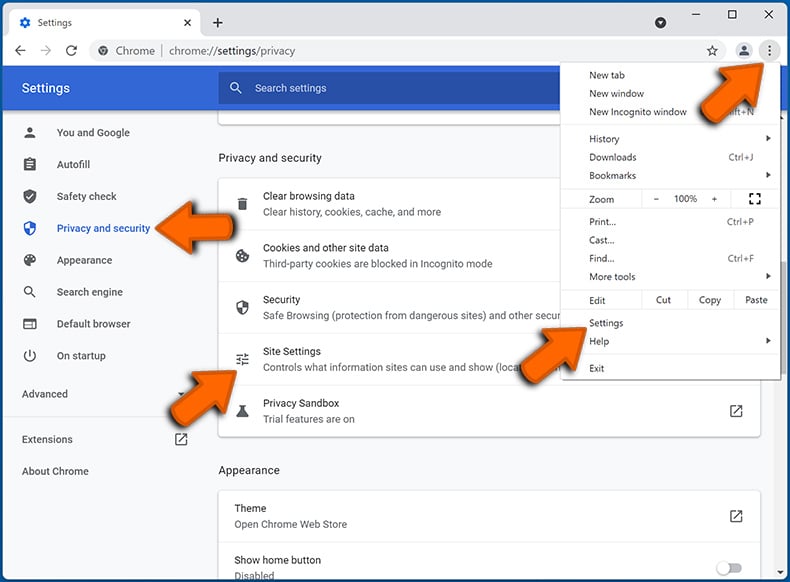
Click the Menu button (three dots) on the right upper corner of the screen and select "Settings". In the opened window select "Privacy and security", then click on "Site Settings" and choose "Notifications".
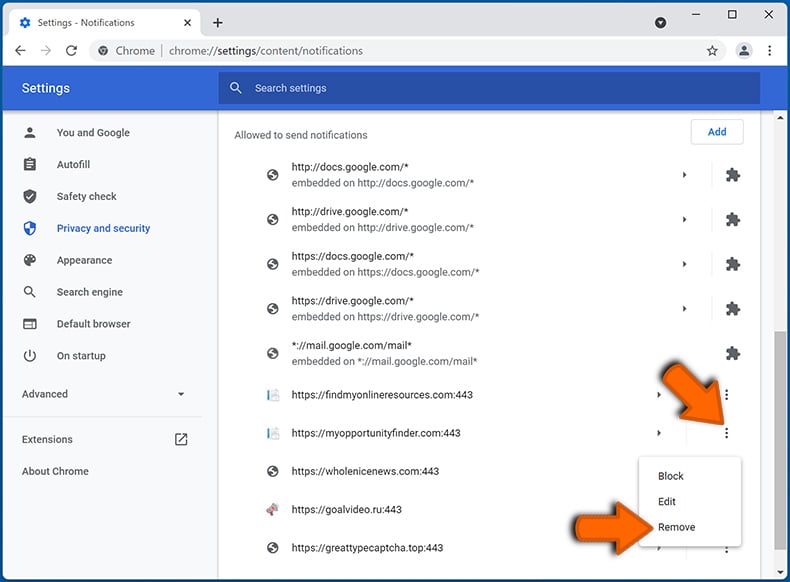
In the "Allowed to send notifications" list search for websites that you want to stop receiving notifications from. Click on the three dots icon near the website URL and click "Block" or "Remove" (if you click "Remove" and visit the malicious site once more, it will ask to enable notifications again).
 Remove spam notifications from Google Chrome (Android):
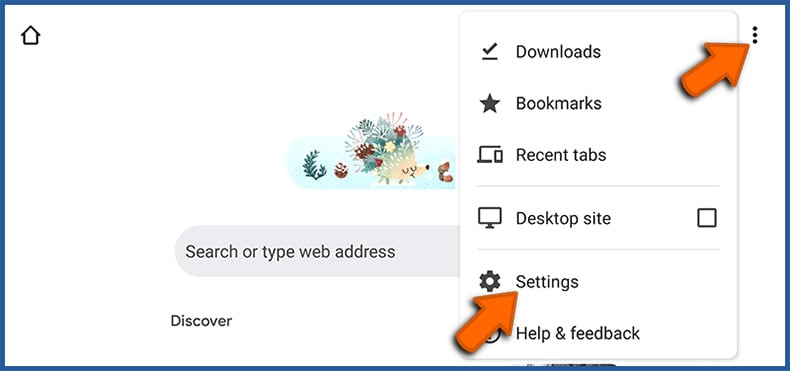
Tap the Menu button (three dots) on the right upper corner of the screen and select "Settings". Scroll down, tap on "Site settings" and then "Notifications".
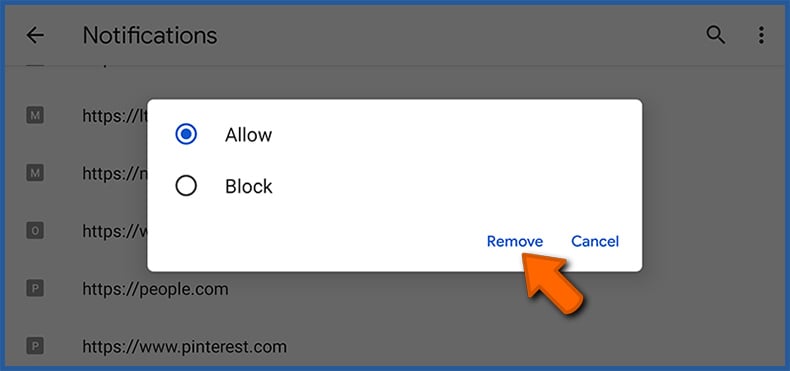
In the opened window, locate all suspicious URLs and tap on them one-by-one. Once the pop-up shows up, select either "Block" or "Remove" (if you tap "Remove" and visit the malicious site once more, it will ask to enable notifications again).
 Remove spam notifications from Mozilla Firefox:
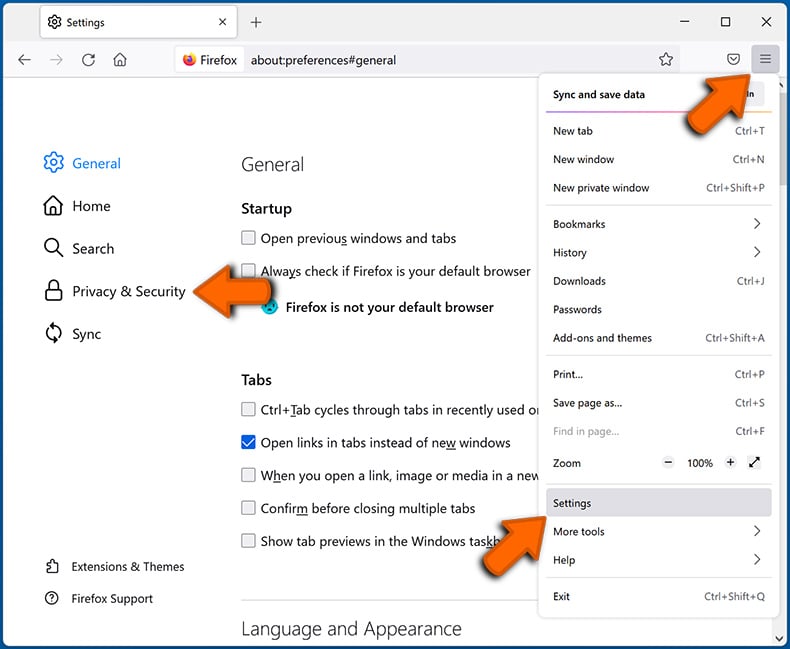
Click the Menu button (three bars) on the right upper corner of the screen. Select "Settings" and click on "Privacy & Security" in the toolbar on the left hand side of the screen. Scroll down to the "Permissions" section and click the "Settings" button next to "Notifications".
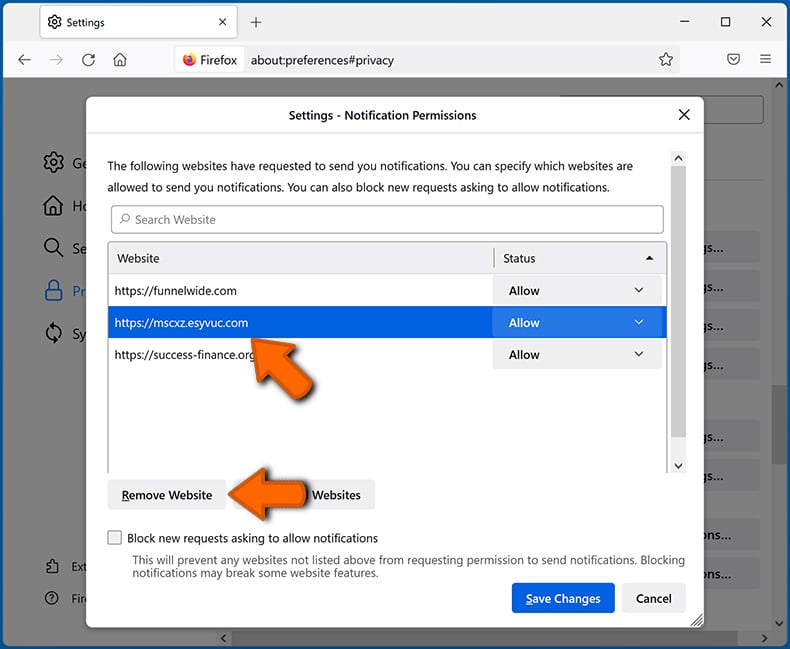
In the opened window, locate all suspicious URLs and block them using the drop-down menu or either remove them by clicking "Remove Website" at the bottom of the window (if you click "Remove Website" and visit the malicious site once more, it will ask to enable notifications again).
 Remove spam notifications from Microsoft Edge:
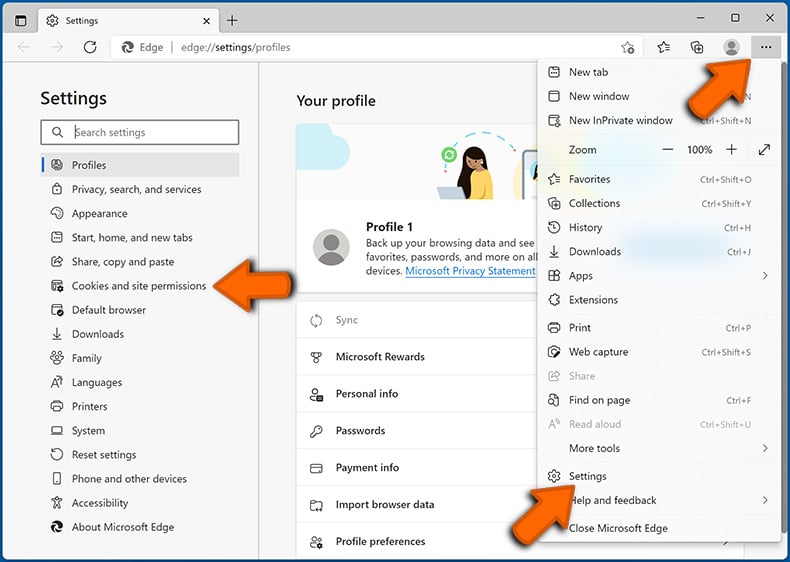
Click the menu button (three dots) on the right upper corner of the Edge window and select "Settings". Click on "Cookies and site permissions" in the toolbar on the left hand side of the screen and select "Notifications".
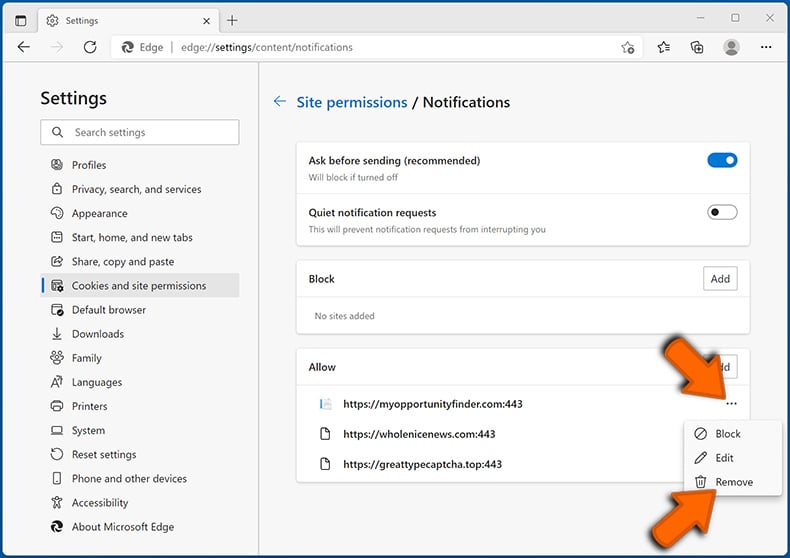
Click three dots on the right hand side of each suspicious URL under "Allow" section and click "Block" or "Remove" (if you click "Remove" and visit the malicious site once more, it will ask to enable notifications again).
 Remove spam notifications from Safari (macOS):
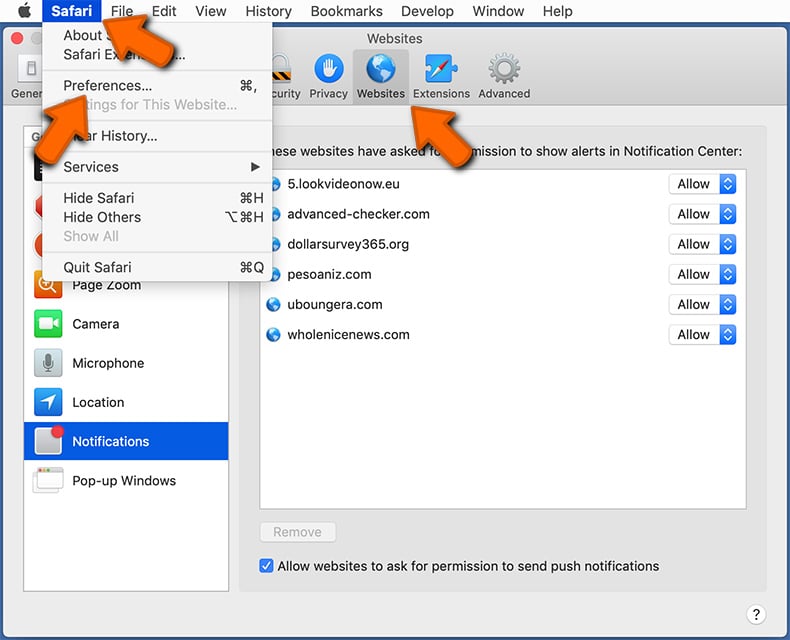
Click "Safari" button on the left upper corner of the screen and select "Preferences...". Select the "Websites" tab and then select "Notifications" section on the left pane.
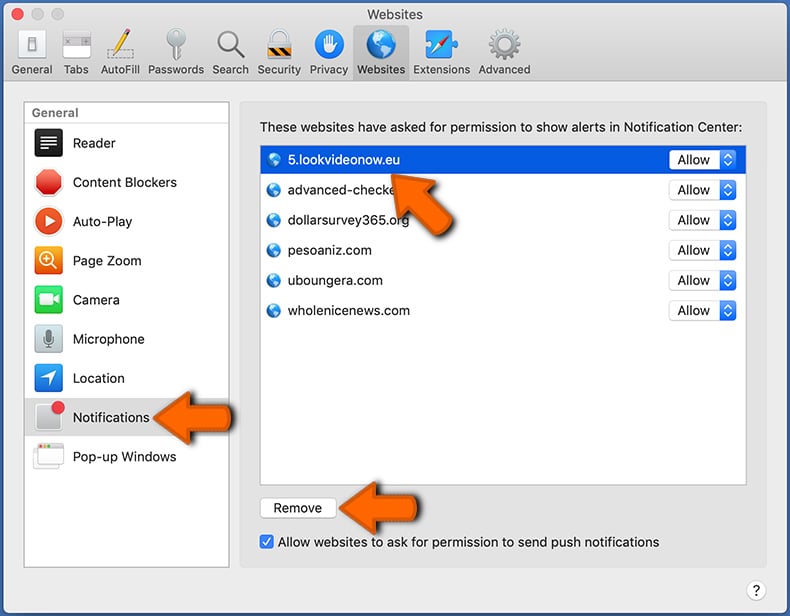
Check for suspicious URLs and apply the "Deny" option using the drop-down menu or either remove them by clicking "Remove" at the bottom of the window (if you click "Remove" and visit the malicious site once more, it will ask to enable notifications again)
How to avoid browser notification spam?
Internet users should be very skeptical when being asked to allow notifications. While this is a useful feature that allows you to receive timely news from websites you like, deceptive marketers frequently abuse it.
Only allow notifications from websites that you fully trust. For added security - use an anti-malware application with a real-time web browsing monitor to block shady websites that tries to trick you into allowing spam notifications. We recommend using Combo Cleaner Antivirus for Windows.
Frequently Asked Questions (FAQ)
Why am I seeing ads (browser notifications) delivered by recheck[.]co.in in the right lower corner of my desktop?
Browsers can only deliver notifications from a site after the user has explicitly granted permission. This means recheck[.]co.in was most likely visited at some point and the "Allow" option (or something similar) was clicked, enabling it to push notifications to your device.
I have clicked on notification ads, is my computer infected?
Clicking a browser notification does not directly infect the computer. However, the pages these notifications link to can be harmful - they may attempt to install malware or trick you into handing over personal information.
Is recheck[.]co.in a virus?
Recheck[.]co.in is not classified as a virus, but it is still considered a threat. Pages like this are routinely used to promote scams, push unwanted software, and expose visitors to potentially harmful or malicious content.
Will Combo Cleaner remove recheck[.]co.in ads automatically or manual steps are still required?
Yes. Combo Cleaner will scan your system, revoke any notification permissions granted to recheck[.]co.in, and block the site from being accessed in the future. No manual follow-up steps will be required.
Share:
 Facebook
 X.com
X.com
 LinkedIn
 Copy Link

Tomas Meskauskas
Expert security researcher, professional malware analyst
I am passionate about computer security and technology. I have an experience of over 10 years working in various companies related to computer technical issue solving and Internet security. I have been working as an author and editor for pcrisk.com since 2010. Follow me on Twitter and LinkedIn to stay informed about the latest online security threats.
PCrisk security portal is brought by a company RCS LT.
Joined forces of security researchers help educate computer users about the latest online security threats. More information about the company RCS LT.
Our malware removal guides are free. However, if you want to support us you can send us a donation.
DonatePCrisk security portal is brought by a company RCS LT.
Joined forces of security researchers help educate computer users about the latest online security threats. More information about the company RCS LT.
Our malware removal guides are free. However, if you want to support us you can send us a donation.
Donate
▼ Show Discussion