

Get free scan and check if your device is infected.
Remove it nowTo use full-featured product, you have to purchase a license for Combo Cleaner. Seven days free trial available. Combo Cleaner is owned and operated by RCS LT, the parent company of PCRisk.com.
What kind of program is Privacy Protector?
Privacy Protector is promoted as a tool that automatically blocks web trackers and protects data for secure browsing. However, during our inspection, we noticed that Privacy Protector displays advertisements. Thus, our team classified this extension as adware. Users should avoid adding adware to their browsers or installing it on their systems.
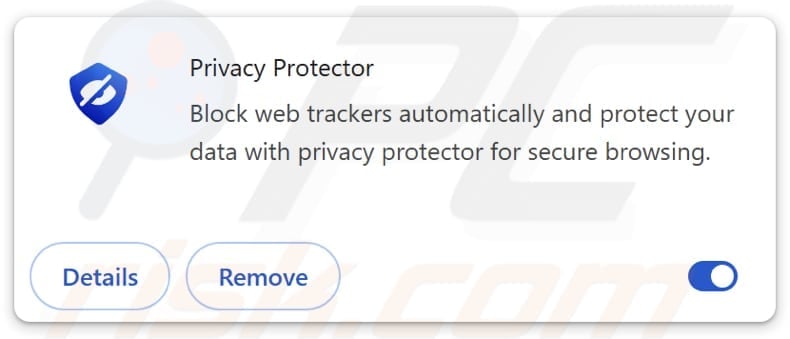
Privacy Protector in detail
Privacy Protector can display pop-ups, banners, coupons, and other ads while users browse the web. Those advertisements can be annoying and cover the contents of visited sites. Clicking on the ads can redirect users to unwanted, suspicious, or potentially malicious websites (e.g., sites hosting scams or unwanted software).
These sites may attempt to trick users into downloading additional software, signing up for fake services, or even providing personal and financial information (e.g., login credentials or credit card details). Some of the pages could host malware and lead to computer infections.
Beyond displaying ads, Privacy Protector may track browsing habits and collect data about the websites users visit, searches they perform, and links they click. This information can be used to serve targeted ads or sold to third parties. The extension can also slow down a browser and cause pages to load improperly.
In addition to the aforementioned issues, adware like Privacy Protector can sometimes operate as a browser hijacker. In such cases, users experience changes in the settings of their browsers that often cannot be undone while a browser hijacker is present. Overall, it is advisable not to use advertising-supported extensions like Privacy Protector to avoid the potential risks.
| Name | Ads by Privacy Protector |
| Threat Type | Adware |
| Symptoms | Your computer becomes slower than normal, you see unwanted pop-up ads, you are redirected to dubious websites. |
| Distribution methods | Deceptive pop-up ads, free software installers (bundling), torrent file downloads. |
| Damage | Internet browser tracking (potential privacy issues), display of unwanted ads, redirects to dubious websites, loss of private information. |
| Malware Removal (Windows) |
To eliminate possible malware infections, scan your computer with legitimate antivirus software. Our security researchers recommend using Combo Cleaner. Download Combo CleanerTo use full-featured product, you have to purchase a license for Combo Cleaner. 7 days free trial available. Combo Cleaner is owned and operated by RCS LT, the parent company of PCRisk.com. |
Conclusion
Privacy Protector is adware that can show unwanted ads, may collect browsing-related data, and can slow down the affected browser. Adding this extension to a browser may lead to privacy and security issues. Thus, if it is already present, it should be removed as soon as possible.
More adware examples are Care.Sale, Ad Dimmer, and AdBlocker Expert.
How did unwanted software install on my computer?
Adware is often included with free or questionable software. It usually installs or adds when users accept the default setup instead of choosing "Custom", "Advanced", or similar options, which let them decline extra offers like adware.
It can also be obtained through misleading ads, pop-ups, or fake alerts on unsafe websites. Downloading apps or files from untrusted sources, such as unofficial app stores, third-party downloaders, or peer-to-peer (P2P) networks, can also result in adware being installed or added.
How to avoid installation of unwanted applications?
Run trusted security tools regularly to detect and remove potential threats, and keep your operating system and software up to date. Only download applications from official websites or reputable app stores, and carefully review installation steps to decline optional programs or unwanted offers.
Also, avoid clicking on suspicious links, pop-ups, or online ads, and never give untrusted websites permission to send notifications. If your computer is already infected with rogue applications, we recommend running a scan with Combo Cleaner Antivirus for Windows to automatically eliminate them.
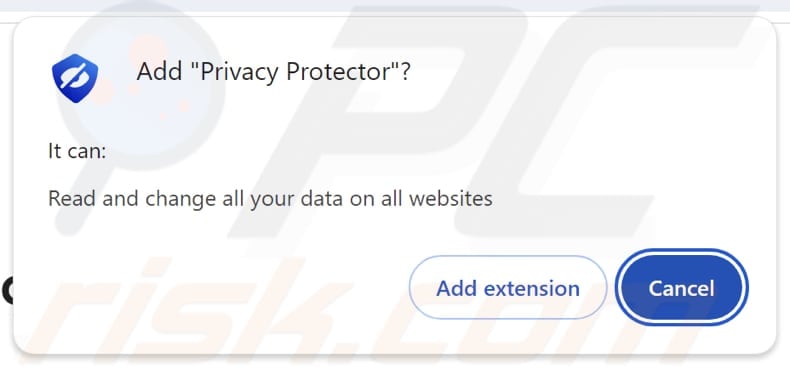
Privacy Protector requests permissions:
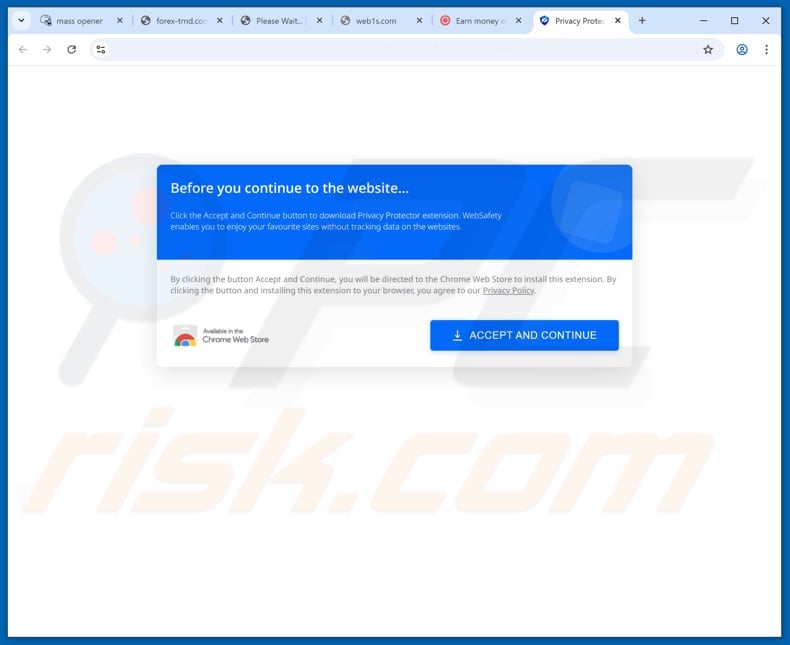
Website promoting Privacy Protector:
Instant automatic malware removal:
Manual threat removal might be a lengthy and complicated process that requires advanced IT skills. Combo Cleaner is a professional automatic malware removal tool that is recommended to get rid of malware. Download it by clicking the button below:
DOWNLOAD Combo CleanerBy downloading any software listed on this website you agree to our Privacy Policy and Terms of Use. To use full-featured product, you have to purchase a license for Combo Cleaner. 7 days free trial available. Combo Cleaner is owned and operated by RCS LT, the parent company of PCRisk.com.
Quick menu:
- What is Privacy Protector?
- STEP 1. Uninstall adware applications using Control Panel.
- STEP 2. Remove rogue plug-ins from Google Chrome.
- STEP 3. Remove adware-type extensions from Mozilla Firefox.
- STEP 4. Remove malicious extensions from Safari.
- STEP 5. Remove rogue plug-ins from Microsoft Edge.
Adware removal:
Windows 11 users:
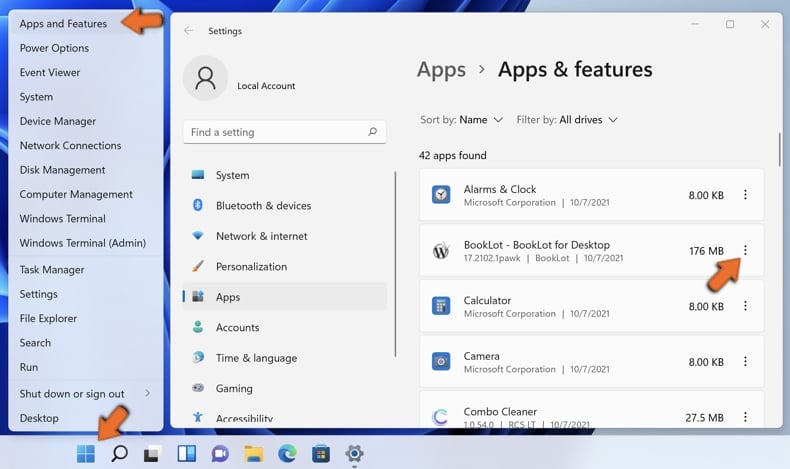
Right-click on the Start icon, select Apps and Features. In the opened window search for the application you want to uninstall, after locating it, click on the three vertical dots and select Uninstall.
Windows 10 users:
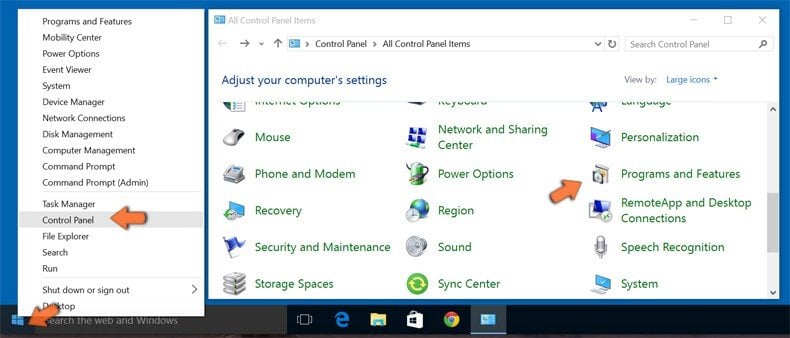
Right-click in the lower left corner of the screen, in the Quick Access Menu select Control Panel. In the opened window choose Programs and Features.
Windows 7 users:
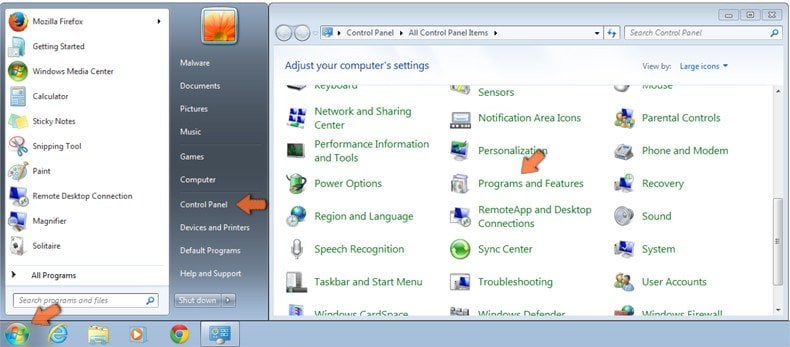
Click Start (Windows Logo at the bottom left corner of your desktop), choose Control Panel. Locate Programs and click Uninstall a program.
macOS (OSX) users:
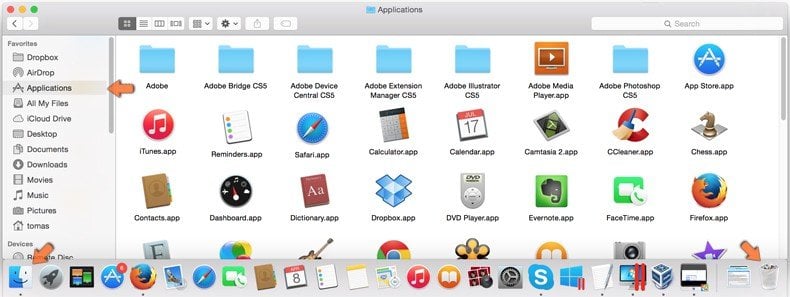
Click Finder, in the opened screen select Applications. Drag the app from the Applications folder to the Trash (located in your Dock), then right click the Trash icon and select Empty Trash.
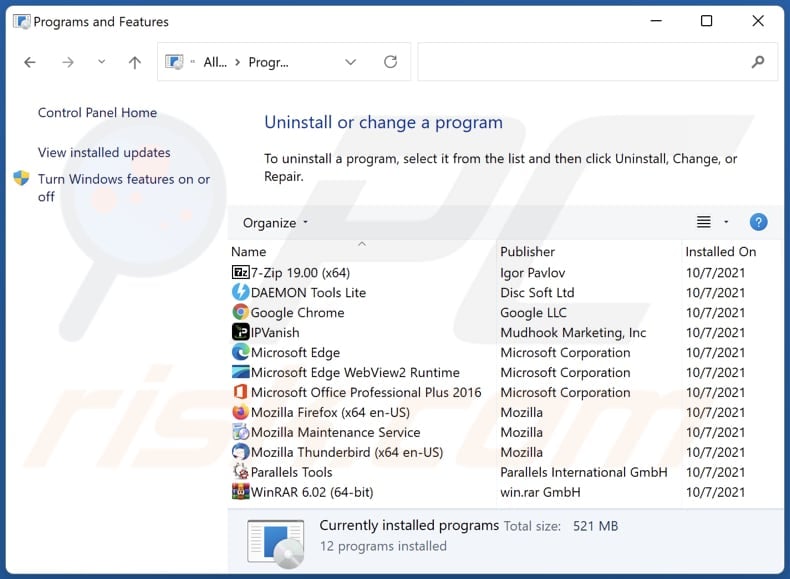
In the uninstall programs window, look for any unwanted applications, select these entries and click "Uninstall" or "Remove".
After uninstalling the unwanted application, scan your computer for any remaining unwanted components or possible malware infections. To scan your computer, use recommended malware removal software.
DOWNLOAD remover for malware infections
Combo Cleaner checks if your computer is infected with malware. To use full-featured product, you have to purchase a license for Combo Cleaner. 7 days free trial available. Combo Cleaner is owned and operated by RCS LT, the parent company of PCRisk.com.
Remove adware from Internet browsers:
Video showing how to remove unwanted browser add-ons:
 Remove malicious extensions from Google Chrome:
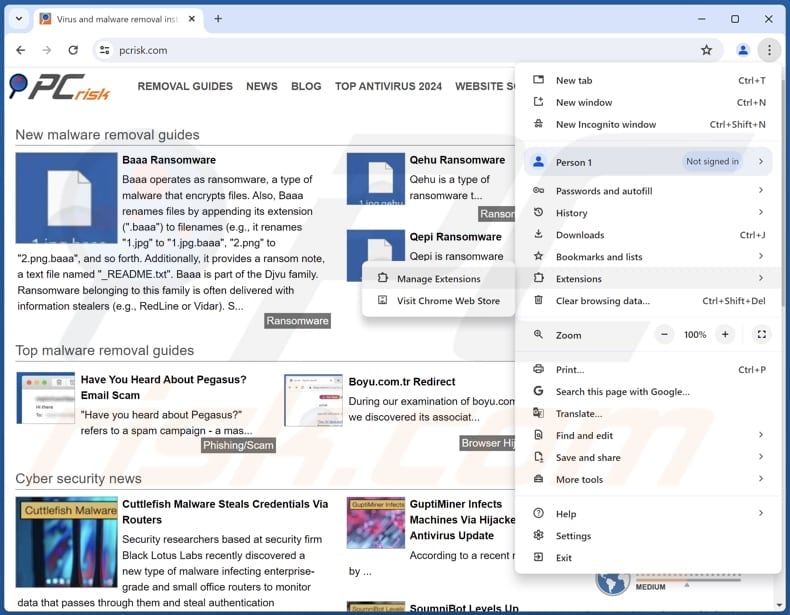
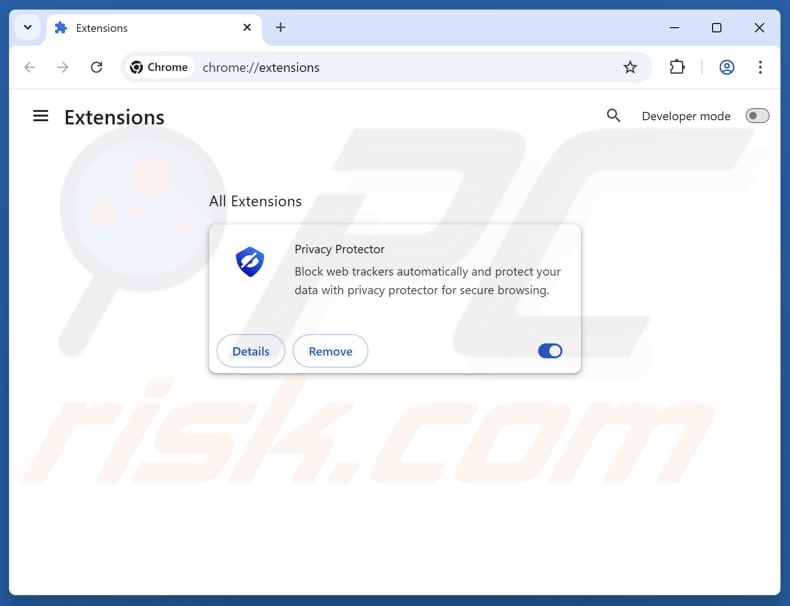
Click the Chrome menu icon  (at the top right corner of Google Chrome), select "Extensions" and click "Manage Extensions". Locate "Privacy Protector" or other suspicious extensions, select these entries and click "Remove".
Optional method:
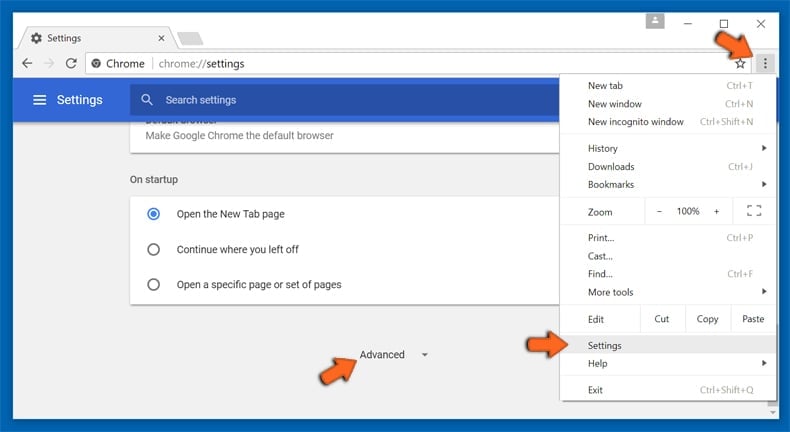
If you continue to have problems with removal of the ads by privacy protector, reset your Google Chrome browser settings. Click the Chrome menu icon (at the top right corner of Google Chrome) and select Settings. Scroll down to the bottom of the screen. Click the Advanced… link.
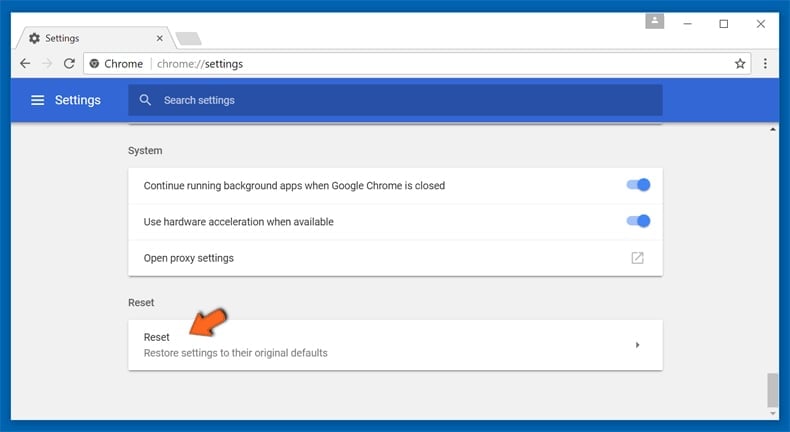
After scrolling to the bottom of the screen, click the Reset (Restore settings to their original defaults) button.
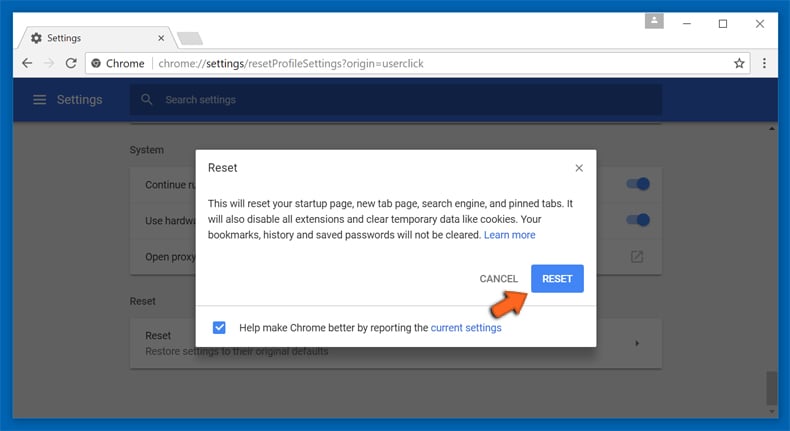
In the opened window, confirm that you wish to reset Google Chrome settings to default by clicking the Reset button.
 Remove malicious plug-ins from Mozilla Firefox:
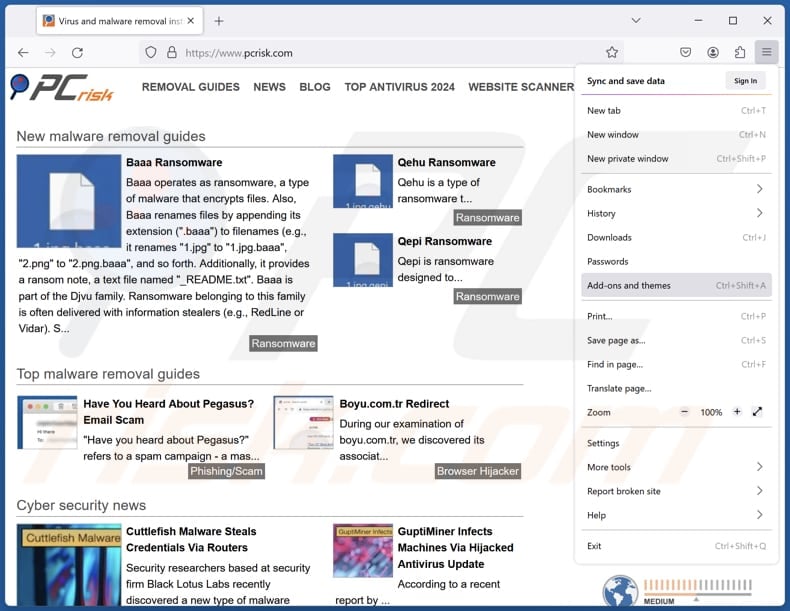
Click the Firefox menu  (at the top right corner of the main window), select "Add-ons and themes". Click "Extensions", in the opened window locate all recently-installed suspicious extensions, click on the three dots and then click "Remove".

Optional method:
Computer users who have problems with ads by privacy protector removal can reset their Mozilla Firefox settings.
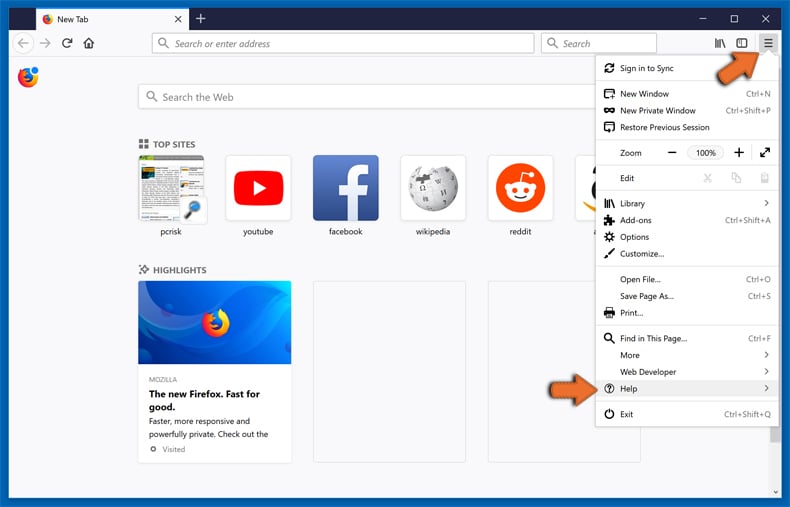
Open Mozilla Firefox, at the top right corner of the main window, click the Firefox menu, in the opened menu, click Help.
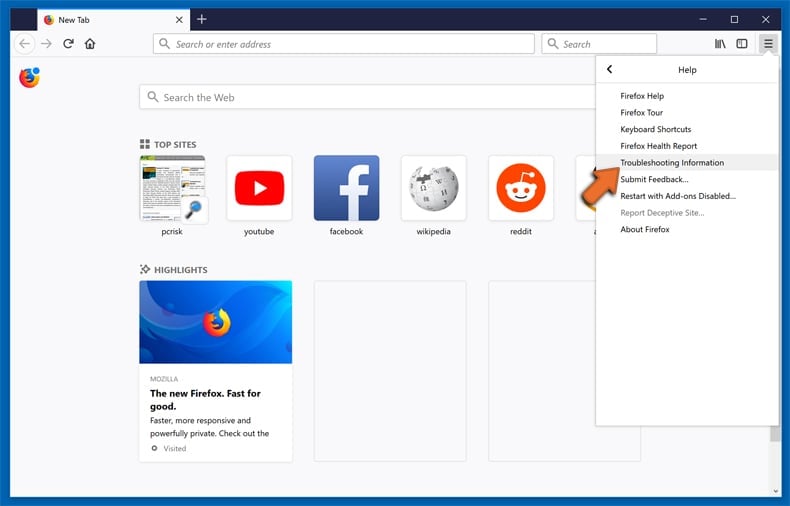
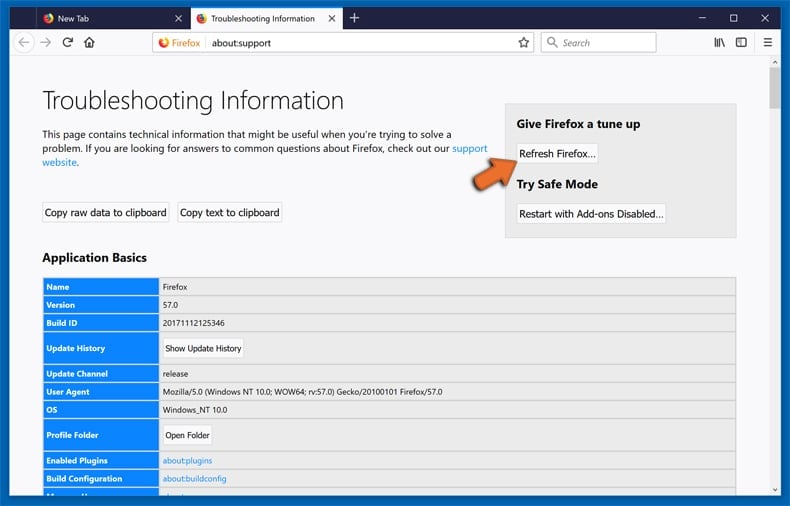
Select Troubleshooting Information.
In the opened window, click the Refresh Firefox button.
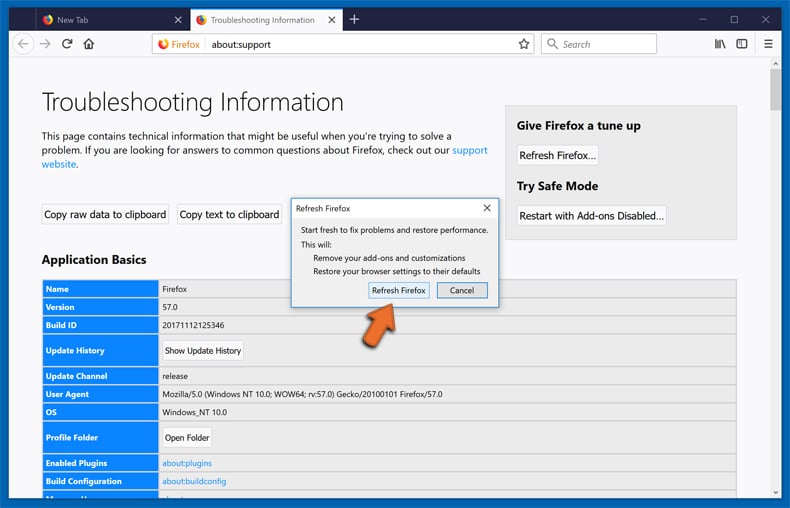
In the opened window, confirm that you wish to reset Mozilla Firefox settings to default by clicking the Refresh Firefox button.
 Remove malicious extensions from Safari:
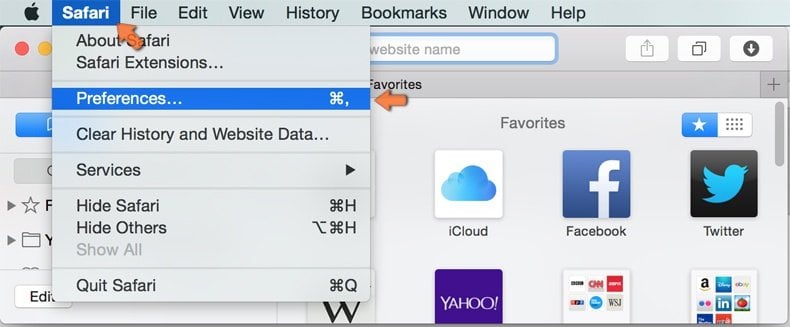
Make sure your Safari browser is active, click Safari menu, and select Preferences....
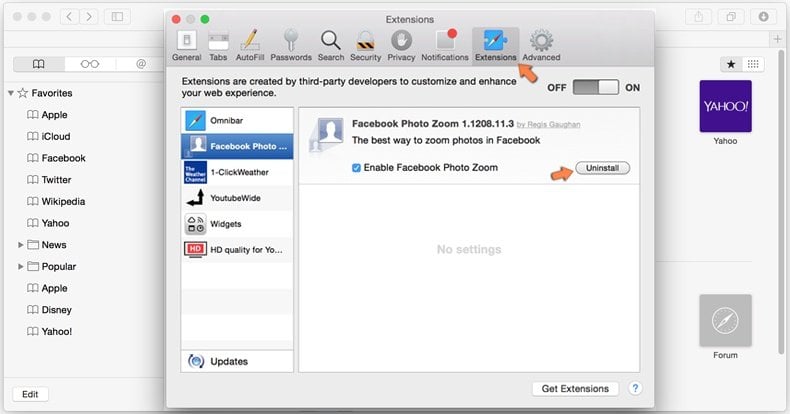
In the opened window click Extensions, locate any recently installed suspicious extension, select it and click Uninstall.
Optional method:
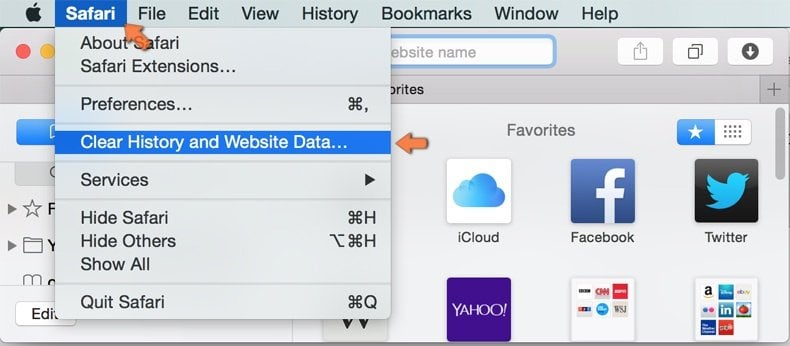
Make sure your Safari browser is active and click on Safari menu. From the drop down menu select Clear History and Website Data...
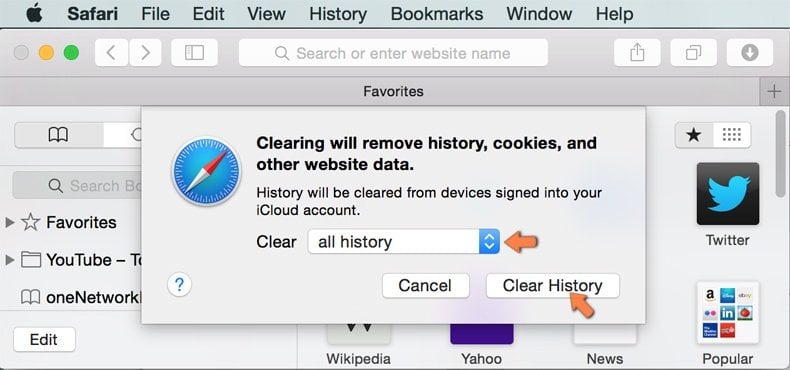
In the opened window select all history and click the Clear History button.
 Remove malicious extensions from Microsoft Edge:
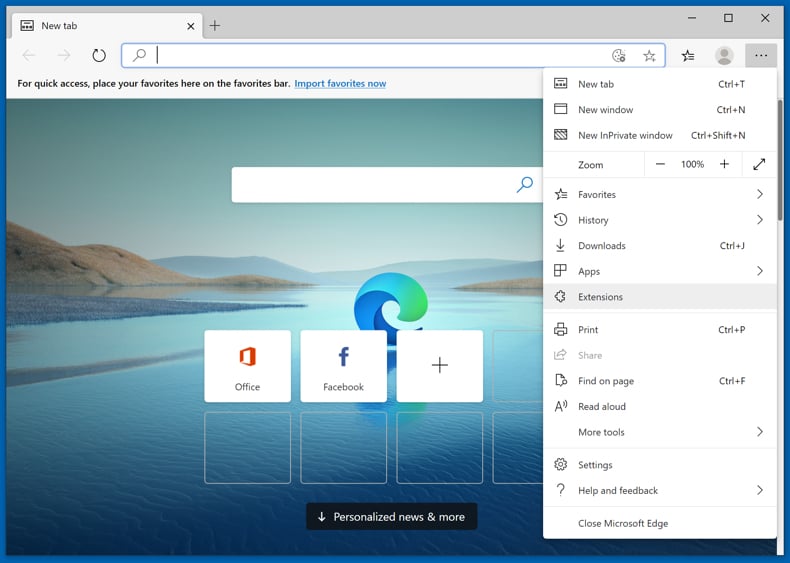
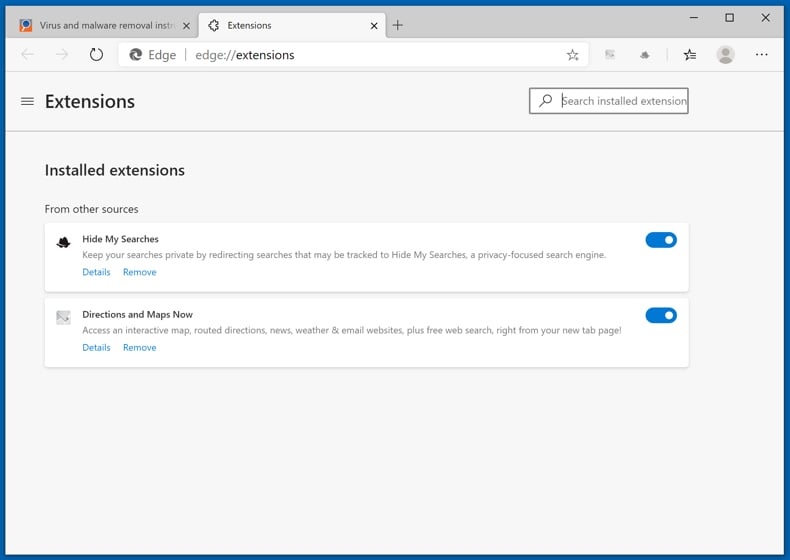
Click the Edge menu icon  (at the upper-right corner of Microsoft Edge), select "Extensions". Locate all recently-installed suspicious browser add-ons and click "Remove" below their names.
Optional method:
If you continue to have problems with removal of the ads by privacy protector, reset your Microsoft Edge browser settings. Click the Edge menu icon (at the top right corner of Microsoft Edge) and select Settings.
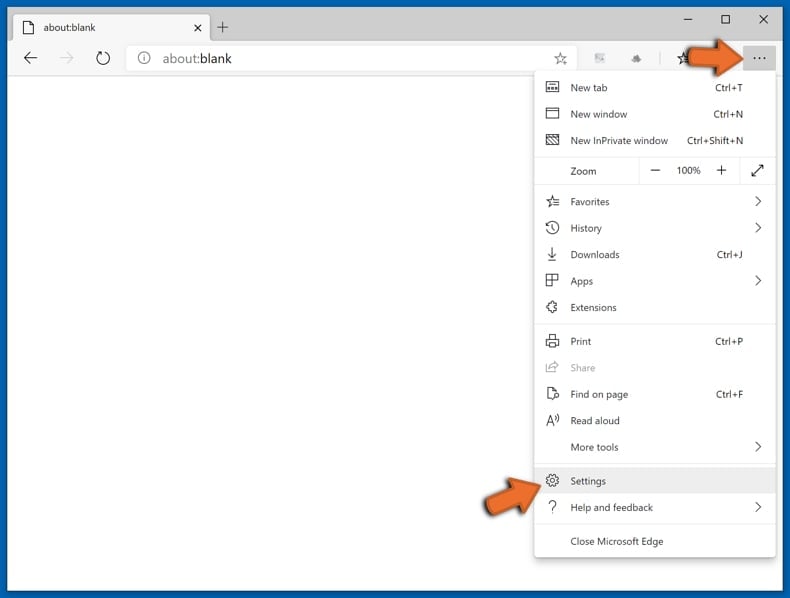
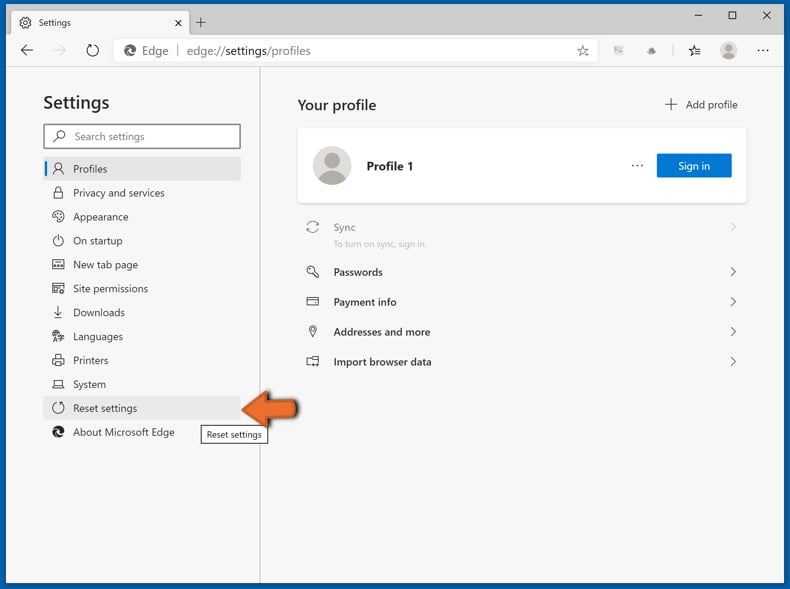
In the opened settings menu select Reset settings.
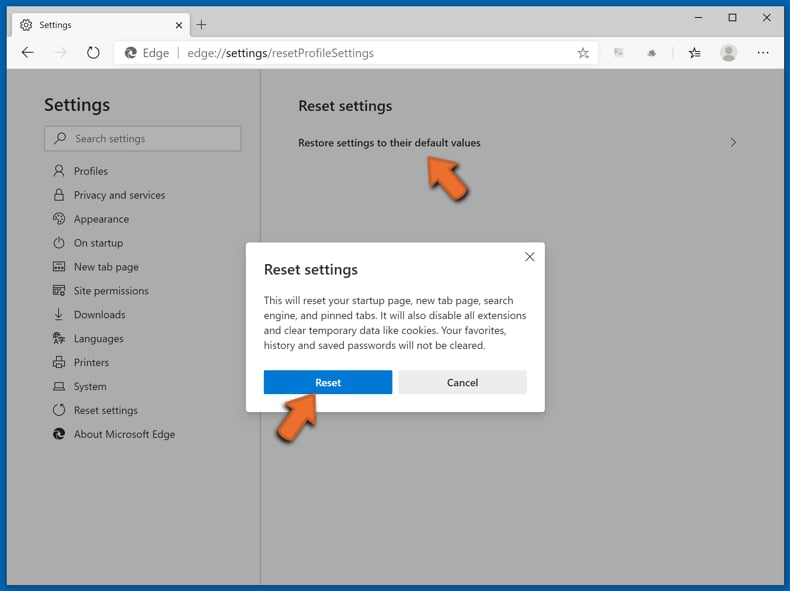
Select Restore settings to their default values. In the opened window, confirm that you wish to reset Microsoft Edge settings to default by clicking the Reset button.
- If this did not help, follow these alternative instructions explaining how to reset the Microsoft Edge browser.
Summary:
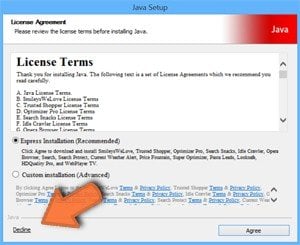 Commonly, adware or potentially unwanted applications infiltrate Internet browsers through free software downloads. Note that the safest source for downloading free software is via developers' websites only. To avoid installation of adware, be very attentive when downloading and installing free software. When installing previously-downloaded free programs, choose the custom or advanced installation options – this step will reveal any potentially unwanted applications listed for installation together with your chosen free program.
Post a comment:
If you have additional information on ads by privacy protector or it's removal please share your knowledge in the comments section below.
Frequently Asked Questions (FAQ)
What harm can adware cause?
Adware can make browsing frustrating by displaying frequent advertisements, decrease system performance, and cause similar issues.
What does adware do?
Adware shows unwanted ads. It may also be programmed to collect personal information and hijack browsers.
How do adware developers generate revenue?
Developers of adware profit from displaying ads, earning commissions whenever users click on them, register for services, or make purchases, or perform other steps.
Will Combo Cleaner remove Privacy Protector adware?
Combo Cleaner can detect and remove adware from your system. Manually deleting it may not be enough, since hidden files or background components can remain and continue running.
Share:
 Facebook
 X.com
X.com
 LinkedIn
 Copy Link

Tomas Meskauskas
Expert security researcher, professional malware analyst
I am passionate about computer security and technology. I have an experience of over 10 years working in various companies related to computer technical issue solving and Internet security. I have been working as an author and editor for pcrisk.com since 2010. Follow me on Twitter and LinkedIn to stay informed about the latest online security threats.
PCrisk security portal is brought by a company RCS LT.
Joined forces of security researchers help educate computer users about the latest online security threats. More information about the company RCS LT.
Our malware removal guides are free. However, if you want to support us you can send us a donation.
DonatePCrisk security portal is brought by a company RCS LT.
Joined forces of security researchers help educate computer users about the latest online security threats. More information about the company RCS LT.
Our malware removal guides are free. However, if you want to support us you can send us a donation.
Donate
▼ Show Discussion