

Get free scan and check if your device is infected.
Remove it nowTo use full-featured product, you have to purchase a license for Combo Cleaner. Seven days free trial available. Combo Cleaner is owned and operated by RCS LT, the parent company of PCRisk.com.
What kind of scam is CallPhantom?
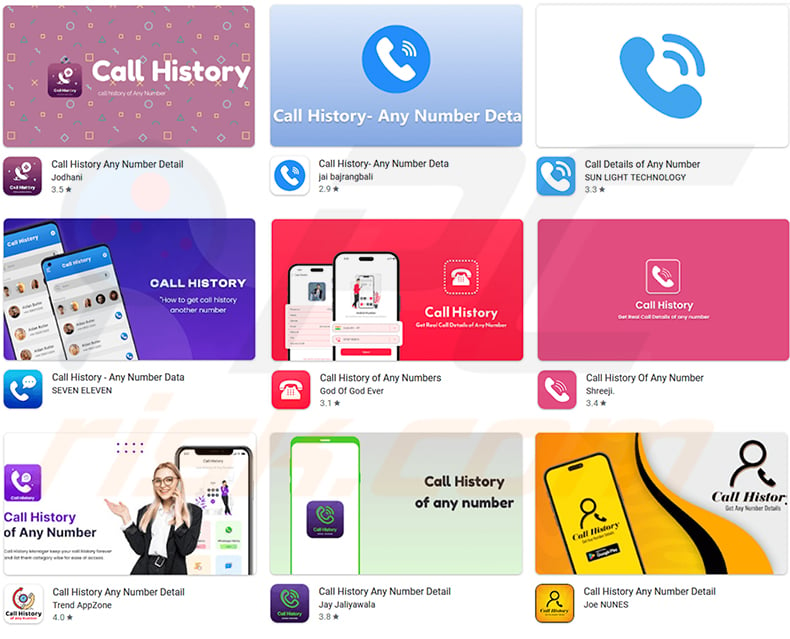
CallPhantom is a cluster of fraudulent Android applications distributed through the official Google Play Store. These apps falsely promised to retrieve call logs, SMS records, and WhatsApp history for any phone number. According to ESET researchers, the 28 apps in this campaign amassed over 7.3 million downloads before being removed.
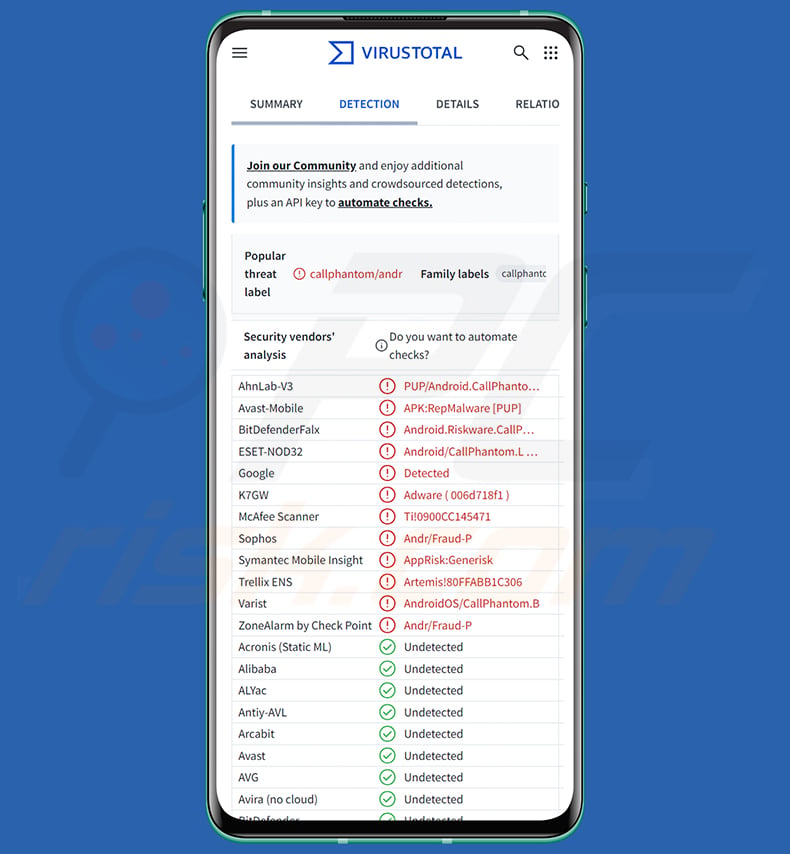
CallPhantom scam overview
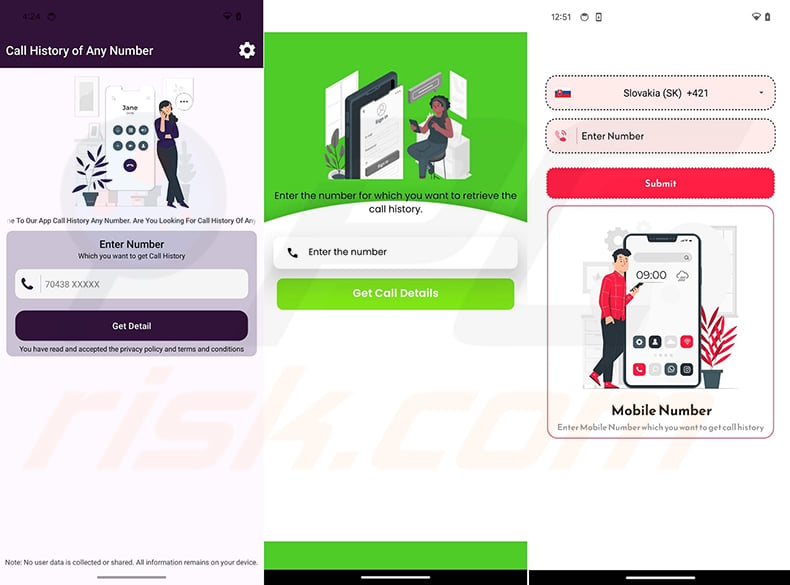
The apps in the CallPhantom cluster all made the same false promise: enter a phone number, and the app would retrieve that number's complete call history, SMS records, and even WhatsApp activity.
In reality, no such retrieval is technically possible. Android's permission model does not allow one app to access another person's private call data. The apps simply generated fabricated results using hardcoded phone numbers, predefined names, and randomly chosen timestamps, all embedded directly in the code.
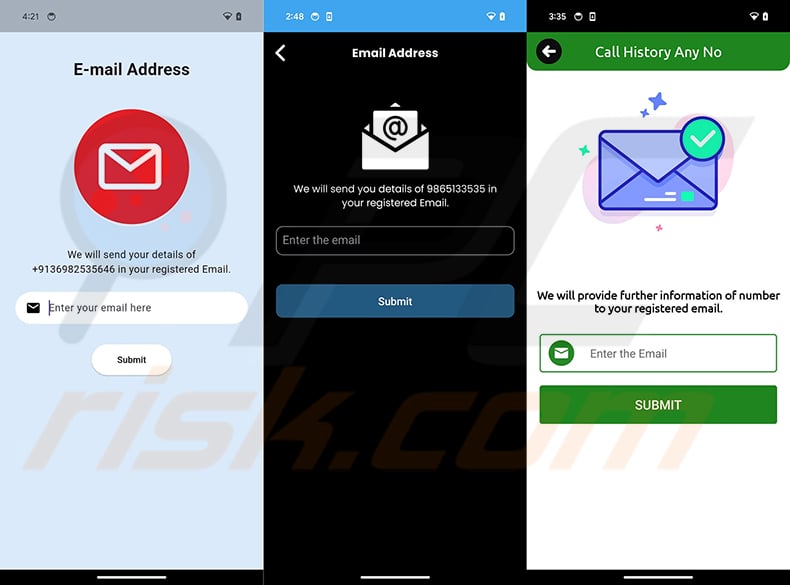
ESET identified two distinct behavioral clusters among the 28 apps. The first group displayed partial fake results immediately and demanded payment to see the supposed full history. The second group collected the user's email address, promised to deliver results there, and required payment before any email was ever sent.
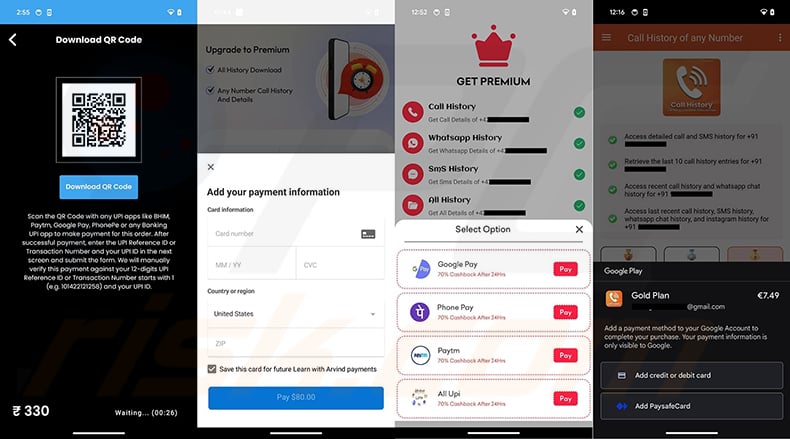
CallPhantom apps used multiple payment methods. Some processed payments through the official Google Play billing system, which users can dispute for a refund within a limited window. Others bypassed Play Store billing entirely, using third-party UPI payment apps or embedded card checkout forms. Both approaches violated Google's policies and left victims with no straightforward refund path.
Some variants retrieved payment URLs dynamically from Firebase servers. This allowed scam operators to swap out their payment accounts at any time and made the payment logic harder for automated security tools to flag.
One app added an extra layer of manipulation. If a user tried to exit without paying, the app displayed fake notification-style alerts claiming that call history results had just arrived in their inbox. This tactic was designed purely to lure the user back and complete a payment.
The campaign focused primarily on users in India and the Asia-Pacific region. Many apps preselected India's +91 country code by default. Subscription prices ranged from roughly €5 to $80 USD, offered in weekly, monthly, or yearly tiers.
In summary, CallPhantom apps deliver nothing of value. Victims lose money for entirely fabricated data, and those who entered card details through in-app checkout forms may face additional financial risk beyond the initial charge.
| Name | CallPhantom phishing scam |
| Threat Type | Android malware, malicious application, unwanted application. |
| Detection Names | Avast-Mobile (APK:RepMalware [PUP]), Combo Cleaner (Android.Riskware.CallPhantom.B), ESET-NOD32 (Android/CallPhantom.A), Sophos (Andr/Fraud-P), Full List (VirusTotal) |
| Fake Claim | Can retrieve call logs, SMS records, and WhatsApp call history of any phone number. |
| Symptoms | Unexpected charges on payment accounts, fabricated call history data displayed in the app, deceptive in-app alerts pressuring users into paying. |
| Distribution methods | Google Play Store, deceptive app listings with fake reviews. |
| Damage | Monetary losses, loss of payment card details, potential additional financial fraud. |
| Malware Removal (Windows) |
To eliminate possible malware infections, scan your computer with legitimate antivirus software. Our security researchers recommend using Combo Cleaner. Download Combo CleanerTo use full-featured product, you have to purchase a license for Combo Cleaner. 7 days free trial available. Combo Cleaner is owned and operated by RCS LT, the parent company of PCRisk.com. |
Android-centered scam examples
CallPhantom illustrates how a fraudulent app can cause real financial harm without requesting a single sensitive permission. The scheme depended entirely on users believing an impossible claim, paying for results that were never real, and having no easy way to recover money once UPI or card payments were processed.
As a general rule, any app claiming to access another person's private communication data should be treated as fraudulent from the outset.
It is worth noting that scams campaigns like CallPhantom are rather rare - in most cases cyber criminals use scare tactics to trick users into performing certain actions (e.g., downloading software, purchasing something, etc.) Few examples of such scams are: A Virus Has Been Detected On Your Phone, Your System Is Infected With 3 Viruses, and Android Has Detected A Wiretap On Your Phone.
How did CallPhantom applications infiltrate my device?
All 28 apps in the CallPhantom cluster were distributed through the official Google Play Store. They used misleading app names, fabricated descriptions, and inflated ratings to appear legitimate and attract downloads.
Google removed all identified apps after ESET reported its findings in December 2025. Users who installed one of these apps before removal may still have it on their device. Checking your installed apps and removing anything matching this campaign's description is strongly recommended.
How to avoid installation of unwanted apps?
Download apps only from the official Google Play Store or verified developer websites. Read user reviews critically, since a large volume of suspiciously vague or uniformly positive reviews with no criticism can signal manipulation.
Be especially skeptical of any app claiming to access another person's private data, such as call logs, messages, or location history. No legitimate Android app can do this. Use reliable mobile security software and keep your device's operating system updated to reduce exposure to new threats.
Appearance of CallPhantom scam apps' email submission interface:
Examples of CallPhantom fraudulent apps listed on the Google Play Store:
CallPhantom scam app interfaces requesting a phone number to look up:
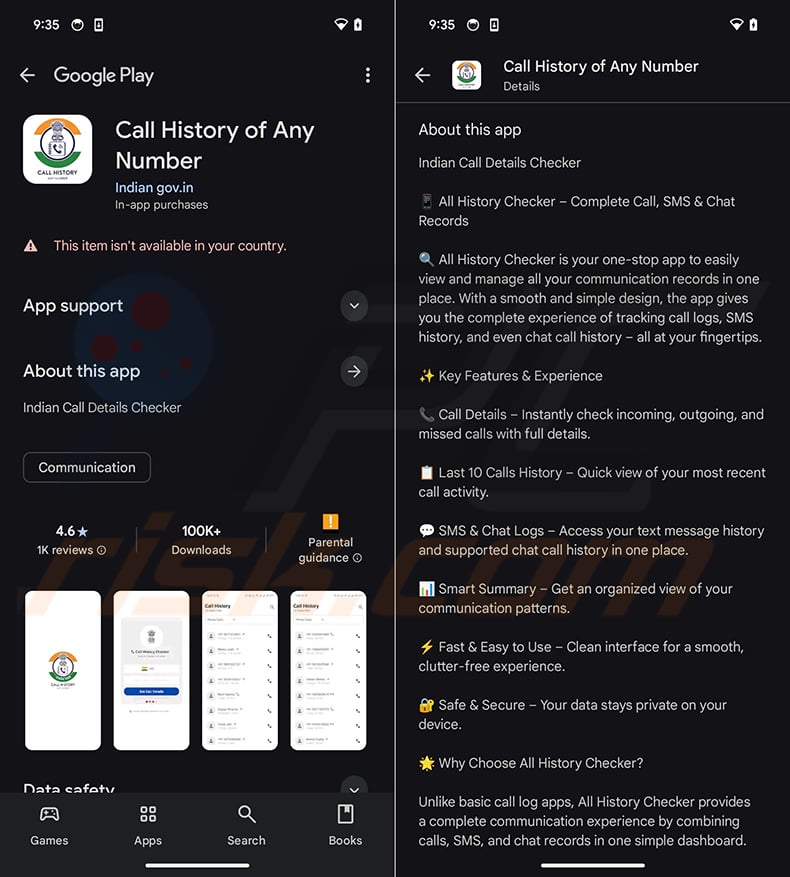
A CallPhantom app using fake Indian government branding on the Google Play Store:
CallPhantom scam apps displaying payment screens for fake call history results:
Quick menu:
- Introduction
- How to delete browsing history from the Chrome web browser?
- How to disable browser notifications in the Chrome web browser?
- How to reset the Chrome web browser?
- How to delete browsing history from the Firefox web browser?
- How to disable browser notifications in the Firefox web browser?
- How to reset the Firefox web browser?
- How to uninstall potentially unwanted and/or malicious applications?
- How to boot the Android device in "Safe Mode"?
- How to check the battery usage of various applications?
- How to check the data usage of various applications?
- How to install the latest software updates?
- How to reset the system to its default state?
- How to disable applications that have administrator privileges?
Delete browsing history from the Chrome web browser:
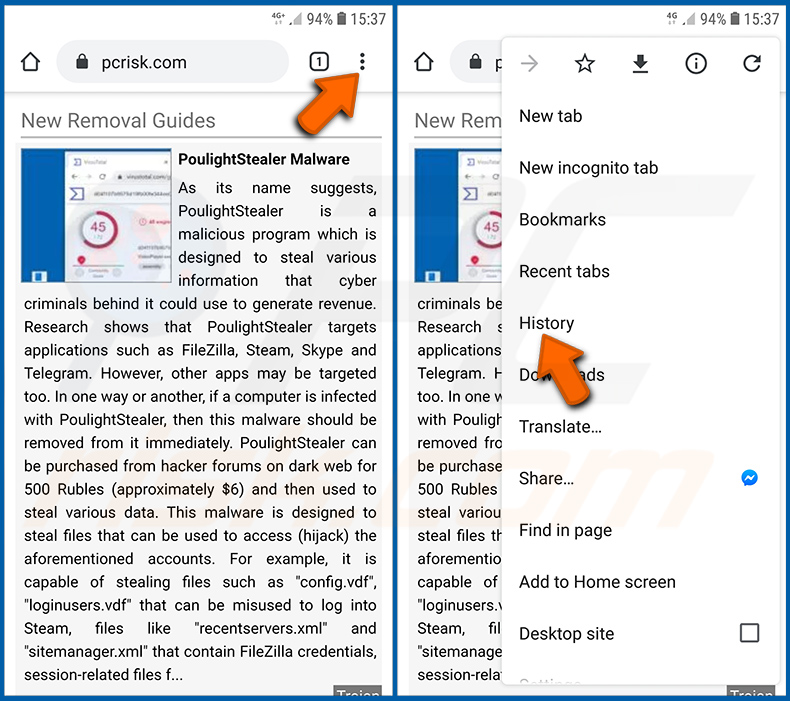
Tap the "Menu" button (three dots on the right-upper corner of the screen) and select "History" in the opened dropdown menu.
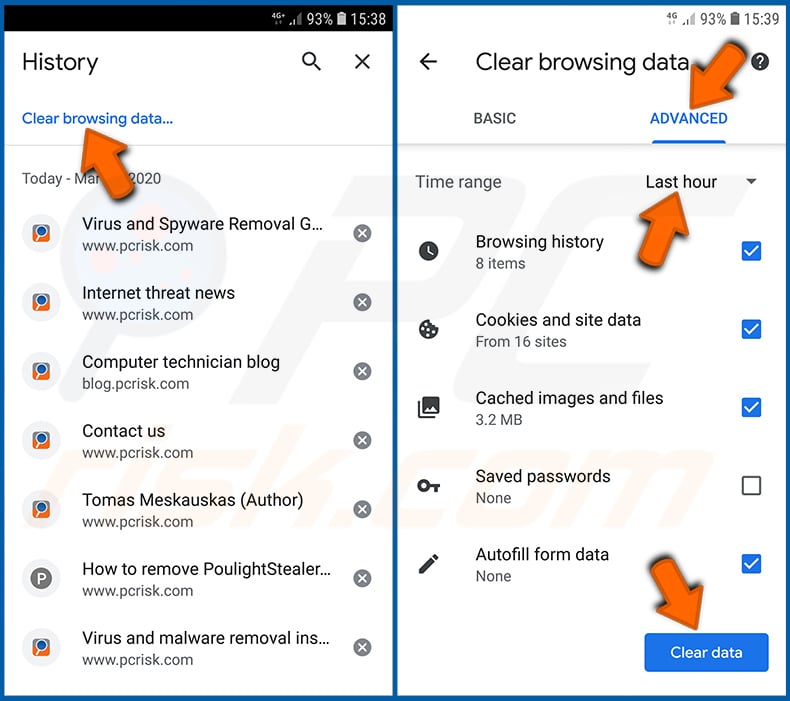
Tap "Clear browsing data", select "ADVANCED" tab, choose the time range and data types you want to delete and tap "Clear data".
Disable browser notifications in the Chrome web browser:
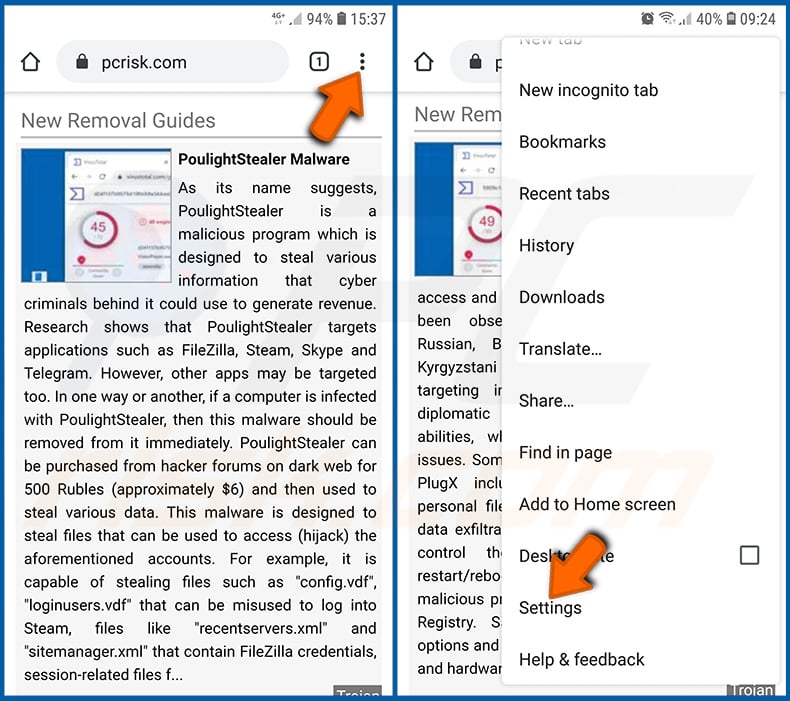
Tap the "Menu" button (three dots on the right-upper corner of the screen) and select "Settings" in the opened dropdown menu.
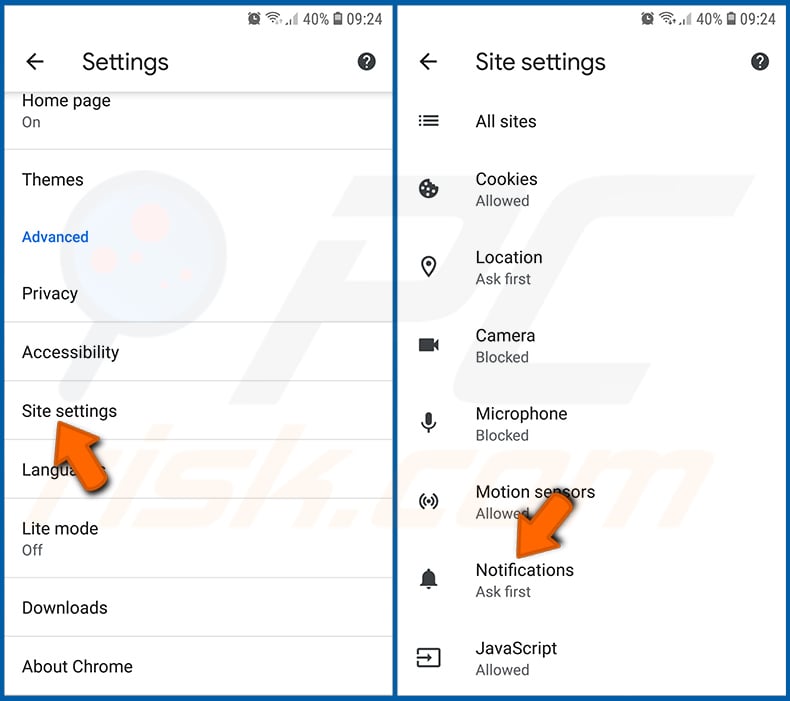
Scroll down until you see "Site settings" option and tap it. Scroll down until you see "Notifications" option and tap it.
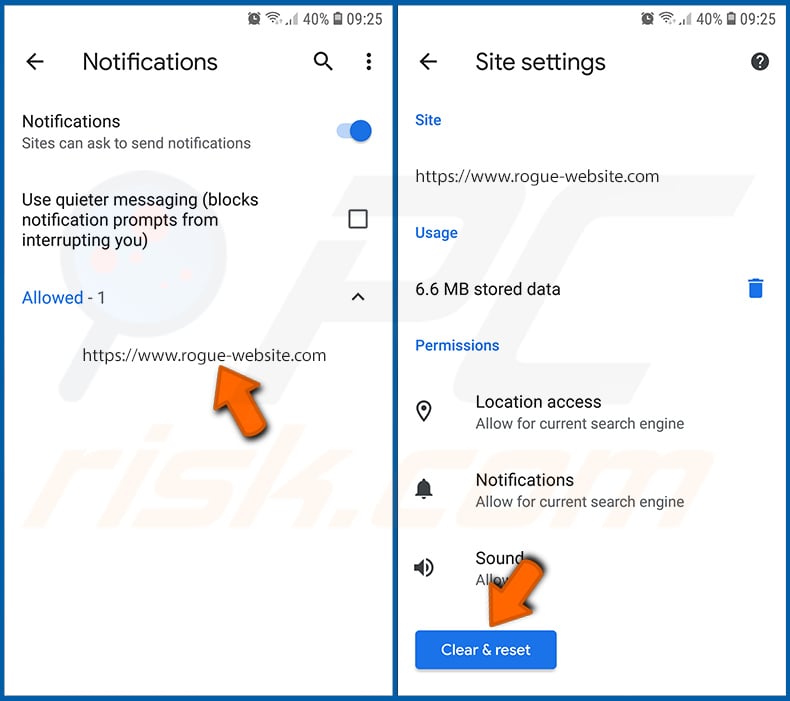
Find the websites that deliver browser notifications, tap on them and click "Clear & reset". This will remove permissions granted for these websites to deliver notifications. However, once you visit the same site again, it may ask for a permission again. You can choose whether to give these permissions or not (if you choose to decline the website will go to "Blocked" section and will no longer ask you for the permission).
Reset the Chrome web browser:
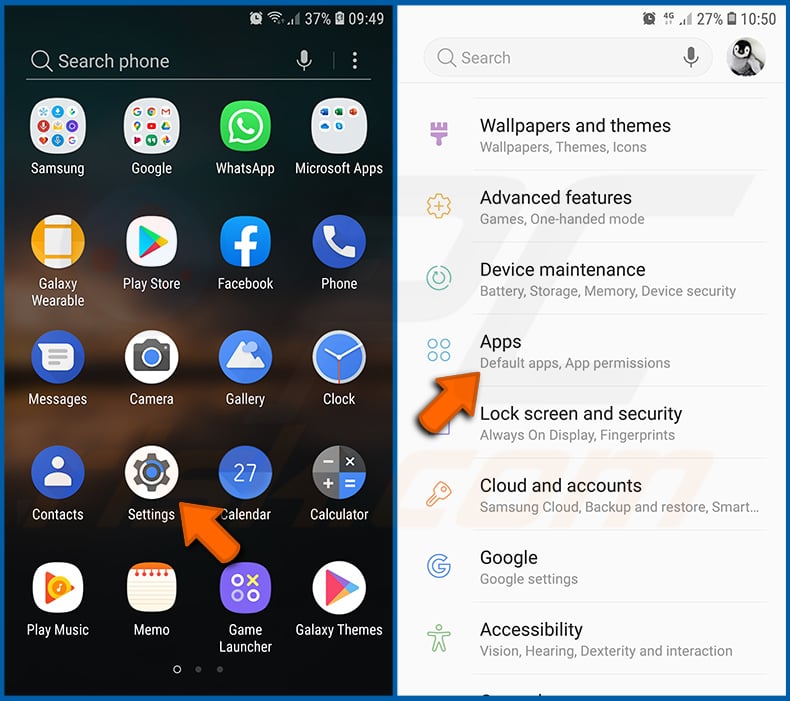
Go to "Settings", scroll down until you see "Apps" and tap it.
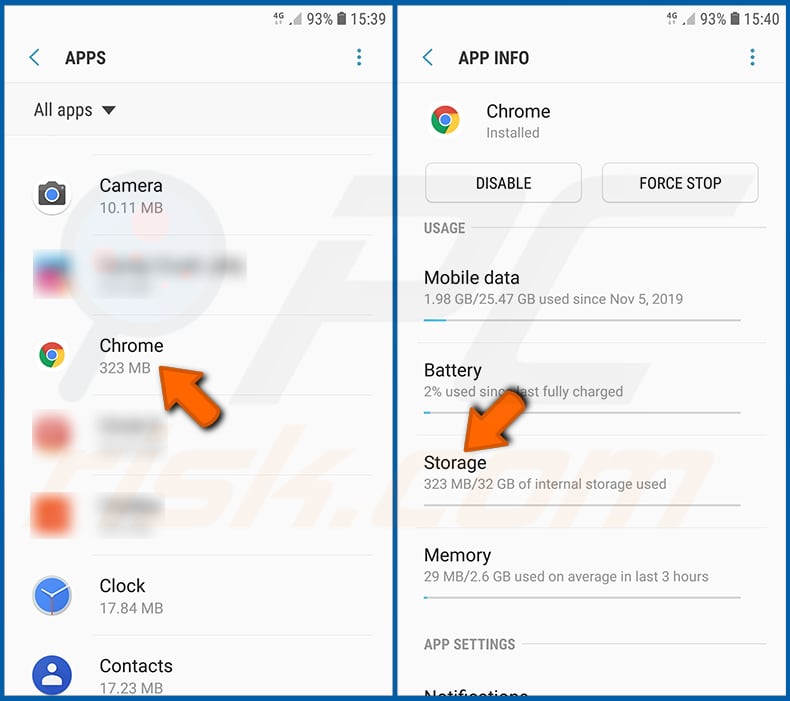
Scroll down until you find "Chrome" application, select it and tap "Storage" option.
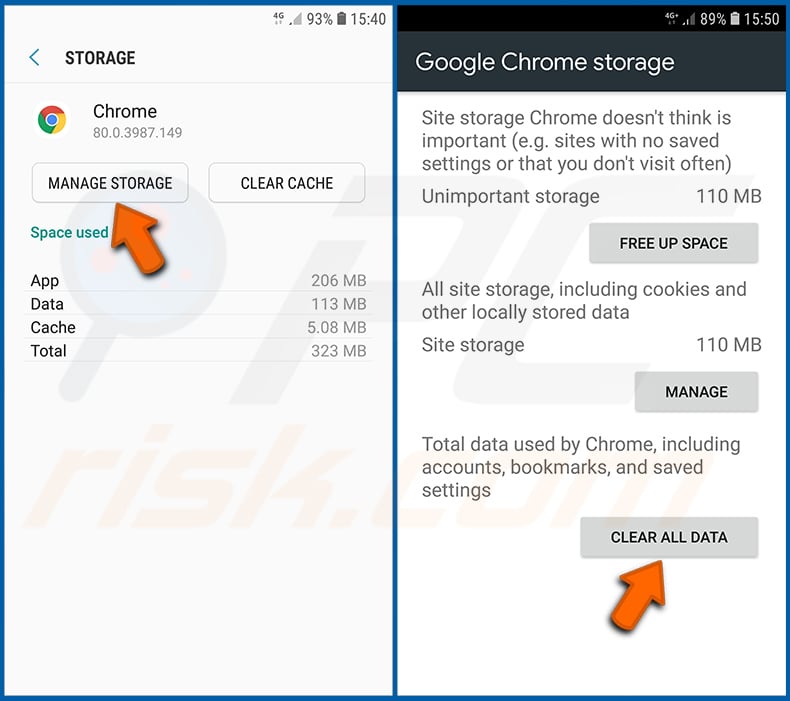
Tap "MANAGE STORAGE", then "CLEAR ALL DATA" and confirm the action by taping "OK". Note that resetting the browser will eliminate all data stored within. This means that all saved logins/passwords, browsing history, non-default settings and other data will be deleted. You will also have to re-login into all websites as well.
Delete browsing history from the Firefox web browser:
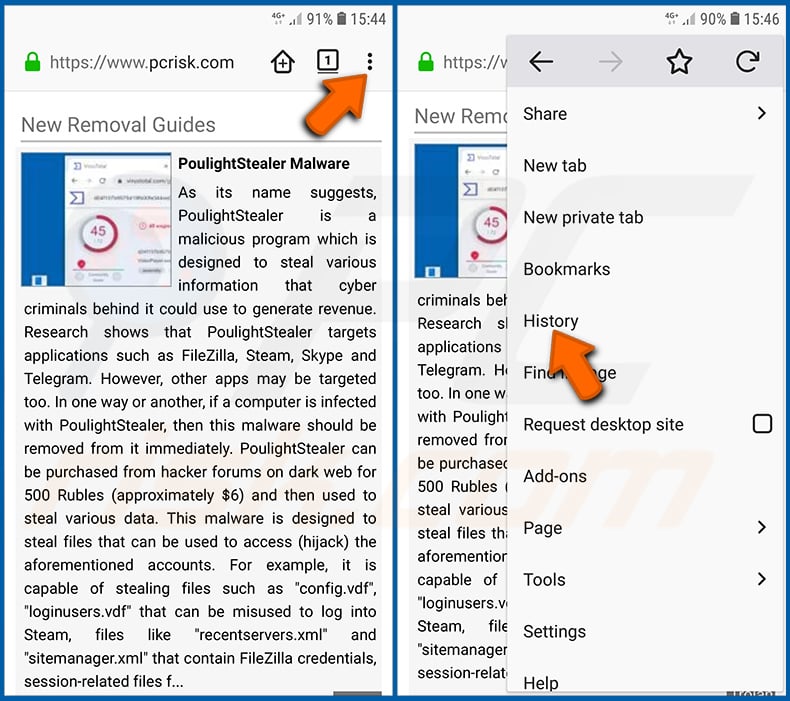
Tap the "Menu" button (three dots on the right-upper corner of the screen) and select "History" in the opened dropdown menu.
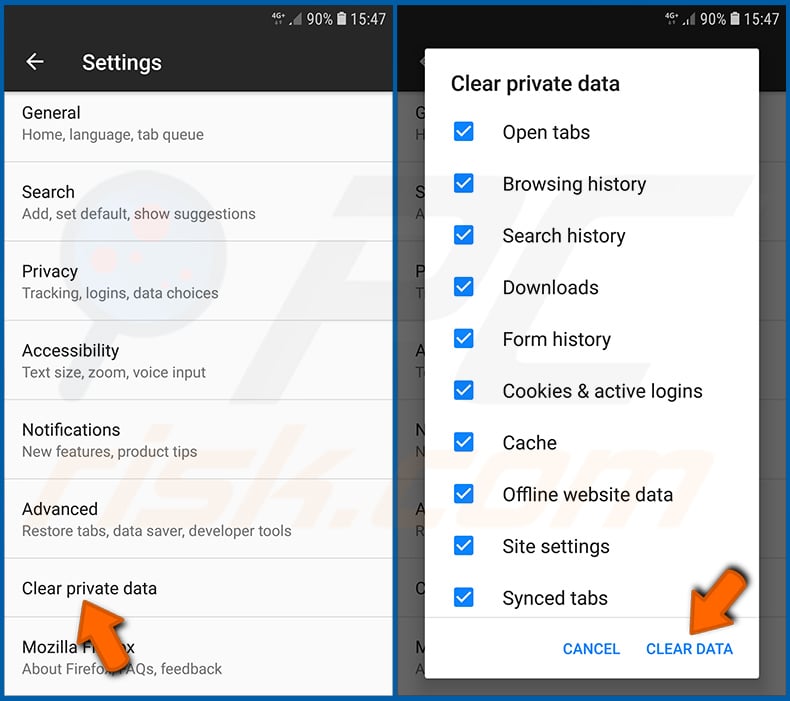
Scroll down until you see "Clear private data" and tap it. Select data types you want to remove and tap "CLEAR DATA".
Disable browser notifications in the Firefox web browser:
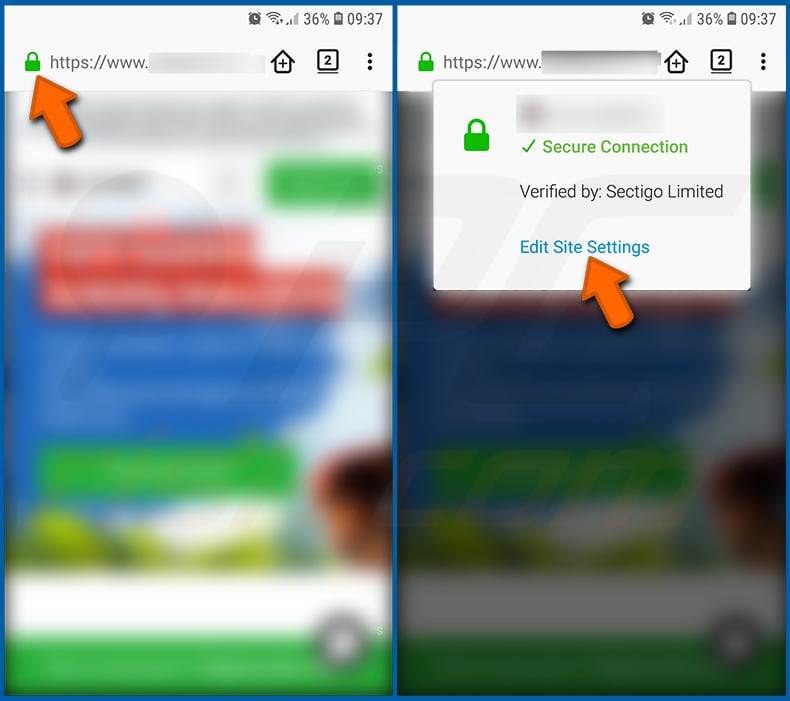
Visit the website that is delivering browser notifications, tap the icon displayed on the left of URL bar (the icon will not necessarily be a "Lock") and select "Edit Site Settings".
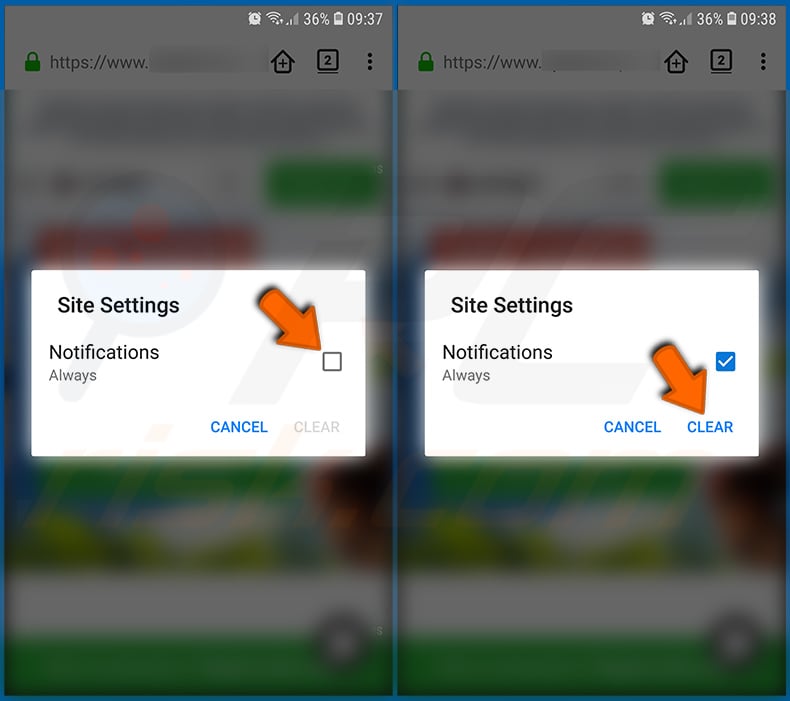
In the opened pop-up opt-in the "Notifications" option and tap "CLEAR".
Reset the Firefox web browser:
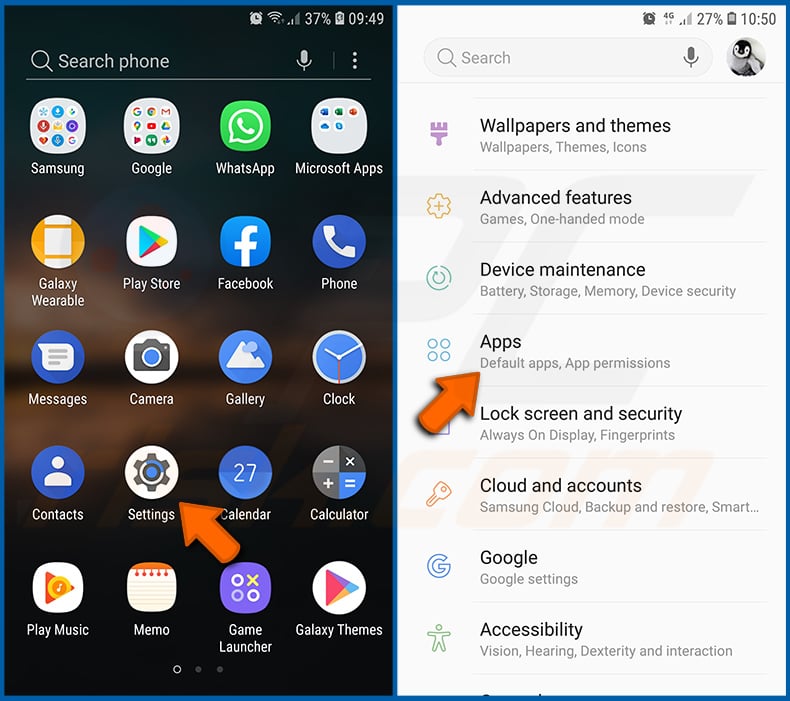
Go to "Settings", scroll down until you see "Apps" and tap it.
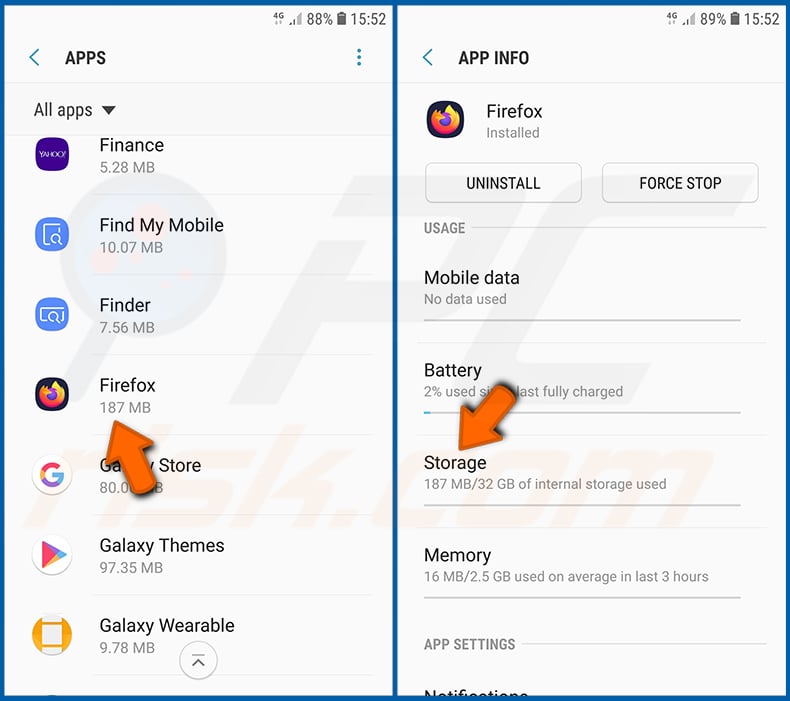
Scroll down until you find "Firefox" application, select it and tap "Storage" option.
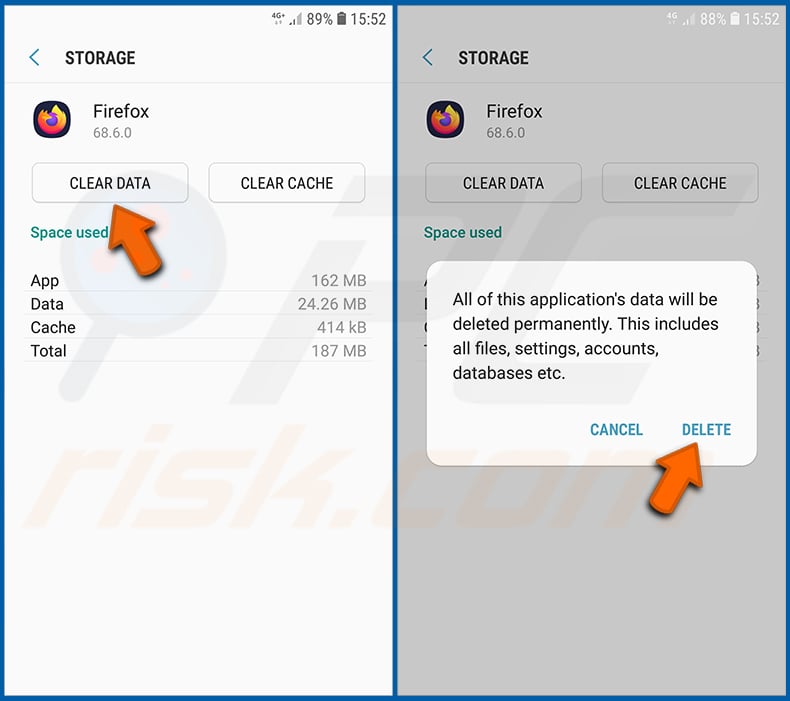
Tap "CLEAR DATA" and confirm the action by taping "DELETE". Note that resetting the browser will eliminate all data stored within. This means that all saved logins/passwords, browsing history, non-default settings and other data will be deleted. You will also have to re-login into all websites as well.
Uninstall potentially unwanted and/or malicious applications:
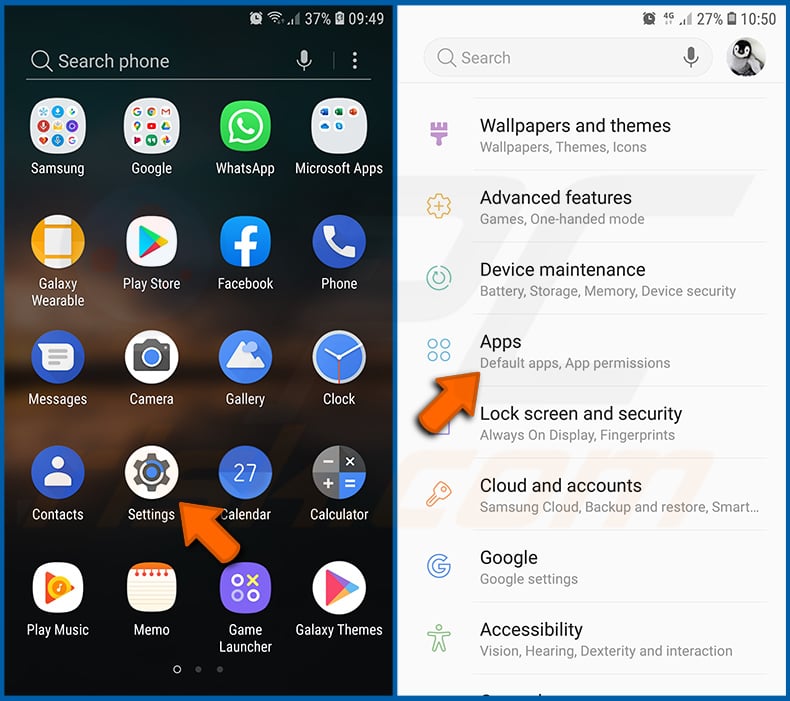
Go to "Settings", scroll down until you see "Apps" and tap it.
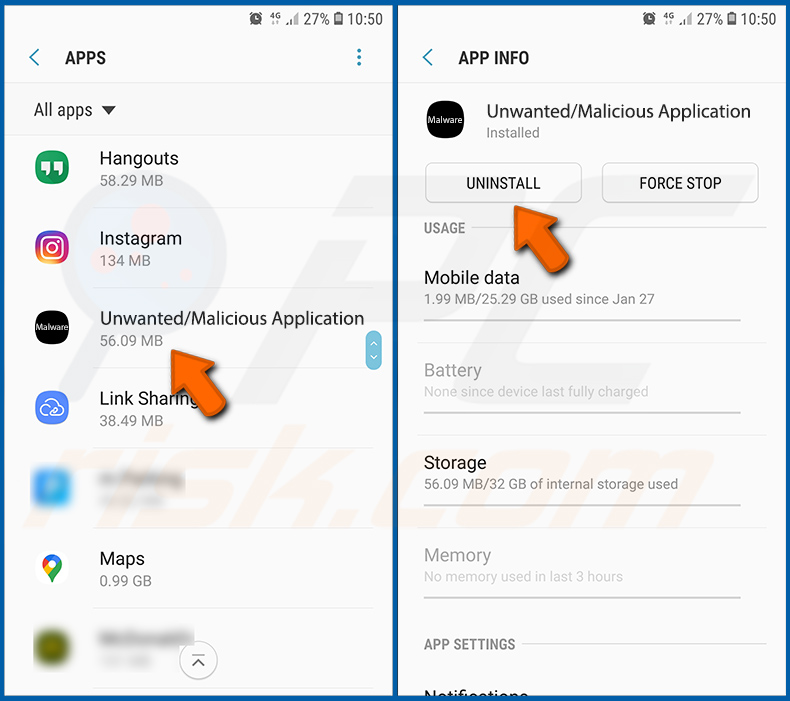
Scroll down until you see a potentially unwanted and/or malicious application, select it and tap "Uninstall". If, for some reason, you are unable to remove the selected app (e.g., you are prompted with an error message), you should try using the "Safe Mode".
Boot the Android device in "Safe Mode":
The "Safe Mode" in Android operating system temporarily disables all third-party applications from running. Using this mode is a good way to diagnose and solve various issues (e.g., remove malicious applications that prevent users you from doing so when the device is running "normally").
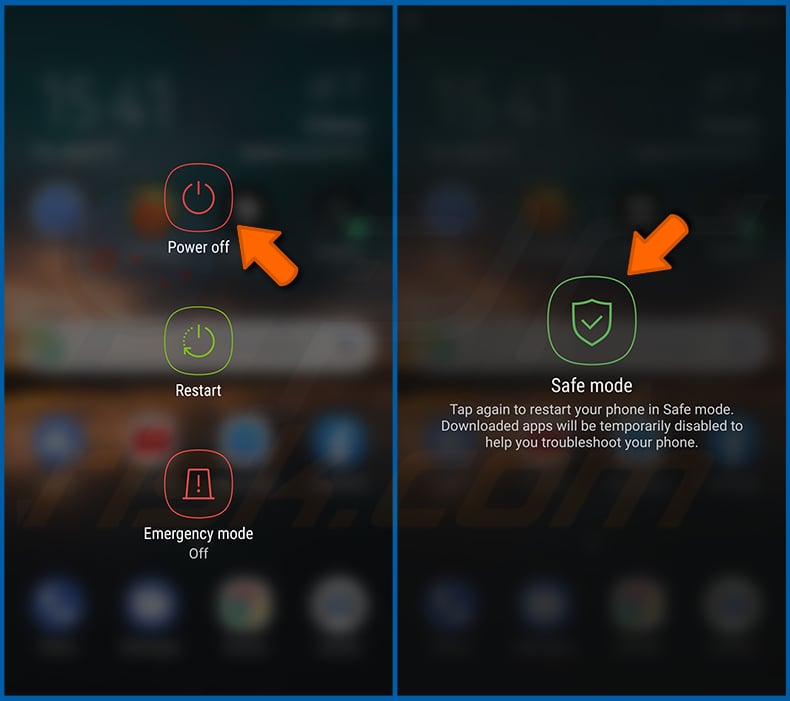
Push the "Power" button and hold it until you see the "Power off" screen. Tap the "Power off" icon and hold it. After a few seconds the "Safe Mode" option will appear and you'll be able run it by restarting the device.
Check the battery usage of various applications:
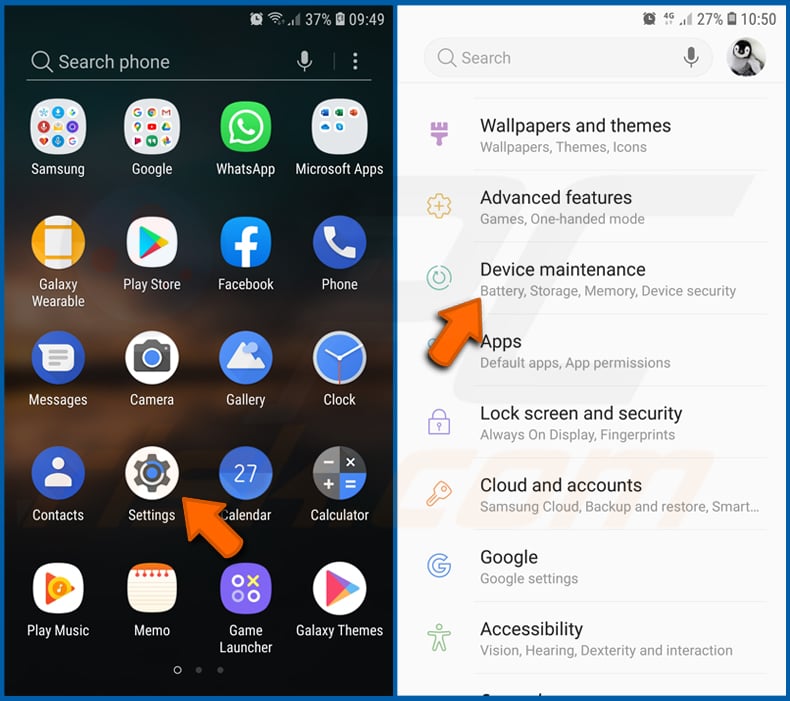
Go to "Settings", scroll down until you see "Device maintenance" and tap it.
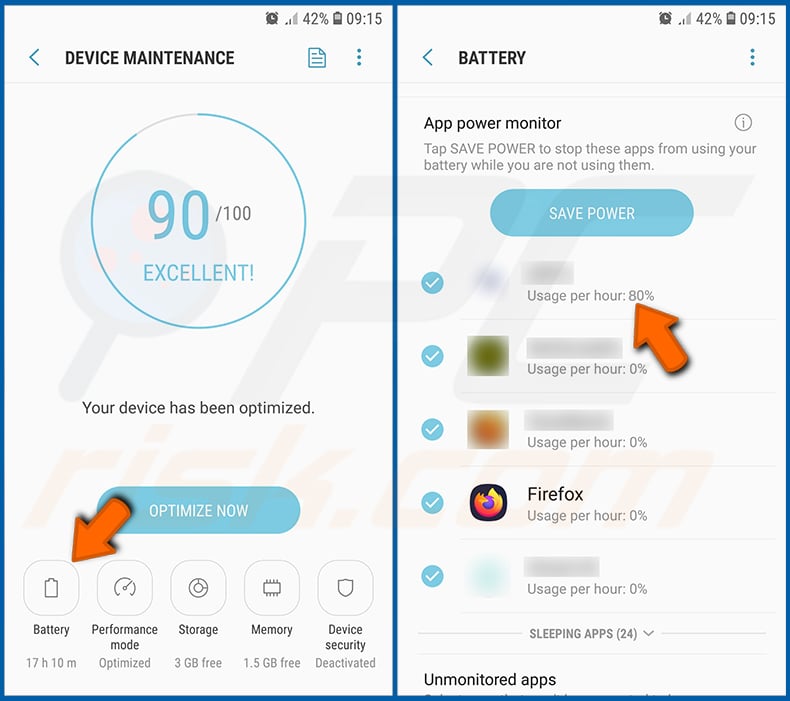
Tap "Battery" and check the usage of each application. Legitimate/genuine applications are designed to use as low energy as possible in order to provide the best user experience and to save power. Therefore, high battery usage may indicate that the application is malicious.
Check the data usage of various applications:
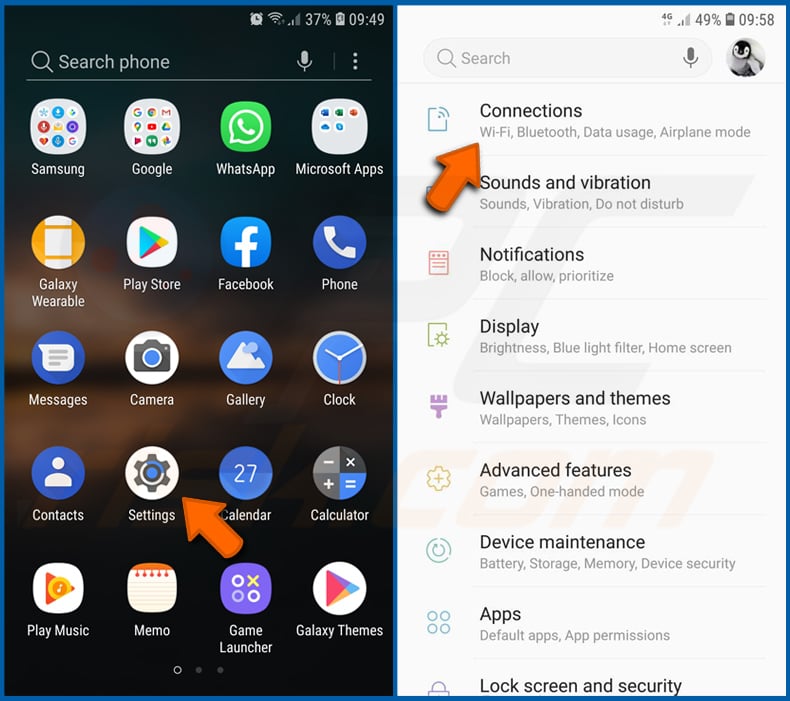
Go to "Settings", scroll down until you see "Connections" and tap it.
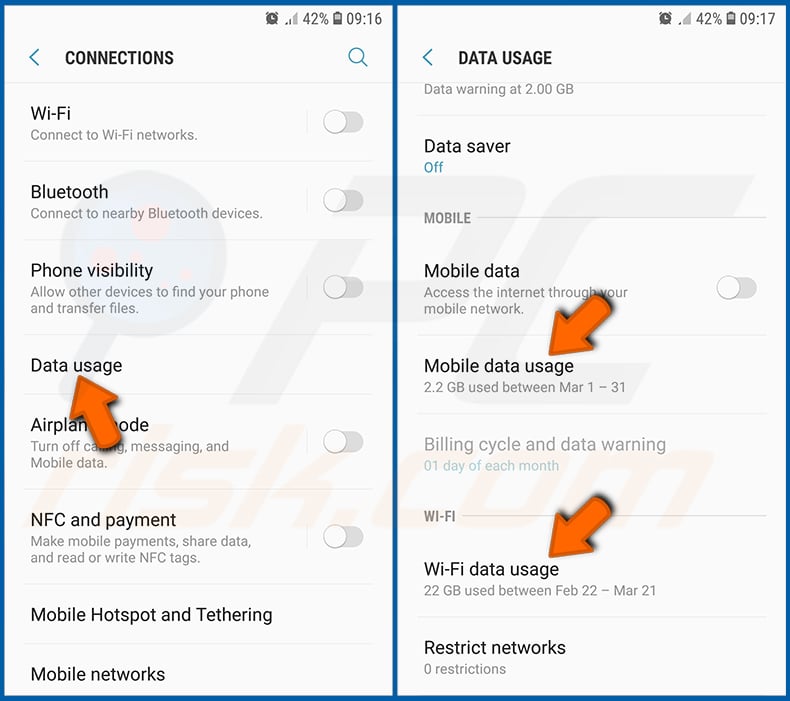
Scroll down until you see "Data usage" and select this option. As with battery, legitimate/genuine applications are designed to minimize data usage as much as possible. This means that huge data usage may indicate presence of malicious application. Note that some malicious applications might be designed to operate when the device is connected to wireless network only. For this reason, you should check both Mobile and Wi-Fi data usage.
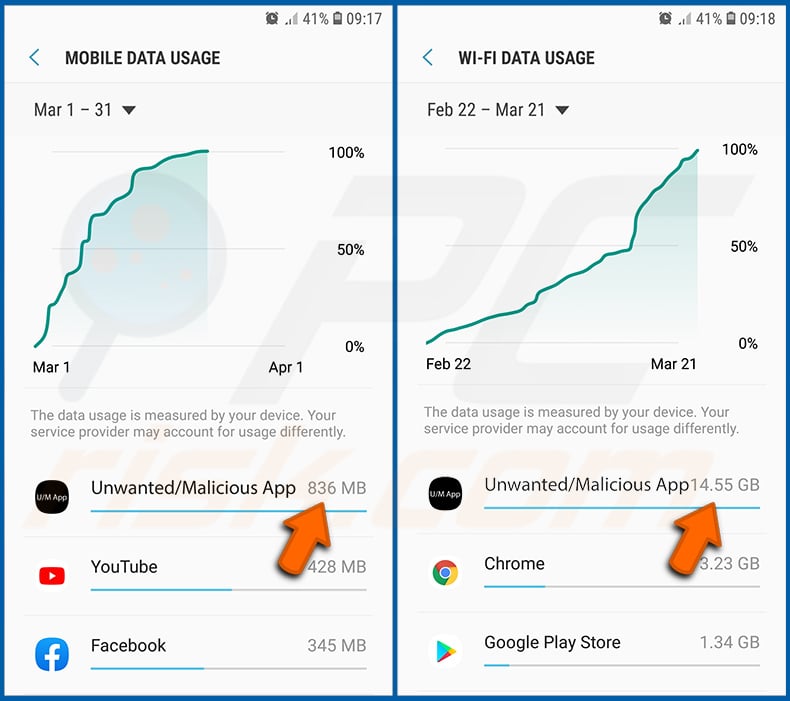
If you find an application that uses a lot of data even though you never use it, then we strongly advise you to uninstall it as soon as possible.
Install the latest software updates:
Keeping the software up-to-date is a good practice when it comes to device safety. The device manufacturers are continually releasing various security patches and Android updates in order to fix errors and bugs that can be abused by cyber criminals. An outdated system is way more vulnerable, which is why you should always be sure that your device's software is up-to-date.
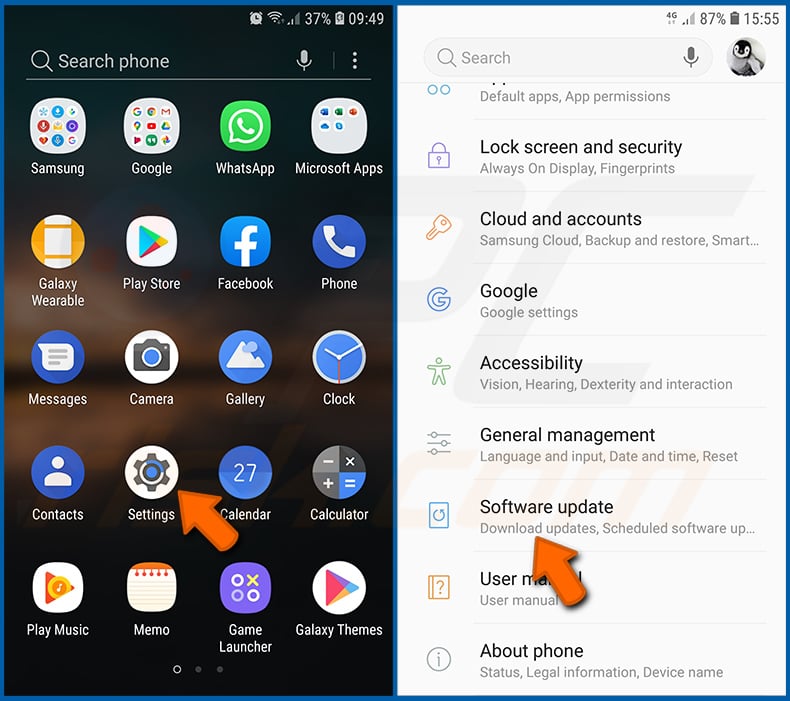
Go to "Settings", scroll down until you see "Software update" and tap it.
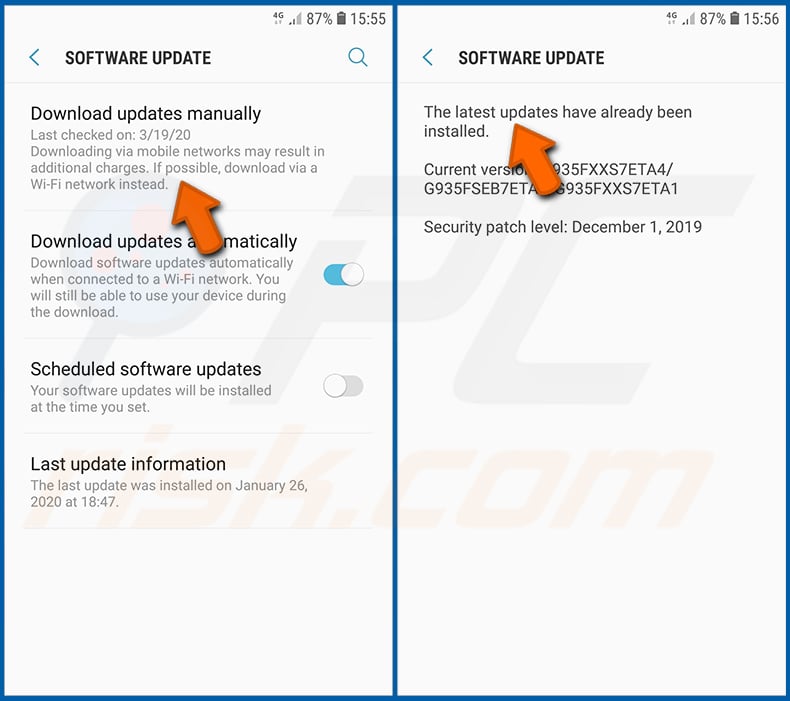
Tap "Download updates manually" and check if there are any updates available. If so, install them immediately. We also recommend to enable the "Download updates automatically" option - it will enable the system to notify you once an update is released and/or install it automatically.
Reset the system to its default state:
Performing a "Factory Reset" is a good way to remove all unwanted applications, restore system's settings to default and clean the device in general. However, you must keep in mind that all data within the device will be deleted, including photos, video/audio files, phone numbers (stored within the device, not the SIM card), SMS messages, and so forth. In other words, the device will be restored to its primal state.
You can also restore the basic system settings and/or simply network settings as well.
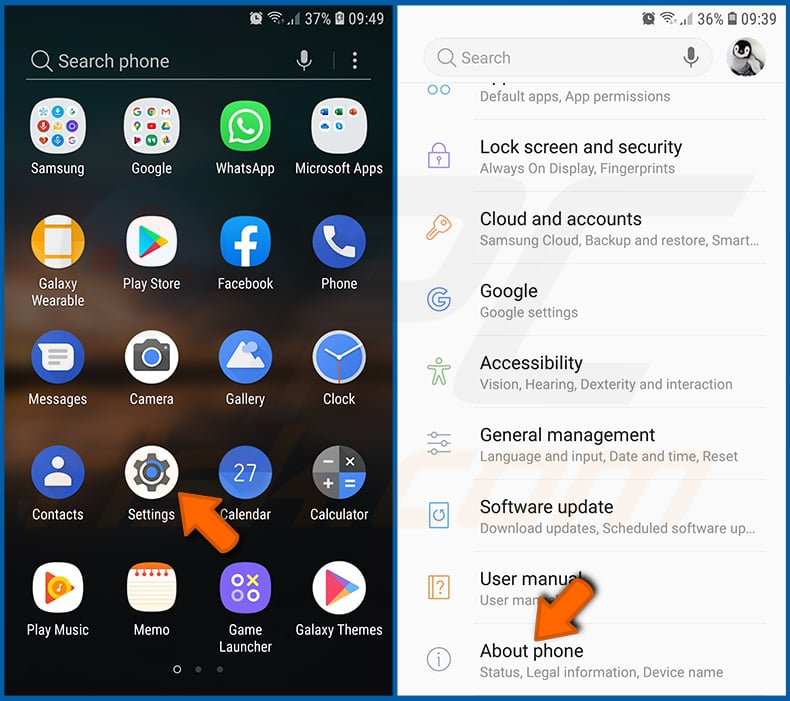
Go to "Settings", scroll down until you see "About phone" and tap it.
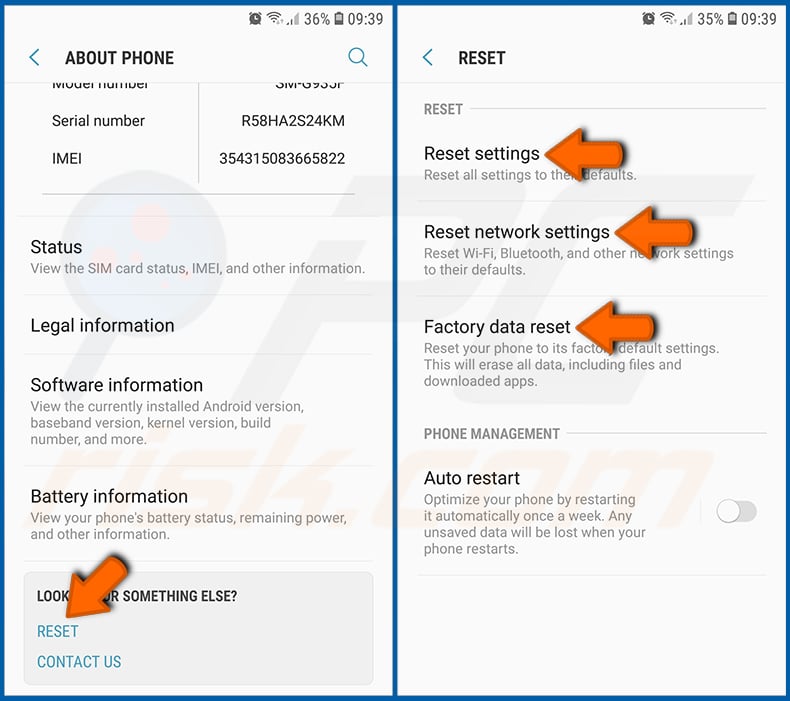
Scroll down until you see "Reset" and tap it. Now choose the action you want to perform:
"Reset settings" - restore all system settings to default;
"Reset network settings" - restore all network-related settings to default;
"Factory data reset" - reset the entire system and completely delete all stored data;
Disable applications that have administrator privileges:
If a malicious application gets administrator-level privileges it can seriously damage the system. To keep the device as safe as possible you should always check what apps have such privileges and disable the ones that shouldn't.
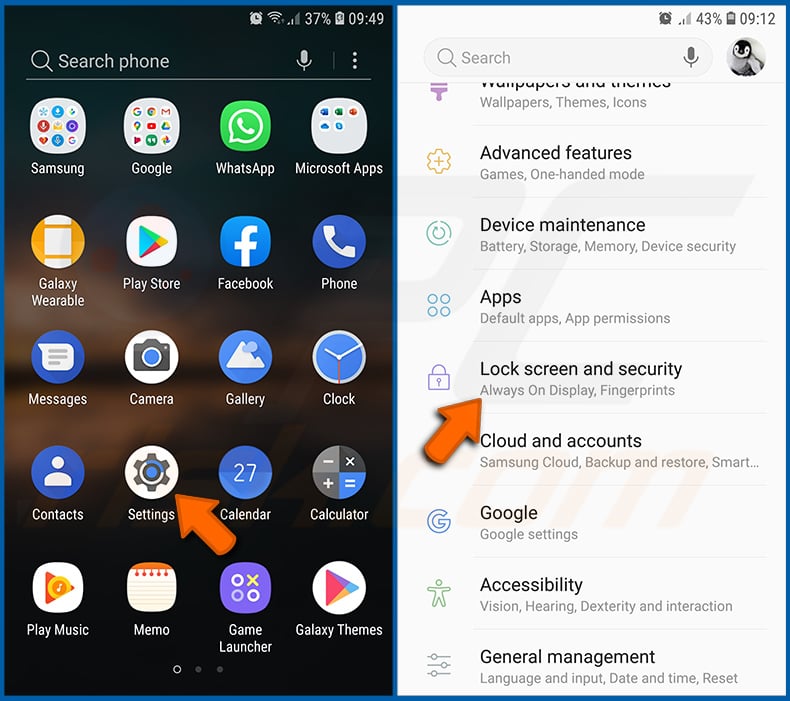
Go to "Settings", scroll down until you see "Lock screen and security" and tap it.
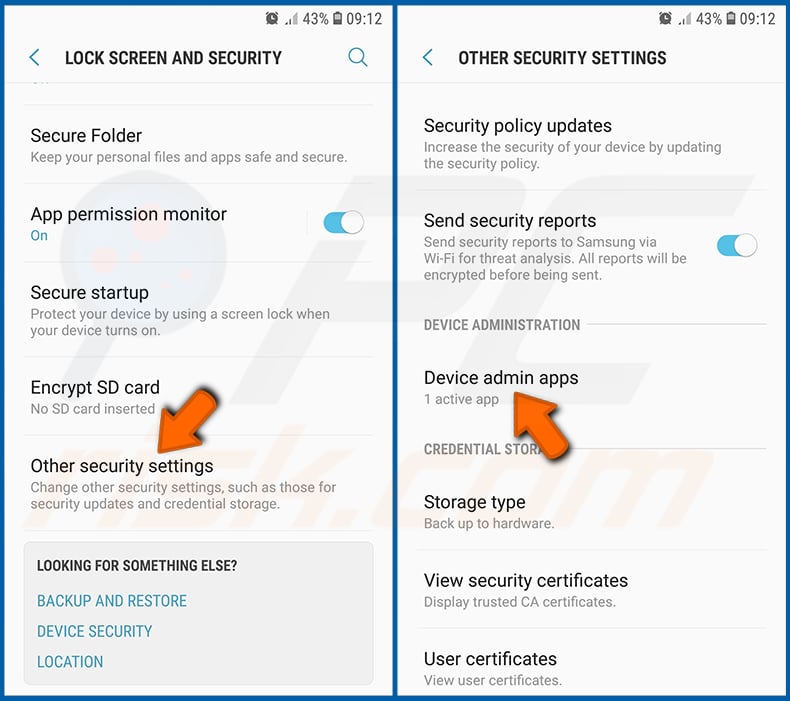
Scroll down until you see "Other security settings", tap it and then tap "Device admin apps".
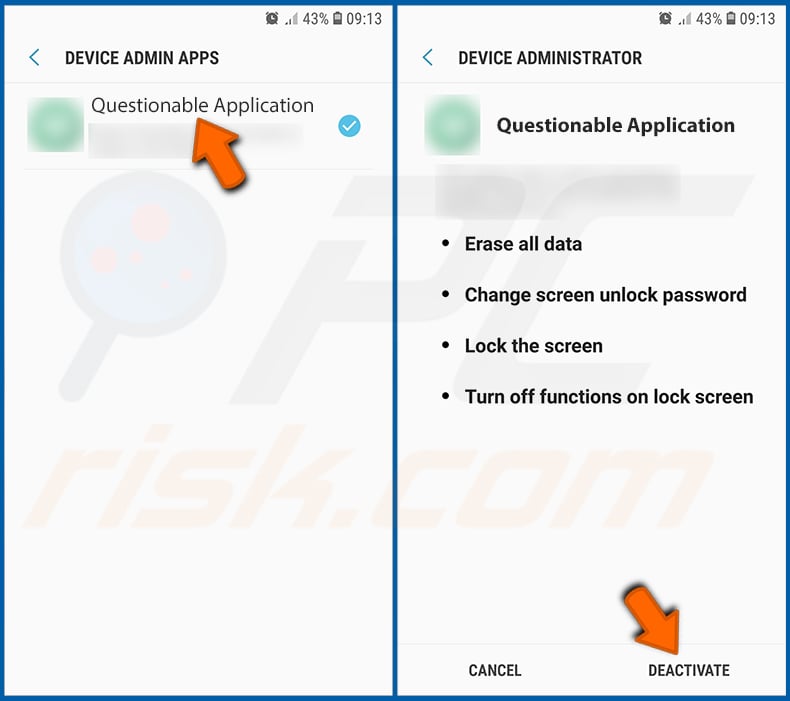
Identify applications that should not have administrator privileges, tap them and then tap "DEACTIVATE".
Frequently Asked Questions (FAQ)
My Android device has a CallPhantom app installed - should I format my storage device to get rid of it?
Formatting is not necessary. Simply uninstalling the app through your Android Settings should be enough. Running a reputable mobile security tool like Combo Cleaner can confirm that no residual data remains after removal.
What are the biggest issues that CallPhantom scam apps can cause?
The primary harm is financial. Users pay subscription fees for call history data that is entirely fabricated. Those who entered payment card details into in-app checkout forms face an additional risk of card fraud.
Deceptive fake alerts within the app may also persist after the first payment, pressuring users into paying again. There is no way to receive a refund through Google for payments made via third-party UPI apps or in-app card forms.
What is the purpose of the CallPhantom scam?
The scheme is purely profit-driven. Operators collected subscription fees from users who believed they were buying access to real call records. Every payment made was for fabricated, worthless data.
How did CallPhantom apps infiltrate my Android device?
The apps were listed on the official Google Play Store with misleading names, fake positive reviews, and deceptive descriptions. Users found them through normal app store searches and installed them believing the call history claims were legitimate.
Will Combo Cleaner protect me from malware?
Combo Cleaner can detect and remove the vast majority of known Android malware. Running a complete device scan is essential, as some threats leave residual files that a manual uninstall alone may not fully clear.
Share:
 Facebook
 X.com
X.com
 LinkedIn
 Copy Link

Tomas Meskauskas
Expert security researcher, professional malware analyst
I am passionate about computer security and technology. I have an experience of over 10 years working in various companies related to computer technical issue solving and Internet security. I have been working as an author and editor for pcrisk.com since 2010. Follow me on Twitter and LinkedIn to stay informed about the latest online security threats.
PCrisk security portal is brought by a company RCS LT.
Joined forces of security researchers help educate computer users about the latest online security threats. More information about the company RCS LT.
Our malware removal guides are free. However, if you want to support us you can send us a donation.
DonatePCrisk security portal is brought by a company RCS LT.
Joined forces of security researchers help educate computer users about the latest online security threats. More information about the company RCS LT.
Our malware removal guides are free. However, if you want to support us you can send us a donation.
Donate
▼ Show Discussion