
We may earn commissions from products we recommend. Learn more.
How to opt out of SearchPeopleFREE in 2026

How to opt out of SearchPeopleFREE in 2026?
SearchPeopleFREE is a people-search and data broker website that collects, aggregates, and publishes personal information in a searchable format. A single listing may reveal your name, current and previous addresses, phone numbers, email addresses, relatives, and other profile details. The presence of such personal data online can make it easier for strangers, marketers, or scammers to locate you online. While these sites typically provide an opt-out option, the process is not always straightforward or permanent.
This article explains what SearchPeopleFREE is, the risks associated with data broker websites, how to manually remove your information, steps to take if the standard opt-out process fails, and how automated privacy services can offer ongoing protection.
Opt out of SearchPeopleFREE with Incogni
Table of Contents:
- Introduction
- What is SearchPeopleFREE?
- How to manually remove your information from SearchPeopleFREE?
- Common issues with manual information removal
- How to remove your information from SearchPeopleFREE automatically?
- Why you should remove your information from SearchPeopleFREE?
- How to prevent data brokers from collecting more of your data?
- In closing
- Frequently Asked Questions (FAQ)
What is SearchPeopleFREE?
SearchPeopleFREE is a people-search website that collects information from public records and other sources to create searchable profiles. It may display names, addresses, phone numbers, email addresses, and similar details. According to the Federal Trade Commission (FTC) and privacy experts, people-search services and data brokers often compile data from public records, commercial sources, online activity, and third-parties into profiles that can be searched or sold.
This level of exposure raises serious privacy concerns. Consumer and privacy authorities warn that data broker and people-search sites can increase the risk of identity theft, scams, spam, harassment, stalking, doxxing, and other misuse. The FTC notes the industry's lack of transparency, while the Consumer Financial Protection Bureau (CFPB) warns that data brokers can enable scamming, stalking, and spying. Other security guidance highlights that broad online exposure of personal details can render a person more vulnerable.
The issue is not just data visibility, but also how it is packaged for easy misuse. Instead of compiling information from various sources, people-search sites aggregate it into comprehensive profiles. Hence, a single search can provide enough information for social engineering, impersonation, or unwelcome contact. This aggregation is a key reason privacy advocates and regulators continue to scrutinize data brokers.
How to manually remove your information from SearchPeopleFREE?
Removing your information from SearchPeopleFREE is important because each visible listing makes it easier for others to identify, contact, or profile you. Most people-search sites offer opt-outs, though the process can be tedious, may require identity verification, and often needs to be repeated. Regardless of these challenges, a manual opt-out is worthwhile if you want to reduce your exposure quickly without paying for a removal service.
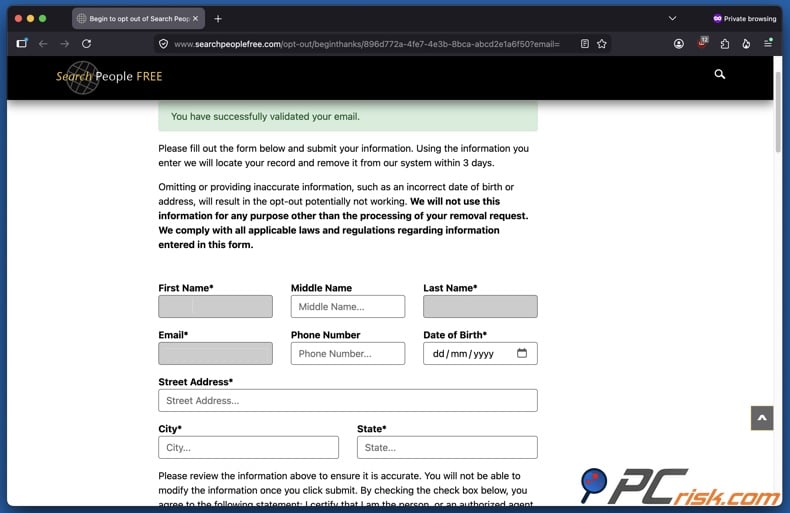
Important note: the opt-out workflow for SearchPeopleFREE has seemingly changed. Previously, initiating the process required only entering your email address in the opt-out page, and, following an email confirmation, users were redirected to a search function - wherein they could search and remove specific listings. However, during our tests, the confirmatory email no longer redirected to any search page; instead, it led to a form for entering the information you wanted removed. Hence, we recommend first verifying which personal details are on SearchPeopleFREE, as mismatched information might prevent the removal of your profile(s).
The current opt-out process works as follows:
1. Open the SearchPeopleFREE opt-out page. If the website layout changes, start on the main website and look for a privacy, "Do Not Sell or Share My Personal Information", or opt-out link in the footer or privacy section.
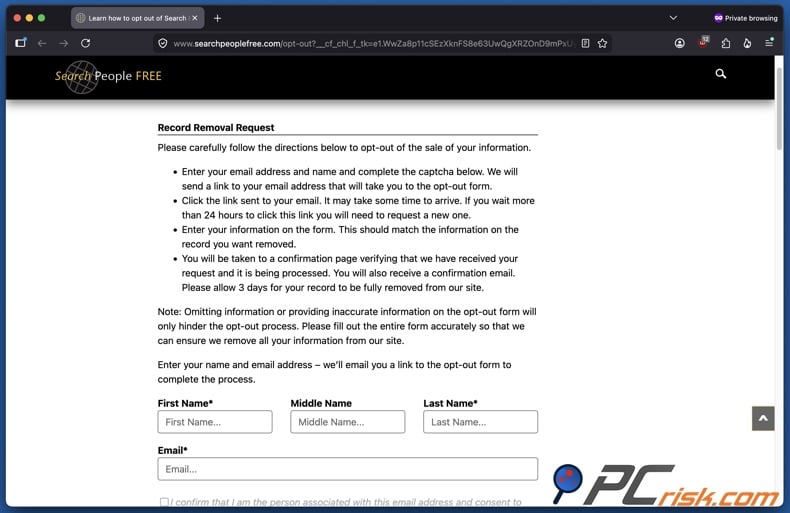
2. Enter your name and chosen email address, check the confirmation box, complete CAPTCHA, and click the button to start the removal process. If possible, use a secondary email address reserved for opt-outs.
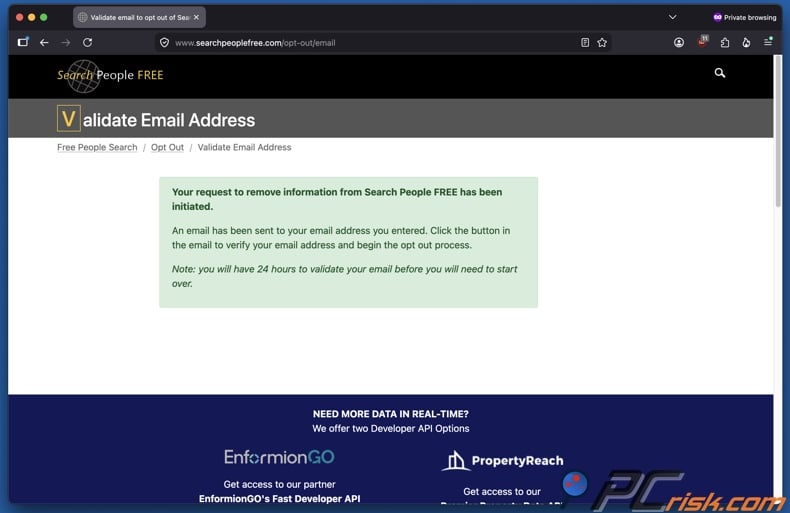
3. Check your inbox for an email from SearchPeopleFREE. Open the message and press the "Click here to fill out the form" button. If you do not find the email, review your spam, junk, or promotions folders before resubmitting the request.
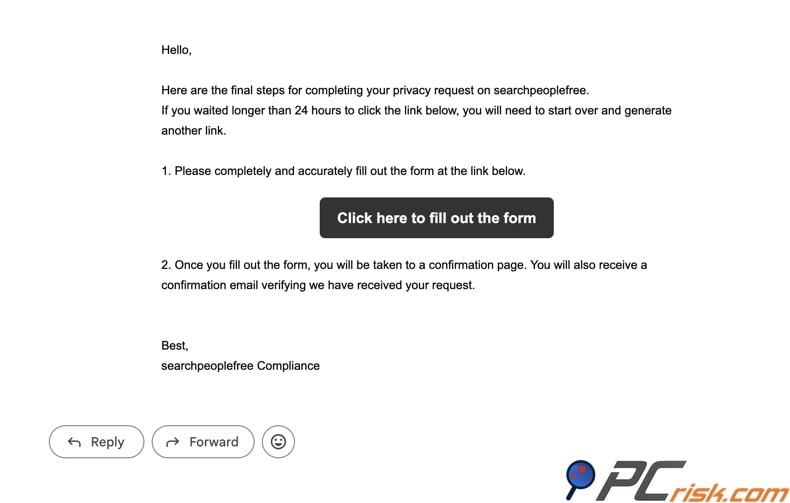
4. Fill out the opt-out form that the email redirects to. As indicated in the note above, SearchPeopleFREE no longer redirects to a search screen where users can locate their public listings. Hence, we recommend reviewing the profile(s) that SearchPeopleFREE has on you. Enter the information that matches your specific listing (ensure it is your listing, not someone else's with the same name or details), then proceed with the removal request.
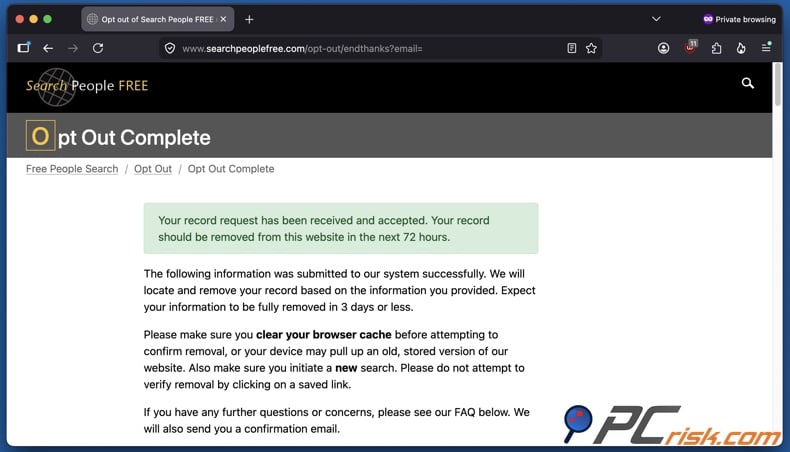
5. Wait for the confirmation email and save proof of your request. SearchPeopleFREE typically confirms removal within 72 hours. Retain the confirmation email or a screenshot for your records.
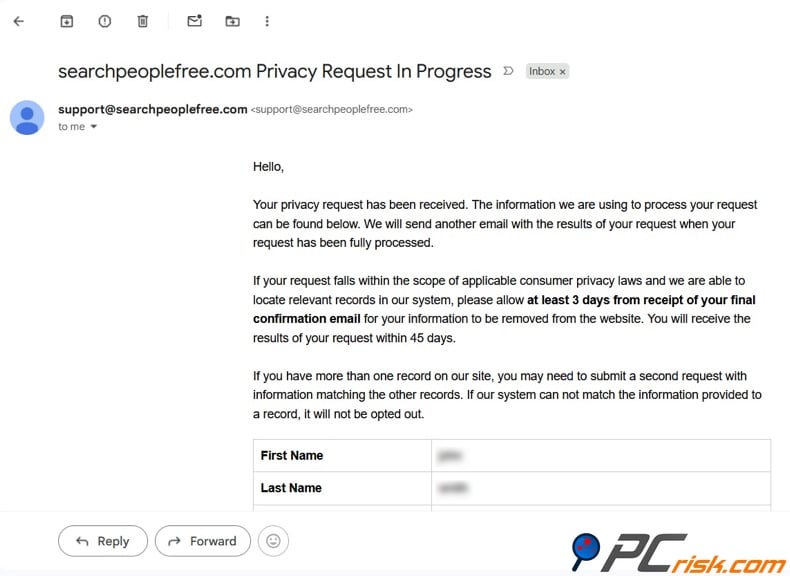
6. After the waiting period, search for your name again on SearchPeopleFREE and check Google for the listing. If the source page has been removed but Google still displays outdated information, use the "Results about you" or outdated content tools to request an update. Google notes that removing a result from Search does not delete the information from the source website, and similarly, content removed from a site may still appear in search results until its index is updated.
Common issues with manual information removal
Manual data removal is often frustrating because it rarely ends with a single form submission. Opting out site by site can be time-consuming and repetitive, and information may reappear as data brokers continue to source records from public and commercial channels. SearchPeopleFREE faces the same challenges as other people-search websites.
Failing to receive emails from such services is a common issue. This can occur if the message is sent to spam, delayed by the email system, or not sent immediately by the site. If you do not receive the email from SearchPeopleFREE, inspect your spam and promotions folders first, then retry carefully instead of submitting multiple requests.
Duplicate listings are another concern. The FTC warns that removing one record may not fully address exposure, as your data can still appear in related reports linked to relatives, neighbors, or associates. The recommendation is to remove each matching record individually, which may require repeating the process.
Timing is also a challenge. SearchPeopleFREE states that removal takes up to 72 hours, but some general guides recommend waiting up to five business days before assuming removal has failed. If the profile remains after this period, re-run the search, confirm you targeted the correct listing, and escalate through the website's contact or support channels. Delays and outdated search indexing are common with data broker removals.
If the standard removal process fails, alternatives are available. Most services like SearchPeopleFREE have contact pages, and some provide backup phone or postal mail options. In urgent cases, such as stalking, harassment, or safety-sensitive professions, it is important to document every request and escalation.
Another option is to clean up search results after removing the source listing. Once SearchPeopleFREE has deleted your information, Google recommends using "Results about you" to find and request removal of search results that display your address, phone number, or email. You can also use the outdated content refresh tool if the page has changed or been removed, but old search results remain. While this does not replace source removal, it can reduce visibility in search more quickly.
You may also consider using an automated data removal service instead of submitting manual requests. Paid opt-out services are recommended due to how many sites they can cover, provided reporting, and rescans for reappearing data. The last feature is crucial since the main challenge with manual removal is not the initial request, but the ongoing follow-up.
How to remove your information from SearchPeopleFREE automatically?
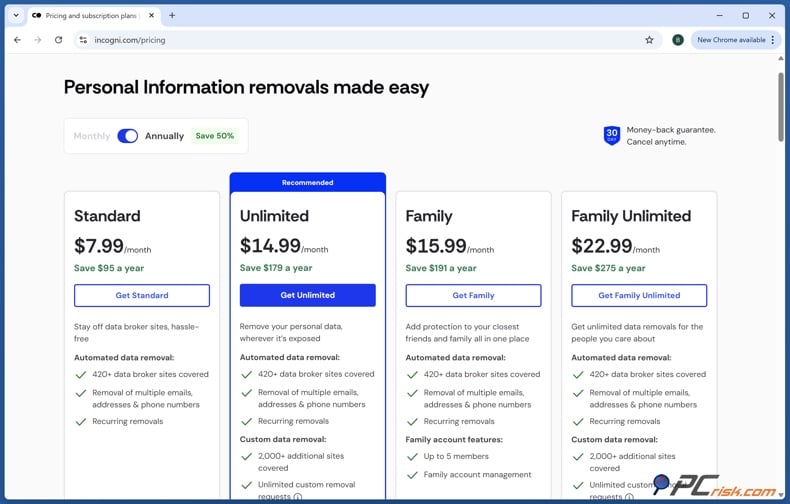
For a more hands-off approach, an automated service like Incogni manages SearchPeopleFREE-style removals by contacting covered brokers and tracks the progress for you. According to Incogni, the service removes data from over 420 brokers, supports recurring removals, and monitors for relisted data while your subscription is active. Automatic removal is a more comprehensive method that offers long-term privacy protection, compared to manual opt-out. You can read an in-depth comparison of our Top 5 Personal Data Removal Services for 2026.
Opt out of SearchPeopleFREE with Incogni
1. Go to Incogni and create an account. Choose the subscription tier that fits your needs. Incogni offers standard and higher-tier plans, with recurring removals and broader custom-removal options available on certain plans.
2. Enter the personal details you want removed. Expect to provide identifiers, such as your full name, past and present addresses, phone numbers, and email addresses. Incogni uses that information to identify matching listings and send removal requests to covered brokers.
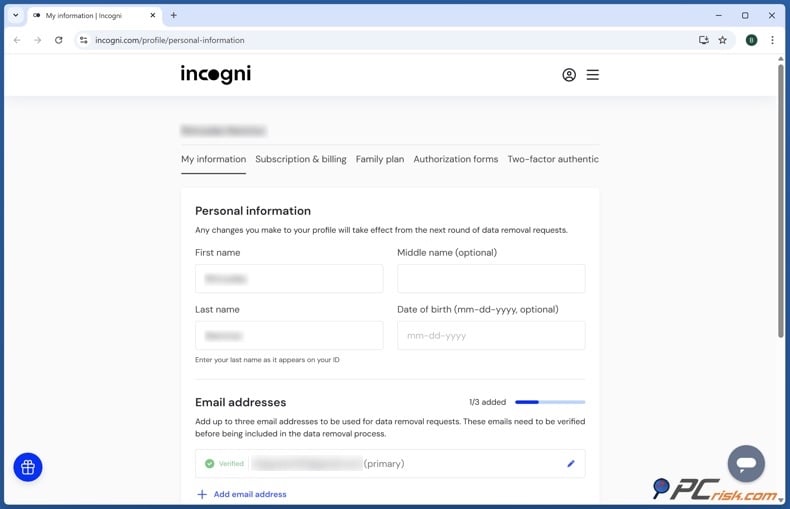
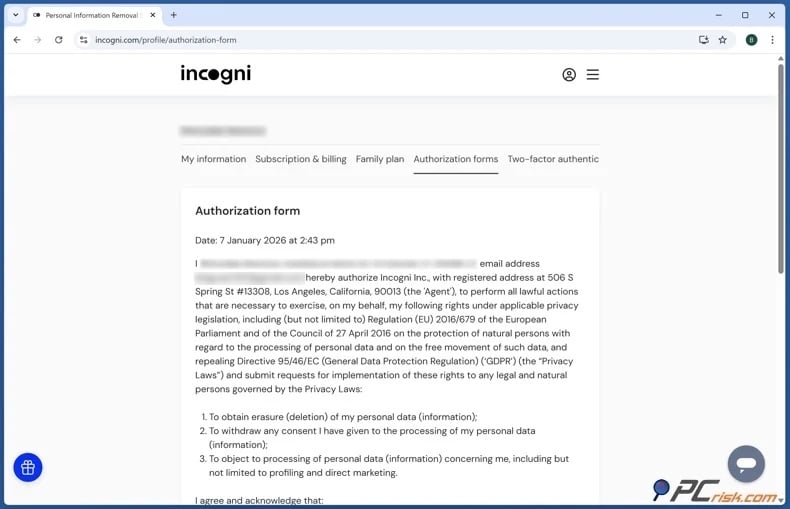
3. Complete the authorization form. Like other formal privacy agents, Incogni needs your permission to act on your behalf when contacting data brokers and people-search websites. Without this step, Incogni cannot begin removing your data, as this form makes the service an authorized representative - which many data aggregators require to follow through with information removal from their sites.
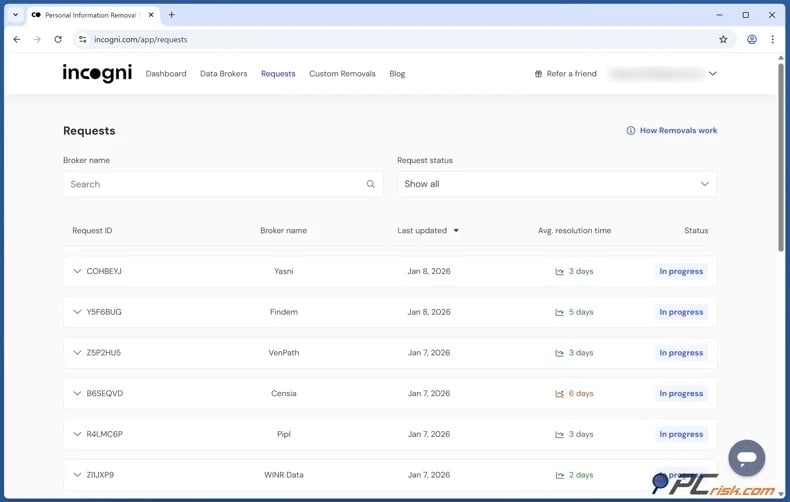
4. Let the service submit requests to covered brokers. Instead of filling out one form at a time, the service sends removal requests across its network of brokers and then tracks which ones are in progress, completed, or still being monitored. This is the biggest practical difference between automated removal and the manual SearchPeopleFREE workflow.
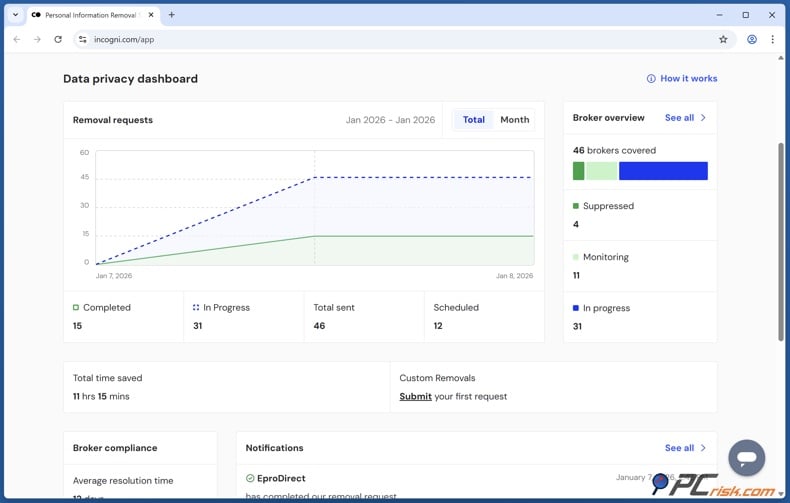
5. Monitor your dashboard. Incogni's dashboard indicates request status - which are in progress, sent, completed, or under monitoring. Many brokers need follow-up because processing times vary or data reappears later. The visibility on Incogni can save a lot of guesswork. Keep in mind that you may be required to interact with the process. In case a broker has a similar profile, you may be asked to verify whether it is yours - in order to proceed with automatic removal.
It is pertinent to mention that higher Incogni tiers offer custom removals. If a people-search or data broker website is not included in Ingoni's list, certain plans allow you to submit a link to a page containing your details for automated removal.
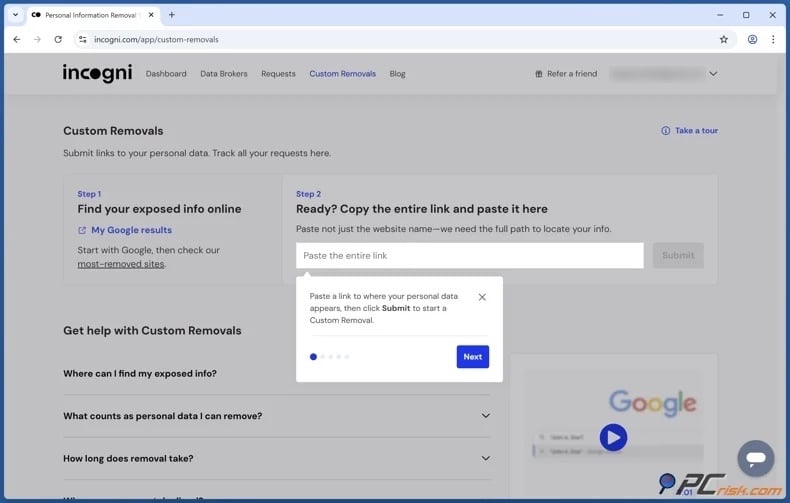
We strongly recommend maintaining your subscription to ensure ongoing protection. Your data may reappear after an opt-out, particularly when public or commercial information changes. Incogni confirms that it sends recurring removal requests as long as your subscription is active. However, remember that automatic removal does not erase original public records. It reduces the effort required, centralizes documentation, and ensures follow-up when brokers are slow or when data reappears. For those managing multiple broker websites, this can mean the difference between short-term and lasting privacy protection.
Why you should remove your information from SearchPeopleFREE?
Even if you have not experienced fraud, stalking, or harassment - removing your information from SearchPeopleFREE is a wise privacy measure. People-search websites make it much easier for strangers to access your personal details by compiling information from various public sources into a single, organized profile. This convenience increases the risk that your data can be misused by strangers, advertisers, scammers, or other malicious parties.
Check our top personal data removal services
Being listed on a site like SearchPeopleFREE can make scams more convincing. Scammers who have access to your full name, previous addresses, age range, phone number, relatives, or associated cities can craft messages that appear familiar, legitimate, and urgent - thus improving the chances that you will trust them. The more personal information is publicly available in one place, the more useful it becomes for targeted deception.
There are also real physical safety concerns. Privacy advocates warn that people-search profiles can facilitate stalking, harassment, intimidation, and abuse, especially for survivors of domestic violence, public-facing professionals, journalists, streamers, healthcare workers, and others who need to keep their contact information private. While a broker profile may not reveal everything, even partial information can help someone piece together your identity. Removing your listing does not erase all public records, but it does eliminate one convenient access point for harmful contact.
Another key reason to opt out is to regain control over your personal information. Data brokers commonly operate without consumer awareness, making it unclear who holds your data, how it was obtained, or how widely it is shared. Each opt-out removes one visible copy of your data, limits redistribution, and gives you more control over how your information is displayed. While this does not eliminate all exposure or erase original public records, it is a meaningful step toward improved privacy. Over time, reducing your presence on multiple people-search sites makes your data less accessible and useful to strangers.
How to prevent data brokers from collecting more of your data?
Removing your profile from SearchPeopleFREE is a useful first step, but it should be part of a wider privacy strategy. Data brokers regularly collect and republish personal information from public records, commercial sources, online activity, and other databases. Therefore, your details may reappear or continue to circulate even after opting out. To minimize long-term exposure, combine opt-outs with stronger privacy practices, limit data sharing, and monitor your information regularly.
The first rule is simple - do not assume a single opt-out completes the process. The FTC recommends regularly checking people-search sites, as new information may appear over time. Data removal services reinforce this by offering recurring removal workflows. Regular reviews are important because brokers frequently update profiles from developing public and commercial sources.
Second, limit the personal information you share online. Review your social media profiles, hide contact details when possible, and avoid posting your address, phone number, birthdate, or family information in public spaces. Websites and apps may collect data through tracking technologies, and opt-out guides recommend minimizing public exposure to reduce what brokers can collect or link.
Third, strengthen your digital privacy settings. Clear cookies and browsing history, adjust browser privacy controls, opt out of personalized ads, review your smartphone's advertising and permission settings, and delete apps that request unnecessary access. While these steps will not remove existing data from SearchPeopleFREE, they help limit future data collection through online tracking and app sharing.
Fourth, review application permissions and unused accounts. Old accounts, abandoned apps, and unnecessary permissions increase your exposure. Hence, check app access, disable unnecessary permissions, and delete unused services. Providing less data to tracking and profiling systems makes it more difficult for brokers to expand your record.
Fifth, monitor Google for your personal information. The "Results about you" feature allows you to submit identifying details, receive alerts when your phone number, address, or email appears in search results, and request removal of eligible results. While this does not prevent brokers from collecting data, it helps you detect new exposures quickly and respond before they spread further.
Sixth, use a separate email address for privacy requests and adopt a wary approach to future sign-ups. Data broker opt-outs often require verification, so privacy guides recommend a dedicated email to avoid sharing your primary address with additional services. Apply this approach to newsletters, coupons, giveaways, and other sign-ups that collect personal information.
Finally, consider ongoing removal support if your exposure is significant. Paid services can be helpful if they cover multiple sites, provide reports, and regularly re-scan for relisted information. This is especially important if your data appears on several brokers or if your role requires continuous privacy management.
In closing
SearchPeopleFREE consolidates personal data, making it easily accessible to others. Opting out is important because a successful removal request reduces the visibility of your address, phone number, email, and related details. This makes it more difficult for scammers, data miners, harassers, and others to profile you.
Check our top personal data removal services
If you need to remove only one or two listings, the manual SearchPeopleFREE process is straightforward - locate your listing(s), enter your name and email address, verify your email, provide your details for removal, and confirm deletion after the processing period. Automated data removal services are far better for broader broker removal than manual opt-outs, as the former can save time and handle recurring requests as your information reappears. Consistency is essential. Protecting privacy on people-search sites requires ongoing checking, removal, and monitoring.
Frequently Asked Questions (FAQ)
Is SearchPeopleFREE legal?
People-search and data broker websites are generally legal in the US, but they must comply with privacy, consumer protection, and field-specific regulations. The FTC has acted against data brokers for deceptive privacy practices and has reminded them of their obligations under applicable laws.
Is it dangerous to have my data on SearchPeopleFREE?
Yes, it can be risky. Widespread exposure of your contact and profile data increases the risk of scams, identity theft, spam, harassment, stalking, and doxxing, particularly when the information is consolidated in one location.
Will opting out of SearchPeopleFREE remove me from Google search?
Not in every case. If SearchPeopleFREE removes the source page, Google may continue to display outdated results for a period. You may need to use "Results about you" or Google's outdated content tools to update search results more quickly.
Does removing myself from SearchPeopleFREE remove the original public record?
No. The FTC specifically notes that opting out of people-search sites does not delete the original public records, so the source information may still exist on government or other public websites.
How do I remove my data from SearchPeopleFREE?
To remove your data manually, visit the website's opt-out page, submit your name and email, enter your details via the email you received, proceed with removal, and verify that your data has been removed after the processing time. Alternatively, you can use an automated service like Incogni to submit and track removal requests across multiple data brokers.
How long does it take SearchPeopleFREE to remove my data?
SearchPeopleFREE states that removal is completed within 72 hours, though some general guides recommend waiting up to 5 business days before checking again. If your listing remains, confirm you removed the correct record and consider consulting support or submitting an additional request.
How is using Incogni different from manually removing my data from SearchPeopleFREE?
Manual removal is free, but you must complete all forms and follow-ups yourself. Incogni automates requests with over 420 brokers, provides dashboard tracking, and continues recurring removals as long as your subscription is active.
Will my data come back to SearchPeopleFREE after I opt out?
Yes, your data can reappear. The FTC notes that information may return when public records change. Incogni also explains that brokers often re-list data after removal, so ongoing monitoring is important.
Share:
 Facebook
 X.com
X.com
 LinkedIn
 Copy Link

Karolis Liucveikis
Experienced software engineer, passionate about behavioral analysis of malicious apps
Author and general operator of PCrisk's News and Removal Guides section. Co-researcher working alongside Tomas to discover the latest threats and global trends in the cyber security world. Karolis has experience of over 8 years working in this branch. He attended Kaunas University of Technology and graduated with a degree in Software Development in 2017. Extremely passionate about technical aspects and behavior of various malicious applications.
▼ Show Discussion