

Get free scan and check if your device is infected.
Remove it nowTo use full-featured product, you have to purchase a license for Combo Cleaner. Seven days free trial available. Combo Cleaner is owned and operated by RCS LT, the parent company of PCRisk.com.
What kind of malware is E4del RAT?
E4del RAT is a Remote Access Trojan (RAT) that hides inside a genuine, digitally signed Discord application. Once installed, it lets attackers watch the victim's screen in real time, run commands, capture screenshots, and drop additional malware onto the machine.
The RAT was uncovered by the SOCRadar Threat Research Unit (STRU) in August 2026, alongside a second trojan called PINHOLE. Both were delivered through a novel technique that hides attacker instructions inside FTP server welcome banners.
Because E4del runs under a legitimate Discord process and never draws a window on screen, victims typically have no idea it is there.
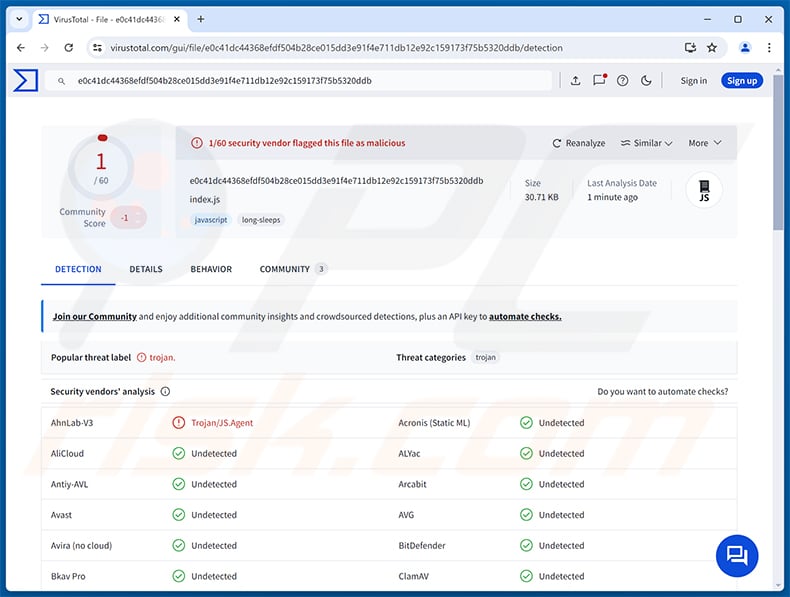
E4del RAT overview
According to research published by SOCRadar, E4del RAT arrives through a multi-stage chain that starts with a malicious shortcut file. The shortcut connects to a rogue FTP server and reads commands hidden in the server's banner, which in turn trigger a PowerShell script that downloads and unpacks the payload.
What gets launched is a real, digitally signed Discord executable. The attackers keep the genuine program files but swap out the application's internal code archive, so Windows sees a trusted, signed program while malicious code runs inside it.
E4del is written in Node.js and runs on the Electron framework that Discord is built on. It starts with hidden-window switches so no interface is ever rendered, reducing it to a silent background process.
What can E4del RAT do?
E4del RAT supports eight operator commands. The most invasive is live desktop streaming: the attacker supplies an address, and the RAT captures the screen every two seconds and pipes the images over a WebSocket connection, creating a hidden remote view of everything the victim does.
It can also open a hidden command prompt that stays alive in the background. The operator types commands into it and receives the output on the next check-in, giving them an interactive shell on the machine.
Screenshots can be captured on demand and sent back as compressed images. Two separate commands let the attacker deliver additional payloads: one fetches a ZIP archive, unpacks it with PowerShell, and launches whatever executable it names, then deletes the archive to hide the traces.
An elevate command attempts to gain administrator rights by loading a separate module downloaded beforehand. Anything the RAT does not recognize as a known command is simply passed straight to the Windows shell and executed.
Persistence and defense evasion
E4del establishes persistence through Electron's own startup settings, registering the host Discord executable to launch automatically every time the user logs in. Because the autostart entry points at a legitimate signed application, it looks unremarkable in startup lists.
The RAT also uses a simple but effective anti-analysis check. It expects to be started with the victim's Windows username as an argument, and if the username on the machine does not match, it shuts down at once. This prevents it from detonating inside automated sandboxes.
Before contacting the attacker, E4del profiles the machine. It builds a unique hardware fingerprint from the network adapter addresses and the CPU model, then checks the system for installed antivirus products so the operator knows what security software is in the way.
All traffic to the Command and Control server is encrypted and sent as HTTP POST requests carrying a spoofed Google Chrome browser identity. The RAT varies its check-in speed between fast, medium, and slow modes depending on how recently it received a task, helping its traffic blend into normal activity.
| Name | E4del remote access trojan |
| Threat Type | Remote Access Trojan (RAT) |
| Detection Names | Avast (Script:SNH-gen [Trj]), Combo Cleaner (Trojan.GenericKD.81261253), Emsisoft (Trojan.GenericKD.81261253 (B)), Kaspersky (Trojan.Script.Agent.mljj), Microsoft (Trojan:Win32/Qwexlafiba!rfn), Full List Of Detections (VirusTotal) |
| Symptoms | Remote Access Trojans are designed to stealthily infiltrate the victim's computer and remain silent, and thus no particular symptoms are clearly visible on an infected machine. |
| Distribution methods | Phishing emails, malicious LNK shortcut files. |
| Damage | Stolen passwords and banking information, identity theft, the victim's computer added to a botnet, additional infections, monetary loss, account hijacking. |
| Malware Removal (Windows) |
To eliminate possible malware infections, scan your computer with legitimate antivirus software. Our security researchers recommend using Combo Cleaner. Download Combo CleanerTo use full-featured product, you have to purchase a license for Combo Cleaner. 7 days free trial available. Combo Cleaner is owned and operated by RCS LT, the parent company of PCRisk.com. |
Conclusion
E4del RAT gives attackers a hidden live view of the victim's desktop, an interactive shell, and the ability to install further malware at will. Anything typed, opened, or displayed on the infected computer can be observed and recorded.
Because it hides behind a genuine signed application and shows no window, an infection can go unnoticed for a long time. If you suspect your computer is affected, it should be scanned and cleaned immediately.
More examples of RATs are Golden Gh0st, Heisenberg, and TONResolver.
How did E4del RAT infiltrate my computer?
E4del RAT is delivered through phishing emails carrying malicious LNK shortcut files, usually inside ZIP archives. Opening the shortcut silently connects to an attacker-controlled FTP server and reads the commands stored in the server's greeting banner.
Those commands point to a second FTP server, which in turn triggers a PowerShell script. The script downloads a ZIP archive containing the genuine Discord files plus the attackers' replaced code, extracts it, and starts the program with the victim's username passed as a hidden argument.
SOCRadar researchers note that abusing FTP banners in this way could easily be adapted to ClickFix-style pages, where victims are tricked into pasting a command themselves. Threats of this kind also spread through fake download sites, pirated software, malvertising, and drive-by downloads.
How to avoid installation of malware?
Be careful with unexpected emails and the files attached to them. Do not open shortcut files or archives sent by unknown senders, and avoid clicking links in unsolicited messages. Keep Windows and your installed programs updated, since patches close the holes malware relies on.
Download software only from official developer websites or verified stores, and stay away from pirated content, cracks, and key generators. Use a trustworthy antivirus and scan the system regularly. If you believe that your computer is already infected, we recommend running a scan with Combo Cleaner Antivirus for Windows to automatically eliminate infiltrated malware.
Instant automatic malware removal:
Manual threat removal might be a lengthy and complicated process that requires advanced IT skills. Combo Cleaner is a professional automatic malware removal tool that is recommended to get rid of malware. Download it by clicking the button below:
DOWNLOAD Combo CleanerBy downloading any software listed on this website you agree to our Privacy Policy and Terms of Use. To use full-featured product, you have to purchase a license for Combo Cleaner. 7 days free trial available. Combo Cleaner is owned and operated by RCS LT, the parent company of PCRisk.com.
Quick menu:
- What is E4del RAT?
- STEP 1. Manual removal of E4del RAT malware.
- STEP 2. Check if your computer is clean.
How to remove malware manually?
Manual malware removal is a complicated task - usually it is best to allow antivirus or anti-malware programs to do this automatically. To remove this malware we recommend using Combo Cleaner Antivirus for Windows.
If you wish to remove malware manually, the first step is to identify the name of the malware that you are trying to remove. Here is an example of a suspicious program running on a user's computer:
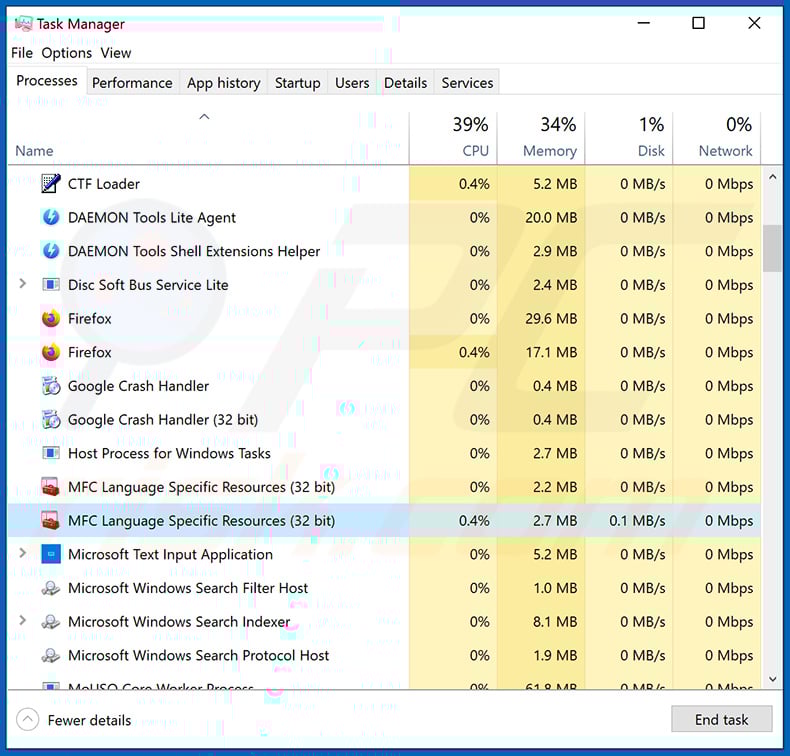
If you checked the list of programs running on your computer, for example, using task manager, and identified a program that looks suspicious, you should continue with these steps:
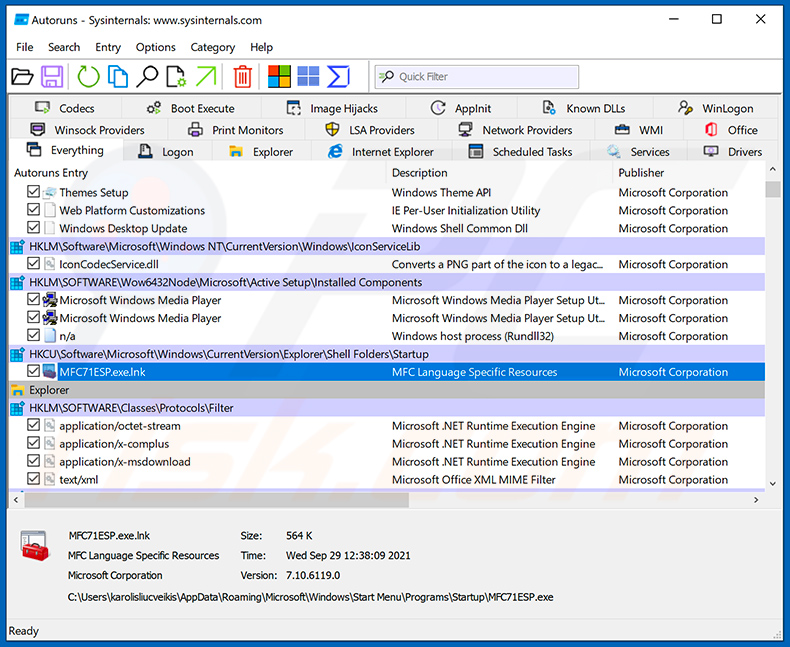
 Download a program called Autoruns. This program shows auto-start applications, Registry, and file system locations:
 Restart your computer into Safe Mode:
Windows XP and Windows 7 users: Start your computer in Safe Mode. Click Start, click Shut Down, click Restart, click OK. During your computer start process, press the F8 key on your keyboard multiple times until you see the Windows Advanced Option menu, and then select Safe Mode with Networking from the list.
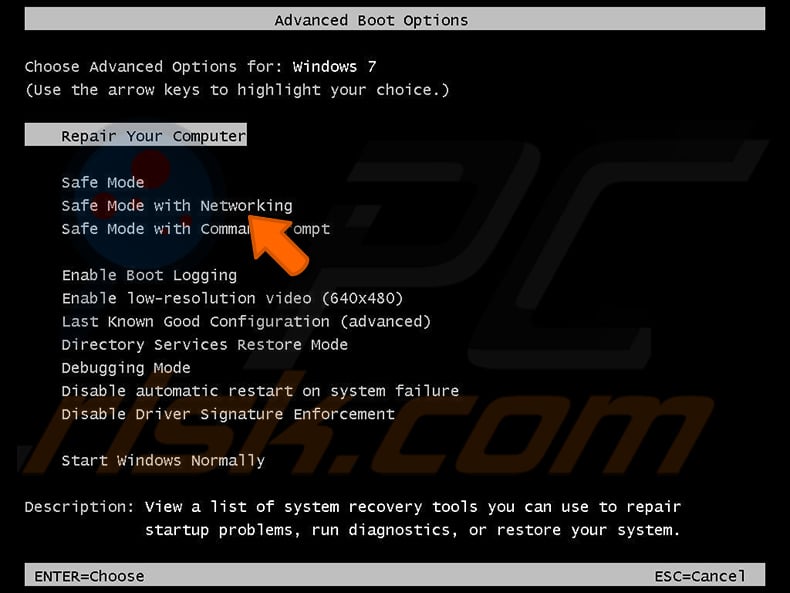
Video showing how to start Windows 7 in "Safe Mode with Networking":
Windows 8 users: Start Windows 8 is Safe Mode with Networking - Go to Windows 8 Start Screen, type Advanced, in the search results select Settings. Click Advanced startup options, in the opened "General PC Settings" window, select Advanced startup.
Click the "Restart now" button. Your computer will now restart into the "Advanced Startup options menu". Click the "Troubleshoot" button, and then click the "Advanced options" button. In the advanced option screen, click "Startup settings".
Click the "Restart" button. Your PC will restart into the Startup Settings screen. Press F5 to boot in Safe Mode with Networking.
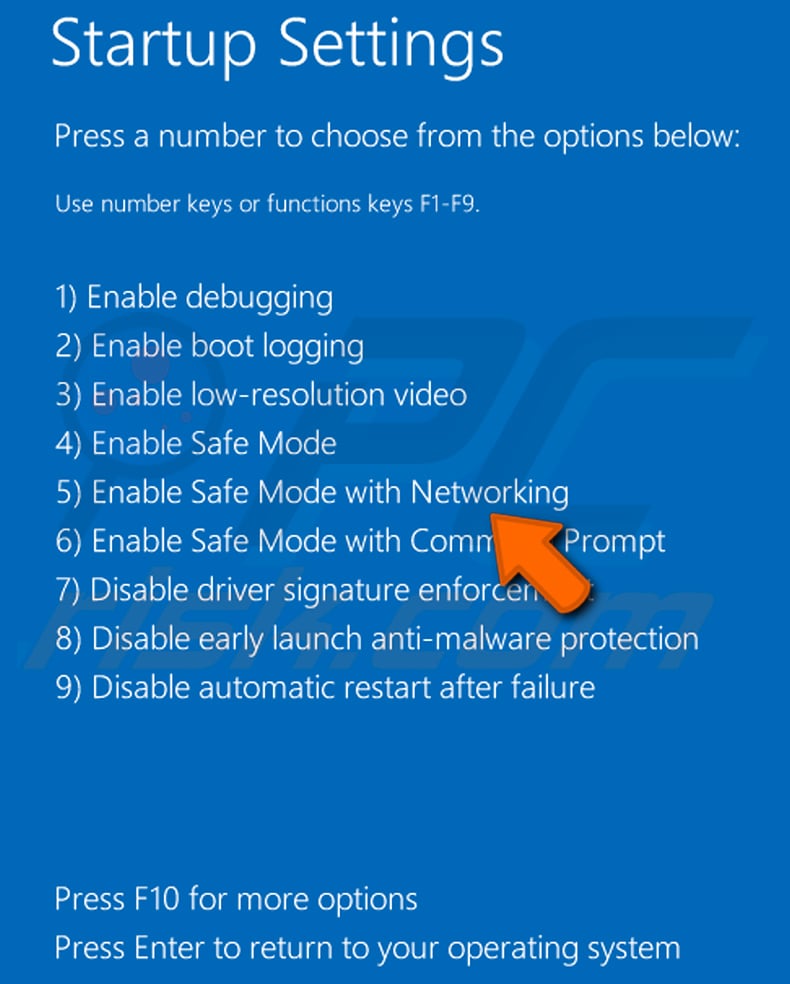
Video showing how to start Windows 8 in "Safe Mode with Networking":
Windows 10 users: Click the Windows logo and select the Power icon. In the opened menu click "Restart" while holding "Shift" button on your keyboard. In the "choose an option" window click on the "Troubleshoot", next select "Advanced options".
In the advanced options menu select "Startup Settings" and click on the "Restart" button. In the following window you should click the "F5" button on your keyboard. This will restart your operating system in safe mode with networking.
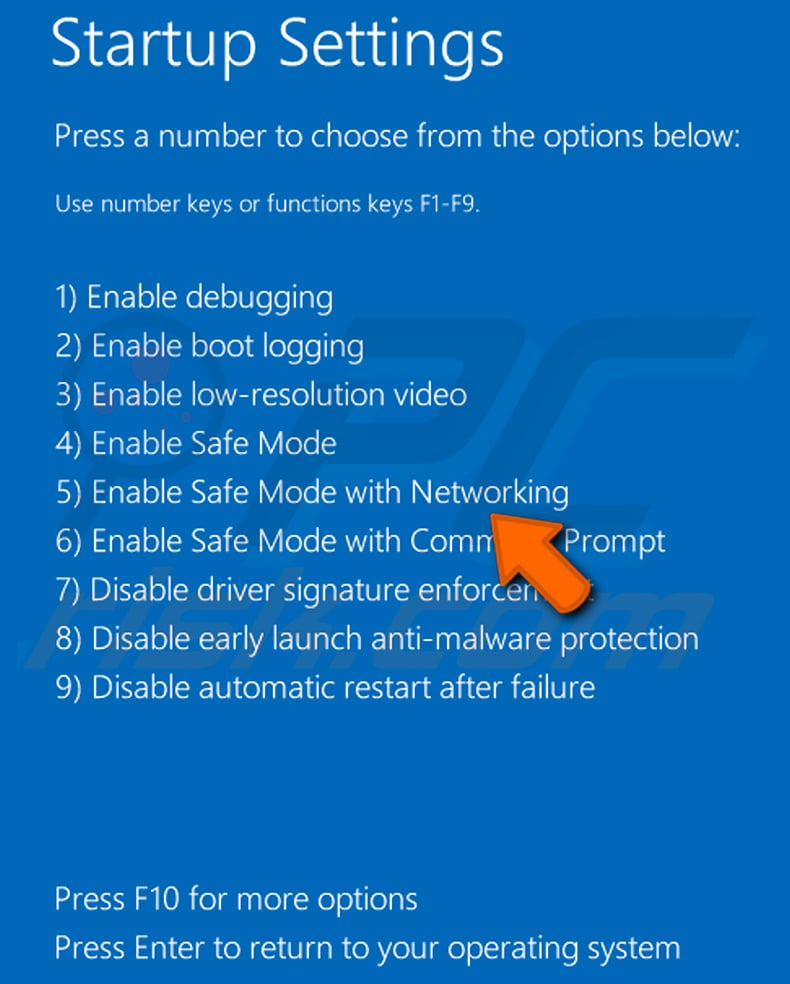
Video showing how to start Windows 10 in "Safe Mode with Networking":
 Extract the downloaded archive and run the Autoruns.exe file.
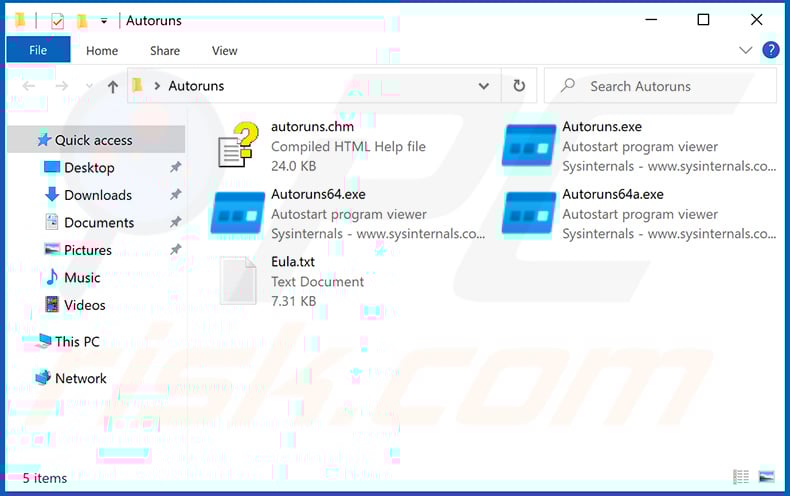
 In the Autoruns application, click "Options" at the top and uncheck "Hide Empty Locations" and "Hide Windows Entries" options. After this procedure, click the "Refresh" icon.
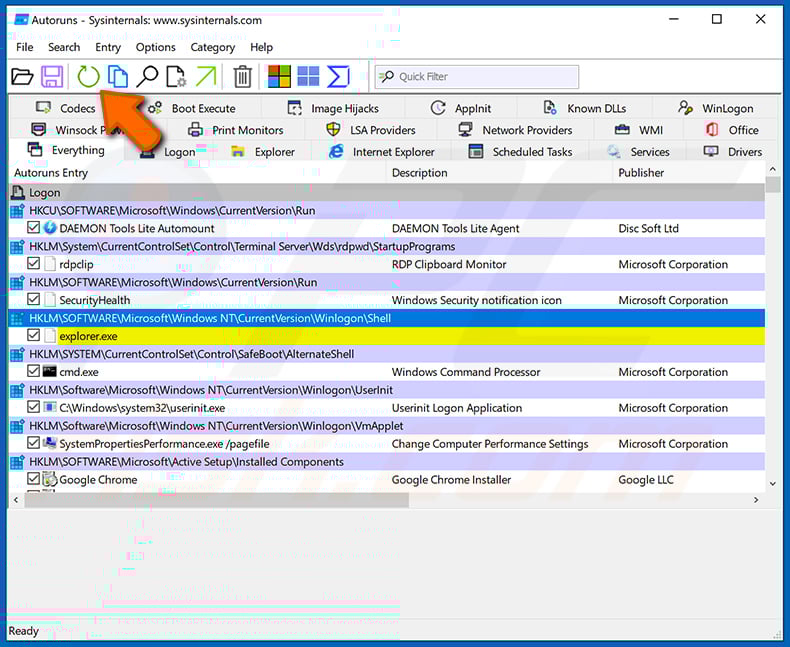
 Check the list provided by the Autoruns application and locate the malware file that you want to eliminate.
You should write down its full path and name. Note that some malware hides process names under legitimate Windows process names. At this stage, it is very important to avoid removing system files. After you locate the suspicious program you wish to remove, right click your mouse over its name and choose "Delete".
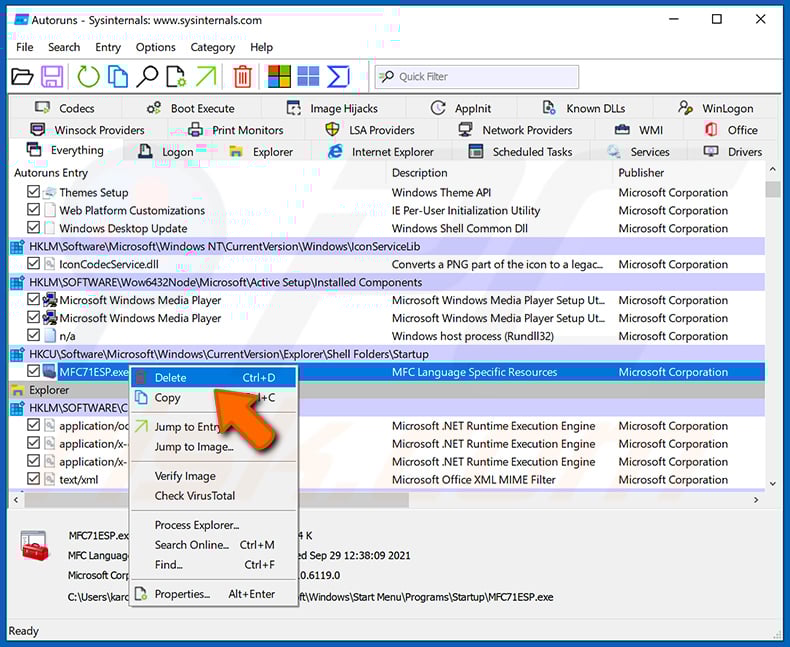
After removing the malware through the Autoruns application (this ensures that the malware will not run automatically on the next system startup), you should search for the malware name on your computer. Be sure to enable hidden files and folders before proceeding. If you find the filename of the malware, be sure to remove it.
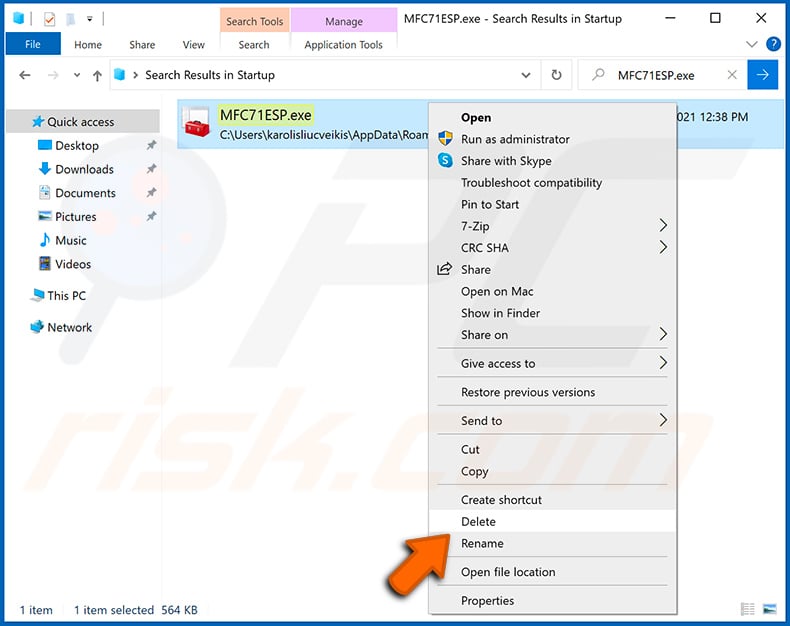
Reboot your computer in normal mode. Following these steps should remove any malware from your computer. Note that manual threat removal requires advanced computer skills. If you do not have these skills, leave malware removal to antivirus and anti-malware programs.
These steps might not work with advanced malware infections. As always it is best to prevent infection than try to remove malware later. To keep your computer safe, install the latest operating system updates and use antivirus software. To be sure your computer is free of malware infections, we recommend scanning it with Combo Cleaner Antivirus for Windows.
Frequently Asked Questions (FAQ)
My computer is infected with E4del RAT malware, should I format my storage device to get rid of it?
Formatting will remove E4del RAT, but it will also wipe every file on the drive. Running a reputable security tool such as Combo Cleaner is normally the safer first step, since it can eliminate the infection without destroying your data.
What are the biggest issues that E4del RAT malware can cause?
E4del RAT lets attackers watch the desktop live, run any command, capture screenshots, and install more malware on the infected computer.
That level of access can lead to stolen passwords and banking details, identity theft, hijacked accounts, and follow-on infections such as stealers or ransomware.
What is the purpose of E4del RAT malware?
The purpose of E4del RAT is to give attackers hidden remote control over infected Windows computers, so they can spy on the user, execute commands, and deliver additional payloads while staying out of sight.
How did E4del RAT malware infiltrate my computer?
E4del RAT spreads through phishing emails containing malicious LNK shortcut files. Opening the shortcut starts a hidden chain that pulls commands from a rogue FTP server, downloads a tampered Discord package, and launches the RAT silently.
Will Combo Cleaner protect me from malware?
Yes. Combo Cleaner can detect and remove most known malware, RATs included. Since E4del RAT hides behind a legitimate signed application, running a full system scan is important to make sure nothing is left behind.
Share:
 Facebook
 X.com
X.com
 LinkedIn
 Copy Link

Tomas Meskauskas
Expert security researcher, professional malware analyst
I am passionate about computer security and technology. I have an experience of over 10 years working in various companies related to computer technical issue solving and Internet security. I have been working as an author and editor for pcrisk.com since 2010. Follow me on Twitter and LinkedIn to stay informed about the latest online security threats.
PCrisk security portal is brought by a company RCS LT.
Joined forces of security researchers help educate computer users about the latest online security threats. More information about the company RCS LT.
Our malware removal guides are free. However, if you want to support us you can send us a donation.
DonatePCrisk security portal is brought by a company RCS LT.
Joined forces of security researchers help educate computer users about the latest online security threats. More information about the company RCS LT.
Our malware removal guides are free. However, if you want to support us you can send us a donation.
Donate
▼ Show Discussion