

Get free scan and check if your device is infected.
Remove it nowTo use full-featured product, you have to purchase a license for Combo Cleaner. Seven days free trial available. Combo Cleaner is owned and operated by RCS LT, the parent company of PCRisk.com.
What kind of malware is WARDEN Stealer?
WARDEN Stealer is a multi-purpose information stealer, cryptocurrency address clipper, and malware loader built into a single Windows x64 executable.
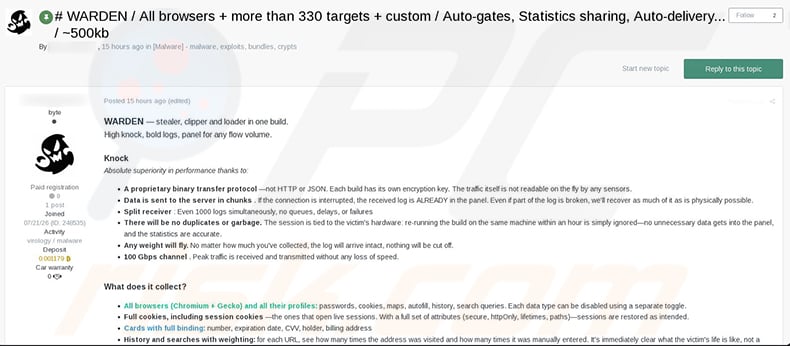
According to research published by KrakenLabs, the threat actor behind WARDEN promotes it on underground forums as a subscription service. The malware harvests browser data, session cookies, saved payment cards, and credentials from over 330 applications.
Its clipper component silently replaces any cryptocurrency wallet address copied to the Windows clipboard with one the attacker controls, rerouting any outgoing transaction. The loader side can pull additional malicious programs onto infected machines at the operator's direction.
WARDEN Stealer overview
WARDEN is sold as a Malware-as-a-Service subscription on underground cybercriminal forums. Each build is a compact Windows x64 executable, reportedly 500-600 KB in size, that sends data to the operator panel using a custom encrypted binary protocol rather than standard web formats.
The stealer targets all Chromium and Gecko-based browsers, covering Chrome, Edge, Firefox, and dozens of similar applications. Saved passwords, full session cookies, autofill entries, payment card details, browsing history, and search queries are all collected. Each data type can be toggled independently by the operator.
For cryptocurrency holdings, WARDEN targets over 200 browser-based wallet extensions. Combined with its clipboard hijacking capability, it covers both stored wallet data and any wallet address a victim copies during a live transaction.
WARDEN Stealer's features
Session cookie theft is among the more damaging capabilities. WARDEN collects full cookie records, including all attributes needed to restore live browser sessions, letting an attacker silently access a victim's accounts without ever needing a password.
Payment card records include the card number, expiration date, CVV, the cardholder's name, and billing address. Browser history is collected with weighting data, so the panel shows how often each URL was visited and whether it was typed in manually or navigated to via a link.
As a loader, WARDEN can fetch and run additional programs from attacker-specified URLs. A single infection can therefore be used to install ransomware, further stealers, or other malware without requiring a separate delivery chain.
Evasion and anti-analysis features
WARDEN detects virtual machines and sandboxes, environments commonly used by security analysts and antivirus engines to study suspicious files. When such an environment is detected, the malware can stop or alter its behavior to avoid being analyzed.
The stealer also bypasses browser App-Bound Encryption, a protection in newer Chromium-based browsers intended to block unauthorized access to stored credentials. On top of that, it can inject code into legitimate system processes, making its presence harder to spot in the process list.
Each build uses its own encryption key for communications, so captured traffic cannot be read without it. Operators can update configurations remotely without rebuilding the payload, and Cloudflare-based gates with automatic failover keep the panel reachable even if one server goes offline.
Pricing and availability
WARDEN is available as a subscription service. A free trial lasts three days, with four additional days offered in exchange for a public review. The paid personal plan is priced at $349 per month and supports Windows 7 through Windows 11.
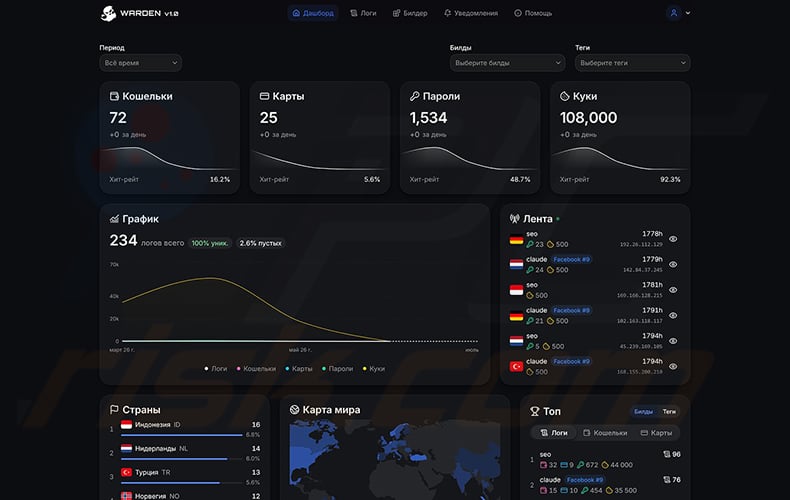
The developer states that the malware skips victims located in CIS countries and the Baltic states, a restriction common among Russian-speaking cybercriminal operations intended to reduce legal exposure closer to home. Buyers receive access to a multilingual panel with real-time log processing, country and campaign statistics, bulk downloads, Telegram notifications, and password-protected traffic reports.
| Name | WARDEN data stealer |
| Threat Type | Information Stealer, Clipper, Trojan, Malware Loader, Password-stealing virus |
| Symptoms | Stealers are designed to stealthily infiltrate the victim's computer and remain silent, and thus no particular symptoms are clearly visible on an infected machine. |
| Distribution methods | Infected email attachments, malicious online advertisements, social engineering, software 'cracks'. |
| Damage | Stolen passwords and banking information, identity theft, the victim's computer added to a botnet, additional infections, monetary loss, account hijacking. |
| Malware Removal (Windows) |
To eliminate possible malware infections, scan your computer with legitimate antivirus software. Our security researchers recommend using Combo Cleaner. Download Combo CleanerTo use full-featured product, you have to purchase a license for Combo Cleaner. 7 days free trial available. Combo Cleaner is owned and operated by RCS LT, the parent company of PCRisk.com. |
Conclusion
WARDEN Stealer combines credential theft, cryptocurrency hijacking, and payload delivery in a single tool, making it capable of causing harm across several fronts at once. Because it operates silently, victims typically have no sign that their data is being taken or that their crypto transactions are being redirected.
The potential consequences range from account takeover and identity theft to financial loss and further infections delivered by the loader component. Any machine suspected of running WARDEN should be scanned and cleaned without delay.
More examples of stealers are KuinaExtractor, CastleStealer, and DebugElevator.
How did WARDEN Stealer infiltrate my computer?
WARDEN Stealer is sold to multiple threat actors through underground forums, meaning the specific delivery method depends on whoever is currently running it. No single distribution campaign has been publicly documented; the malware reaches victims through whichever channels each operator chooses.
Common infection routes for malware of this type include phishing emails with malicious attachments, fake software download sites, cracks and key generators for pirated software, and malicious ads leading to infected installers.
Payload files often arrive packaged as archives, executables, or documents. Cybercriminals depend on the victim taking some action - opening an attachment, running a downloaded file - so healthy skepticism toward unexpected downloads is an effective first line of defense.
How to avoid installation of malware?
Only download software from official websites and authorized app stores. Avoid third-party download platforms, torrent sites, and file-sharing networks. Do not open attachments or follow links in unsolicited emails without first verifying the sender, and keep all software and the operating system updated to patch known security weaknesses.
Treat suspicious pop-up notifications and browser notification requests from unfamiliar sites with caution. Use a reputable antivirus solution and schedule regular scans. If you believe that your computer is already infected, we recommend running a scan with Combo Cleaner Antivirus for Windows to automatically eliminate infiltrated malware.
WARDEN Stealer promoted on an underground forum (source: KrakenLabs):
Instant automatic malware removal:
Manual threat removal might be a lengthy and complicated process that requires advanced IT skills. Combo Cleaner is a professional automatic malware removal tool that is recommended to get rid of malware. Download it by clicking the button below:
DOWNLOAD Combo CleanerBy downloading any software listed on this website you agree to our Privacy Policy and Terms of Use. To use full-featured product, you have to purchase a license for Combo Cleaner. 7 days free trial available. Combo Cleaner is owned and operated by RCS LT, the parent company of PCRisk.com.
Quick menu:
- What is WARDEN Stealer?
- STEP 1. Manual removal of WARDEN Stealer malware.
- STEP 2. Check if your computer is clean.
How to remove malware manually?
Manual malware removal is a complicated task - usually it is best to allow antivirus or anti-malware programs to do this automatically. To remove this malware we recommend using Combo Cleaner Antivirus for Windows.
If you wish to remove malware manually, the first step is to identify the name of the malware that you are trying to remove. Here is an example of a suspicious program running on a user's computer:
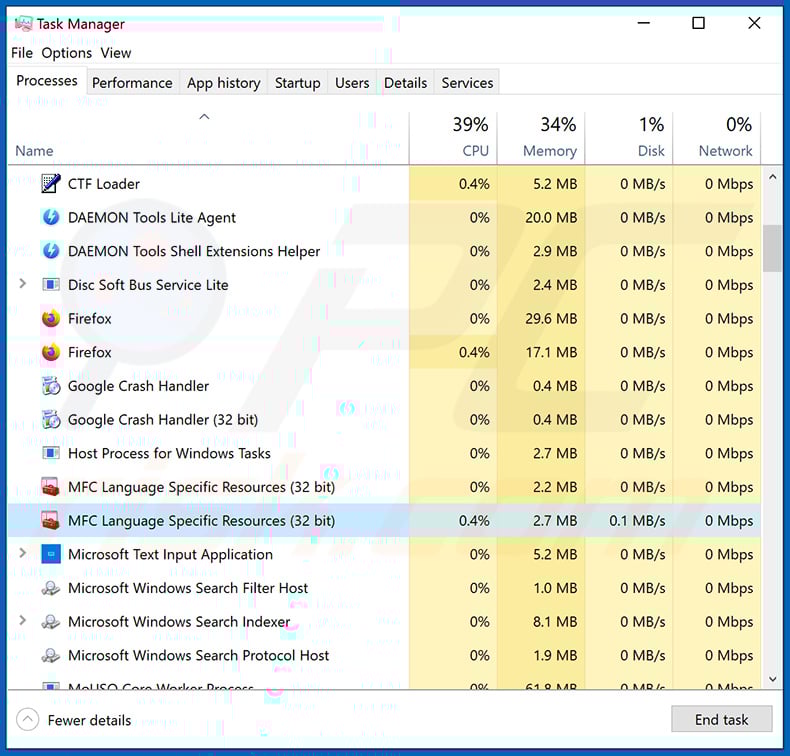
If you checked the list of programs running on your computer, for example, using task manager, and identified a program that looks suspicious, you should continue with these steps:
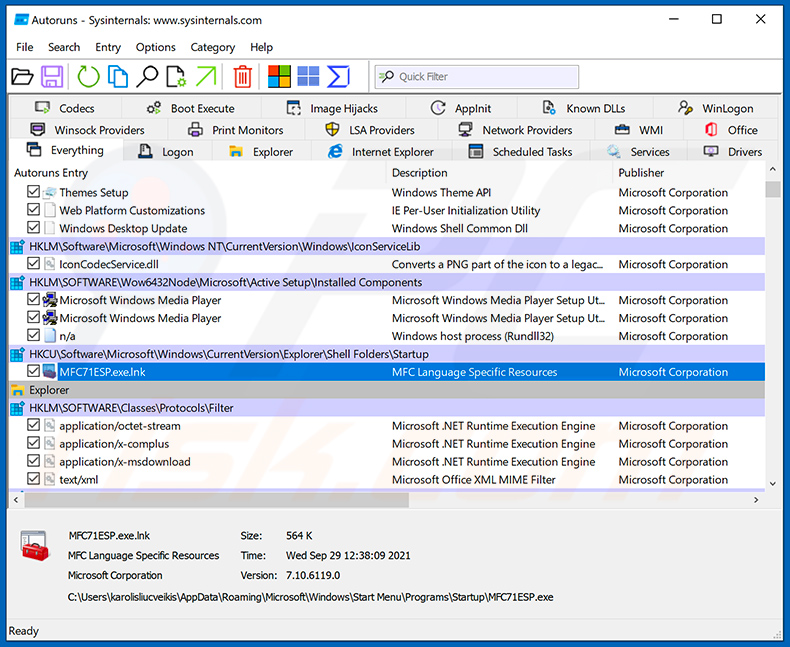
 Download a program called Autoruns. This program shows auto-start applications, Registry, and file system locations:
 Restart your computer into Safe Mode:
Windows XP and Windows 7 users: Start your computer in Safe Mode. Click Start, click Shut Down, click Restart, click OK. During your computer start process, press the F8 key on your keyboard multiple times until you see the Windows Advanced Option menu, and then select Safe Mode with Networking from the list.
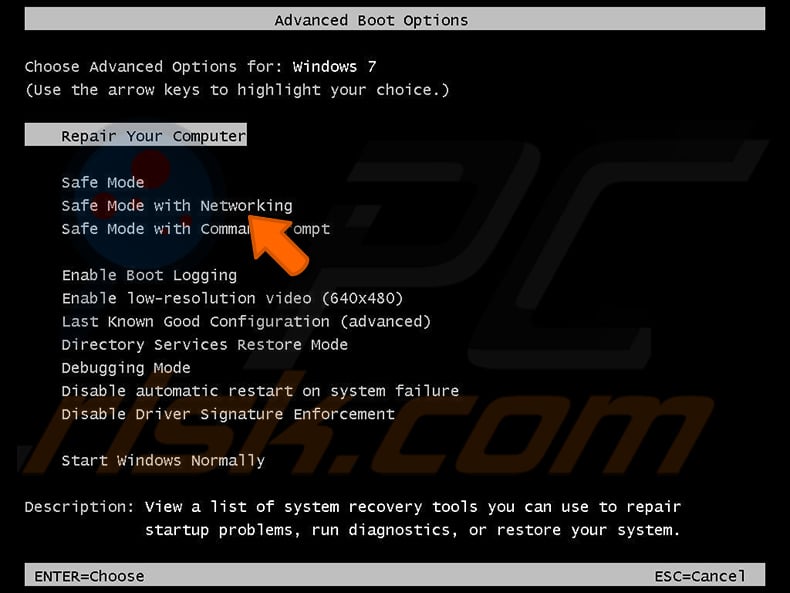
Video showing how to start Windows 7 in "Safe Mode with Networking":
Windows 8 users: Start Windows 8 is Safe Mode with Networking - Go to Windows 8 Start Screen, type Advanced, in the search results select Settings. Click Advanced startup options, in the opened "General PC Settings" window, select Advanced startup.
Click the "Restart now" button. Your computer will now restart into the "Advanced Startup options menu". Click the "Troubleshoot" button, and then click the "Advanced options" button. In the advanced option screen, click "Startup settings".
Click the "Restart" button. Your PC will restart into the Startup Settings screen. Press F5 to boot in Safe Mode with Networking.
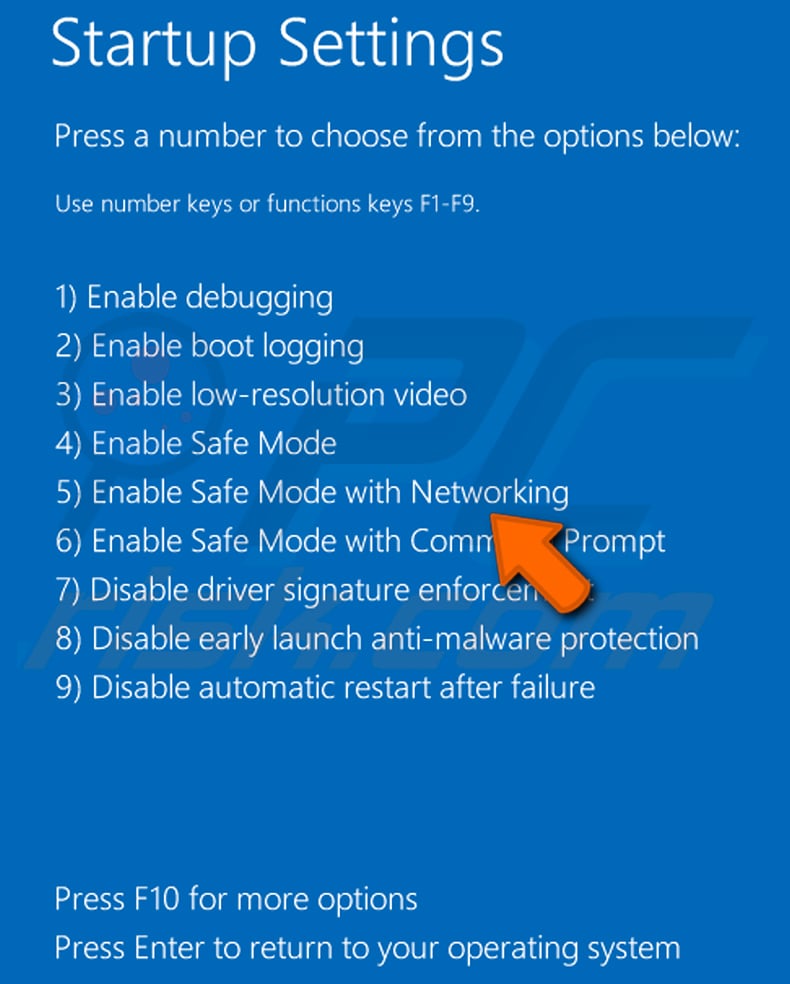
Video showing how to start Windows 8 in "Safe Mode with Networking":
Windows 10 users: Click the Windows logo and select the Power icon. In the opened menu click "Restart" while holding "Shift" button on your keyboard. In the "choose an option" window click on the "Troubleshoot", next select "Advanced options".
In the advanced options menu select "Startup Settings" and click on the "Restart" button. In the following window you should click the "F5" button on your keyboard. This will restart your operating system in safe mode with networking.
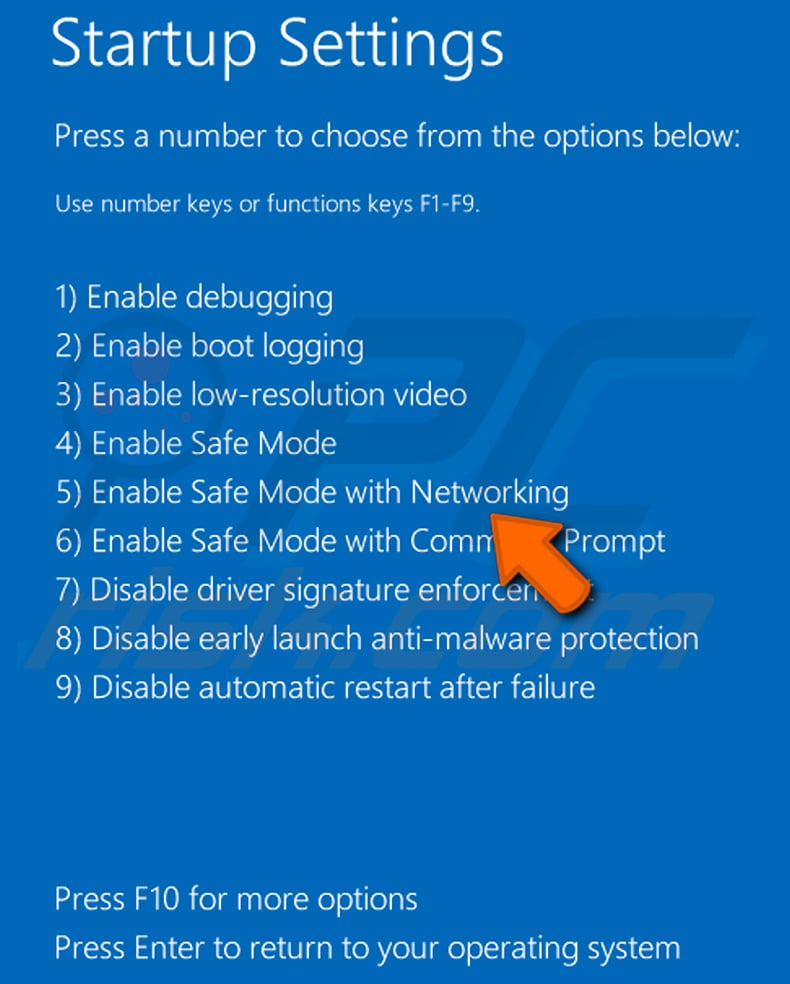
Video showing how to start Windows 10 in "Safe Mode with Networking":
 Extract the downloaded archive and run the Autoruns.exe file.
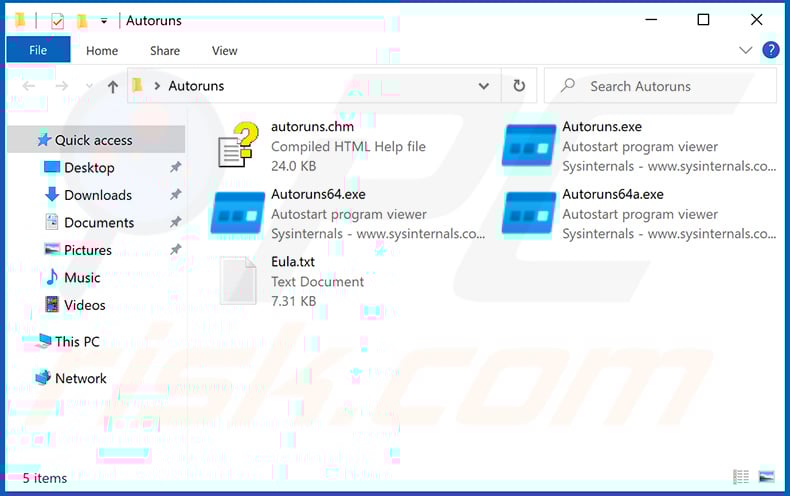
 In the Autoruns application, click "Options" at the top and uncheck "Hide Empty Locations" and "Hide Windows Entries" options. After this procedure, click the "Refresh" icon.
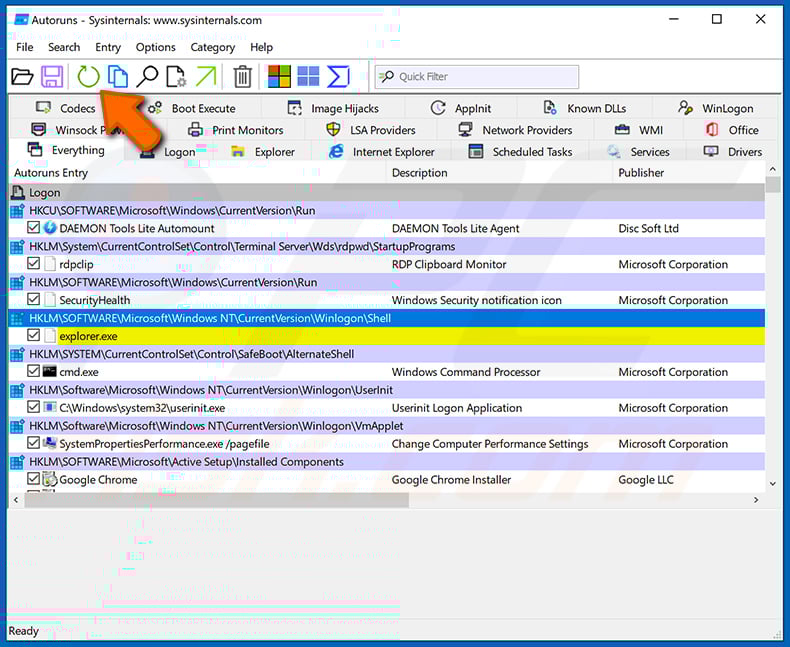
 Check the list provided by the Autoruns application and locate the malware file that you want to eliminate.
You should write down its full path and name. Note that some malware hides process names under legitimate Windows process names. At this stage, it is very important to avoid removing system files. After you locate the suspicious program you wish to remove, right click your mouse over its name and choose "Delete".
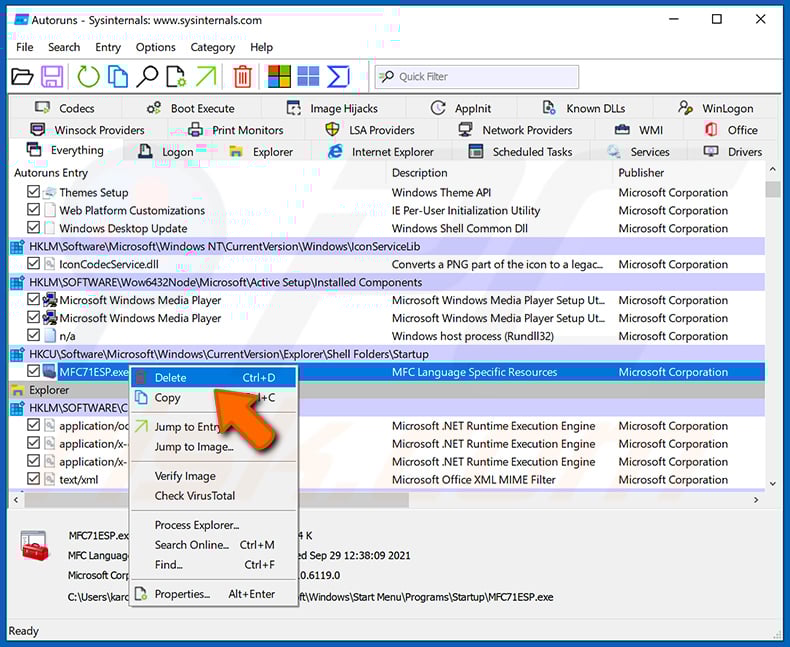
After removing the malware through the Autoruns application (this ensures that the malware will not run automatically on the next system startup), you should search for the malware name on your computer. Be sure to enable hidden files and folders before proceeding. If you find the filename of the malware, be sure to remove it.
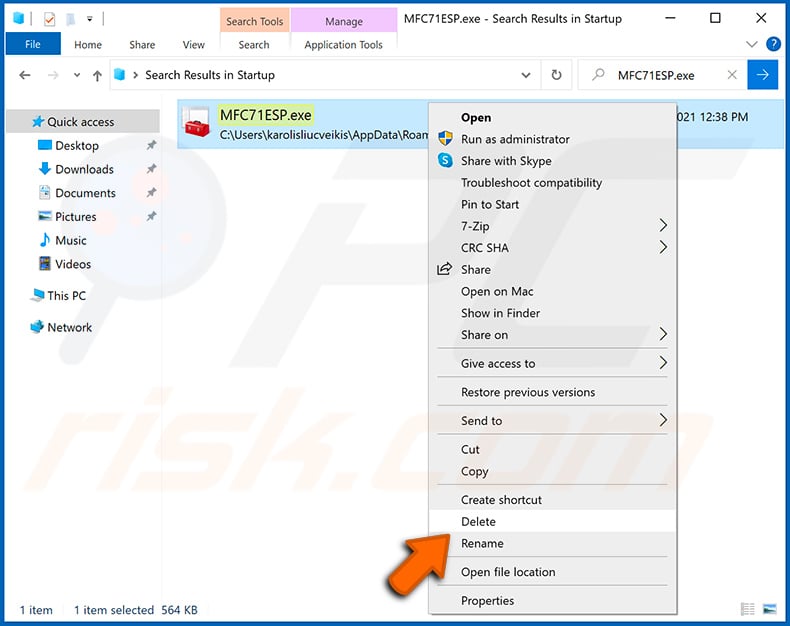
Reboot your computer in normal mode. Following these steps should remove any malware from your computer. Note that manual threat removal requires advanced computer skills. If you do not have these skills, leave malware removal to antivirus and anti-malware programs.
These steps might not work with advanced malware infections. As always it is best to prevent infection than try to remove malware later. To keep your computer safe, install the latest operating system updates and use antivirus software. To be sure your computer is free of malware infections, we recommend scanning it with Combo Cleaner Antivirus for Windows.
Frequently Asked Questions (FAQ)
My computer is infected with WARDEN Stealer malware, should I format my storage device to get rid of it?
Formatting removes WARDEN Stealer but also erases all files on the drive. Running a reputable security tool such as Combo Cleaner is the safer first option and should be tried before resorting to a full reformat.
What are the biggest issues that WARDEN Stealer malware can cause?
WARDEN Stealer can expose saved passwords, session cookies, payment card data, and cryptocurrency holdings. This may lead to account takeovers, identity theft, financial fraud, and additional infections if the loader component delivers follow-on malware.
What is the purpose of WARDEN Stealer malware?
WARDEN Stealer is built to harvest sensitive data from infected Windows machines, redirect cryptocurrency transactions by swapping clipboard wallet addresses, and install additional malicious programs at the operator's direction.
How did WARDEN Stealer malware infiltrate my computer?
Because WARDEN is sold as a service to multiple buyers, the delivery method varies by operator. It most commonly reaches victims through phishing emails, fake software downloads, pirated content, and malicious advertisements.
Will Combo Cleaner protect me from malware?
Yes. Combo Cleaner can detect and remove most known malware threats. Because sophisticated malware can embed itself deeply in a system, running a full scan is the safest approach to confirm nothing has been left behind.
Share:
 Facebook
 X.com
X.com
 LinkedIn
 Copy Link

Tomas Meskauskas
Expert security researcher, professional malware analyst
I am passionate about computer security and technology. I have an experience of over 10 years working in various companies related to computer technical issue solving and Internet security. I have been working as an author and editor for pcrisk.com since 2010. Follow me on Twitter and LinkedIn to stay informed about the latest online security threats.
PCrisk security portal is brought by a company RCS LT.
Joined forces of security researchers help educate computer users about the latest online security threats. More information about the company RCS LT.
Our malware removal guides are free. However, if you want to support us you can send us a donation.
DonatePCrisk security portal is brought by a company RCS LT.
Joined forces of security researchers help educate computer users about the latest online security threats. More information about the company RCS LT.
Our malware removal guides are free. However, if you want to support us you can send us a donation.
Donate
▼ Show Discussion