
Do not download apps promoted on security-update-required.com
Mac VirusAlso Known As: security-update-required.com pop-up

Get free scan and check if your device is infected.
Remove it nowTo use full-featured product, you have to purchase a license for Combo Cleaner. Seven days free trial available. Combo Cleaner is owned and operated by RCS LT, the parent company of PCRisk.com.
What is security-update-required[.]com?
security-update-required[.]com is a deceptive website running various scams. At the time of research, this web page promoted two different schemes. The scams promoted on this site primarily target iPhone users, yet it is often accessed via other Apple devices as well.
One variant claims visitors' devices are infected, the other that they must update their VPN software. The goal of these schemes is to promote various untrusted applications, however, other scam versions with different purposes are possible. This web page has been observed being promoted through deceptive Calendar events.
Typically, these websites are promoted via redirects caused by intrusive advertisements or by Potentially Unwanted Applications (PUAs) already installed on the system.
![security-update-required[.]com scam](/images/stories/screenshots202011/security-update-required-com-scam-main.jpg)
One scam variant run on security-update-required[.]com presents visitors with a pop-up window. The text within it claims that users' devices have been infected with viruses originating from corrupted websites. To remove the fake threats, visitors are instructed to follow the provided steps.
After the window is closed, the scheme states that users' Apple iPhones have been seriously damaged with 19 viruses. The origin of the threats is repeated and the viruses are identified as "browser Trojans". To protect their Facebook accounts, WhatsApp messages, photos and private applications, visitors are instructed to install a "mobile security application".
Another version informs users that they need to update their existing VPN and/or install one to safely continue watching content. No web page can detect threats/issues present on devices, and any that make such claims are scams. Therefore, you are strongly advised against trusting these schemes and/or installing/purchasing the apps promoted through them.
To summarize, by trusting security-update-required[.]com and other deceptive sites, many users experience system infections, serious privacy issues, financial loss and even identity theft. As mentioned, scam websites are often entered through redirects caused by PUAs.
As well as force-opening various bogus/malicious pages, these unwanted applications have different functionalities. Adware-types deliver pop-ups, banners, coupons and other intrusive advertisements. When clicked, the delivered ads redirect to dangerous sites and some can even stealthily download/install software (e.g. PUAs).
Browser hijackers modify browser settings and restrict/deny access to them to promote fake search engines. The promoted web searchers are rarely able to generate search results, and so they redirect to (or cause redirection chains ending with) Yahoo, Bing, Google and other legitimate search engines.
Furthermore, most PUAs track browsing activity (browsing and search engine histories) and collect personal information extracted from it (IP addresses, geolocations and other details). This vulnerable data is then shared with and/or sold to third parties (potentially, cyber criminals).
In summary, the presence of unwanted software on devices poses a risk to both device and user safety. You are strongly advised to remove all suspect apps and browser extensions/plug-ins immediately upon detection.
| Name | security-update-required.com pop-up |
| Threat Type | Phishing, Scam, Mac malware, Mac virus. |
| Fake Claim | Scam claims that users' devices are infected or that they require a VPN. |
| Detection Names | CyRadar (Malicious), ESET (Malware), Full List (VirusTotal). |
| Promoted Unwanted Application | Various dubious applications. |
| Serving IP Address | 51.81.245.225 |
| Symptoms | Your Mac becomes slower than normal, you see unwanted pop-up ads, you are redirected to dubious websites. |
| Distribution methods | Deceptive pop-up ads, free software installers (bundling), fake Flash Player installers, torrent file downloads. |
| Damage | Internet browser tracking (potential privacy issues), display of unwanted ads, redirects to dubious websites, loss of private information. |
| Malware Removal (Windows) |
To eliminate possible malware infections, scan your computer with legitimate antivirus software. Our security researchers recommend using Combo Cleaner. Download Combo CleanerTo use full-featured product, you have to purchase a license for Combo Cleaner. 7 days free trial available. Combo Cleaner is owned and operated by RCS LT, the parent company of PCRisk.com. |
Service24.report, topdefence-formob.com and umobile-security.com are some examples of other scam websites similar to security-update-required[.]com. The internet is full of online schemes.
Popular scam models include (but are not limited to) fake prize giveaways and raffles, "amazing" deals and offers, warnings that the device is infected or at risk, alerts that a crucial piece of software is outdated or missing, and so on. Regardless of what these pages claim or offer, the purpose is identical: to generate profit for the scammers/cyber criminals behind them.
Therefore, you are strongly advised to exercise caution when browsing.
How did potentially unwanted applications install on my computer?
PUAs are often downloaded/installed together with other products. This deceptive marketing technique of pre-packing regular software with unwanted or malicious additions is called "bundling".
By rushing through download/installation of software (e.g. ignoring terms, skipping steps and sections, using "Quick/Express" settings, etc.) many users risk unintentionally allowing bundled content into their devices. Intrusive advertisements proliferate PUAs as well.
When clicked, the ads can execute scripts to download/install these applications without users' permission. Some PUAs have "official" download web pages from which they can be downloaded.
How to avoid installation of potentially unwanted applications
You are advised to research all software before download/installation. Use only official and verified download channels. Unofficial and free file-hosting websites, Peer-to-Peer sharing networks (BitTorrent, Gnutella, eMule), and other third party downloaders commonly offer harmful and bundled content, and are therefore untrusted and should be avoided.
When downloading/installing, read the terms, study all possible options, use the "Custom/Advanced" settings and opt-out of additional apps, tools, features, and so on. Intrusive advertisements typically seem legitimate, however, they can redirect to dubious and malicious sites (e.g. gambling, pornography, adult-dating, and many others).
If you encounter ads or redirects of this kind, inspect the system and remove all dubious applications and browser extensions/plug-ins immediately. If your computer is already infected with PUAs, we recommend running a scan with Combo Cleaner Antivirus for Windows to automatically eliminate them.
Text presented in the pop-up displayed by one of the scam variants run on security-update-required[.]com:
Warning!
Apple device is infected with viruses picked up while surfing recent corrupted sites. Tap OK and follow the instructions to protect your Apple devices.
Appearance of the second page displayed by this scam variant:
![Second page displayed by one of the security-update-required[.]com scam variants](/images/stories/screenshots202011/security-update-required-com-scam-second-page-displayed.jpg)
Text presented in this page:
Your Apple iPhone is severely damaged by 19 viruses!
We have detected that your Browser is (59%) DAMAGED by BROWSER TROJAN VIRUSES picked up while surfing recent corrupted sites.
Immediately install mobile security application or sensitive data like your Facebook account, WhatsApp messages, photos and private applications will be infected and stolen.
0 minute 42 seconds
Install Cancel
Appearance of another scam variant run on security-update-required[.]com:
![Another variant of security-update-required[.]com scam](/images/stories/screenshots202011/security-update-required-com-scam-another-variant.jpg)
Text presented in this scam variant:
VPN Update
Please download VPN App to continue watching in safe mode
Dubious application promoted by this scam variant:
![App promoted by one of the scams run on security-update-required[.]com](/images/stories/screenshots202011/security-update-required-com-scam-app-promoted-by-another-variant.jpg)
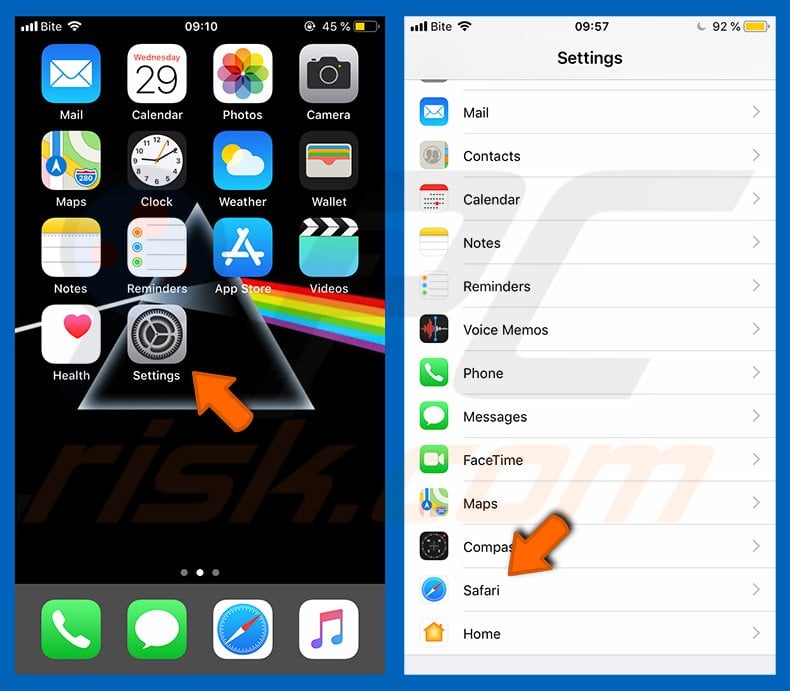
To enable pop-up blocking, fraudulent website warnings, and remove web browsing data in mobile Apple devices, follow these steps:
First, go to "Settings", and then scroll down to find and tap "Safari".
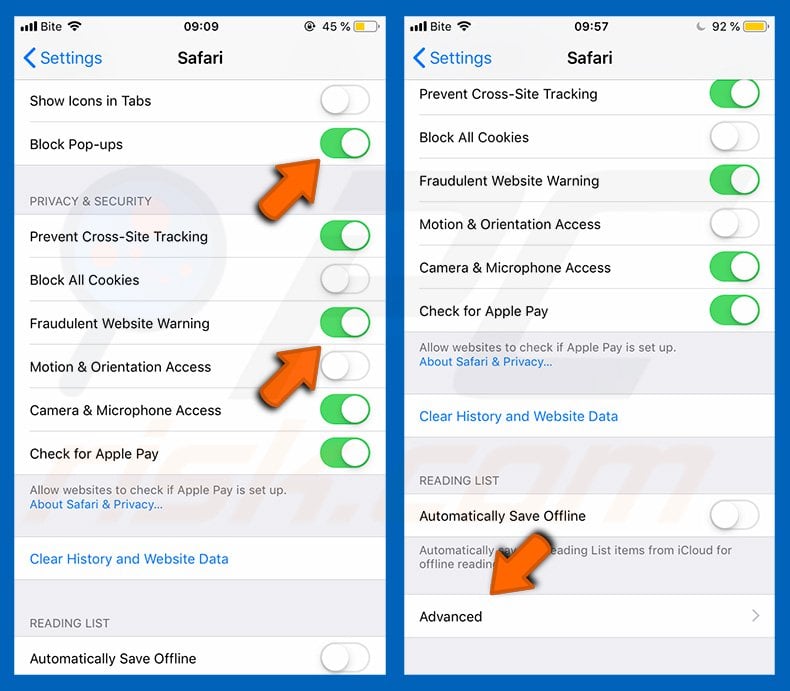
Check if the "Block Pop-ups" and "Fraudulent Website Warning" toggles are enabled. If not, enable them immediately. Then, scroll down and tap "Advanced".
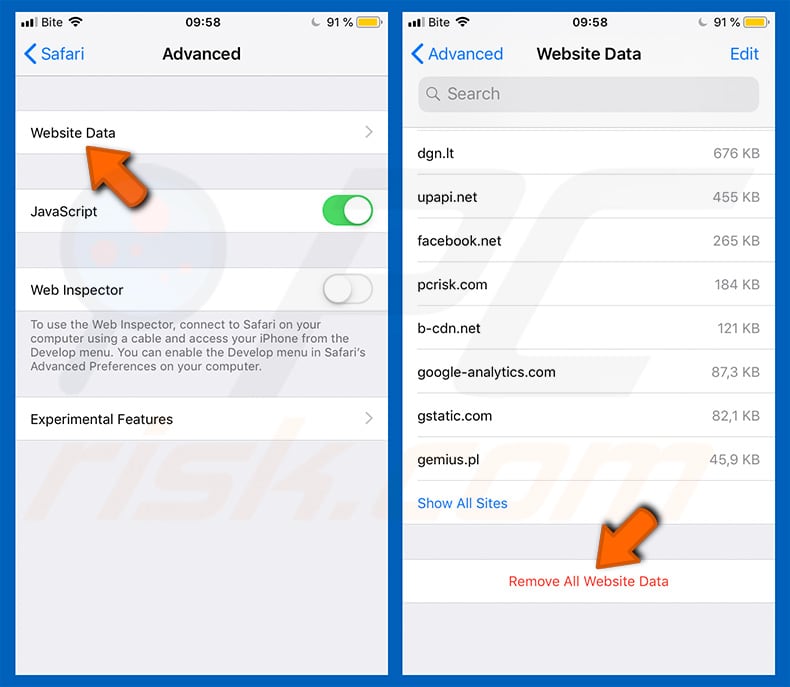
Tap "Website Data" and then "Remove All Website Data".
Instant automatic malware removal:
Manual threat removal might be a lengthy and complicated process that requires advanced IT skills. Combo Cleaner is a professional automatic malware removal tool that is recommended to get rid of malware. Download it by clicking the button below:
DOWNLOAD Combo CleanerBy downloading any software listed on this website you agree to our Privacy Policy and Terms of Use. To use full-featured product, you have to purchase a license for Combo Cleaner. 7 days free trial available. Combo Cleaner is owned and operated by RCS LT, the parent company of PCRisk.com.
Quick menu:
- What is "security-update-required[.]com"?
- STEP 1. Remove PUA related files and folders from OSX.
- STEP 2. Remove rogue extensions from Safari.
- STEP 3. Remove rogue add-ons from Google Chrome.
- STEP 4. Remove potentially unwanted plug-ins from Mozilla Firefox.
Video showing how to remove adware and browser hijackers from a Mac computer:
Potentially unwanted applications removal:
Remove potentially unwanted applications from your "Applications" folder:
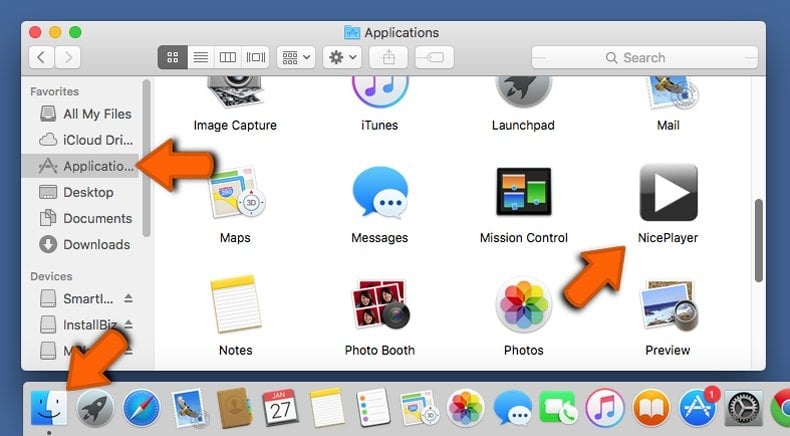
Click the Finder icon. In the Finder window, select "Applications". In the applications folder, look for "MPlayerX","NicePlayer", or other suspicious applications and drag them to the Trash. After removing the potentially unwanted application(s) that cause online ads, scan your Mac for any remaining unwanted components.
DOWNLOAD remover for malware infections
Combo Cleaner checks if your computer is infected with malware. To use full-featured product, you have to purchase a license for Combo Cleaner. 7 days free trial available. Combo Cleaner is owned and operated by RCS LT, the parent company of PCRisk.com.
Remove adware-related files and folders
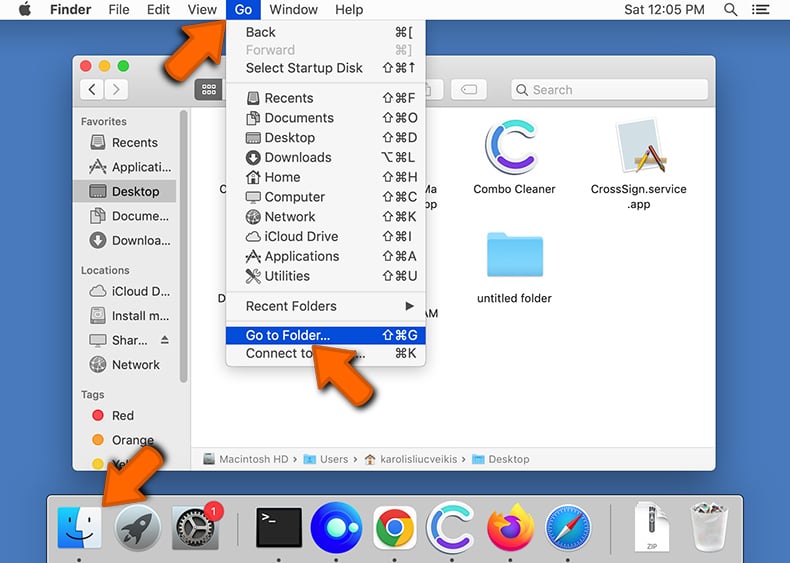
Click the Finder icon, from the menu bar. Choose Go, and click Go to Folder...
 Check for adware generated files in the /Library/LaunchAgents/ folder:
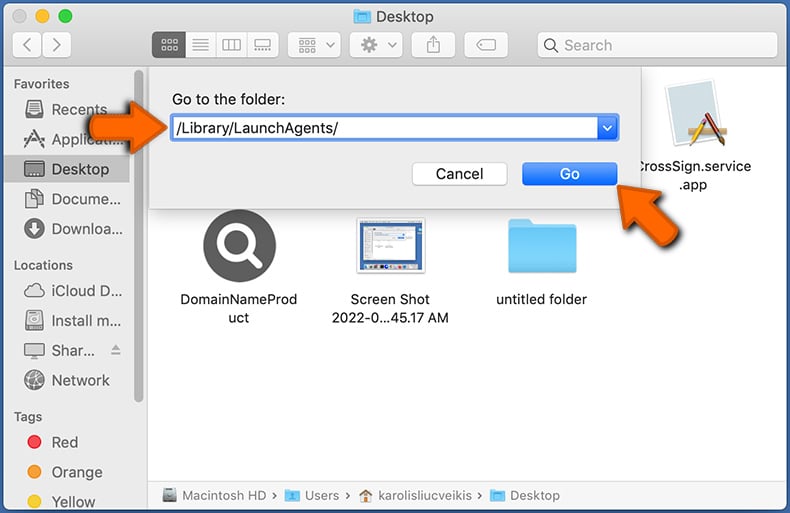
In the Go to Folder... bar, type: /Library/LaunchAgents/
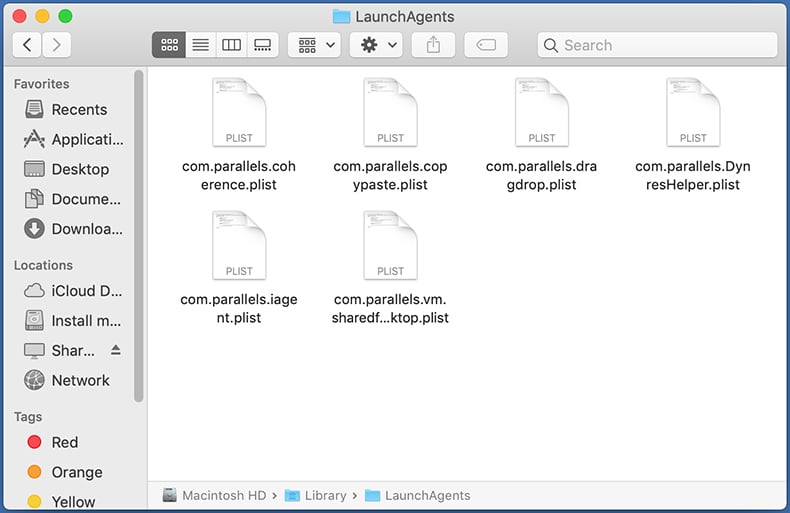
In the "LaunchAgents" folder, look for any recently-added suspicious files and move them to the Trash. Examples of files generated by adware - "installmac.AppRemoval.plist", "myppes.download.plist", "mykotlerino.ltvbit.plist", "kuklorest.update.plist", etc. Adware commonly installs several files with the exact same string.
 Check for adware generated files in the ~/Library/Application Support/ folder:
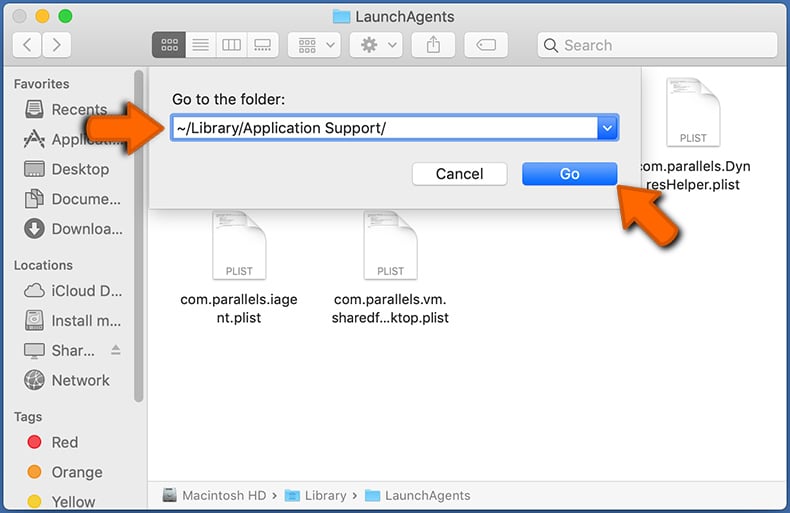
In the Go to Folder... bar, type: ~/Library/Application Support/
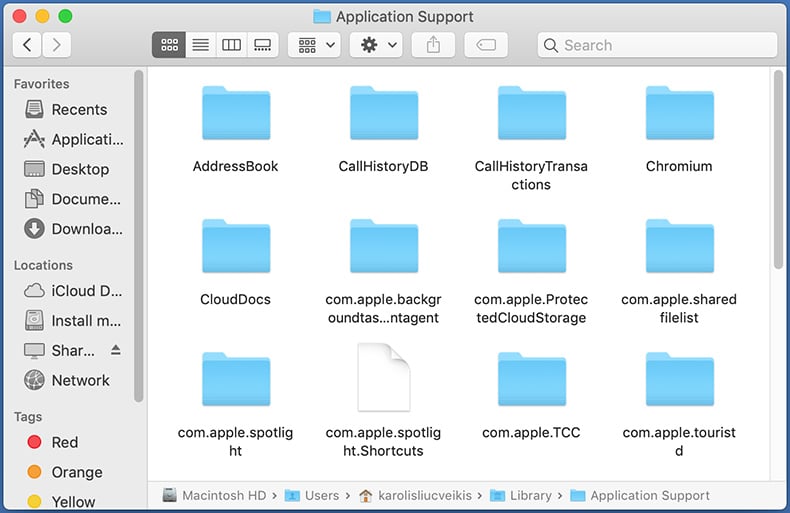
In the "Application Support" folder, look for any recently-added suspicious folders. For example, "MplayerX" or "NicePlayer", and move these folders to the Trash.
 Check for adware generated files in the ~/Library/LaunchAgents/ folder:
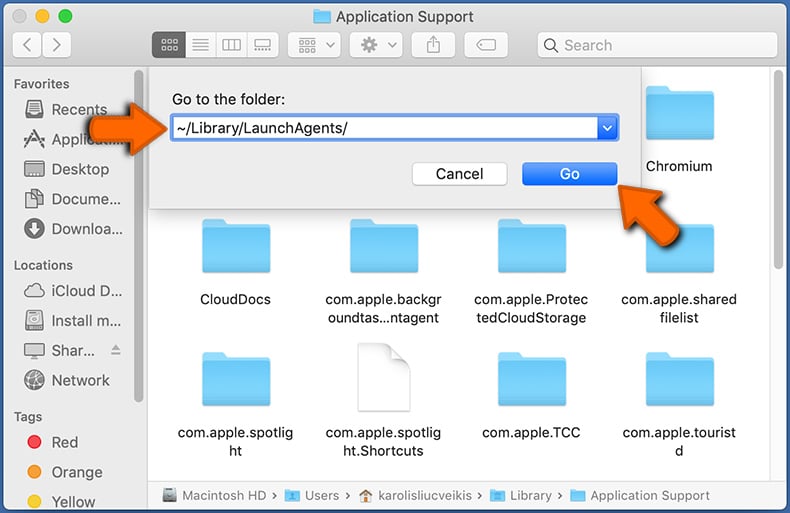
In the Go to Folder... bar, type: ~/Library/LaunchAgents/
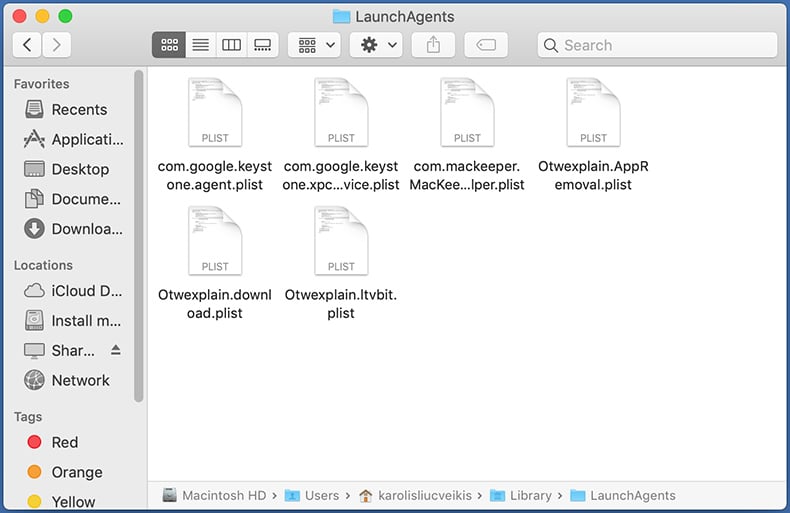
In the "LaunchAgents" folder, look for any recently-added suspicious files and move them to the Trash. Examples of files generated by adware - "installmac.AppRemoval.plist", "myppes.download.plist", "mykotlerino.ltvbit.plist", "kuklorest.update.plist", etc. Adware commonly installs several files with the exact same string.
 Check for adware generated files in the /Library/LaunchDaemons/ folder:
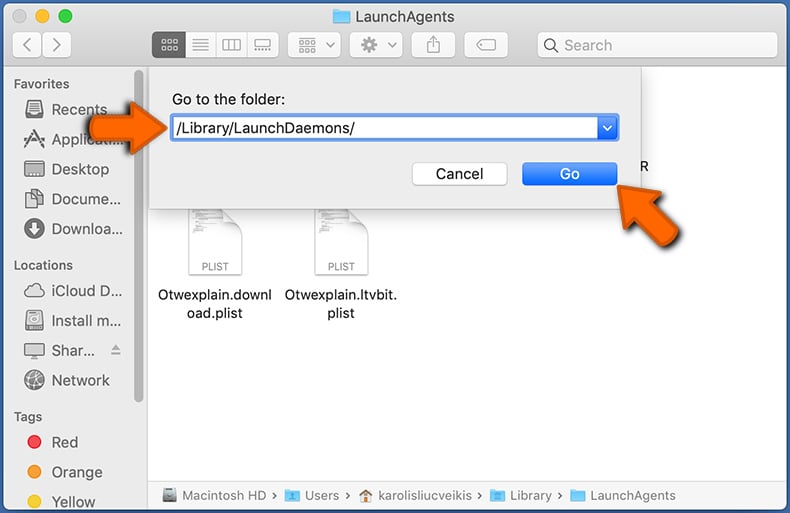
In the "Go to Folder..." bar, type: /Library/LaunchDaemons/
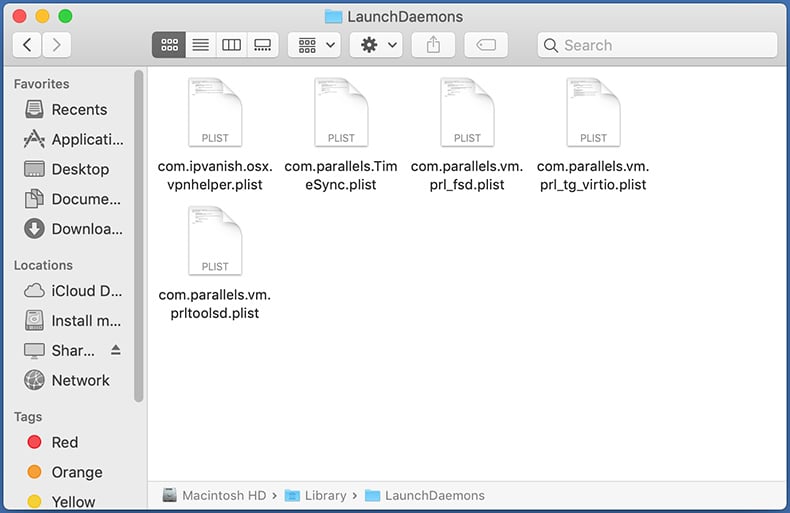
In the "LaunchDaemons" folder, look for recently-added suspicious files. For example "com.aoudad.net-preferences.plist", "com.myppes.net-preferences.plist", "com.kuklorest.net-preferences.plist", "com.avickUpd.plist", etc., and move them to the Trash.
 Scan your Mac with Combo Cleaner:
If you have followed all the steps correctly, your Mac should be clean of infections. To ensure your system is not infected, run a scan with Combo Cleaner Antivirus. Download it HERE. After downloading the file, double click combocleaner.dmg installer. In the opened window, drag and drop the Combo Cleaner icon on top of the Applications icon. Now open your launchpad and click on the Combo Cleaner icon. Wait until Combo Cleaner updates its virus definition database and click the "Start Combo Scan" button.
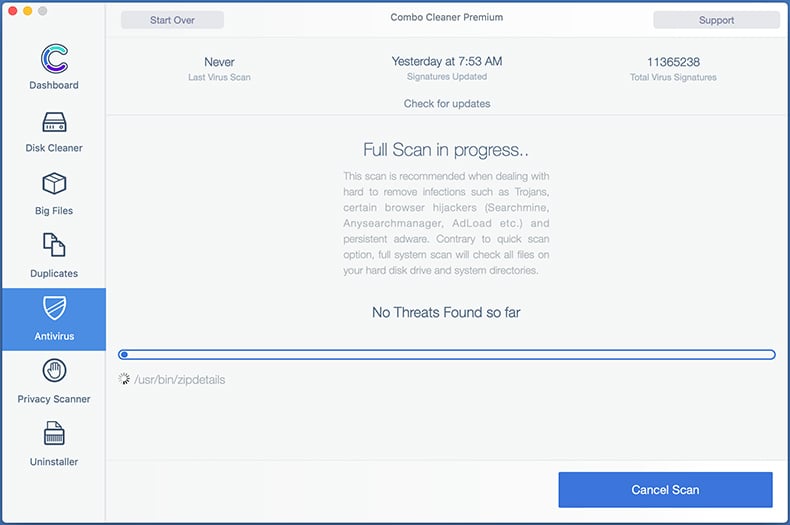
Combo Cleaner will scan your Mac for malware infections. If the antivirus scan displays "no threats found" - this means that you can continue with the removal guide; otherwise, it's recommended to remove any found infections before continuing.
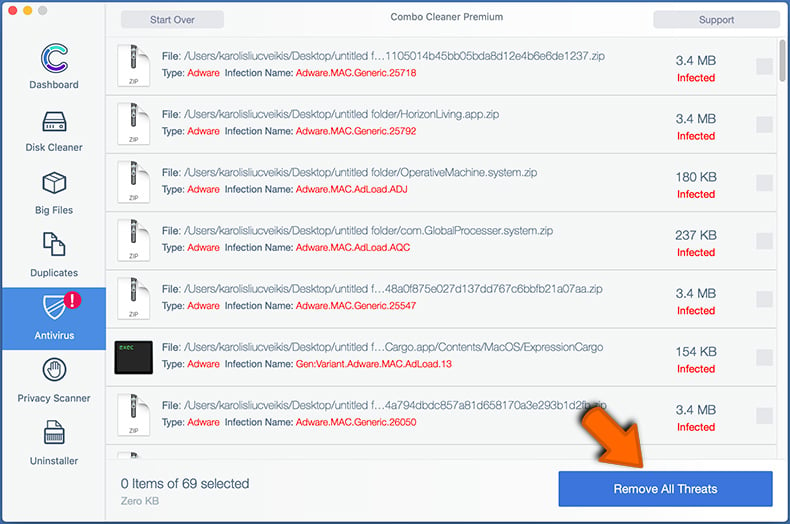
After removing files and folders generated by the adware, continue to remove rogue extensions from your Internet browsers.
Remove malicious extensions from Internet browsers
 Remove malicious Safari extensions:
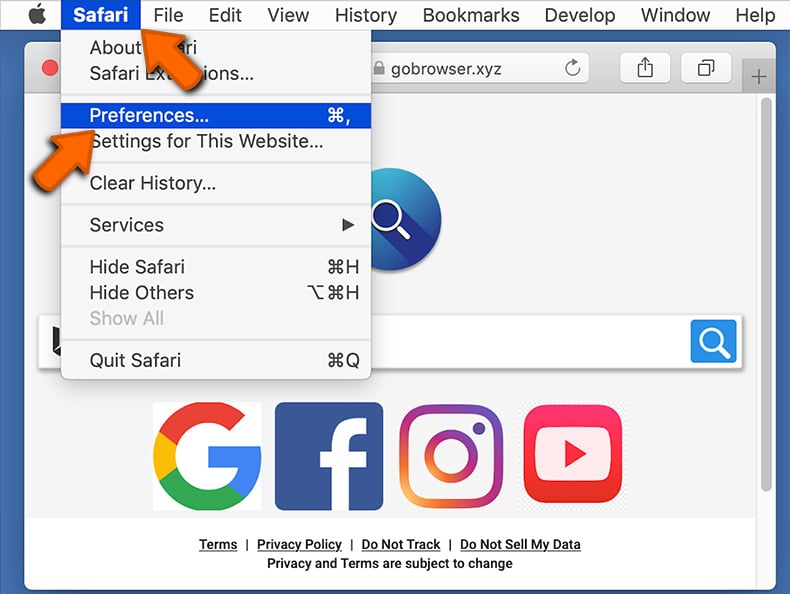
Open the Safari browser, from the menu bar, select "Safari" and click "Preferences...".
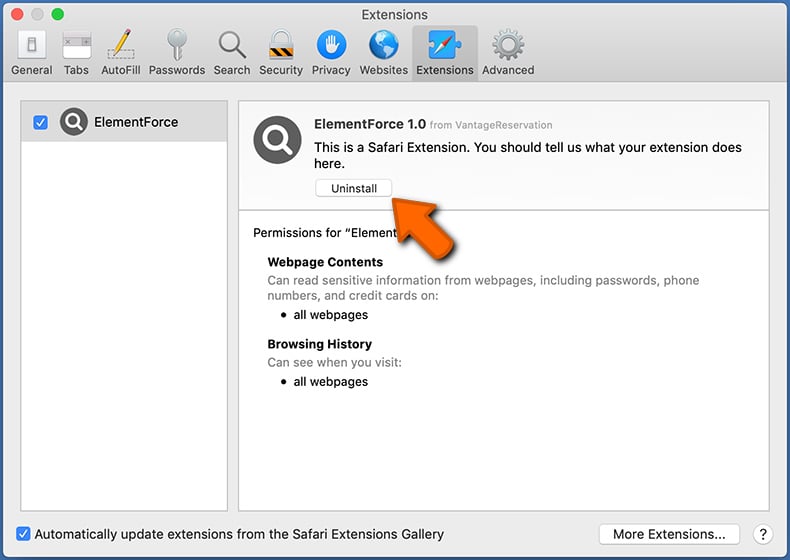
In the preferences window, select "Extensions" and look for any recently-installed suspicious extensions. When located, click the "Uninstall" button next to it/them. Note that you can safely uninstall all extensions from your Safari browser - none are crucial for regular browser operation.
- If you continue to have problems with browser redirects and unwanted advertisements - Reset Safari.
 Remove malicious extensions from Google Chrome:
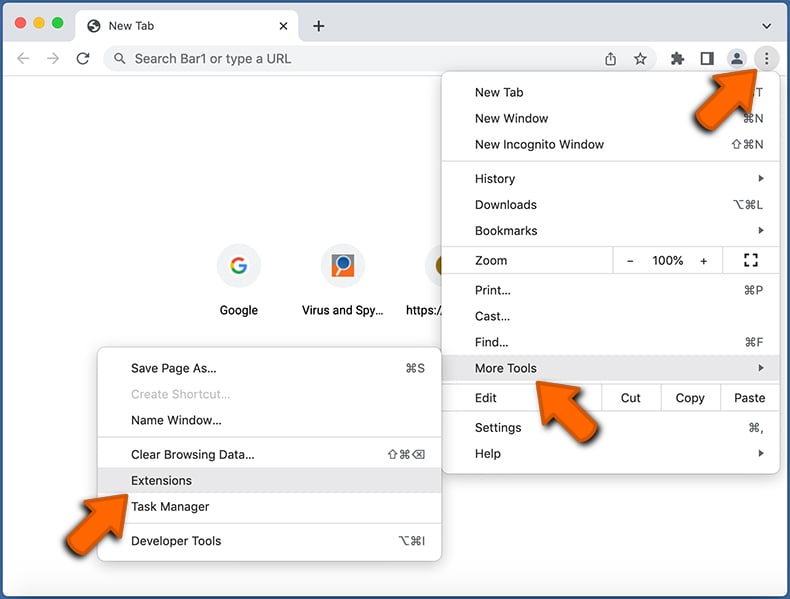
Click the Chrome menu icon  (at the top right corner of Google Chrome), select "More Tools" and click "Extensions". Locate all recently-installed suspicious extensions, select these entries and click "Remove".
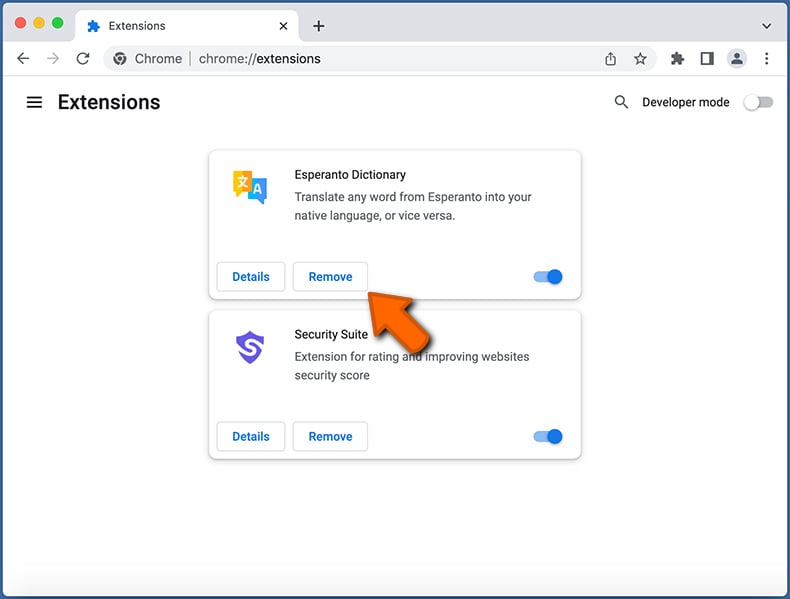
- If you continue to have problems with browser redirects and unwanted advertisements - Reset Google Chrome.
 Remove malicious extensions from Mozilla Firefox:
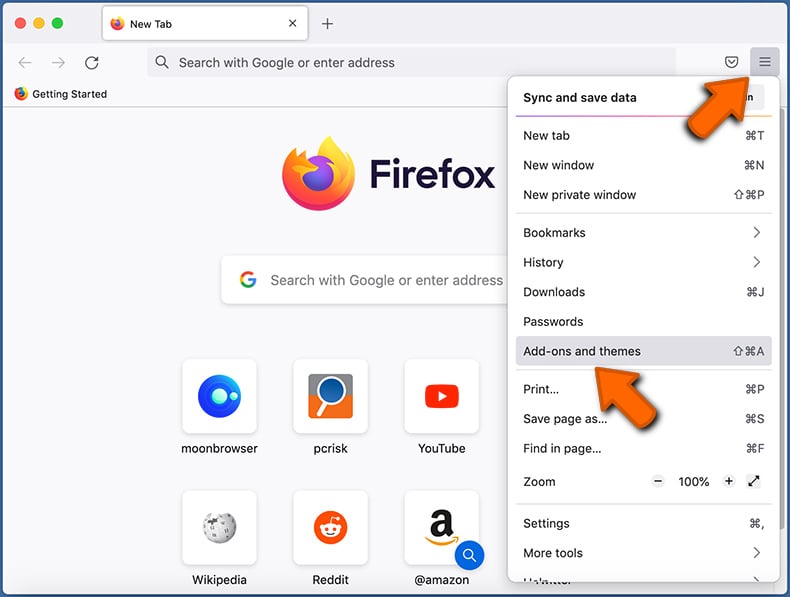
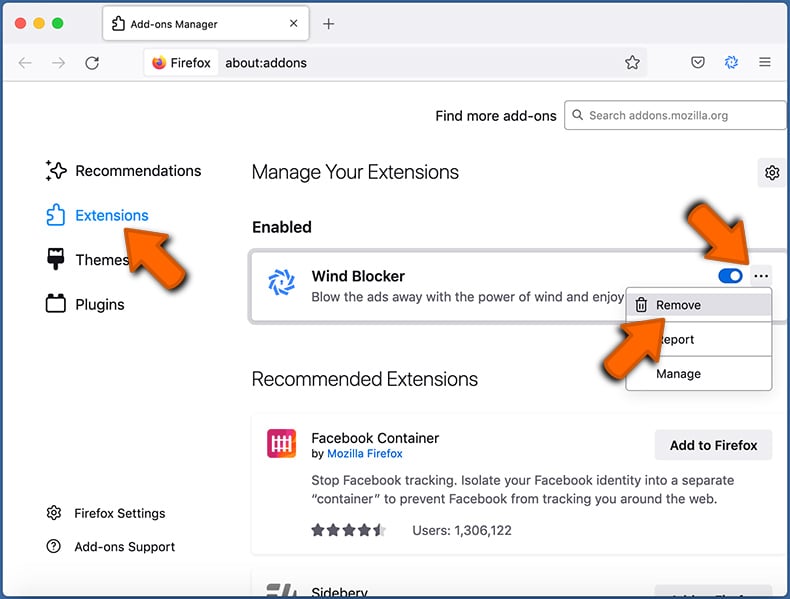
Click the Firefox menu  (at the top right corner of the main window) and select "Add-ons and themes". Click "Extensions", in the opened window locate all recently-installed suspicious extensions, click on the three dots and then click "Remove".
- If you continue to have problems with browser redirects and unwanted advertisements - Reset Mozilla Firefox.
Share:
 Facebook
 X.com
X.com
 LinkedIn
 Copy Link

Tomas Meskauskas
Expert security researcher, professional malware analyst
I am passionate about computer security and technology. I have an experience of over 10 years working in various companies related to computer technical issue solving and Internet security. I have been working as an author and editor for pcrisk.com since 2010. Follow me on Twitter and LinkedIn to stay informed about the latest online security threats.
PCrisk security portal is brought by a company RCS LT.
Joined forces of security researchers help educate computer users about the latest online security threats. More information about the company RCS LT.
Our malware removal guides are free. However, if you want to support us you can send us a donation.
DonatePCrisk security portal is brought by a company RCS LT.
Joined forces of security researchers help educate computer users about the latest online security threats. More information about the company RCS LT.
Our malware removal guides are free. However, if you want to support us you can send us a donation.
Donate
▼ Show Discussion