
How to remove ShadyPanda malicious browser extensions
AdwareAlso Known As: ShadyPanda unwanted browser extensions

Get free scan and check if your device is infected.
Remove it nowTo use full-featured product, you have to purchase a license for Combo Cleaner. Seven days free trial available. Combo Cleaner is owned and operated by RCS LT, the parent company of PCRisk.com.
What kind of software is ShadyPanda?
ShadyPanda is a family of malicious browser extensions responsible for over four million infections. These extensions are connected by overlapping code, identical obfuscation, and shared infrastructure. Some operated as advertised and remained dormant for years before an update introduced malicious functions, including extensive data theft and backdoor behavior.
ShadyPanda-linked browser extensions were first uploaded to legitimate platforms in 2018, and several are still hosted as of December 2025.
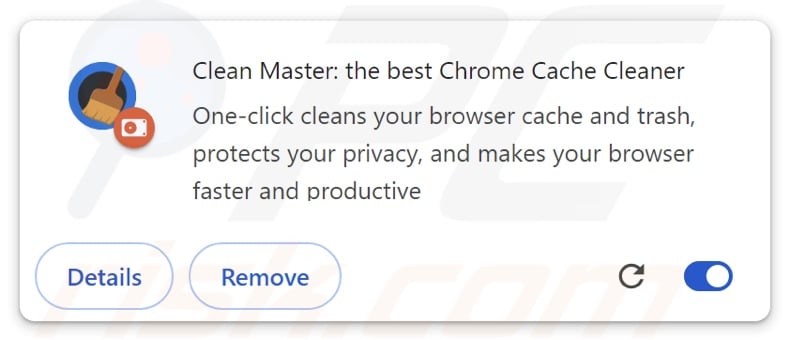
ShadyPanda browser extension overview
ShadyPanda is a group of malicious browser extensions compatible with Google Chrome and Microsoft Edge browsers. These extensions have different names and promise various capabilities, including themed wallpapers, one-click cache cleaners, and productivity tools. Some functioned exactly as indicated by the promotional material for years, and even gained "verified" status, before they were updated with malicious abilities.
The first campaign associated with ShadyPanda occurred in 2023 and involved at least 145 extensions; 20 were uploaded to the Chrome Web Store and 125 to Microsoft Edge Add-ons. The browser extensions acted as affiliate-injection type adware. In other words, whenever a user accessed a targeted e-commerce platform (e.g., Amazon, Booking.com, eBay, etc.) – the software inserted an affiliate tracking code to obtain an illegitimate commission from each purchase made. They also leveraged Google Analytics to track and sell users' browsing data.
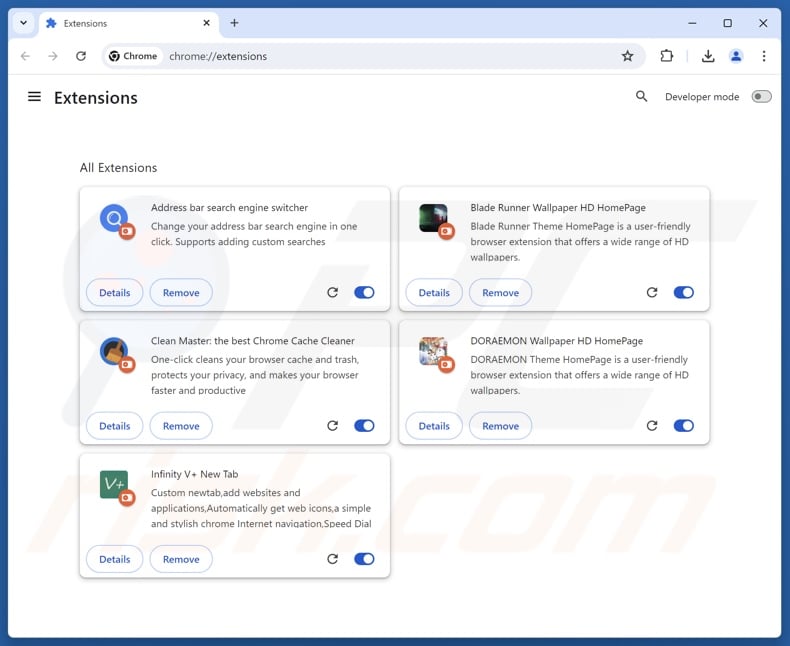
The following year, ShadyPanda ("Infinity V+ New Tab", etc.) reoriented towards classic browser hijacking. The software modified browsers to produce redirects to the trovi.com fake search engine whenever users searched the Web. These extensions likewise collected browsing information, including search engine histories and Internet cookies.
The next campaign involved five dormant browser extensions, with several initially introduced to genuine stores back in 2018 ("Clean Master: the best Chrome Cache Cleaner", etc.). In the middle of 2024, after collecting installations ranging in the hundreds of thousands, malicious functions were implemented via an automated update.
The data collection was upgraded to cross-device browser surveillance, where, in addition to browsing histories and cookies, the software could gather browser details (e.g., screen resolution, timezone, language settings, etc.), user navigation patterns, activity timestamps, and so on.
However, the core functionality was to operate as a "backdoor". Exactly how such an extension is used can differ greatly depending on the attackers' goals. It can be used to open an avenue for infecting the device with trojans, ransomware, cryptocurrency miners, or other malware.
The auto-update feature runs every hour – thus, new functions can be introduced rapidly, making this ShadyPanda software incredibly versatile. What is more, these extensions use anti-analysis mechanisms – strong obfuscation and not activating malicious capabilities when analysis-related tools are detected.
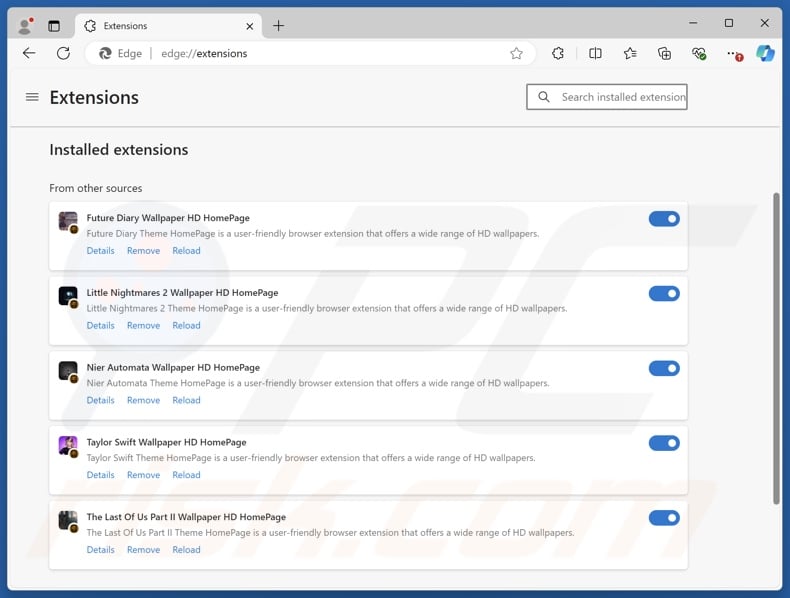
Browser extensions from another ShadyPanda campaign were uploaded to Microsoft Edge Add-ons in 2023, and they have not been removed as of the time of writing. Five known extensions ("WeTab 新标签页", etc.) have aggregated over four million downloads.
These are browser surveillance tools. In addition to the previously described information targeted by ShadyPanda, the extensions also seek detailed website navigation (e.g., viewing time, scrolling habits, total time spent on a page, etc.) and mouse input tracking (i.e., identifying elements and logging movement based on pixel-precise coordinates). These Edge extensions may be updated to introduce backdoor or other dangerous functionality – while this has not occurred as of writing, the likelihood is strong.
To summarize, the presence of a malicious extension like those belonging to the ShadyPanda family can lead to multiple system infections, severe privacy issues, financial losses, and identity theft.
| Name | ShadyPanda unwanted browser extensions |
| Threat Type | Malicious browser extension, adware, browser hijacker, spyware, backdoor. |
| Browser Extension(s) | Clean Master: the best Chrome Cache Cleaner, Infinity V+ New Tab, WeTab 新标签页, Address bar search engine switcher, Blade Runner Wallpaper HD HomePage, DORAEMON Wallpaper HD HomePage, Future Diary Wallpaper HD HomePage, Little Nightmares 2 Wallpaper HD HomePage, Nier Automata Wallpaper HD HomePage, Taylor Swift Wallpaper HD HomePage, The Last Of Us Part II Wallpaper HD HomePage, etc. |
| Supposed Functionalities | Themed wallpapers, productivity tools, cache cleaning, etc. |
| Symptoms | Rogue redirects. Decreased Internet browsing speed. Manipulated Internet browser settings. |
| Distribution Methods | Deceptive pop-up ads, free software installers (bundling). |
| Damage | Browser tracking - serious privacy issues, possible additional malware infections. |
| Malware Removal (Windows) |
To eliminate possible malware infections, scan your computer with legitimate antivirus software. Our security researchers recommend using Combo Cleaner. Download Combo CleanerTo use full-featured product, you have to purchase a license for Combo Cleaner. 7 days free trial available. Combo Cleaner is owned and operated by RCS LT, the parent company of PCRisk.com. |
Malicious browser extensions in general
We have investigated countless harmful browser extensions. Most possess some manner of data-tracking abilities. Prevalent types include adware and browser hijackers.
The former aim to generate revenue through advertising, such as affiliate code injection, stealthy ad clicking, advertisement delivery, and redirect generation. The latter hijack browsers to produce redirects to fake search engines. Typically, these sites cannot provide search results and redirect to Google, Bing, Yahoo, or other legitimate search engines.
It must be emphasized that while the functionalities advertised by malicious extensions are rarely operational, even if they work – that does not guarantee the software's legitimacy or safety.
How did a ShadyPanda browser extension install on my computer?
ShadyPanda browser extensions have been made available on legitimate platforms, such as the Chrome Web Store and Microsoft Edge Add-ons. As of the time of research, five were still available on the latter. Many have been removed, but not before spending months and even years on the platform.
This abuse occurs due to a flaw in the review process that is only undertaken at upload and not maintained throughout the software's lifetime on the platform. However, these extensions could be distributed using other techniques.
Generally, this type of software can have dedicated promotional webpages and is endorsed on scam sites. They are primarily accessed via redirects caused by websites utilizing rogue advertising networks, intrusive ads, spam browser notifications, mistyped URLs, and installed adware.
"Bundling" is another prevalent method. It involves packing regular program installers with unwanted/malicious supplements. The threat of allowing bundled content into the system is increased by downloading from suspicious sources (e.g., freeware and free file-hosting sites, Peer-to-Peer sharing networks, etc.) and by rushing through installations (e.g., ignoring terms, skipping steps, using "Easy/Quick" settings, etc.).
Intrusive advertisements also proliferate software directly. Some of the adverts can be triggered (by being clicked) to execute scripts that perform downloads/installations without user consent.
How to avoid installation of unwanted/malicious browser software?
We highly recommend researching software prior to downloading or purchasing by reading terms and expert/user reviews, checking required permissions, and verifying developer legitimacy. All downloads must be made from official and trustworthy sources. Installations must be approached with care by inspecting available options, using "Custom" or "Advanced" settings, and opting out of additional apps, extensions, etc.
Additionally, it is essential to be vigilant when browsing, as fake and dangerous online content usually appears legitimate and harmless. For example, despite their often innocuous appearance – intrusive ads redirect to questionable and unreliable websites (e.g., scam-promoting, gambling, adult dating, etc.).
In case of continuous encounters with such advertisements/redirects, check the device and immediately remove all suspect applications and browser extensions/plug-ins. If your computer is already infected with ShadyPanda, we recommend running a scan with Combo Cleaner Antivirus for Windows to automatically eliminate this adware.
Screenshot of ShadyPanda browser extensions installed on Google Chrome:
Screenshot of ShadyPanda browser extensions installed on Microsoft Edge:
Instant automatic malware removal:
Manual threat removal might be a lengthy and complicated process that requires advanced IT skills. Combo Cleaner is a professional automatic malware removal tool that is recommended to get rid of malware. Download it by clicking the button below:
DOWNLOAD Combo CleanerBy downloading any software listed on this website you agree to our Privacy Policy and Terms of Use. To use full-featured product, you have to purchase a license for Combo Cleaner. 7 days free trial available. Combo Cleaner is owned and operated by RCS LT, the parent company of PCRisk.com.
Quick menu:
- What is ShadyPanda?
- STEP 1. Uninstall unwanted applications using Control Panel.
- STEP 2. Remove rogue extensions from Google Chrome.
- STEP 3. Remove rogue extensions from Mozilla Firefox.
- STEP 4. Remove rogue extensions from Safari.
- STEP 5. Remove rogue plug-ins from Microsoft Edge.
Unwanted application removal:
Windows 11 users:
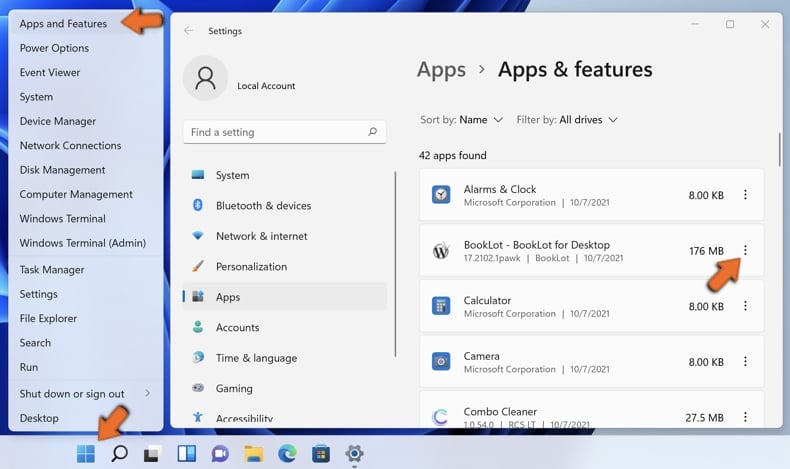
Right-click on the Start icon, select Apps and Features. In the opened window search for the application you want to uninstall, after locating it, click on the three vertical dots and select Uninstall.
Windows 10 users:
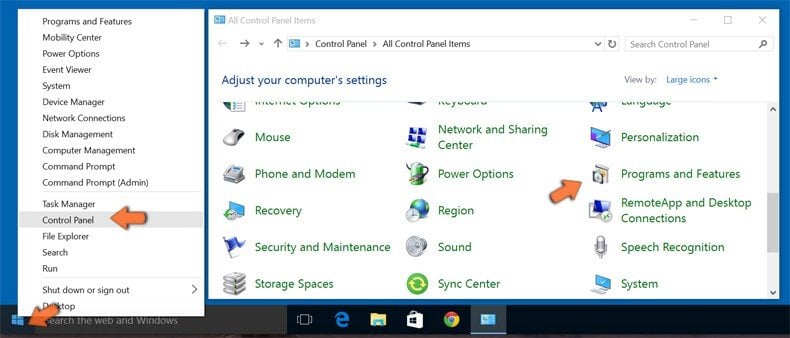
Right-click in the lower left corner of the screen, in the Quick Access Menu select Control Panel. In the opened window choose Programs and Features.
Windows 7 users:
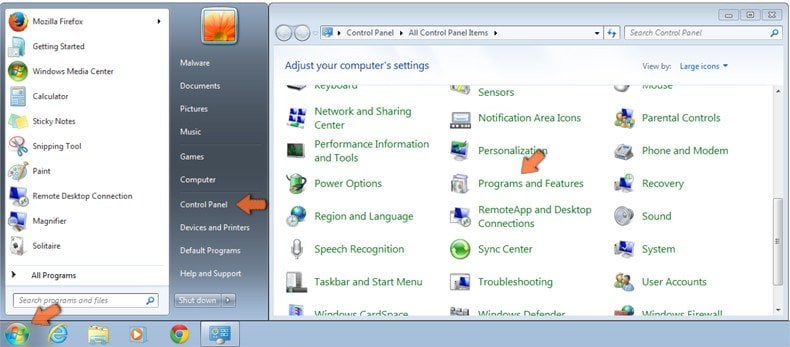
Click Start (Windows Logo at the bottom left corner of your desktop), choose Control Panel. Locate Programs and click Uninstall a program.
macOS (OSX) users:
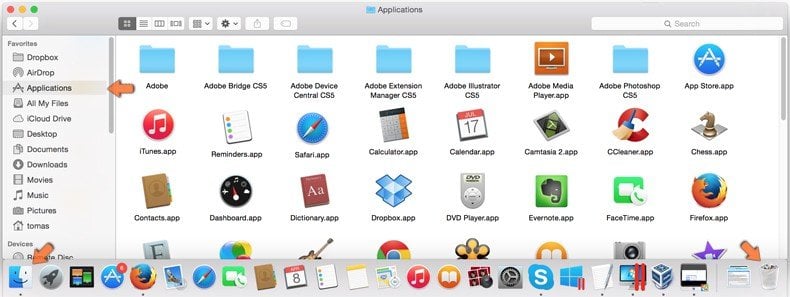
Click Finder, in the opened screen select Applications. Drag the app from the Applications folder to the Trash (located in your Dock), then right click the Trash icon and select Empty Trash.
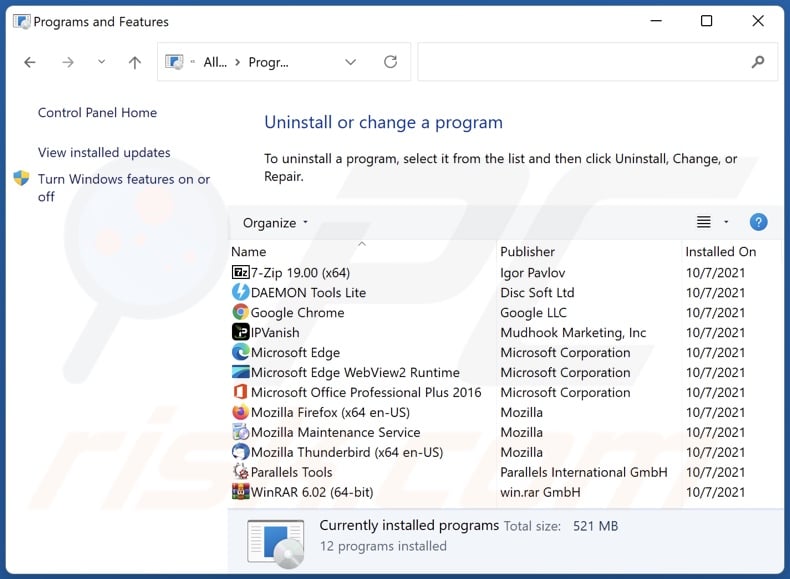
In the uninstall programs window, look for any unwanted applications, select these entries and click "Uninstall" or "Remove".
After uninstalling the unwanted applications, scan your computer for any remaining unwanted components or possible malware infections. To scan your computer, use recommended malware removal software.
DOWNLOAD remover for malware infections
Combo Cleaner checks if your computer is infected with malware. To use full-featured product, you have to purchase a license for Combo Cleaner. 7 days free trial available. Combo Cleaner is owned and operated by RCS LT, the parent company of PCRisk.com.
Remove malicious extensions from Internet browsers:
Video showing how to remove potentially unwanted browser add-ons:
 Remove malicious extensions from Google Chrome:
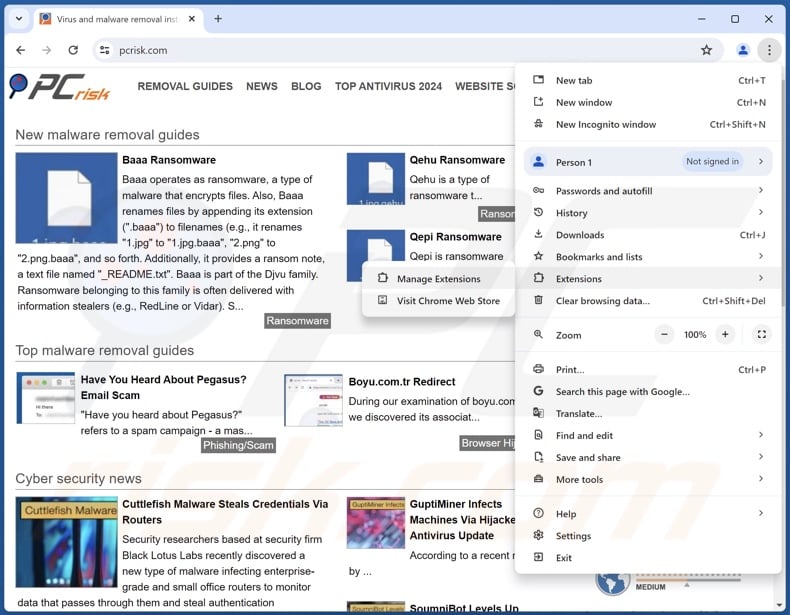
Click the Chrome menu icon  (at the top right corner of Google Chrome), select "Extensions" and click "Manage Extensions". Locate suspicious extensions, select these entries and click "Remove".
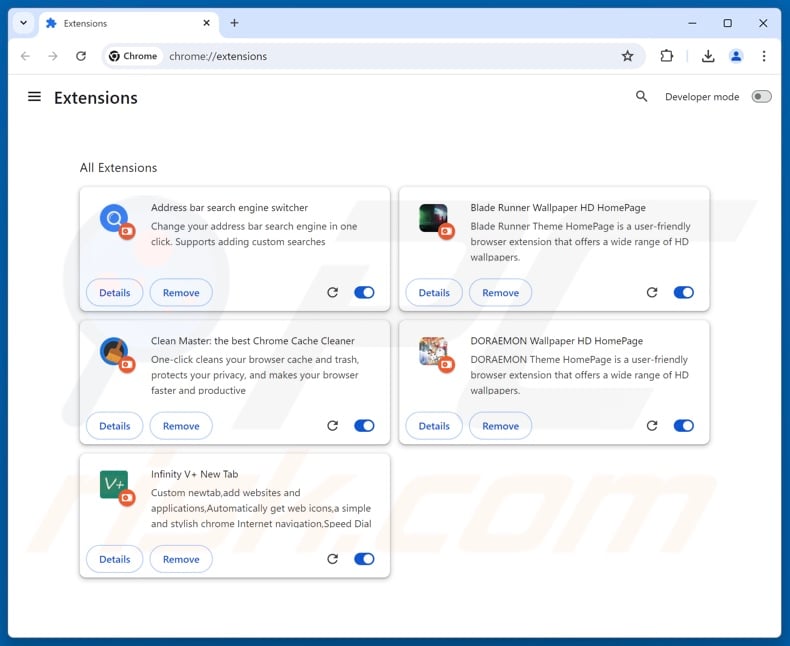
Optional method:
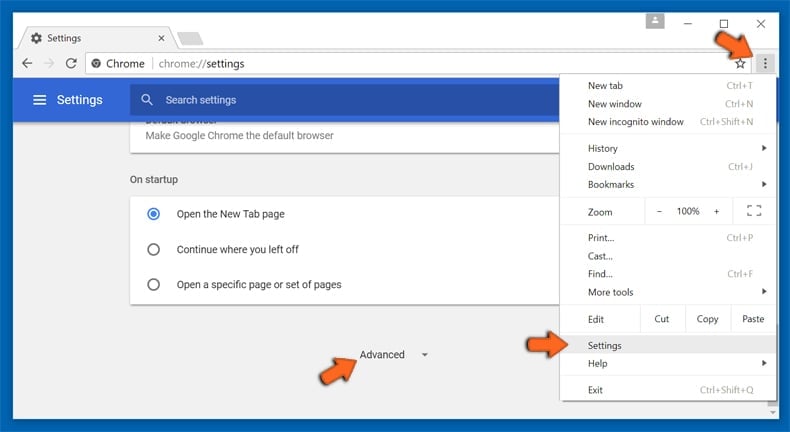
If you continue to have problems with removal of the shadypanda unwanted browser extensions, reset your Google Chrome browser settings. Click the Chrome menu icon (at the top right corner of Google Chrome) and select Settings. Scroll down to the bottom of the screen. Click the Advanced… link.
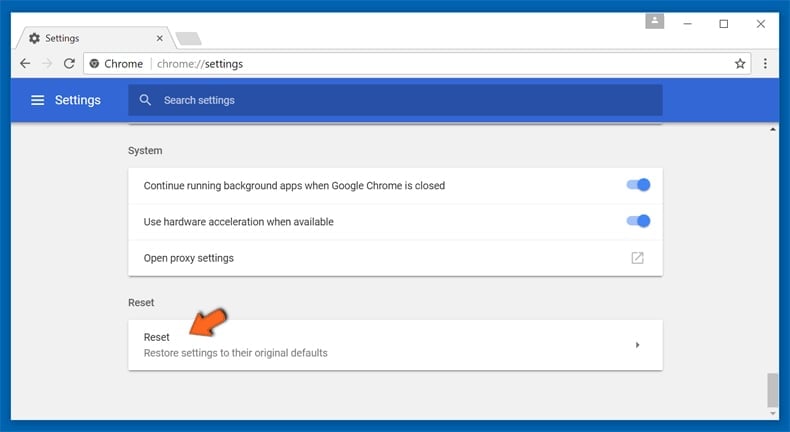
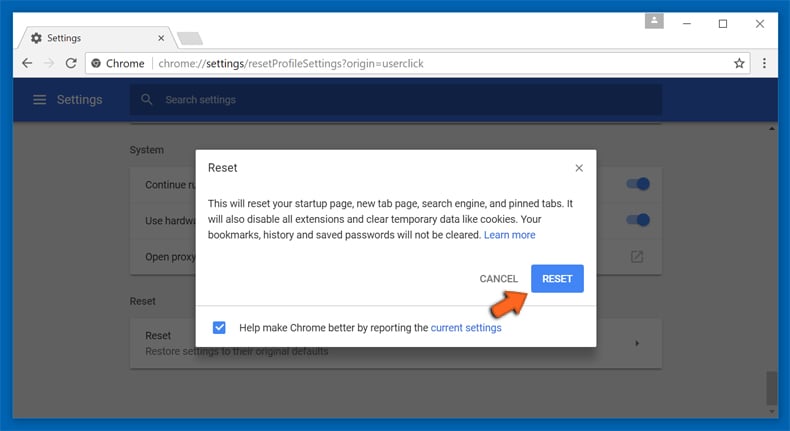
After scrolling to the bottom of the screen, click the Reset (Restore settings to their original defaults) button.
In the opened window, confirm that you wish to reset Google Chrome settings to default by clicking the Reset button.
 Remove malicious plugins from Mozilla Firefox:
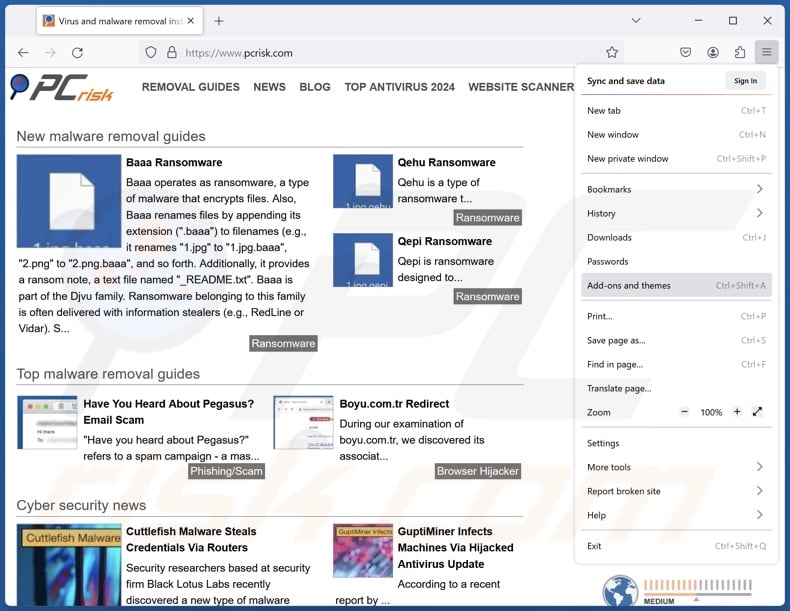
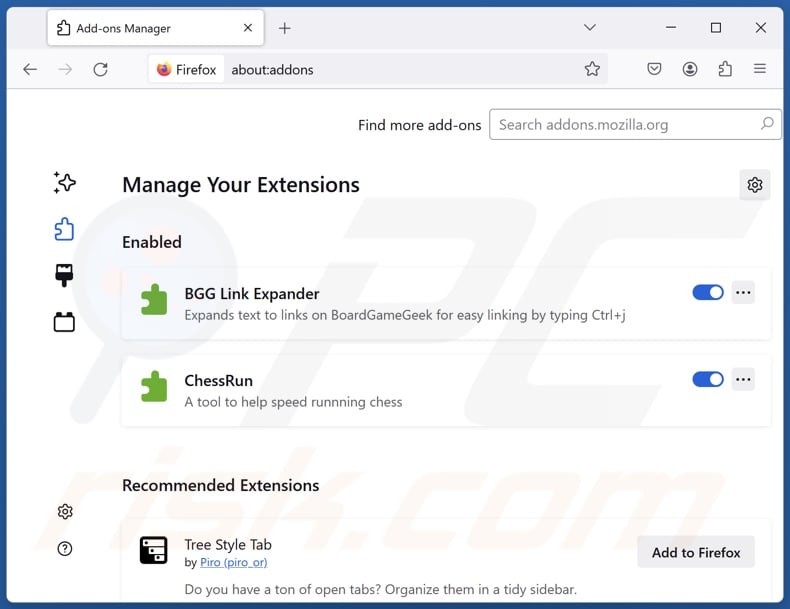
Click the Firefox menu  (at the top right corner of the main window), select "Add-ons and themes". Click "Extensions", in the opened window locate suspicious extensions, click on the three dots and then click "Remove".
Optional method:
Computer users who have problems with shadypanda unwanted browser extensions removal can reset their Mozilla Firefox settings.
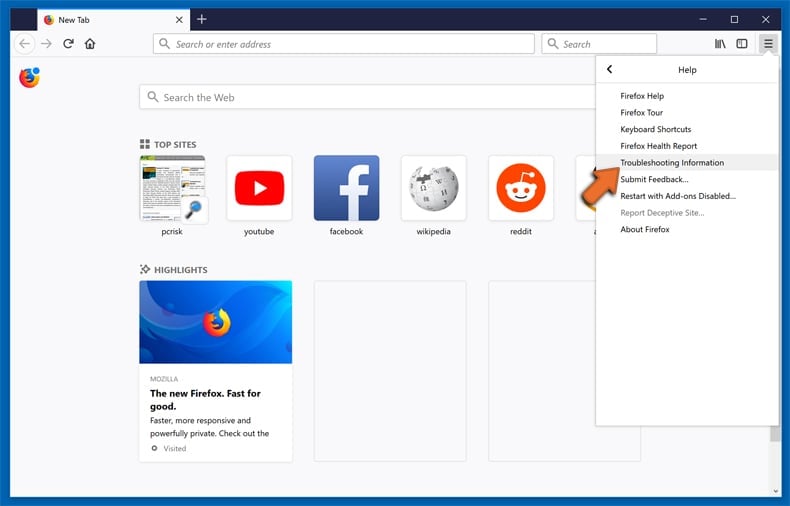
Open Mozilla Firefox, at the top right corner of the main window, click the Firefox menu, in the opened menu, click Help.
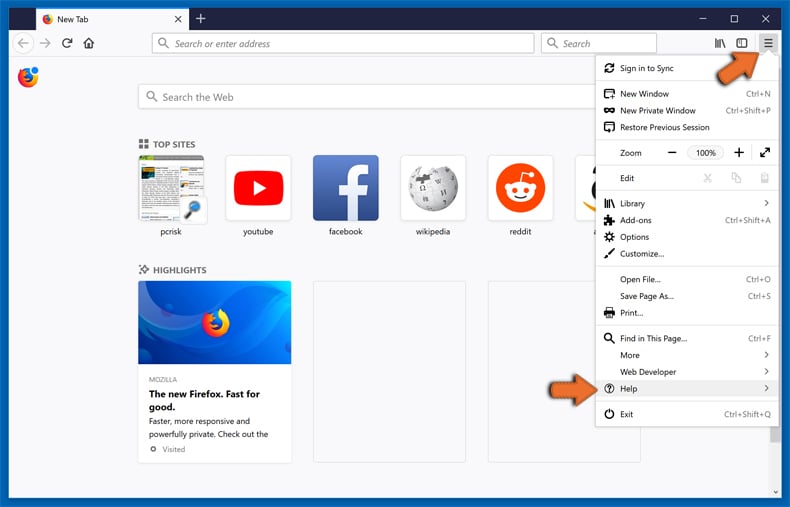
Select Troubleshooting Information.
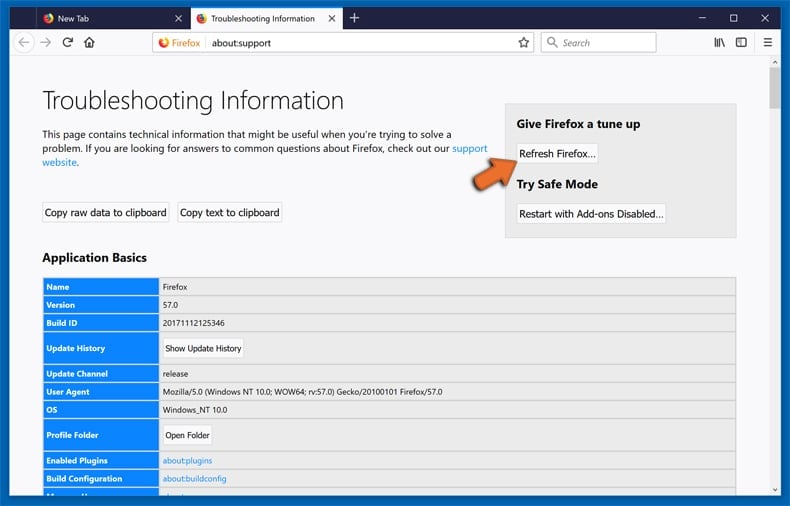
In the opened window, click the Refresh Firefox button.
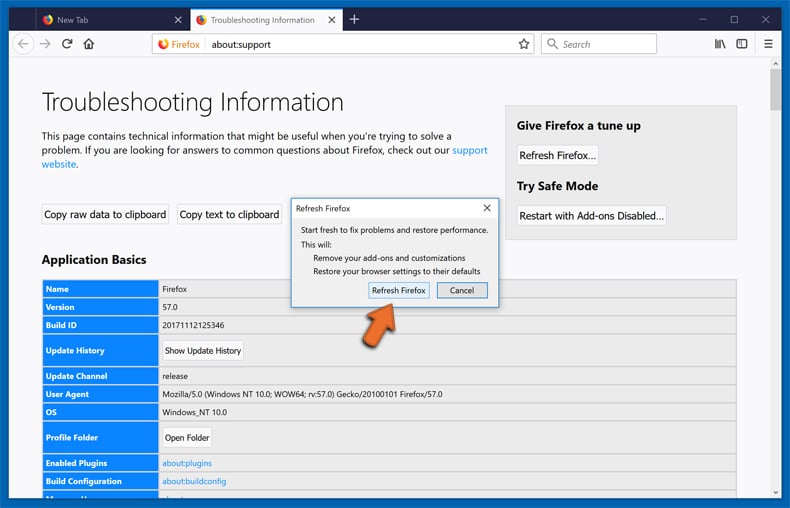
In the opened window, confirm that you wish to reset Mozilla Firefox settings to default by clicking the Refresh Firefox button.
 Remove malicious extensions from Safari:
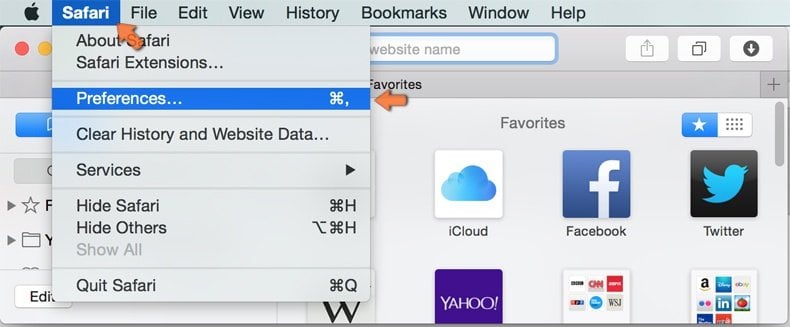
Make sure your Safari browser is active, click Safari menu, and select Preferences....
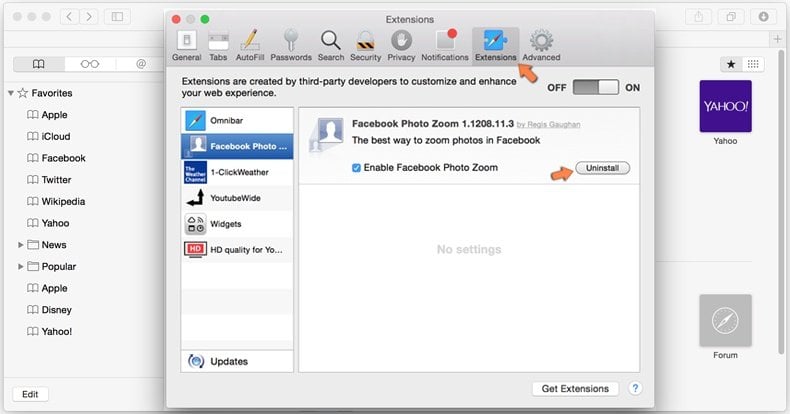
In the opened window click Extensions, locate any recently installed suspicious extension, select it and click Uninstall.
Optional method:
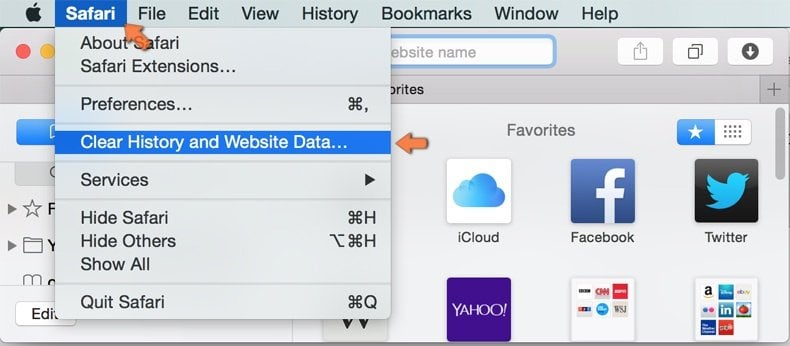
Make sure your Safari browser is active and click on Safari menu. From the drop down menu select Clear History and Website Data...
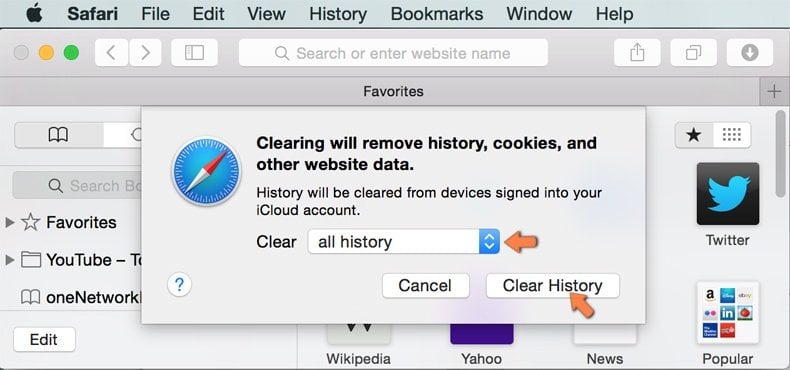
In the opened window select all history and click the Clear History button.
 Remove malicious extensions from Microsoft Edge:
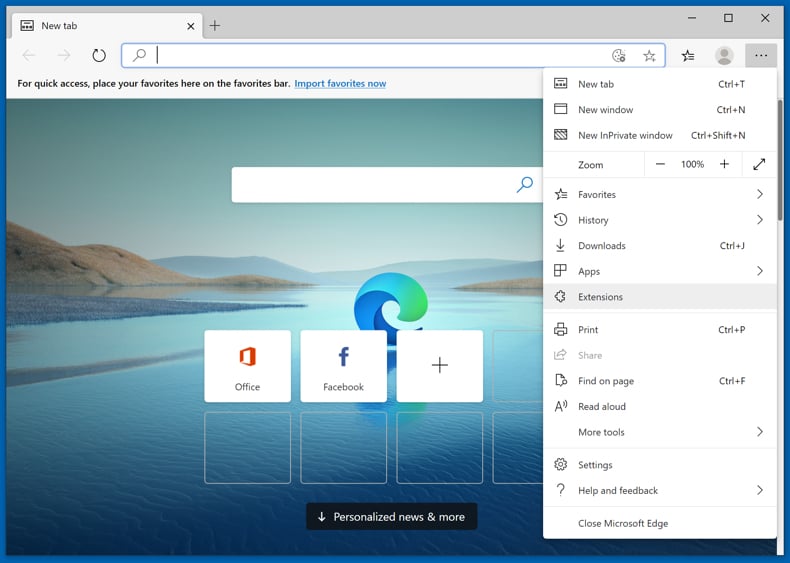
Click the Edge menu icon  (at the upper-right corner of Microsoft Edge), select "Extensions". Locate all recently-installed suspicious browser add-ons and click "Remove" below their names.
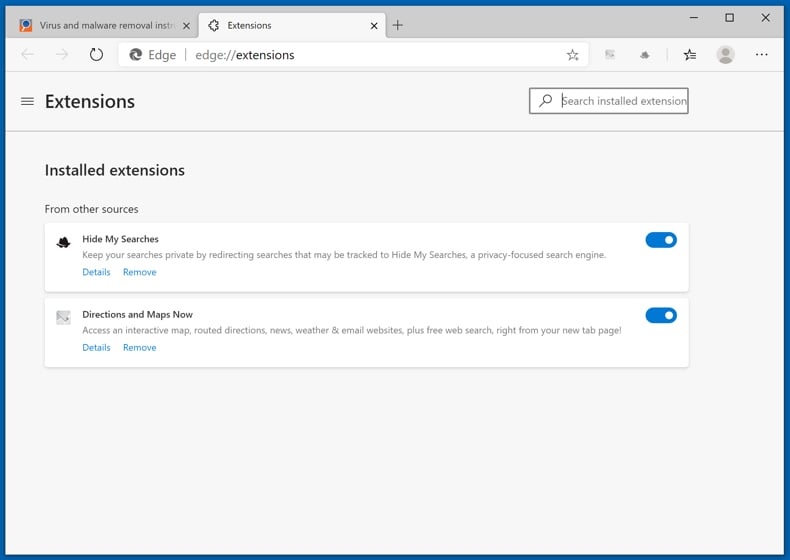
Optional method:
If you continue to have problems with removal of the shadypanda unwanted browser extensions, reset your Microsoft Edge browser settings. Click the Edge menu icon (at the top right corner of Microsoft Edge) and select Settings.
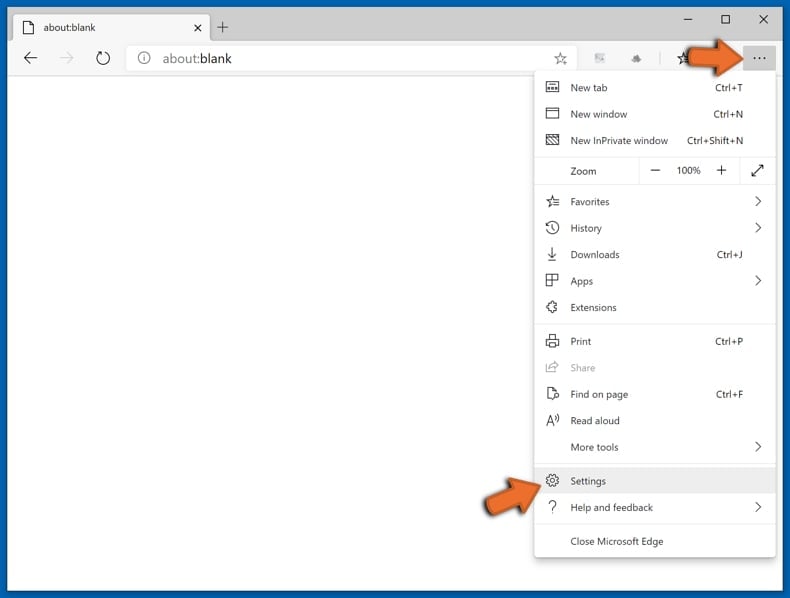
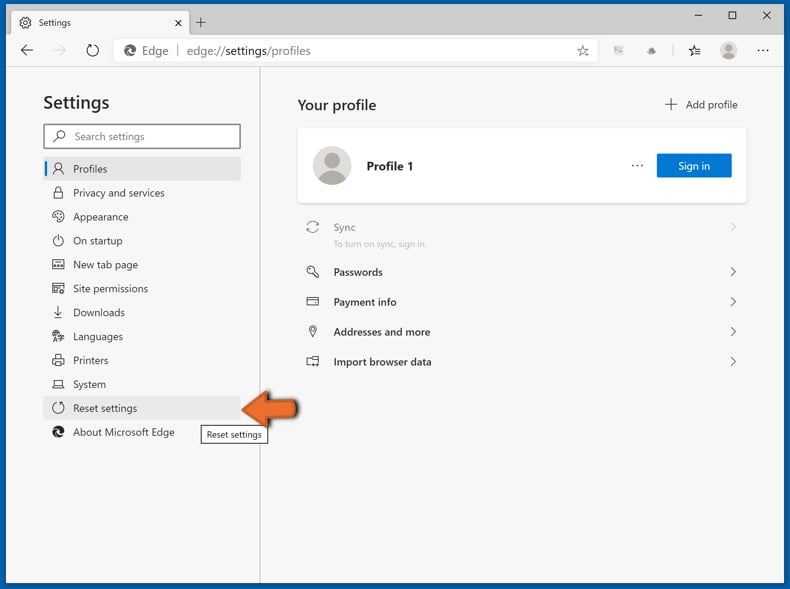
In the opened settings menu select Reset settings.
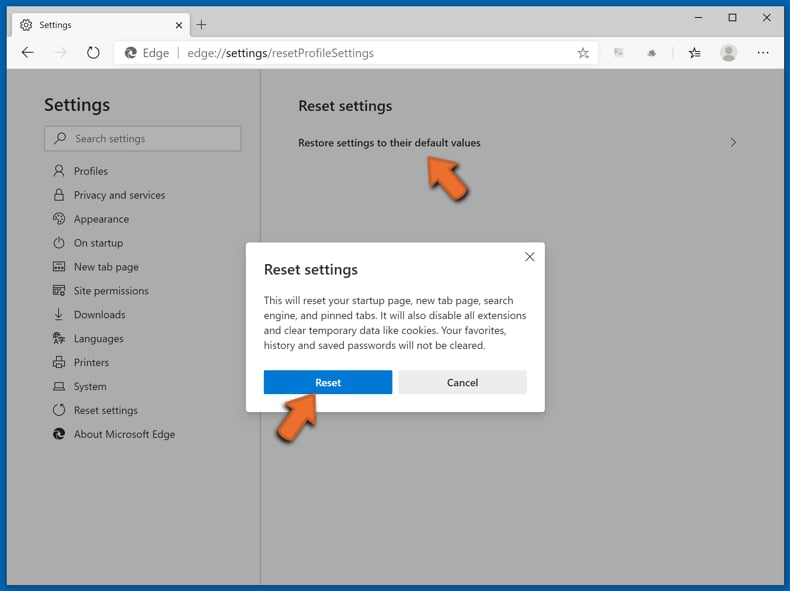
Select Restore settings to their default values. In the opened window, confirm that you wish to reset Microsoft Edge settings to default by clicking the Reset button.
- If this did not help, follow these alternative instructions explaining how to reset the Microsoft Edge browser.
Summary:
 Commonly, adware or potentially unwanted applications infiltrate Internet browsers through free software downloads. Note that the safest source for downloading free software is via developers' websites only. To avoid installation of adware, be very attentive when downloading and installing free software. When installing previously-downloaded free programs, choose the custom or advanced installation options – this step will reveal any potentially unwanted applications listed for installation together with your chosen free program.
Post a comment:
If you have additional information on shadypanda unwanted browser extensions or it's removal please share your knowledge in the comments section below.
Frequently Asked Questions (FAQ)
What do ShadyPanda extensions do?
Browser extensions from the ShadyPanda group can have different capabilities. The features primarily center on data tracking (e.g., browsing and search engine histories, browser cookies, user navigation on sites, etc.) and backdoor behavior. Software capable of the latter can vary in modus operandi and may even be used to download/install additional malware.
What harm can ShadyPanda extensions cause?
ShadyPanda extensions can operate as surveillance tools and malware-infiltrating backdoors. Hence, the presence of this software can result in multiple system infections, serious privacy issues, financial losses, and identity theft.
How did a ShadyPanda extension infiltrate my computer?
ShadyPanda extensions were distributed through the Chrome Web Store and Microsoft Edge Add-ons. However, they could be pushed through other channels. Generally, malicious browser extensions are proliferated via bundled installation setups, deceptive promotional pages, online scams, freeware and free file-hosting websites, Peer-to-Peer sharing networks, intrusive ads, and spam browser notifications.
Will Combo Cleaner remove malicious software?
Combo Cleaner can scan devices and eliminate all kinds of threats, including unwanted/malicious applications and most of the known malware infections. Note that manual removal (unaided by security tools) might be ineffective. After an app has been manually removed – various file remnants can remain hidden within the system and continue running. In malware removal, performing a full system scan is paramount since sophisticated malicious software typically hides deep within systems.
Share:
 Facebook
 X.com
X.com
 LinkedIn
 Copy Link

Tomas Meskauskas
Expert security researcher, professional malware analyst
I am passionate about computer security and technology. I have an experience of over 10 years working in various companies related to computer technical issue solving and Internet security. I have been working as an author and editor for pcrisk.com since 2010. Follow me on Twitter and LinkedIn to stay informed about the latest online security threats.
PCrisk security portal is brought by a company RCS LT.
Joined forces of security researchers help educate computer users about the latest online security threats. More information about the company RCS LT.
Our malware removal guides are free. However, if you want to support us you can send us a donation.
DonatePCrisk security portal is brought by a company RCS LT.
Joined forces of security researchers help educate computer users about the latest online security threats. More information about the company RCS LT.
Our malware removal guides are free. However, if you want to support us you can send us a donation.
Donate
▼ Show Discussion