Our reviews are written by Internet security experts. Learn more.
With online privacy risks and digital tracking increasing in 2026, a VPN is now among the best ways to protect your data, remain anonymous, and access the unrestricted internet. Our cybersecurity experts at PCrisk have independently tested and reviewed the leading VPN services to identify which ones truly deliver on their promises.
We examined each VPN’s encryption strength, privacy practices, speed performance, and ease of use through hands-on testing, ensuring our rankings reflect real-world performance, not marketing hype. Regardless of whether you are protecting sensitive information, streaming safely, or just preserving your digital privacy, this review of the Best VPNs of 2026 will help you make a sensible, informed decision.
Note: When ranking the best VPN programs, we've combined the results of our in-house tests and looked at the ratings from other reliable sources. The 'best' option depends on your situation, including the number of devices on which you want to use a VPN, the features you need, and how much you're willing to spend. We recommend reading our full reviews of each product for more details.
Hands-On Testing
For over a decade, PCRisk has been a trusted authority in malware research. Our daily engagement with malware and cybersecurity threats uniquely positions us to evaluate and recommend the most effective internet security solutions. Through rigorous in-house testing, we are able to provide informed insights to help you select the tools that best meet your needs.
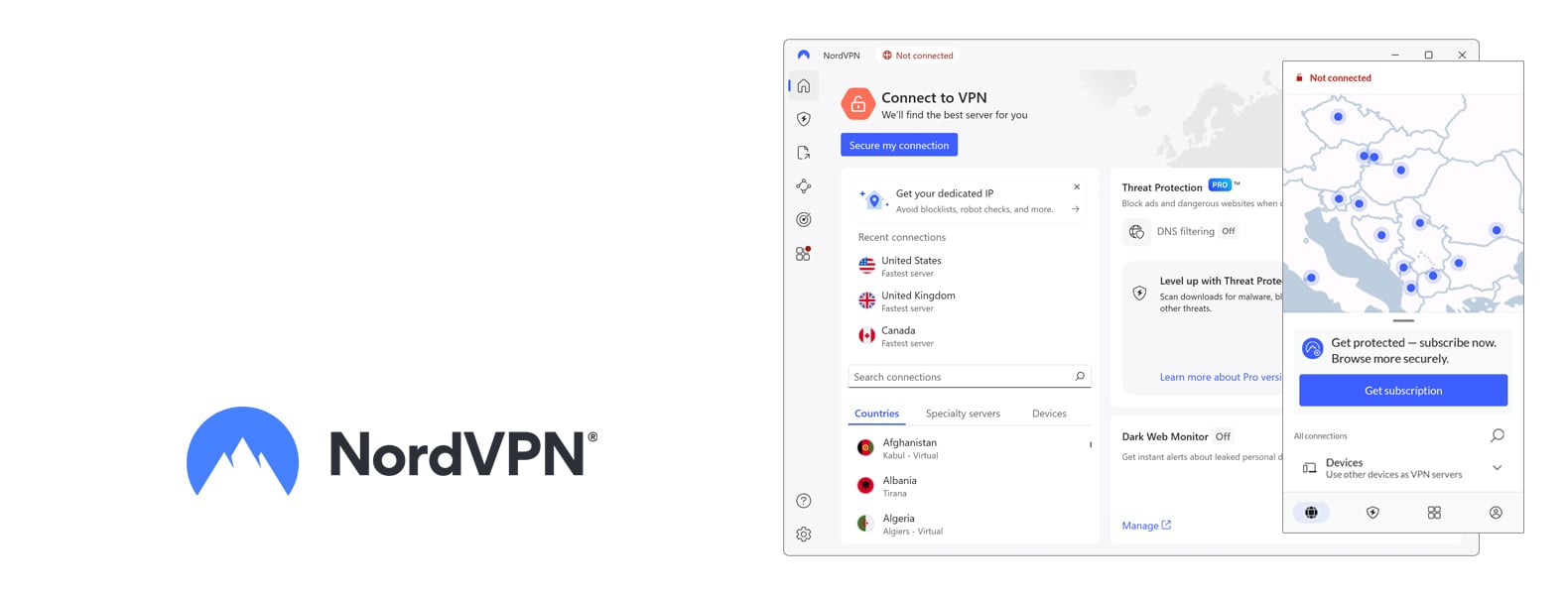
We rank NordVPN as the best VPN in 2026, offering a powerful mix of speed, privacy, and versatility. Its AES-256 encryption, a strict no-logs policy, audited by PwC and Deloitte, and top-notch features such as Double VPN, Onion over VPN, and Threat Protection give users both peace of mind and total safety. Its proprietary NordLynx protocol provides extremely fast connections and basically no slowdowns, making it an excellent option for streaming, gaming, and torrenting.
NordVPN also doesn't struggle to unblock major platforms, including Netflix, BBC iPlayer, and Disney+. Its user-friendly apps are compatible with Windows, macOS, Android, iOS, and more.
Allowing for up to ten devices to be connected at once. Coming in with a higher-priced but well-rounded offering, NordVPN's more expensive plans include NordPass (password management), NordLocker (encrypted cloud storage), and identity theft protection in certain areas, making it a complete security suite that's not just a VPN.
Our in-house and independent tests of NordVPN show that it's lightning-fast and rock-solid, yet the functionality of split tunneling is unfortunately limited on macOS and iOS. Overall, NordVPN will be a top choice for anyone who wants swift, reliable, and completely private online security in 2026.
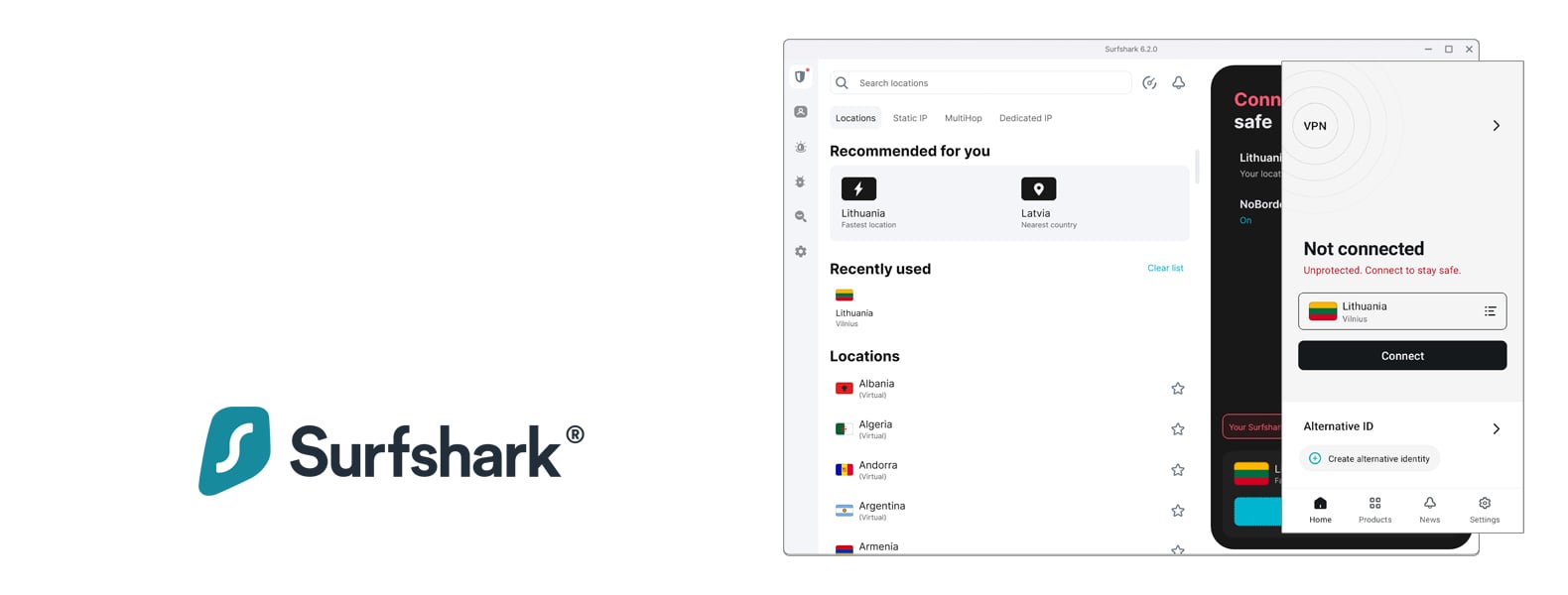
Surfshark has rapidly grown into one of the most popular VPNs since its launch in 2018, offering a rare combination of affordability, performance, and rich features. Its unlimited device policy makes it especially appealing for families and multi-device users, while advanced tools like MultiHop, CleanWeb ad-blocking, Everlink connection recovery, and split tunneling add exceptional value.
Surfshark offers some of the best speeds, especially when using the WireGuard protocol, and it works seamlessly with Netflix, Hulu, and BBC iPlayer, without any buffering issues. Its audited no-logs policy, AES-256 encryption, and extras like antivirus, threat alerts, and private search turn it into a veritable security powerhouse.
Surfshark's year-long plans offer an unbelievable price reduction, but be aware that the renewal prices will be eye-wateringly steep. The absence of a permanent free version and some missing features on iOS and Linux slightly limit its appeal, but overall usability remains top-notch across platforms.
Well-known for its consistent performance, sleek interface, and commitment to introducing new features, such as Alternative ID and Incogni, Surfshark sets itself apart as one of the best budget-friendly VPNs of 2026.
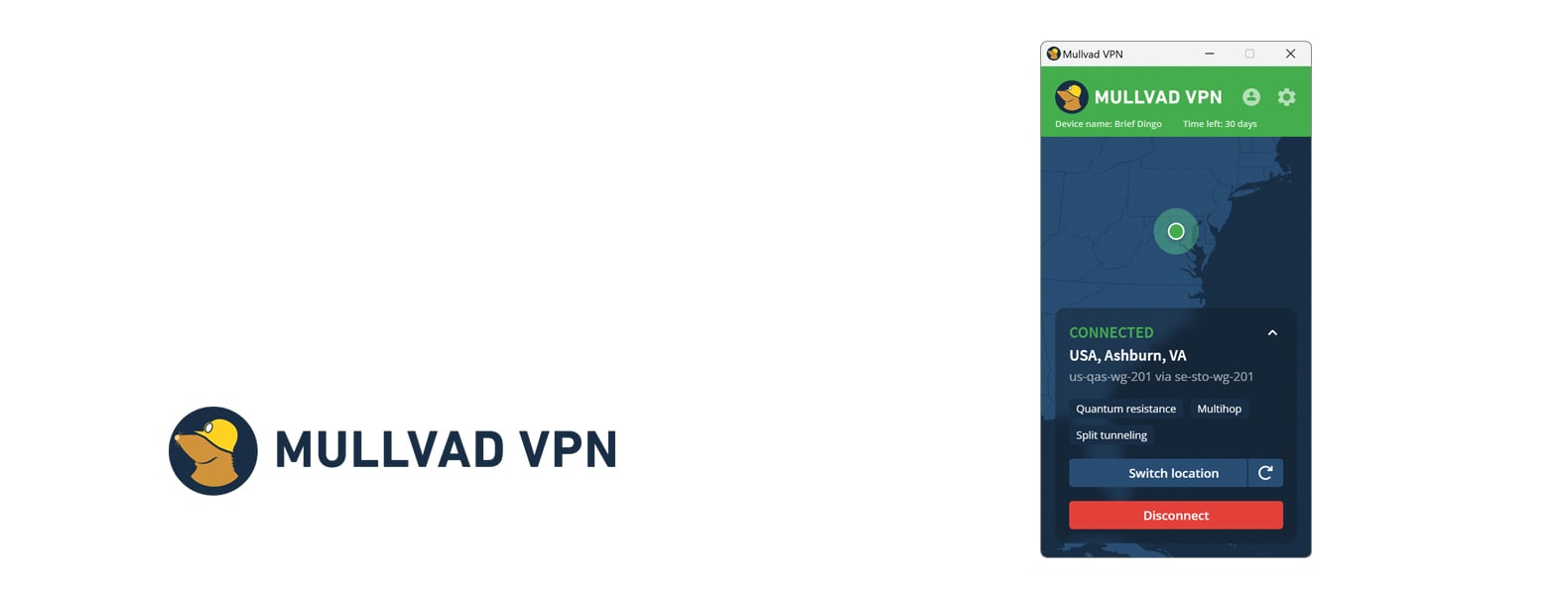
Mullvad VPN stands out in 2026 as one of the most privacy-focused VPNs available, offering unmatched anonymity and transparency. Based in Sweden and operating since 2009, Mullvad's no-logs policy remains unwavering. Sign-ups can be made completely anonymously, with no email or personal details required, thanks to the use of unique anonymous payment methods.
With an open-source background and independent audits, Mullvad's apps guarantee verified trust and are secured with WireGuard and OpenVPN encryption. Users are spoiled with Mullvad's fantastic performance, which is fast and stable enough for everything from browsing to gaming and torrenting, with multi-hop connections, a kill switch, DNS leak protection, and encrypted DNS in place. At €5 per month, the company's pricing is refreshingly straightforward, covering all features without hidden fees or tiered plans.
Unfortunately, Mullvad's minimalist approach somewhat hampers its services. There is no live chat support, specific IPs, and server coverage is lacking. It struggles with unblocking Netflix and Disney+, which makes it a less attractive option for those who watch movies and TV shows. Despite this, Mullvad is the number one choice for journalists, privacy purists, and people who are tech-savvy. Its open-source software, anonymous payments (even via cash or cryptocurrency), and consistent reliability make it one of the most reliable VPNs in the market, and it delivers honest privacy without all the extra features.
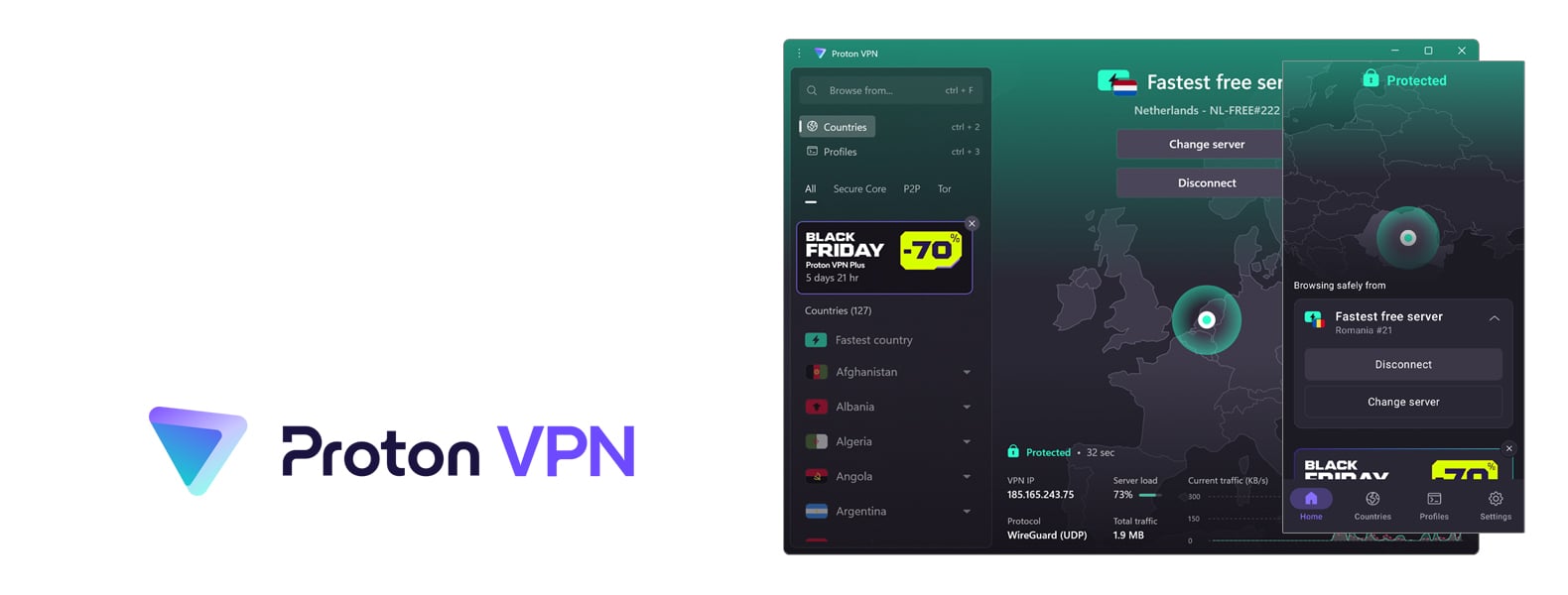
Proton VPN is a name that's synonymous with transparency, privacy, and being developed by the Swiss-based team behind ProtonMail. Coming equipped with military-grade encryption, a no-logs policy that has been thoroughly audited, and open-source software, Proton VPN offers a guarantee that ensures your online activities remain private.
Its multi-hop routing, NetShield ad and malware blocker, and built-in VPN Accelerator take care of both security and speed. In testing, Proton VPN Plus impressed with reliable speeds on local servers, smooth HD streaming on Netflix and BBC iPlayer, and flawless protection against IP and DNS leaks. Even its free plan is a top contender in the market. Unlimited data, no ads, and basic protection are not something you'll find in a lot of VPNs.
Although Proton VPN may not be the fastest or the cheapest option, its ethical foundation, open transparency, and extensive feature set make it a must-have for anyone serious about online privacy. The Plus and Unlimited plans offer features such as P2P, streaming services, and hook-ups to Proton's suite of secure tools, ProtonMail, Proton Drive, and Proton Pass. Minor drawbacks like slower customer support and higher long-term costs don't overshadow its strengths.
If you're looking for a VPN in 2026, ExpressVPN stands out from the rest, as a brand based in the British Virgin Islands, and is known for its unwavering commitment to user privacy and unobstructed performance.
Boasting AES-256 encryption, RAM-only servers, and a 100% verified no-logs policy, ExpressVPN is basically guaranteed to keep its users completely anonymous. Its Lightway protocol reduces the amount of internet traffic it has to process, which is fantastic for streaming, torrenting, and online gaming.
Our in-house tests show that ExpressVPN can unblock popular streaming services, including Netflix, BBC iPlayer, and Disney+, and delivers silky-smooth HD playback. The apps are intuitive and beginner-friendly, yet powerful enough for advanced users, and setup is effortless across desktop, mobile, and routers.
While ExpressVPN is pricier than most rivals, its premium features justify the cost. ExpressVPN's top features, such as ad and tracker blocking, parental controls, credit monitoring, and breach alerts in select regions, are well worth the investment. With rock-solid dependability, world-class support, and a commitment to privacy, ExpressVPN is an excellent VPN service. However, the lack of built-in malware scanning or extended multi-hop features may deter some power users. Still, ExpressVPN leads in security, stability, and ease of use, offering peace of mind for those who value both privacy and performance online.
Do You Need a VPN in 2026?
When discussing online security and privacy, VPNs are still very much relevant in 2026. The increasing use of HTTPS encryption on the web is a positive step, but a VPN provides a much more secure tunnel between your device and the Internet. This is especially important if you ever use public Wi-Fi or travel frequently. A VPN prevents your ISP from seeing the specific websites you visit, helps you get around geo-blocked or censored content, and, in a nutshell, gives you peace of mind that your online activities are being kept private.
Is a Free VPN Enough?
When considering a VPN, a free option is unlikely to offer the level of security and functionality you require. They come with considerable limitations, such as slower speeds, fewer server options, and sometimes a risk to your privacy, something that paid VPNs don't have.
Free VPNs frequently impose data caps and show ads, and in some cases, the only free thing is the service that eats away at your data.
A few have been caught logging and selling users' information. While a reputable free VPN might be okay for occasional use, a paid VPN is generally the better choice if you need consistent security, streaming, or performance.
Are Paid VPNs Better Than Free VPNs?
As for VPNs, paid services almost always outperform their free counterparts. This is because paid VPNs have a stable revenue stream from subscriptions that they can use to improve and expand their service. In doing so, they deliver higher speeds, stronger encryption, and more features, such as streaming support, malware blocking, and customer support.
Contrast that to free VPNs, which have to resort to making money in less-than-pleasant ways, like cutting back on features, injecting ads, or even monetizing their users' personal data. It's no wonder that free VPNs are less reliable, slower, and, in general, less functional than paid ones.
Will a VPN Keep Me Safe Online?
By using a VPN, you're adding a protective layer to your internet activities, obscuring your IP address and encrypting your traffic so that hackers and snoopers on the network can't see your browsing. It's great when connecting to unsecured networks, such as public Wi-Fi, or when you want to throw off your ISP and websites that are tracking your browsing.
But a VPN isn't a magic bullet that will repel malware, phishing scams, and viruses, nor does it make you anonymous. A VPN doesn't come into play when you voluntarily log into websites with your personal accounts, which is when you'll remain fully exposed.
The key to cybersecurity is a layered defense, and to be completely protected, you will still need to use antivirus software and employ strong passwords and other security measures.
How to Reliably Choose the Best VPN?
When comparing VPN services, keep the following factors in mind to choose a reliable service that suits your needs:
Security & Encryption - Look for strong encryption (like AES-256) and security features such as a kill switch and DNS leak protection. A good VPN should have a proven track record of protecting user data.
Privacy & No-Logs Policy - Prioritize VPNs with a strict no-logs policy, meaning they do not record your online activity. Check if the provider has been independently audited or is based in a privacy-friendly jurisdiction, ensuring your data remains private..
Speed & Performance - A good VPN will minimize speed loss. Read reviews or see speed test results to find a VPN that offers fast download/upload rates and low latency, so it won't significantly slow down your streaming, gaming, or browsing.
Server Network & Locations - VPNs with more servers offer more location options. This can improve your connection quality and help unblock content from specific countries (e.g., using servers in the US for Netflix, or in Europe for BBC iPlayer).
Price & Support - Consider the cost of the VPN and whether it fits your budget for the features offered. Paid plans vary in price, so look at the value (number of devices, features, etc.). Also, check if the provider offers 24/7 customer support or resources in case you need help..
FAQ
Are VPNs legal to use?
As for the legality of VPNs, they are completely fine to use, even for personal privacy and security, in most countries, such as the US, Canada, the UK, and most of Europe. However, some countries, like China, Iran, and North Korea, have restrictions on VPNs.
Always check your local laws, but generally, if you're in a country with no specific ban, you can legally use a VPN for legitimate purposes. (Remember that illegal activities remain illegal even with a VPN.)
Will a VPN slow down my Internet?
Yes. VPNs introduce a minor slowdown as they encrypt your data and send it through a different server. A typical reduction in download/upload speeds is around 10-20%, which is normal with a good VPN, and the top VPNs are designed to minimize the impact.
Well-known VPNs will be able to provide the best speeds, and if you want the fastest, choose a server near your location and a VPN with fast performance.
Can I use one VPN account on multiple devices?
Yes. Most paid VPN services allow you to use one account on multiple devices, anywhere from 5 to 10, and sometimes even unlimited. With a single subscription, this lets you protect your phone, laptop, tablet, and anything else you own. Be sure to check the device limit of the VPN plan you choose (if you have a large household or many devices, pick a VPN that meets that need). Generally, any top VPN with easy-to-use apps will work across all major platforms (Windows, macOS, Android, iOS, etc.).
Can I use a VPN to stream Netflix or other streaming services?
Yes, a good VPN can be a game-changer when streaming Netflix, Hulu, BBC iPlayer, Disney+, and other geo-blocked content. Not every VPN will work with these services because companies try to block VPN IP addresses, but many top VPNs are up to the task and can consistently unblock the popular platforms.
We highly recommend using a paid VPN for streaming, as free ones don't have enough servers, and are guaranteed to get blocked by services like Netflix.
When choosing a VPN, look for one known for its streaming capabilities. With the right VPN, you can make it look like you're in the required country and enjoy your favorite shows while staying safe.
Do VPNs keep logs of my activity?
The best VPNs do not keep logs of your online activities, and that's the minimum you should expect.
No-logs policies mean that the VPN won't record or store your browsing history, connection timestamps, IP addresses, or anything else that could be used to identify you. Many of the top VPNs have even had independent audits to verify their no-logging claims.
When choosing a VPN, always read the privacy policy: trustworthy providers will be transparent about what little data they need (for instance, account email or payment info). They will explicitly state they do not log user activity. Avoid VPNs that are vague about logging or have been caught sharing data – with a good no-logs VPN, even if authorities request information, there should be nothing sensitive to hand over by design.
Your privacy is as strong as the VPN's policies, so stick to reputable, audited no-log services for true peace of mind.
For VPNs, NordVPN stands out as a top contender. Its global reputation is partly due to its speed, security, and ability to unblock streaming services. We put this to the test, performing a comprehensive hands-on evaluation across different platforms to see how well it works.
ExpressVPN is a well-known premium VPN service with a strong reputation for security, speed, and reliability. Founded in 2009 and headquartered in the British Virgin Islands, it has long been a top choice for users seeking online privacy and the ability to bypass internet restrictions.
Proton VPN is a popular VPN service developed by the Swiss company Proton AG (the team behind ProtonMail). It's known for its strong focus on privacy, offering advanced security features and an unlimited free plan - something rare among VPNs.
Surfshark launched in 2018 and quickly grew into a popular VPN choice known for its unlimited device policy and budget-friendly pricing. In recent years, Surfshark has expanded beyond a basic VPN into a comprehensive security suite.
Mullvad has existed in Sweden since 2009. Since then, it has become known as one of the most privacy-focused VPN services. Today, we will examine whether Mullvad lives up to its high standards and is a good VPN for everyday use in 2026.