
We may earn commissions from products we recommend. Learn more.
How to Access Pornhub in the US With a VPN in 2026

How to Access Pornhub in the US With a VPN in 2026
By 2026, many Americans are used to online age checks. Adult sites, social media, app stores, and lawmakers all pushed for stricter age verification, with Pornhub being a major example. Depending on where you live, you might just see an age prompt or find the site blocked, since some companies prefer to leave rather than handle large amounts of sensitive personal data.
This change has made more people interested in VPNs. Most are not just searching for technical shortcuts; they want to understand new privacy concerns, site rules, and state laws. A VPN can protect your privacy on public Wi-Fi, limit what your ISP sees, and add an additional security layer. But it does not answer the legal and policy questions about age verification. In 2026, the real issue is not just if a VPN can change your IP address, but what responsible and legal internet use means today.
Disclaimer: PCrisk.com does not promote, encourage, or endorse bypassing age verification requirements, evading state law, or using privacy tools to gain access to content in violation of local rules or website terms. This article is for informational and cybersecurity awareness purposes only.
Watch Pornhub in the US with NordVPNSpecial deal30-day money-back guarantee→
Table of Contents:
- Introduction
- Why Does Pornhub Require Age Verification in 2026?
- Why Some Users Turn to VPNs in 2026 and What a VPN Can Really Do
- Bypass Pornhub Age Verification in the US With a VPN 2026
- Best VPNs to Bypass Pornhub Age Verification in the US
- Common Issues and Privacy Pitfalls People Run Into With VPNs
- US States Where Adult-Site Age Verification Laws Affect Access
- Guide to How Age Verification Works on Adult Sites
- Is Using a VPN to Access Age-Restricted Adult Content Legal in the US?
- Can I Use a Free VPN to Access Pornhub?
- Why Open Proxies and Tor Are Not Good Alternatives
- Protecting Your Privacy Without Breaking the Rules
- Conclusion
- Frequently Asked Questions (FAQs)
If you are an adult trying to understand Pornhub's restrictions in the US in 2026, your best move is to learn your state's rules, know how your data is used, and protect your privacy without taking risky shortcuts. A VPN is a useful privacy tool, but using it is not always risk-free.
Why Does Pornhub Require Age Verification in 2026?
When people say there is a "porn ban" in the United States, they are usually not talking about a single nationwide federal prohibition. What they really mean is a patchwork of state laws requiring commercial adult sites to verify that visitors are 18 or older before granting access to material deemed harmful to minors. In practice, those laws have created three common outcomes. Some sites implement age checks. Some use state-approved or third-party verification tools. Others decide that the compliance, privacy, and liability burdens are too high and simply stop serving that state.
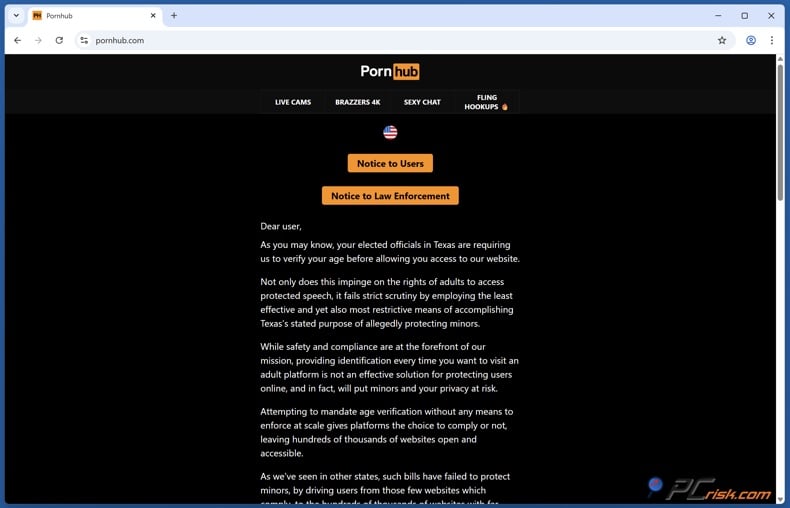
Pornhub is central to this issue because it is a well-known adult site and sometimes blocks access in places where it believes age checks are too invasive, inconsistent, or risky for privacy. In some areas, its parent company Aylo has suggested that verifying age on the device would be safer than having every site collect sensitive data. Lawmakers might not agree, but for users, the key point is that access now depends heavily on your location and local rules.
Here are the main points to understand:
- Age verification laws are state-driven, not a single nationwide porn ban.
- Platforms can respond differently to the same type of law: verify age, geoblock users, or suspend service.
- The policy goal is to keep minors away from adult content, but critics argue the current system creates privacy and security risks for adults.
- In 2025, the U.S. Supreme Court upheld Texas's age-verification law, which gave momentum to similar state measures.
- By 2026, adult-site access in the United States will be shaped by a patchwork of rules rather than a uniform national standard.
Age verification now goes beyond adult sites. Regulators in many countries and more US states are looking at similar rules for social media, AI services, and other online content. The debate about Pornhub is just one part of a larger conversation about what an age-checked internet should look like.
If you care about cybersecurity, remember that age verification is also about how your data is handled. When a site or service asks for your ID, a face scan, or a digital credential, you should ask: Who is collecting this data? How long will they keep it? How secure is it? What if scammers try to fake the process?
Why Some Users Turn to VPNs in 2026 and What a VPN Can Really Do
A VPN, or virtual private network, is primarily a tool for privacy and security. It encrypts the connection between your device and the VPN server, making it harder for your ISP, a local network operator, or someone on public Wi-Fi to see the websites you visit or the exact contents of your traffic. It also changes the public IP address websites see. That is why VPNs are often discussed whenever geoblocking or location-based content restrictions come up.
But this simple explanation can be misleading. A VPN is not a magic shield. It does not stop websites from using cookies, account logins, browser fingerprinting, GPS, or payment details to identify you or your location. It also does not make everything you do legal just because it hides your network traffic. In short, a VPN can help with privacy and change your visible location, but you still need to follow site rules and local laws.
This difference is even more important in 2026. Many people are interested in VPNs for Pornhub because they do not want to upload ID documents or send biometric data to third-party services. Some just do not want their identity linked to adult sites. Others worry about data leaks, account misuse, scams, or untrustworthy verification companies. These are real concerns. The less personal data you share online, the safer you usually are.
Our top recommendation for streaming and privacy. NordVPN consistently leads our tests with fast speeds, reliable geo-unblocking, and a strict no-logs policy.
- ✔ Unblocks geo-restricted streaming services reliably
- ✔ 202+ locations across 111 countries
- ✔ 30-day money-back guarantee · Special deal available
Still, do not expect too much from a VPN. If a website strictly enforces state rules, if your device leaks your location, or if the site blocks common VPN IP addresses, the VPN might not work as you hope. If new laws target VPN use for bypassing age checks, things get even more complicated. In short, VPNs are helpful for privacy, but they are not a simple fix for every age-verification problem.
For PCrisk readers, the best way to use a VPN is for what it does well: protecting you on public networks, limiting what your ISP can see, and adding security when you travel. Pick a VPN for its leak protection, reliable kill switch, clear privacy policy, independent audits, and easy-to-use apps - not because it claims to block all tracking or legal issues.
Bypass Pornhub Age Verification in the US With a VPN 2026
A VPN works by routing your internet traffic through an encrypted tunnel to a remote server. When that happens, the website you visit sees the VPN server's IP address instead of the IP address assigned by your home or mobile provider. In plain English, that means a VPN can change how a website geolocates you. It also hides the specific websites you visit from your ISP, though your ISP can usually still see that you are connected to a VPN.
For 2026, NordVPN remains the most practical all-around choice for users who want a fast, polished, security-focused VPN. It combines fast speeds, a large network, reliable apps, DNS leak protection, a kill switch, and additional privacy tools useful when visiting sensitive sites on public or untrusted networks.
Step-by-step guide using NordVPN:
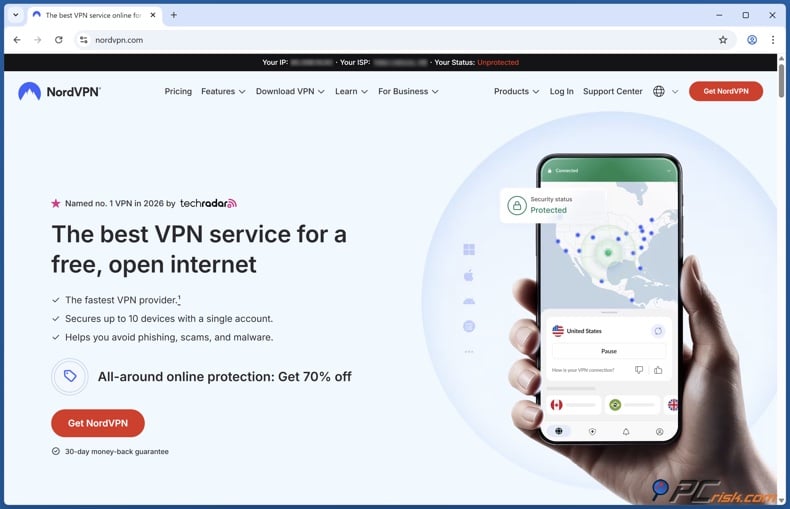
1. Create a NordVPN account and install the official app. Download NordVPN only from its official website or trusted app stores. Avoid "cracked," "modded," or "free premium" versions because fake VPN installers are a common malware lure, especially around popular brands.
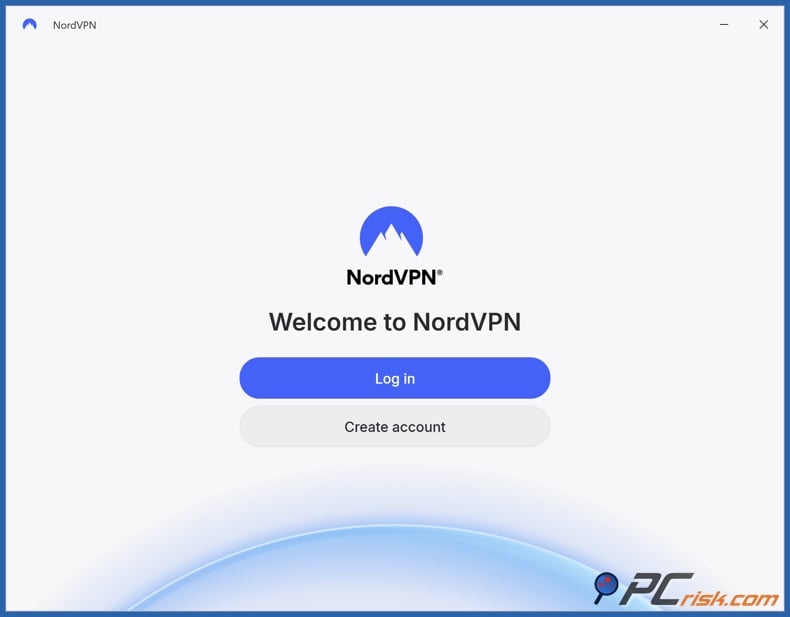
2. Sign in and update the app before using it. A current version matters because VPN providers regularly improve protocol stability, fix bugs, and rotate infrastructure. Using an outdated client increases the chance of leaks, crashes, and poor server selection.
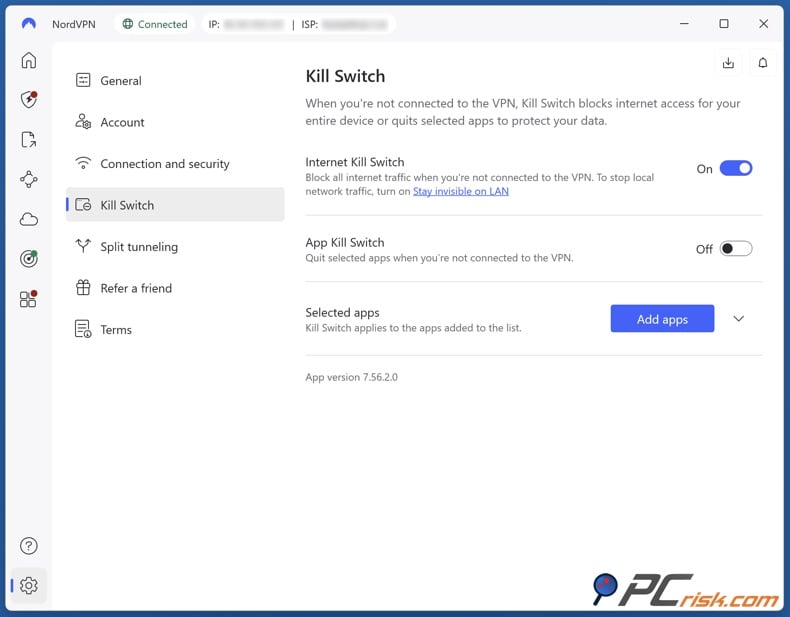
3. Turn on the kill switch. The kill switch is one of the most important features for adult-site privacy. If the VPN disconnects unexpectedly, the kill switch cuts internet access so your real IP address is not briefly exposed during reconnection.
4. Keep DNS protection enabled. DNS leaks are one of the most common reasons a VPN "seems" connected while websites still infer your true location. Make sure NordVPN is handling your DNS requests instead of your ISP.
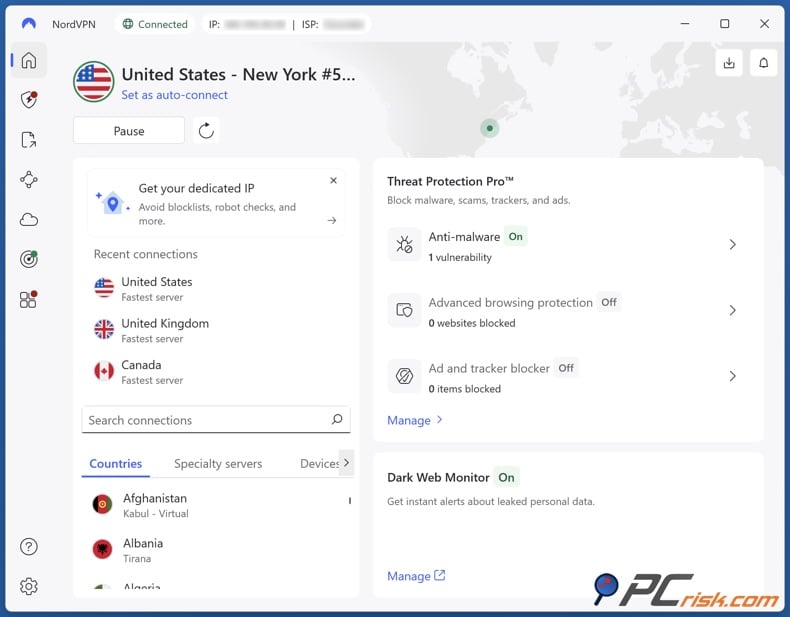
5. Choose an appropriate server. If you want general privacy, the closest fast server is usually the best option. If site access depends on your location, connect to a server in a place where Pornhub is normally available to adults. Many users pick a nearby US state without restrictions or a country with broad access. Avoid overloaded servers if you experience buffering or page-load issues.
6. Wait for the app to confirm the connection is active. Do not open the browser too early - make sure the VPN status is green, connected, and stable.
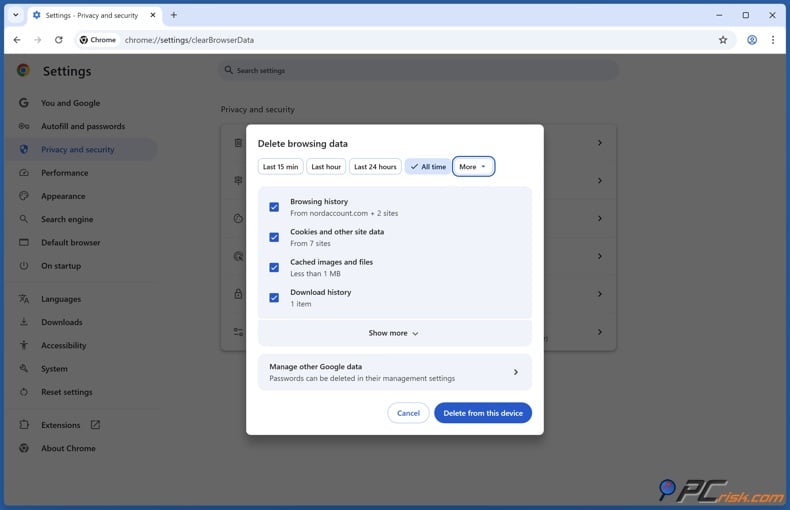
7. Open a private browser window or clear cookies and site data. Pornhub and other sites do not just use your current IP address. Old cookies, cached redirects, browser storage, and saved sessions can make the site keep showing a restricted page. Using a private window is the quickest way to start a fresh session.
8. Disable browser or device location sharing if prompted. Even with a VPN, your browser can still reveal your location through prompts, saved permissions, or device settings. Only allow location access if you have a clear reason.
9. Visit Pornhub and test access. If the page loads normally, the VPN is doing its job. If you still get an age gate or block page, the site may be using more than IP geolocation, or the VPN server's IP may already be tagged.
10. Switch servers if needed. One of the most effective troubleshooting steps is simply changing to another server in the same country or region. Popular VPN IPs are sometimes blacklisted or temporarily overloaded.
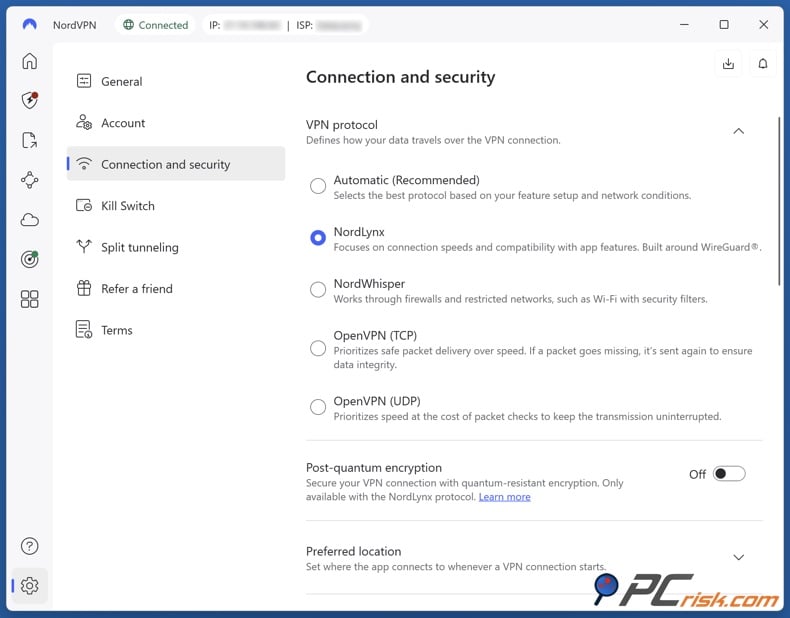
11. Try another protocol if the connection quality is poor. NordLynx is usually the best default for speed, but OpenVPN can sometimes work better on restrictive networks or hotel/public Wi-Fi systems.
12. Confirm there are no leaks. If a site still behaves as though you are in a restricted state, test for IP, DNS, and WebRTC leaks. WebRTC in particular can reveal network information in some browser setups.
A good rule of thumb is to use the VPN first as a privacy and security tool, then check whether the restriction is based solely on location. If the website still asks you to verify your age after a clean VPN session, the block may not be fixable by just changing your IP. At that point, the site may require its official verification process or may treat the VPN server with extra caution.
Best VPNs to Bypass Pornhub Age Verification in the US
The VPNs below are ranked based on PCrisk's 2026 VPN reviews. This is not a list of tools for avoiding age verification. Instead, it is a shortlist of reputable VPNs for adults who care about privacy, app quality, leak protection, and reliability, especially as identity exposure and browsing security become more important.
1. NordVPN - NordVPN is still the most balanced all-around choice in PCrisk's 2026 lineup. It offers speed, privacy features, broad platform support, audited policies, and a large global network. For many users, this mix is more important than having just one standout feature. NordVPN works well for everyday browsing, streaming, mobile use, and travel without making users manage too many settings.
NordVPN stays at the top mainly because it is consistent. NordLynx is fast, the apps are well-designed, and the network is broad enough that users rarely feel stuck with overcrowded locations. Its kill switch, special DNS handling, and specialty servers add real value for users who want more than just a basic VPN.
Its server footprint is also a major strength. NordVPN operates more than 8,900 servers in 127 countries, making it among the largest and highest-quality networks in the commercial VPN market. That scale improves flexibility for travelers and people who want a wide choice of regions for ordinary privacy use. If you are an adult user who travels for work, uses hotel Wi-Fi, or wants to keep ISP-level browsing visibility to a minimum, NordVPN's spread is a real advantage.
There are some clear drawbacks. NordVPN is not the cheapest if you pay monthly, renewals can be expensive, and it does not offer port forwarding. Split tunneling is missing on iOS and macOS, which may frustrate advanced Apple users. Still, as a complete security and privacy package, NordVPN is the easiest first recommendation.
- Pros: excellent speed, very large network, audited no-logs policy, strong leak protection, user-friendly apps, good streaming performance, robust kill switch.
- Cons: pricier short plans, no unlimited free tier, no port forwarding, some platform-specific feature gaps.
- Country selection: 167 countries.
- Number of servers: 9,100+.
2. Surfshark - Surfshark is the best value pick in this group and is the easiest choice for households with many devices. In 2026, one of its main selling points is unlimited simultaneous connections. For the right user, this is not just a marketing claim - it can really help families or anyone using a laptop, phone, tablet, streaming box, and smart TV on one account.
Performance is another reason Surfshark scores highly. We can highlight fast WireGuard-based speeds, a broad network, and a deep feature set, including MultiHop, kill switch protection, split tunneling, CleanWeb filtering, and Everlink for connection stability.
Surfshark's network is not as big as Proton's or Nord's in server numbers, but it still covers many countries. It has over 4,500 servers in 100 countries, all with at least 10 Gbps connections. This wide coverage gives users many options for travel and privacy. It is also a good fit for people who want one VPN for the whole household without worrying about device limits.
Surfshark's main downsides are well known. Renewal prices can go up a lot after the first term, there is no permanent free plan, and some features are missing on iOS and Linux. Advanced users may also miss the port-forwarding option. Still, for those who want a feature-rich VPN that does many things well at a reasonable starting price, Surfshark is one of the best picks on PCrisk's list.
- Pros: great value, unlimited devices, fast speeds, good streaming performance, audited no-logs policy, strong feature set.
- Cons: steep renewals, no free plan, some iOS/Linux feature gaps, no port forwarding.
- Country selection: 100 countries.
- Number of servers: 4,500+.
3. Mullvad - Mullvad is the top choice for privacy purists on this list. It is not the flashiest service or the best at unblocking popular platforms, but it stands out for its focus on anonymity and transparency.
Mullvad is known for its simple design and easy anonymous sign-up. You do not need to give personal details to create an account. Mullvad also focuses on open-source apps, independent audits, and simple flat-rate pricing. This straightforward approach is refreshing in a market where many VPNs are turning into all-in-one suites with extra tools and upsells.
According to PCrisk's review, Mullvad operates in more than 50 countries and has more than 700 servers. That is a much smaller network than the leaders in this roundup, and it shows. If your use case is broad entertainment unblocking, or if you want extremely granular country choice, Mullvad will feel limited. Mullvad struggles with major streaming services such as Netflix and Disney+, which is part of why it is not higher on the list for general users.
Still, Mullvad deserves a spot in any serious VPN discussion. It is fast for local connections, stable, security-focused, and honest about its strengths and limits.
- Pros: exceptional privacy posture, anonymous sign-up model, open-source, audited apps, fast and stable performance nearby.
- Cons: weaker streaming access, smaller network, no discounts, fewer convenience features like live chat or dedicated IPs.
- Country selection: 50+ countries.
- Number of servers: 580+.
4. Proton VPN - Proton VPN is a top choice for users who care about privacy culture as much as technical features. Its Swiss base, open-source apps, audited no-logs policy, and integration with the Proton ecosystem make it especially appealing to people who already use Proton Mail, Proton Pass, or Proton Drive. It is one of the few services where the privacy branding aligns with a clear, long-term product vision.
Feature-wise, Proton VPN is impressive. Secure Core multi-hop routing, NetShield filtering, split tunneling, a strong kill switch, and one of the broadest networks in the market make it competitive with any major provider. PCrisk reports 18,000-plus servers in more than 130 countries.
Proton's free plan is a key reason it stands out in 2026. Unlike many free VPNs, it does not rely on questionable monetization, and it is one of the best free options for basic use. Still, the free tier has limits: one device, only a few countries, lower performance, and no streaming or P2P. It works as a trial or basic privacy layer, but it is not a replacement for a full paid VPN if you need steady performance.
The main drawbacks are cost and speed compared to the fastest competitors. Proton is not usually the cheapest, and support can be slower than some others. But if you want a provider with a strong privacy brand, solid features, and one of the few reputable free options, Proton VPN is an excellent choice.
- Pros: privacy-friendly Swiss jurisdiction, open-source apps, a strong feature set, a large server network, and one of the best free plans.
- Cons: higher long-term cost, not always the fastest, and support can be slower.
- Country selection: 134+ countries.
- Number of servers: 18,700+.
5. ExpressVPN - ExpressVPN is the most polished premium service on this list for users who value ease of use. It is known for clean apps, reliable performance, and quick setup on phones, desktops, and routers. While it is not as far ahead of the competition as before, it still does many things well and is a great choice for beginners who want a reputable, easy-to-use service.
PCrisk's review emphasizes ExpressVPN's Lightway protocol, RAM-only server model, zero-knowledge DNS, and independently audited no-logs policy. Those are strong building blocks for people who want a service that feels robust without asking them to learn a dozen advanced settings. Its apps are simple enough for less technical users, but the product still carries enough depth to satisfy most mainstream privacy needs.
In terms of network reach, ExpressVPN offers more than 3,000 servers in over 105 countries. That global spread is helpful for travelers, and the service also has strong router support for users who want home-wide protection.
The downsides are clear: it is more expensive, has fewer advanced features than some competitors, and lacks multi-hop options. PCrisk also notes that its shorter plans are less appealing for bargain hunters. Still, for the right user, ExpressVPN's stability and simplicity are the main benefits. Not everyone wants the biggest dashboard or the cheapest deal. Some just want a VPN that installs easily, stays connected, and is simple to use every day.
- Pros: polished apps, strong privacy architecture, reliable speeds, great for routers and travel, and wide country coverage.
- Cons: more expensive than many rivals, fewer advanced extras, shorter plan structures.
- Country selection: 105+ countries.
- Number of servers: 3,000+.
Common Issues and Privacy Pitfalls People Run Into With VPNs
A VPN can help protect your privacy, but it can also give a false sense of security. Many people think turning on a VPN hides all their location details, but that is not true. Modern websites can still use cookies, account logins, device language, GPS, payment history, and fingerprinting to learn about you. Using a VPN does not make you fully anonymous.
Trust is another major issue. People often worry about what their ISP can see, but forget to consider what the VPN provider can see. A bad VPN can just become another company collecting your data. That is why it is important to choose a VPN with audited no-logs policies, clear ownership, a good security record, and a strong privacy policy. The worst VPN is not always the slowest; it is often the one you cannot trust with your data.
Weak or free VPNs are also a problem. Low-quality services can leak your data, reuse crowded IP addresses, show many ads, install shady browser add-ons, or secretly collect your information. This is especially risky on adult sites, since these users are often targets for scams and fake security alerts. If your VPN is not trustworthy, you are increasing your risk instead of lowering it.
Websites are now better at detecting shared VPN traffic. This can lead to more CAPTCHAs, warnings about suspicious logins, or location problems. In 2026, effective privacy still depends on multiple layers of protection, not just one tool.
US States Where Adult-Site Age Verification Laws Affect Access
As of early 2026, a significant number of states have active laws that affect access to commercial adult sites. Depending on the platform, that can result in age verification prompts, stricter geolocation handling, partial access, or full withdrawal from the state.
States commonly listed as having active adult-site age-verification laws include:
| Alabama | Arizona | Arkansas |
| Florida | Georgia | Idaho |
| Indiana | Kansas | Kentucky |
| Louisiana | Mississippi | Missouri |
| Montana | Nebraska | North Carolina |
| North Dakota | Ohio | Oklahoma |
| South Carolina | South Dakota | Tennessee |
| Texas | Utah | Virginia |
| Wyoming |
This list is important for two reasons. First, it shows how divided the US is on these rules. Your experience can change a lot just by crossing a state line. Second, it explains why general online advice can quickly become outdated. A tip from 2024 or 2025 might not work in 2026 if laws or site policies have changed.
Also, remember that 'restricted' means different things in different places. In Louisiana, some adult sites use state digital ID tools. In other states, big platforms have simply blocked access rather than follow rules they deem unsafe. It is better to think of it as 'state law affects access' rather than assuming every state handles things the same way.
Guide to How Age Verification Works on Adult Sites
Age verification is often described as one system, but in reality, it uses several methods. Some confirm age directly with a government document or digital identity tool. Others estimate or guess age using financial, facial, or account-based signals. For users, the process may look simple, but behind the scenes, it can involve multiple vendors, token exchanges, and risk scoring.
The most familiar method is photo-ID matching. The site or its age-assurance partner asks the user to upload or scan a government-issued ID, and sometimes also requires a selfie or short video to match the person to the document. This is straightforward in concept, but it is the model many privacy critics dislike most because it involves especially sensitive material and a higher fear of breach or misuse.
Another model uses digital identity services or government-backed wallets. Louisiana's LA Wallet is the best-known American example in this space. Rather than sending a raw ID image to every site, the user relies on a digital identity tool that can verify age. In theory, this reduces repeated document handling, though it still requires trust in the identity infrastructure.
A third category is biometric or facial age estimation. Instead of verifying exact identity, the system estimates whether the person appears above a threshold, such as 18. Some regulators see this as more privacy-preserving than straight ID upload because it can be designed to answer only the age question rather than reveal full identity. Critics counter that accuracy, bias, and opaque vendor practices remain concerns.
There are also payment or account-linked methods, such as credit card checks, open banking signals, or mobile network operator checks. These do not always prove identity in the same way an ID document does, but they can serve as evidence that the user is likely an adult. In 2026, many regulators are moving toward the concept of "highly effective age assurance" rather than insisting on a single universal technology.
For readers, this means that if Pornhub or another adult site asks for age verification, the process can vary a lot depending on your state, the company, or local rules. It could be a state digital ID, a third-party check, a facial scan, or the site might just block access instead of collecting your data. For safety, always treat age-check pages as sensitive. Check the website address, read the privacy policy, avoid clicking age prompts from emails or pop-ups, and watch out for fake verification scams.
Is Using a VPN to Access Age-Restricted Adult Content Legal in the US?
Many people want a simple yes-or-no answer here, but the truth is more complicated. Using a VPN in the United States is generally legal. Businesses, journalists, remote workers, travelers, and regular consumers use VPNs every day for legitimate reasons. A VPN is a common privacy and security tool, not something illegal.
However, a VPN does not guarantee that everything you do with it is legal or allowed by a website's rules. If a state requires age verification, if a site blocks a region to comply, or if a service's terms ban location tricks, a VPN does not erase those rules. In other words, 'VPNs are legal' and 'using a VPN for this purpose is risk-free' are not the same thing.
The situation is getting even less clear because lawmakers are now focusing more on people trying to get around these rules. By late 2025 and early 2026, digital-rights groups warned about state proposals to block or penalize VPN use for bypassing age gates, and Utah's 2026 amendments moved in that direction too. This does not mean every VPN user is breaking the law, but it does mean it is safest not to assume a VPN is a legal free pass.
The best advice is to treat this as a compliance issue, not just a technology issue. Adults who want to protect their privacy should use reputable tools, understand their state's rules, and avoid thinking that hiding their network solves everything. This section is for risk awareness, not legal advice.
Can I Use a Free VPN to Access Pornhub?
A free VPN can sometimes change your IP address, but that does not make it a good choice for sensitive browsing. The issue is not that every free VPN is bad, but many are very limited, weak on privacy, overloaded, or rely on collecting data, showing ads, or aggressive upselling.
Top VPN ReviewsExclusive dealsExpert-tested · hands-on reviews→
That is why the best answer is 'possible, but usually unwise.' If you want serious privacy, less risk on adult sites, or reliable security on many devices, free plans usually do not deliver. They may limit speed, data, country choices, or streaming, and often use a small pool of shared IPs already flagged by websites. Some are also unclear about logging and data sharing, which defeats the purpose of using a VPN.
One notable exception is Proton VPN's free tier. We at PCrisk rate it as one of the best free plans because it does not have ads or bandwidth caps, which is rare. But even this plan is limited to one device and only a few server locations, and it does not offer the same performance or features as the paid plan. It is best seen as a safe way to start, not a long-term solution.
Users should also remember that 'free' can come with hidden risks. The FBI has warned about fake VPN apps linked to abuse and backdoor activity, including some well-known names. This is a strong reminder that the cheapest privacy tool can sometimes be the most costly mistake. If you want a VPN for sensitive browsing, paying for a reputable, audited service is usually the safer choice.
Why Open Proxies and Tor Are Not Good Alternatives
When people do not want to pay for a VPN, they often look at open proxies, browser proxies, 'unblocker' sites, or the Tor Browser. These tools are often grouped together, but they are not equally safe or designed for the same purpose.
Open proxies are usually the worst choice. Anyone can run them, they can inject ads, log your requests, break HTTPS, and disappear without warning. From a cybersecurity point of view, sending sensitive browsing through a random public proxy is almost the opposite of good practice. If you care about privacy, using an untrusted proxy may expose you to more surveillance or fraud than not using one at all.
Tor is a more serious technology, but it is not a universal replacement for a reputable VPN. Tor can offer real anonymity benefits in the right situations, especially for people facing censorship or surveillance. But it is often slower, struggles with media-heavy sites, and is more likely to trigger anti-abuse systems. Many commercial sites treat Tor exit nodes as high-risk. Tor also does not solve the issue of whether a platform is allowed or willing to serve your location.
For most adult-content readers, the main point is simple: neither open proxies nor Tor should be used as easy replacements for a trustworthy VPN, and neither changes the fact that age-verification laws and site policies still apply. In security terms, these are tools for specific situations, not general loopholes.
Protecting Your Privacy Without Breaking the Rules
The most helpful question in 2026 is not 'How do I beat the system?' but 'How do I reduce unnecessary data exposure?'
Start with the basics. Keep your browser and operating system up to date. Use strong, unique passwords and enable multi-factor authentication whenever possible. Do not click age-verification prompts from emails, social posts, or pop-up ads; go straight to the site instead. Check the URL carefully before uploading any document or selfie. Consider using a reputable password manager and anti-malware protection, since scam pages about adult content are still common.
Scam websites and fake verification messages can put you at risk for harmful downloads, phishing attempts, and dangerous browser add-ons before you even notice. Combo Cleaner protects your device with real-time malware scanning, blocks phishing and infected sites, and removes harmful browser extensions that cause redirects, pop-up ads, or track your activity.
A VPN encrypts your traffic — but your device still needs protection against malware and ransomware. Combo Cleaner adds the missing layer of defense.
Download Combo CleanerAntivirusDetect & remove malware threats→Next, read the privacy policy on any age-verification process. Does it explain what is collected, how long it is kept, who processes it, and whether your data is stored after the check? You do not need to become a privacy expert, but you should at least know if you are dealing with a known verification company or an unknown third party.
Finally, remember that the safest approach is usually the simplest. Use a reputable VPN for general online privacy. Use trusted networks for sensitive accounts. Be wary of 'easy bypass' promises from social media, YouTube comments, and questionable blogs. In 2026, the biggest threat for many users is not the main site, but the fake age-check, malware-filled proxy, or scam 'solution' they find while searching for shortcuts.
Conclusion
Accessing Pornhub in the United States in 2026 is no longer as simple as opening a website. It now involves state laws, platform policies, age-verification technology, and privacy concerns. VPNs are still important, but mainly as privacy and security tools - not as quick fixes for complex rules.
For PCrisk readers, the best approach is clear: know your state's rules, use reputable software, protect your identity data, and avoid risky shortcuts that can cause bigger security problems. In a patchwork internet, caution and good digital habits are worth much more than any shortcut.
Frequently Asked Questions (FAQs)
Does Pornhub require age verification in every US state?
No. The United States does not have one nationwide Pornhub rule that works the same everywhere. What exists instead is a patchwork of state laws and platform responses. In some states, adult sites may use age-verification tools. In others, a platform may block access entirely rather than process sensitive identity data. The user experience depends heavily on jurisdiction and the site's compliance decision.
Is it legal to use a VPN to access Pornhub in blocked areas?
Using a VPN itself is generally legal in the United States, but that does not mean every use of a VPN to get around a site's location-based restrictions is risk-free. Site terms, state policy, and future anti-circumvention rules all matter. The safest answer is to use VPNs for general privacy and security, not to assume they erase every legal or contractual issue.
Can your ISP detect that you're using a VPN to access Pornhub?
Usually, yes - at least to the extent that the ISP can often see that you are connected to a VPN service. What it generally cannot see in the same way is the final site you visit through the encrypted tunnel. That said, your VPN provider can still see a great deal unless it truly follows a trustworthy no-logs model, which is why provider choice matters so much.
How do websites verify your age without asking for ID?
They can use several methods besides direct document upload. Common approaches include digital identity wallets, facial age estimation, open-banking checks, credit card checks, mobile-network operator checks, and third-party age-assurance providers. Some methods estimate whether you are above a threshold, while others confirm identity more directly.
Can you access Pornhub without completing age verification?
In locations where age verification is required, or the platform has chosen to restrict service, mainstream-compliant access is likely to require either verification or acceptance of the platform's block. Some sites choose not to serve a jurisdiction at all rather than run the age-check process.
Why is Pornhub still blocked even when my VPN is on?
A VPN changes your visible IP address, but it does not automatically remove every location or identity signal. Cookies, browser fingerprinting, GPS permissions, account history, or website anti-abuse systems can still affect what the platform does. Some sites also flag shared VPN IPs or apply additional fraud checks. A VPN should be treated as a single privacy layer, not as complete invisibility.
Is it safe to upload your ID to Pornhub for age verification?
Safety depends on the exact workflow, the verification partner, the privacy controls in place, and the jurisdiction. Any process involving government-issued ID or biometrics is sensitive and should be approached carefully. Users should verify the domain, review the privacy information, and avoid any page that looks suspicious or arrives through unsolicited links. If a site or vendor is vague about data handling, that is a warning sign.
Share:
 Facebook
 X.com
X.com
 LinkedIn
 Copy Link

Rimvydas Iliavicius
Researcher, author
Rimvydas is a researcher with over four years of experience in the cybersecurity industry. He attended Kaunas University of Technology and graduated with a Master's degree in Translation and Localization of Technical texts. His interests in computers and technology led him to become a versatile author in the IT industry. At PCrisk, he's responsible for writing in-depth how-to articles for Microsoft Windows.
▼ Show Discussion