
We may earn commissions from products we recommend. Learn more.
How to access porn websites in Germany in 2026 with a VPN

How to access porn websites in Germany in 2026 with a VPN?
Adult websites may appear to function inconsistently in Germany. Some websites work on one connection but not another, or unexpectedly require intrusive age verification with personally identifiable data. These changes are due to the Youth Media Protection Treaty, which is designed to protect minors online.
This article explains why some pornography sites are blocked in Germany, common age verification methods, privacy and security trade-offs, and how adults can use a VPN (Virtual Private Network) service to protect their privacy and bypass age verification.
Disclaimer: PCrisk.com does not promote, encourage, or endorse the bypassing of age verification measures or geoblocks and geo-restrictions. This information is provided for educational purposes to help adult users understand their privacy options. It is not intended for minors, and we strongly advise that underage individuals do not attempt to circumvent age checks. Always abide by local laws - use any methods described at your own risk.
Access adult websites in Germany with NordVPNSpecial deal30-day money-back guarantee→
Table of Contents:
- Introduction
- Why are some adult websites blocked in Germany?
- Germany's "pornography ban" and age verification laws
- How does age verification work on adult websites in Germany?
- Privacy risks of verifying your age
- Risks of using adult websites that do not require age verification
- Access adult websites in Germany with a VPN in 2026
- Best VPNs to access adult websites in Germany
- Can you use a free VPN to access adult websites in Germany?
- Common issues and solutions when accessing adult websites with a VPN
- How to access adult websites in Germany without a VPN?
- Is using a VPN to access adult websites legal in Germany?
- In closing
- Frequently Asked Questions (FAQ)
Pornography is not universally illegal in Germany. The youth media protection rules categorize most pornography as content that cannot be freely accessed online. Under the Youth Media Protection State Treaty (Jugendmedienschutz-Staatsvertrag, JMStV), pornographic services are generally restricted, but may be lawful in telemedia if providers restrict access to adults within a "closed user group" (geschlossene Benutzergruppe).
Germany's enforcement model is fragmented. Efforts are overseen by the Commission for the Protection of Minors in the Media (Kommission für Jugendmedienschutz, KJM) and state media authorities (Landesmedienanstalten). If regulators determine that a platform offers pornography without a compliant "closed user group", actions may be taken against the provider. Regulators may even target intermediaries, such as pressuring ISPs (Internet Service Providers) to utilize network-level access restrictions.
Users are most likely to notice changes at the ISP level, such as blocking. In April 2024, German media authorities (Landesmedienanstalten), including the Media Authority of Rhineland-Palatinate (Landesanstalt für Medien NRW), directed several access providers to implement DNS blocks, preventing users in Germany from accessing certain Cypriot pornographic platforms. The motivation was a lack of adequate technical safeguards, such as robust age verification systems.
However, the legal environment regarding these blocking orders is in flux. On February 12, 2026, the Administrative Court Neustadt an der Weinstraße announced judgments from January 13, 2026, overturning the DNS blocking orders. The court found that the JMStV provisions did not apply due to conflicting with the EU law and the country-of-origin principle, and referenced the Digital Services Act (DSA) framework that largely supersedes national provisions in this area. It is worth noting that the court permitted an appeal - hence, this matter should be considered unsettled rather than resolved.
To further illustrate the evolving nature of compliance and enforcement, German media regulators (Landesmedienanstalten), including the Berlin-Brandenburg media authority (Medienanstalt Berlin-Brandenburg, MABB), found that Aylo, the operator of platforms such as Pornhub and YouPorn, violated the JMStV due to insufficient age verification on German-language services. Regulators issued blocking orders, such as MABB instructing the ISP Tele Columbus to restrict access to the noncompliant platforms. Both the ISP and the platforms contested these actions in court. The Berlin Administrative Court (Verwaltungsgericht Berlin) denied interim relief, permitting enforcement, and in July 2025, the Higher Administrative Court Berlin-Brandenburg (Oberverwaltungsgericht Berlin-Brandenburg) upheld this position in interim proceedings, allowing at least one blocking measure to remain in effect.
Germany's "pornography ban" and age verification laws
There is no "pornography ban", no nationwide ban on adult material in Germany. However, this phrase is commonly used to describe the user experience. Major adult platforms are increasingly difficult to access from German IP addresses, as regulators require strong age verification. Certain noncompliant platforms have been blocked at the level of the access provider (often via DNS blocking).
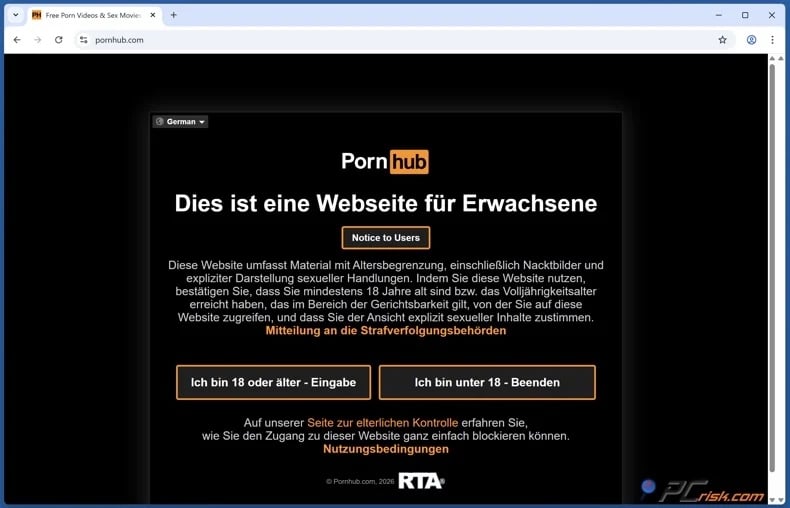
The Youth Media Protection State Treaty (Jugendmedienschutz-Staatsvertrag, JMStV) classifies content into distinct categories. There are categories of pornographic content that are strictly prohibited and even criminally punishable. Legal pornography may be offered online if access is limited only to adults within a "closed user group".
Age verification remains a key issue. German regulators have consistently found self-declaratory measures (e.g., "I am 18+" prompts) to be inadequate. Hence, platforms using simple click-through age confirmation are deemed noncompliant and may face enforcement actions. The expectations for compliant adult content providers can be summarized as follows:
Closed user group requirement - pornographic content is lawful only if the provider restricts access exclusively to adults, thereby forming a "closed user group" rather than allowing access to the general public.
Two-step concept - robust age verification is conceptualized as a two-step process involving initial identification (one-time proof of legal age) and subsequent authentication, which must minimize the risk of credential sharing with minors.
No "trial access" - access must not be granted before age verification is fully completed. The Commission for the Protection of Minors in the Media (Kommission für Jugendmedienschutz, KJM) criteria explicitly reject any form of "trial access".
Ongoing protection - a "closed user group" requires more than a single verification. KJM materials highlight the necessity of additional safeguards, such as backdoor protection and session/idle timeouts.
"Checkbox" verification is insufficient - German regulators have deemed that basic self-declaratory measures like "I am 18+" prompts are an ineffective form of age verification.
Provider responsibility - while the KJM evaluation process offers guidance, the ultimate responsibility for compliance with JMStV remains with the content provider.
The EU has recently strengthened its regulation of adult platforms. Since February 2024, the Digital Services Act (DSA) has applied to all online platforms, establishing a unified framework for accountability across the EU. The European Commission has classified several adult platforms as Very Large Online Platforms (VLOPs) and begun enforcement actions, focusing on protecting minors by requiring effective age assurance measures. National youth protection rules remain relevant, but the regulatory landscape has changed, especially for platforms operating across EU borders. The country-of-origin principle and EU-level oversight now play a greater role in regulation and enforcement.
How does age verification work on adult websites in Germany?
Germany's "closed user group" concept is designed to ensure access is limited to adults. Basic self-declamatory age checks (such as "I am 18+" prompts) are no longer considered to be sufficient age assurance. Most compliant age verification models require both identification to confirm age and ongoing authentication to prevent minors from gaining access.
The following are some of the age verification methods discussed in German compliance contexts:
Video identification (VideoIdent) and video chat checks: one of the most recognized strong age assurance methods. KJM reports highlight modules such as IDnow Video Ident and Postident by Videochat, which verify users through a video session, including ID and personal data checks, followed by steps like entering the Transaction Authentication Number (TAN).
ID upload with automated checks (document and liveness authenticity): many verification providers combine ID scanning with selfie/video checks. Basically, these systems compare the ID photo with biometric data from a live capture. In standard practice, after the information is processed, the user-accessed service only receives a confirmation (e.g., "yes/no") token.
Electronic ID (eID): Germany's national ID card enables digital verification through NFC, providing a strong and reliable method that directly confirms identity with government-issued credentials.
Bank-based and identity database verification: in these models, users log into their online banking services or identity databases, many of which require Two-Factor Authentication (2FA). The verifier confirms their age without sharing their bank account or personally identifiable data with the visited platform. However, this method may be used as part of a multi-step system.
Age estimation without ID submission: some systems utilize AI to estimate user age by analyzing their facial features. This method works with live camera images and typically incorporates liveness detection to prevent spoofing. However, age estimation may lack accuracy and potentially produce false positives or bar eligible users. Hence, these systems are commonly paired with additional or fallback methods, as KJM considers them insufficient on their own.
The purpose of age verification for adult websites is to reliably restrict access only to adults by using robust, high-assurance systems instead of superficial checks. In Germany, these methods must combine verified identity with ongoing authentication. Providers must balance effectiveness with security and privacy, as verification requires sensitive data (e.g., IDs, biometric details, financial info, etc.). Many verification systems limit data exposure, for example, by sending no personal data and only a confirmation token to the platform. Despite these measures, risks persist - especially when third-party providers process user data.
Privacy risks of verifying your age
Strong age verification protects minors and ensures lawful access, but it also raises significant privacy and security concerns. These systems often require sensitive personal data and involve multiple parties, increasing risks of identity exposure, improper data handling, and long-term data use. Understanding these risks is crucial, as even robust privacy-preserving solutions cannot fully eliminate the threats associated with large-scale personal data collection and processing.
Below are some of the risks linked to online age verification:
Identity exposure: uploading an ID, using video identification, or relying on a third-party identity provider can directly associate sensitive browsing activity with a real-world identity.
Data breach impact: if IDs, biometric data, personally identifiable information, or related account data are compromised - users may face fraud or impersonation. While many systems seek to minimize data collection and ensure confidentiality, gathering vulnerable information at scale still exposes users to potential breaches.
Biometric sensitivity: age estimation and certain document checks require biometric processing, such as face images and liveness tests. This data is difficult or even impossible to change if compromised.
Function creep: verification datasets may be used for secondary purposes such as profiling, fraud scoring, or marketing analytics. While rules and regulations often emphasize collection minimization and limitation, it cannot be fully prevented. From the users' perspective, it may be difficult or impossible to verify how the information is handled.
Third-party processing: in many instances, age verification is outsourced to specialized vendors. While this may improve security standards, it increases the number of parties involved and adds complexity regarding storage locations, retention periods, and the risk of cross-system data leakage.
If you have to verify your age online, choose systems that minimize data sharing, avoid unnecessary uploads of personally identifiable information, and treat each instance as highly sensitive and risky. In summary, always consider your alternatives, verify the legitimacy of the age check (to avoid phishing and malicious impersonator pages), select the least intrusive methods, and stay safe.
Risks of using adult websites that do not require age verification
While avoiding verification on pornography websites may seem safer, browsing those that do not utilize robust age assurance is linked with serious risks. Sites that do not comply with verification regulations are more likely to also be noncompliant in other ways. These platforms may utilize aggressive monetization tactics, such as hosting deceptive/malicious advertisements or selling user data.
The following are some of the risks associated with noncompliant adult websites:
Higher exposure to malicious ads - adult sites often use aggressive advertising and redirects, which are known to promote technical support scams, phishing, adware, and even malware.
Tracking and profiling - porn websites that do not use strong age verification may engage in extensive tracking. In sensitive browsing contexts, this data poses long-term privacy risks if sold, leaked, or connected to other identifiers. If this browsing activity is linked to users' identities, its exposure could lead to a variety of social repercussions, including extortion/sextortion and blackmail.
Regulatory unpredictability - sites that bypass or fail to implement age gating may face enforcement actions, such as access blocks. This can drive users to risky workarounds, unsafe mirror domains, and even malicious impersonator pages.
To summarize, searching for platforms that do not comply with age verification requirements may lead you to encounter sites that pose serious security and privacy threats. If you choose to browse adult content, prioritize safe browsing practices - limit the information you share and avoid webpages that prompt downloads, request suspicious log-ins, or promote payment schemes.
Access adult websites in Germany with a VPN in 2026
If you want to access pornography sites from Germany without verifying your age, a VPN (Virtual Private Network) may aid you in this endeavor. It is important to note that this tool does not verify age or make unlawful content lawful. What a VPN does is enhance your privacy and can aid in bypassing certain access restrictions, such as ISP-level DNS blocks or location-based rules tied to your IP address.
VPNs typically work by creating an encrypted tunnel and routing your Internet traffic through a server operated by the service provider. Therefore, visited websites see the VPN server's IP address, and local networks cannot view your activity within the tunnel. This makes VPNs useful for privacy on public Wi-Fi and for bypassing censorship or geoblocking. As for accessing age-gated adult sites from Germany, a VPN may allow you to bypass age verification by connecting to a server in a region without similar regulations, provided the platform uses IP-based geolocation.
Our top recommendation for streaming and privacy. NordVPN consistently leads our tests with fast speeds, reliable geo-unblocking, and a strict no-logs policy.
- ✔ Unblocks geo-restricted streaming services reliably
- ✔ 202+ locations across 111 countries
- ✔ 30-day money-back guarantee · Special deal available
Additionally, a VPN can be useful in Germany for the following situations:
Overbroad ISP blocking - if an ISP blocks certain domains via DNS, a VPN can route DNS resolution through its path and often bypass local DNS blocks.
Privacy and discretion - a VPN can reduce what your ISP, campus, or workplace network can infer about your browsing. This is one of the primary reasons for using a VPN to browse pornographic content.
Location-dependent access behavior - some sites show different content by country. Changing your apparent IP location can alter which version of a site you see or whether it blocks traffic from a specific region.
Below are the steps for the standard VPN setup:
1. Choose a reputable VPN provider. We recommend our top 2026 choice - NordVPN. When selecting your VPN provider, prioritize broad server coverage, stable performance, high speeds, and strong privacy controls. A large server network will give you the best chances for accessing geoblocked or geo-restricted content and provide ample alternatives if certain IP ranges get blocked. Both speed and a stable performance are essential for streaming video. Transparent privacy policies and strong security features ("kill switch", "stealth" mode, DNS-leak protection, etc.) are likewise key.
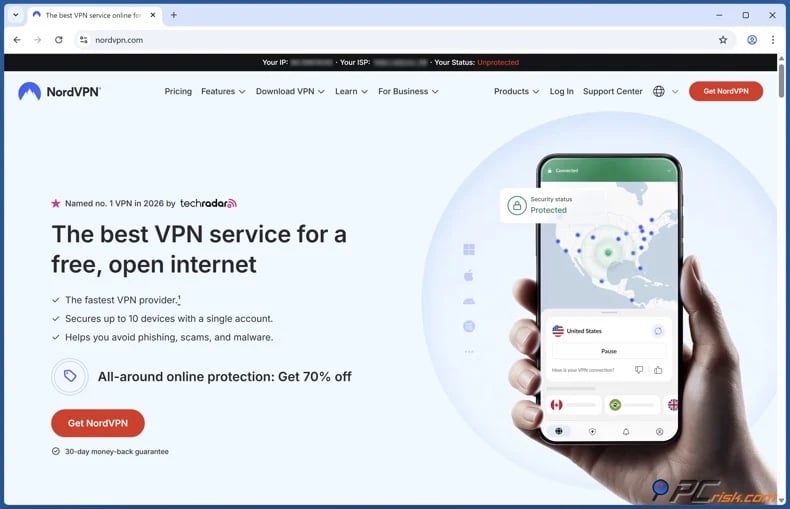
2. Install the VPN app and log in. If available, enable key protections, such as the "kill switch" feature and DNS-leak protection. It is worth noting that major VPN services are usually compatible with various devices, including Windows, macOS, iOS, Android, and streaming hardware.
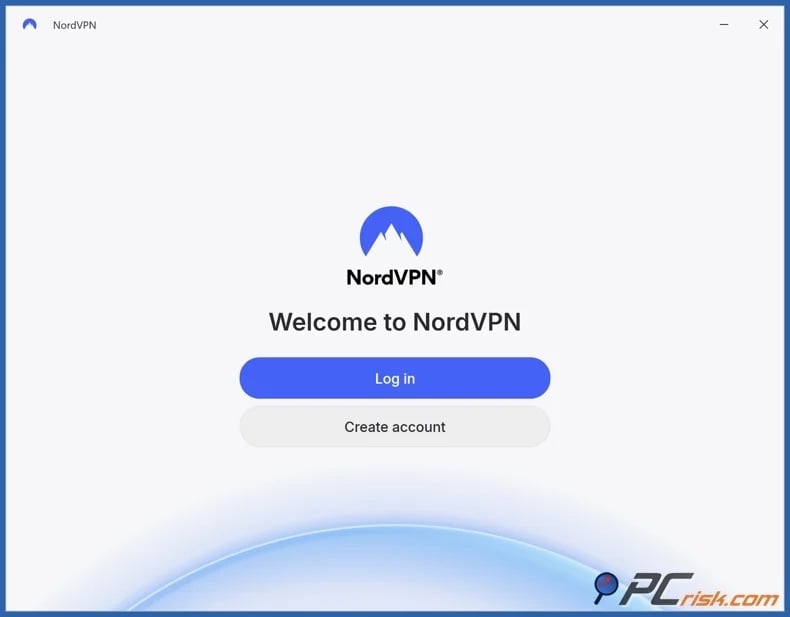
3. Connect to a suitable server. If you wish to bypass age verification on adult websites in Germany, select a server located in a nearby country that does not have similar age check regulations. Avoid distant servers, as those located far from you may cause noticeable speed loss and latency.
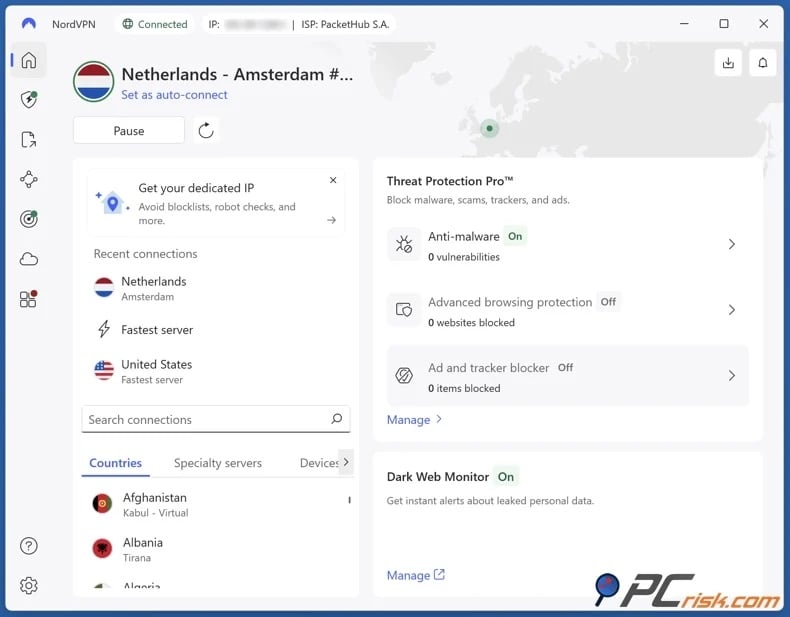
4. Open the website and start streaming. If you have tried accessing the site prior to connecting to the VPN server, your browser may have retained location signals that could conflict with the VPN-provided location. Hence, clear cookies and cache, then reload the website in a private browsing window.
It must be mentioned that a VPN does not replace security software. Browsing adult content, particularly on less regulated sites, is associated with a variety of security threats. These websites may promote malicious ads, fake downloads, and phishing pages. Combo Cleaner reduces these risks by offering real-time anti-malware protection, blocking dangerous websites, and detecting harmful downloads before they impact your system. It can remove unwanted browser extensions that cause redirects, intrusive ads, or tracking, thereby supporting a safer, more private browsing experience. Combo Cleaner can likewise detect and eliminate most of the known malware infections.
A VPN encrypts your traffic — but your device still needs protection against malware and ransomware. Combo Cleaner adds the missing layer of defense.
Download Combo CleanerAntivirusDetect & remove malware threats→Best VPNs to access adult websites in Germany
When selecting a VPN to access adult content from Germany, the priority should be stable streaming, strong privacy protections, and reliable server access. High speeds and low latency ensure smooth video playback, while a broad server network enables location switching if content is restricted or performance declines. Robust privacy and security features are paramount to safeguard your browsing activity, especially on sensitive platforms.
Below are our Top Five VPN Picks for 2026:
1. NordVPN - our Top Choice. This VPN offers fast speeds, extensive server coverage, and effective privacy protections. Its performance and server variety support stable streaming and easy switching if a server slows or becomes restricted.
2. Surfshark - an option with a flexible device policy. This VPN provides a strong streaming performance and is ideal for covering a household since it offers unlimited device connections.
3. Mullvad VPN - a privacy-focused service that minimizes data collection. This VPN has an audited no-logs policy, requires no personal information upon registration, and offers anonymous payment methods. It is best suited for users who prioritize privacy, but it has a comparatively smaller server network and fewer streaming optimizations.
4. Proton VPN - a reputable service that offers a functional free tier. The paid plans are better suited for streaming, as they provide a broader server network and more features.
5. ExpressVPN - a premium, user-friendly service. This VPN is known for its well-designed app and consistent reliability. It is ideal for users seeking minimal setup and dependable streaming.
It must be stressed that no VPN service can guarantee continuous access to any given website in all locations. Many platforms are proactive in their attempts to detect and block VPN traffic.
Can you use a free VPN to access adult websites in Germany?
Free VPNs are widely available, but they frequently impose strict limitations and require users to place greater trust in the provider. Privacy is essential when browsing adult websites, and a low-quality VPN can compromise user data and may even pose serious threats.
Top VPN ReviewsExclusive dealsExpert-tested · hands-on reviews→
The following cover some of the key concerns associated with free VPN services:
Data monetization incentives - many free VPN providers depend on alternative revenue streams, such as aggressive advertising, user tracking, data sharing, or software "bundling". To expand on this, rogue advertising networks often promote scams and unwanted/malicious software. User data collection and sharing pose severe privacy threats. Privacy issues can also be posed if the service has weak security measures or fails to adequately encrypt users' Internet traffic.
Security and leakage risks - as mentioned above, free VPN applications are prone to traffic leaks, and may provide inadequate or even no encryption. Under these circumstances, such VPNs may provide a false sense of security while exposing users' browsing activity to third-parties.
Performance limitations - free VPNs commonly come with service limitations that can seriously affect browsing, particularly streaming. These VPNs can have data caps that can be easily exhausted when engaging in bandwidth-intensive activities (such as browsing media-heavy pages, streaming video, etc.). Speed limits are prevalent as well, and they can drastically diminish the browsing experience. Free VPNs usually offer fewer server locations and are often overcrowded, which can cause slow loading, video buffering, and unstable connections.
Limited features and protections - many free VPNs do not include critical safeguards such as a "kill switch" feature, DNS-leak protection, or modern protocols. Without these, users' IP addresses or browsing activity could be exposed if the connection fails or is misconfigured.
If you still wish to try a free VPN, it is safer to choose a trustworthy provider that also offers paid plans, as they are less likely to rely on monetizing user data. We recommend the free plan from Proton VPN. However, it does have its limitations; Proton VPN's paid tiers are more reliable for speed, stability, and broader server access.
Common issues and solutions when accessing adult websites with a VPN
Even with a reliable VPN, various issues may still occur. When accessing adult sites from Germany, problems may arise because of strict age verification systems rather than simple network blocks. Hence, the issue is unlikely to be a "broken" VPN; it could be a mismatch between enforcement methods (e.g., identity checks, account/session data, multi-layer controls, etc.) or device behavior (e.g., cached data, inconsistent location signals, unstable connections, etc.). Other access problems could be due to general VPN-related factors, such as DNS handling, server congestion, and shared IP usage.
Below are some of the most common issues and solutions:
Website remains blocked or continues to request age verification - your geolocation may be determined by more than your IP address (e.g., account history, previous verification attempts, browser cookies, device signals, etc.). The VPN server you are connected to has been flagged or is located in a region with similar age verification requirements.
Potential solutions:
- Connect to a different VPN server; first try nearby regions (with no analogous age checks).
- Clear cookies and cache.
- Use a private/incognito window.
- Restart the browser/app.
- Avoid switching servers mid-session (keep your connection consistent).
Pages load but video playback is slow or buffers - streaming performance can be affected by VPN speed, latency, and server load. Congested or distant servers may reduce video quality.
Potential solutions:
- Connect to a server located closer to your actual location.
- Try a different server in the same region.
- (If this data is available) Connect to a less crowded server.
- (If available) Lower video quality.
- (If available) Disable video auto-play.
- Check your base connection speed to determine whether the issue is unrelated to the VPN and is due to your Internet.
Frequent CAPTCHA tests or "unusual traffic" messages - could be caused because the server you are connected to has been flagged. Anti-abuse systems often flag shared IP addresses. Heavily repeated actions may also trigger anti-spam systems to display verification prompts.
Potential solutions:
- Connect to another server to obtain a different IP address, wait a while if you have recently made multiple server-switch attempts.
- (If available) Try alternative routing or obfuscation ("stealth") mode.
- Temporarily disable potentially interfering browser extensions.
- Stop repeat actions on the platform.
Access initially succeeds but fails during log-in or verification - some platforms enforce stricter checks for account actions and location mismatches, outdated session data, or incomplete verification may result in additional restrictions.
Potential solutions:
- Clear cookies and cache to eliminate old session data.
- Try accessing the site without being logged in, then proceed.
- Avoid server switching during log-in or verification.
VPN disconnects and exposes your real IP address - connection instability can interrupt access and reveal your location if the proper safeguards are not enabled.
Potential solutions:
- (If available) Enable the "kill switch" feature.
- (If available) Enable DNS-leak protection.
- (If available) Use auto-connect features, particularly on mobile devices.
- Connect to a closer server if your connection is unreliable.
If common solutions do not resolve the issue you are experiencing, contact your VPN's official support, as reputable VPN providers offer reliable and swift support.
How to access adult websites in Germany without a VPN?
Usually, VPNs are the simplest and most practical privacy tools, but these services are not the only option. Open (web-based) proxies and the Tor browser are commonly used as well. However, while both offer some anonymity and may enable you to bypass age verification on adult sites - they function differently from VPNs and have significant limitations. It is also pertinent to mention that open proxies and Tor carry certain risks.
Open (web-based) proxies
Open (web-based) proxies function as intermediaries between a user's device and a website. When a connection is established through a proxy, the user's request is first directed to the proxy server, which subsequently forwards it to the destination site. As a result, the website identifies the proxy server's IP address rather than the user's actual IP.
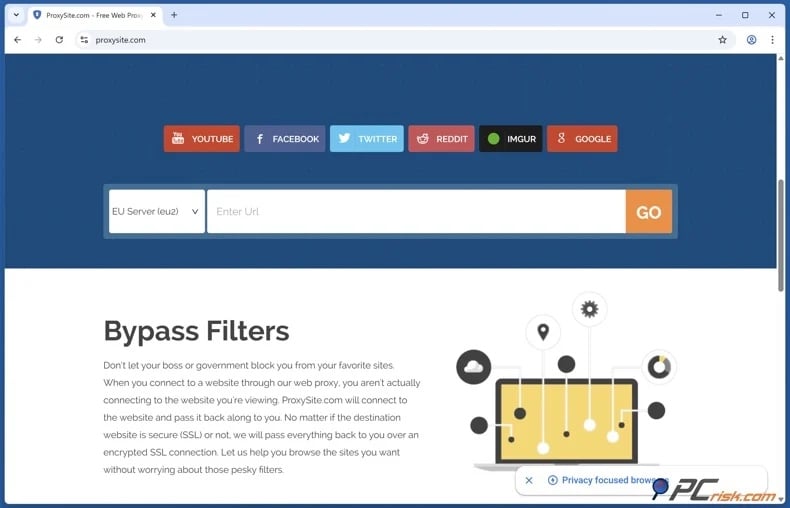
Pros:
- Easy to use - typically requiring no installation; accessible directly through a browser.
- Basic IP masking - can bypass simple network-level restrictions.
- Quick access solution - useful for occasional or low-risk browsing.
Cons:
- No or weak encryption - many open proxies do not secure traffic, leaving data exposed.
- Unknown operators - verifying the provider or data handling practices can be difficult or impossible.
- Logging and tracking risks - activity may be monitored or recorded.
- Content injection - some proxies insert ads, trackers, or malicious scripts.
- Frequent blocking - shared IPs are often flagged and blocked.
- Poor performance - limited bandwidth and high latency, which make activities like streaming video unreliable.
Tor Browser
The Tor Project developed Tor Browser to enhance user anonymity by routing Internet traffic through a network of volunteer-operated servers (known as relays). Each connection typically traverses several relays, including an entry (guard) node, a middle relay, and an exit node. Each relay encrypts or decrypts a layer of data, ensuring that no single node possesses both the user's identity and the final destination website.
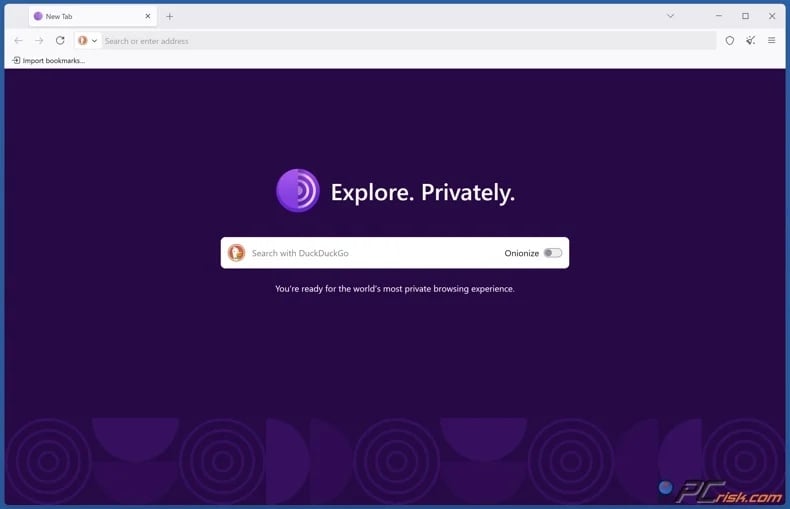
Pros:
- Strong anonymity - multi-hop routing obscures traffic origin.
- Decentralized design - no single provider controls the network.
- Useful in restrictive environments - can help bypass censorship in high-risk regions.
Cons:
- Slow speeds - multi-layer routing significantly increases latency, and typically renders bandwidth-heavy activities (like streaming) difficult or impossible.
- Unstable connections - performance depends on relay availability and load.
- Blocked by many sites - known Tor exit nodes are often restricted.
- CAPTCHA and verification issues - shared IP reputation can trigger anti-abuse systems.
- Exit node exposure - unencrypted traffic can be observed or modified by malicious exit nodes.
Open proxies and the Tor browser are not ideal for streaming adult content and are not analogous replacements for VPNs. Open proxies lack reliable encryption, are often slow, and pose significant security risks. Tor prioritizes anonymity over speed and usability, which makes it poorly suited for video streaming. Neither option can handle multi-layered access controls used by many adult platforms in Germany. These platforms use robust age verification systems based on identity checks, session data, and compliance mechanisms beyond simple IP restrictions. Therefore, open proxies and Tor may fail to provide consistent access without delivering the performance, privacy balance, or reliability of a reputable VPN service.
Is using a VPN to access adult websites legal in Germany?
Using a VPN is legal in Germany, and there is currently no specific law against adults employing these services to bypass age verification. However, a VPN does not provide immunity. Illegal content and activities remain illegal regardless of your connection method; a VPN does not remove legal responsibility.
The youth media protection is intended to prevent minors from accessing inappropriate content, and the regulations primarily focus on providers of pornography rather than adult users seeking to access legal content. Generally, enforcement has been centered on platforms and intermediaries delivering this content in Germany.
However, it must be emphasized that minors should not use VPNs or similar tools to access pornographic content. The "closed user group" model is specifically designed to prevent children and teenagers from accessing age-inappropriate material. Under the JMStV (Jugendmedienschutz-Staatsvertrag, Youth Media Protection State Treaty), pornography is only lawful in telemedia when it is restricted to adults.
It must also be stressed that laws can change. Laws regarding access to pornography or VPNs may be changed. Concerning minors accessing inappropriate content, even if there are no direct repercussions - legal ramifications might be faced by the adults facilitating access or those responsible for the minor. Additionally, using a bypass tool to access age-gated content may break platforms' Terms of Service (ToS) and result in penalties like subscription cancellation or account suspension/deletion.
In closing
Germany's "porn blocks" reflect a broader compliance effort - pornography is permitted for adults, but not through open access that minors can easily reach. Hence, "closed user group" rules and age verification requirements place pressure on adult platforms, which have led to ISP-level DNS blocking. Meanwhile, EU law increasingly influences how member states regulate platforms based in other EU countries, contributing to conflicting court decisions and changing access patterns.
If you prioritize privacy and want to minimize overbroad blocking, a reputable VPN is a practical option. It can protect your traffic on untrustworthy networks and may bypass DNS-level restrictions. A VPN may also serve as a workaround for adults who do not want to complete age verification on adult websites if the site in question is using IP-based geolocation. However, these tools cannot guarantee continuous and uninterrupted access. In conclusion, stay informed, choose reputable tools, keep up-to-date with local laws, and use safe browsing practices.
Frequently Asked Questions (FAQ)
Why are some porn websites blocked in Germany?
German youth media rules treat pornographic telemedia as illegal unless restricted to a "closed user group" of adults. When platforms fail to implement effective age verification, regulators may enforce rules and even order access providers to block noncompliant websites.
Why are adult websites in Germany asking for age verification?
Germany's "closed user group" model expects providers to restrict access to adult materials to adults only. Basic age checks like "I am 18+" pop-ups are considered insufficient, so more robust verification systems are used.
Can I watch porn in Germany without verifying my age?
Some adult sites may not require strong age verification, but that calls into question their compliance in other aspects, such as security and safety. Websites without appropriate age gates can be enforcement targets or expose users to significant security and privacy risks. As for accessing compliant adult platforms without verifying your age - that is not possible without a bypass tool, such as a VPN.
How do websites verify age without ID?
There are systems that use age estimation (such as facial age estimation with liveness checks) or rely on other trusted systems like banking services. However, Germany's regulations deem these methods insufficient for standalone verification. Hence, these options are typically paired with others that do involve data linked to user identity.
Is it legal to access porn websites using a VPN in Germany?
There are no current laws in Germany criminalizing VPN usage by adults to access pornographic content. However, these tools do not eliminate legal responsibility, and illegal activities remain illegal. Remember to always check local laws when using VPN services, as they are restricted and regulated in certain countries.
Share:
 Facebook
 X.com
X.com
 LinkedIn
 Copy Link

Karolis Liucveikis
Experienced software engineer, passionate about behavioral analysis of malicious apps
Author and general operator of PCrisk's News and Removal Guides section. Co-researcher working alongside Tomas to discover the latest threats and global trends in the cyber security world. Karolis has experience of over 8 years working in this branch. He attended Kaunas University of Technology and graduated with a degree in Software Development in 2017. Extremely passionate about technical aspects and behavior of various malicious applications.
▼ Show Discussion