
We may earn commissions from products we recommend. Learn more.
How to watch FIFA World Cup 2026 for free with a VPN

How to watch FIFA World Cup 2026 for free with a VPN?
The FIFA World Cup is the premier event in men's international football, and the 2026 tournament will be unprecedented in scale. It will feature 48 teams, take place across three host countries, and include 104 matches. FIFA and its broadcast partners have confirmed the tournament will run from June 11 to July 19, 2026, in the United States, Canada, and Mexico. While this expanded format benefits fans, it also means viewing rights are divided among multiple broadcasters, apps, and regions, with availability varying by country.
This article covers where the FIFA World Cup 2026 can be watched for free and provides a guide on how to access foreign streams using a VPN (Virtual Private Network) service. However, it is worth noting that no VPN can guarantee uninterrupted access to geoblocked content.

Disclaimer: PCrisk.com does not promote, encourage, or endorse bypassing geoblocks/geo-restrictions or violating streaming platforms' terms of service. This information is provided for educational purposes to help users understand geo-restrictions, privacy tools, and practical troubleshooting. Always follow local laws and use any method described at your own risk.
Watch FIFA World Cup 2026 with NordVPNSpecial deal30-day money-back guarantee→
Table of Contents:
- Introduction
- Channels to watch the FIFA World Cup 2026 for free
- How can a VPN help you watch the FIFA World Cup 2026 for free?
- Watch FIFA World Cup with a VPN in 2026
- Best VPNs to watch the FIFA World Cup 2026
- Can you use a free VPN to watch the FIFA World Cup 2026?
- Common issues and solutions when watching the FIFA World Cup with a VPN
- Is using a VPN to watch the FIFA World Cup 2026 legal?
- In closing
- Frequently Asked Questions (FAQ)
Channels to watch the FIFA World Cup 2026 for free
FIFA organizes the World Cup, but viewers cannot purchase access through a single global package. Instead, media rights are sold by territory, resulting in varied coverage - some countries offer extensive free-to-air broadcasts, while others place most matches behind paywalls. According to FIFA's May 2026 media-rights overview, coverage spans 180 territories via public broadcasters, commercial networks, radio partners, and paid services. This licensing approach leads to significant differences in free coverage between markets. In some regions, public broadcasters provide broad access to major events, while in others, rights are split between free and paid outlets to offset costs.
Viewers seeking official free coverage will find the best options in countries where national broadcasters or advertising-supported channels hold full or partial rights. Below are the most relevant current examples:
The UK offers comprehensive free World Cup coverage. ITV and the BBC will share all FIFA World Cup 2026 matches free-to-air across their broadcast channels and streaming platforms. UK audiences can watch the entire tournament, including the final, at no cost. BBC television and iPlayer, along with ITV's channels and ITVX, are leading official free options for eligible viewers.
Australia: SBS, SBS VICELAND, and SBS On Demand
Australia also provides extensive free official coverage. SBS holds exclusive rights to the 2026 tournament and will broadcast all 104 matches live and free on SBS, SBS VICELAND, and SBS On Demand. This combination of traditional and streaming platforms offers one of the most accessible official free options for the World Cup.
Brazil: CazéTV and Globo (additional free coverage)
Brazil offers broad free access. FIFA confirmed that CazéTV will broadcast all 104 matches on its platforms. Globo, a long-term partner, will air every Brazil match, the final, and half of the remaining tournament matches. CazéTV is ideal for viewers seeking full coverage, while Globo suits those interested in Brazil and major knockout games.
Poland: TVP
Poland is a strong free-viewing market. According to FIFA, TVP is Poland's media partner, and TVP Sport has confirmed that every World Cup 2026 match will be available on TVP channels and online. This makes Poland one of the most generous free territories for free full tournament access.
France, Monaco, Andorra, and French overseas territories: Groupe M6
In France and related territories, free-to-air rights were obtained by Groupe M6 for 54 matches in the 2026 tournament. While this does not cover the entire tournament, it remains a substantial free package and illustrates how some countries combine broad free access with a smaller paid component. France is a good choice for viewers interested in major matches rather than every game.
Spain: RTVE
Spain does not offer every match for free, but it provides a significant free package. RTVE will air one match from each competition day, all Spain matches, key round-of-16 and quarterfinal fixtures, both semifinals, the third-place match, and the final. Hence, Spain is a strong free option for casual fans or those interested in major fixtures.
Netherlands: NOS
FIFA lists NOS as the Dutch rights holder across TV, radio, mobile, and the Internet. NOS itself announced that the men's World Cups in 2026 and 2030 will be followed live through the public broadcaster. As of the time of writing, the specific number of matches to be aired has not been indicated. NOS will make the tournament widely accessible on television, radio, and online as a public service.
FIFA's media-rights overview also identifies public or free-to-air partners in other territories, such as VRT and RTBF in Belgium, SRG SSR in Switzerland, TRT in Turkey, Sveriges Television (SVT) and TV4 in Sweden, and FBC in several Pacific territories. Match counts and platform availability may vary; consult the broadcaster's current tournament page before your chosen match. Keep in mind that rights, sublicensing, and app access may change between tournaments and even shortly before kickoff.
How can a VPN help you watch the FIFA World Cup 2026 for free?
World Cup broadcasting rights are sold by country, so official streams are rarely available globally. Broadcasters are typically required to block viewers outside their licensed regions, and this practice is known as geoblocking. Essentially, the platform checks your connection's location and either grants or denies access. If your connection is deemed to be originating from an unlicensed region, the platform may block access by simply not loading its pages, display "unavailable in your region" style messaging, or show errors during playback.
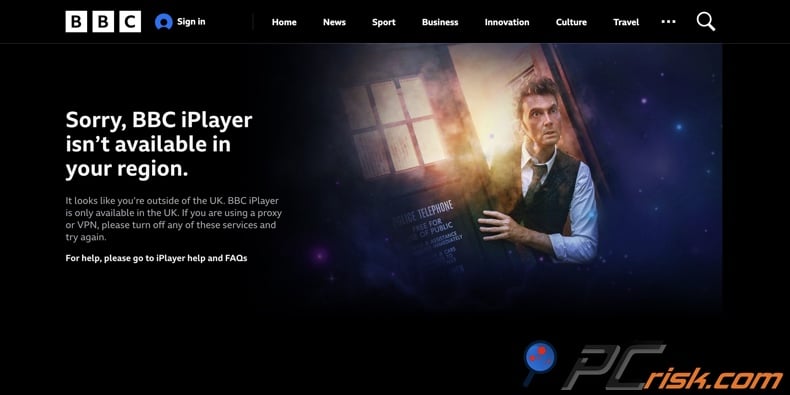
A VPN (Virtual Private Network) may help viewers access geoblocked FIFA World Cup 2026 coverage. These services operate by creating an encrypted connection between your device and a remote server. Hence, opened websites and apps may perceive the VPN server's IP address - thus making it appear as if you are browsing from another country.
This is a key benefit of using a VPN. If a country like the UK, Australia, Brazil, or Poland offers official free streams, a quality VPN is the best tool for accessing them from outside the licensed region. Leading VPN services simplify this process with reliable apps, vast server networks, router compatibility, and features tailored for streaming on TVs and other devices. VPNs are often recommended for sports fans traveling internationally, those facing network restrictions, or anyone seeking a consistent viewing experience across countries.
VPNs offer advantages beyond enabling access to geoblocked football streams. These services can reduce exposure on public Wi-Fi, limit local network monitoring, and provide enhanced privacy while browsing. VPNs may also allow you to access restricted content on managed networks, such as those on campuses, workplaces, hotels, and other institutions.
Our top recommendation for streaming and privacy. NordVPN consistently leads our tests with fast speeds, reliable geo-unblocking, and a strict no-logs policy.
- ✔ Unblocks geo-restricted streaming services reliably
- ✔ 202+ locations across 111 countries
- ✔ 30-day money-back guarantee · Special deal available
However, it is important to mention that while a VPN can increase your chances, it cannot guarantee access to any specific World Cup stream. Streaming services may block VPN IP addresses, use additional measures apart from IP-based geolocation (such as app cache, DNS checks, account verification, etc.), or monitor device location signals. Some troubleshooting is expected with streaming platforms. Major VPN providers recommend that users who encounter issues switch servers, clear cookies/cache, disable secure DNS, or turn off location services because streaming detection methods are becoming increasingly more sophisticated. In summary, a premium VPN is helpful, but it is not a guaranteed solution.
Watch FIFA World Cup with a VPN in 2026
Setting up a VPN for watching the FIFA World Cup 2026 through an official geoblocked broadcaster is typically a straightforward process:
1. Choose a reputable VPN. Select a provider that offers broad server coverage, fast and stable speeds, a strong privacy record, and multi-device support (such as TVs) - as these traits are important for live sports. We recommend NordVPN - our Top VPN Choice for 2026. It is noteworthy that free or weak VPNs often cause buffering, lag, and disconnects, which are especially noticeable during live football.
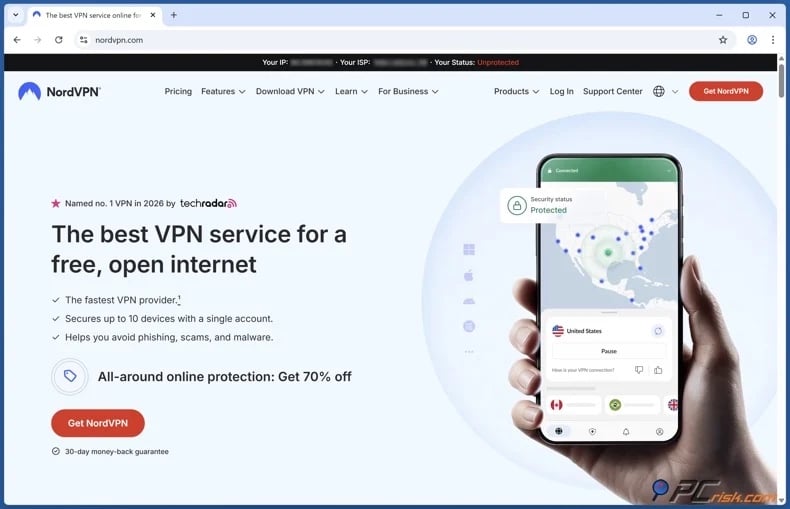
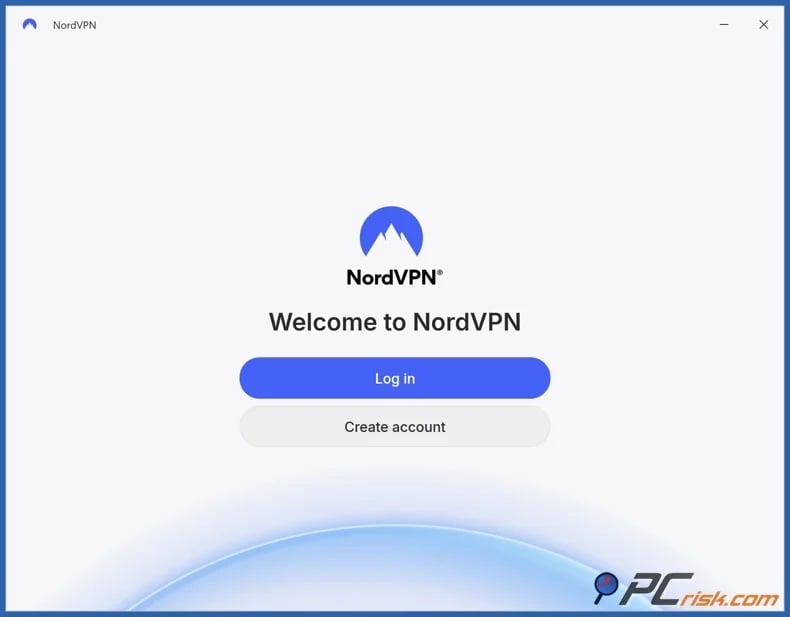
2. Install the VPN app on the device you plan to stream on and sign in. Most major VPNs support Windows, macOS, Android, iOS, and streaming hardware. If you want to try a geoblocked official broadcaster, test the VPN before the match begins. Preparing in advance will help you avoid the frustration of troubleshooting after kickoff.
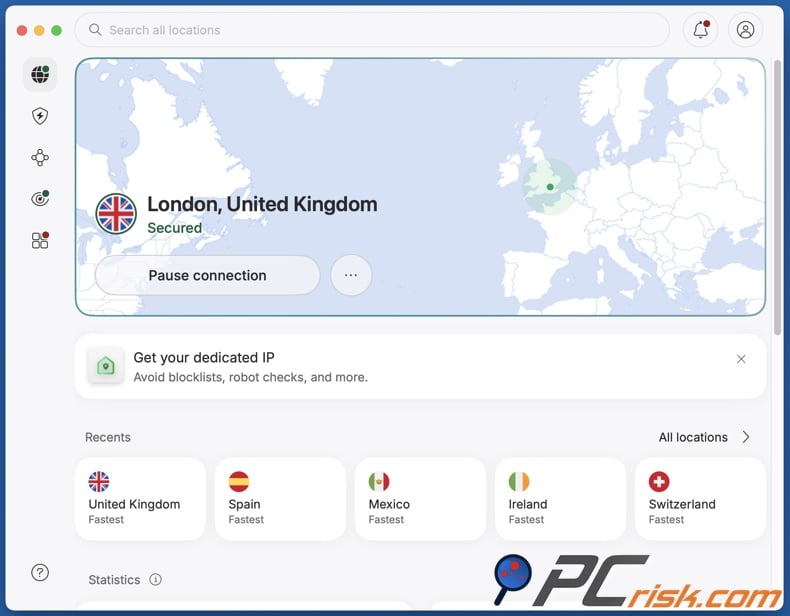
3. Connect to a server located in the broadcaster's country. To access UK coverage, connect to a UK server, for Australian coverage - one located in Australia, and so on. After connecting, open the broadcaster's website or app and confirm it loads properly before the match. If you encounter issues, switching to another server in the same country can often resolve them.
4. Open the official broadcaster and start the stream. Once connected, visit the official broadcaster, sign in or register if required, and start playback. Some services are straightforward, while others may require an account, a local app-store region, or additional eligibility checks. If the stream does not work initially, try switching servers, clearing your cache, or using a browser instead of an app. For more information on troubleshooting, check out the "Common issues and solutions when watching the FIFA World Cup with a VPN" section of this article.
If you want to watch the FIFA World Cup on a TV, VPN setup varies by device:
Some smart TVs support VPN apps (Android TV, Fire TV, and newer Apple TV models), and they are generally the easiest to configure. Additionally, most major VPNs offer native apps or simple installation options.
Smart TVs that do not support VPN apps (Samsung and LG TV models) usually require a router-level VPN setup or a DNS-based solution. Another method is connecting a VPN-enabled laptop or casting from another supported device.
Relying on a native VPN application is the most convenient option for smart TVs, as switching servers and troubleshooting is usually a quick and easy process. In contrast, changing servers on a router-level setup is more complex and time-consuming, which can be incredibly frustrating when watching live sports.
It must be emphasized that a VPN is not a replacement for dedicated security software. Streaming events like the 2026 FIFA World Cup from unfamiliar broadcasters or unofficial sources can expose users to risks such as malvertising, phishing pages, fake verification prompts, and harmful download links. Combo Cleaner mitigates these threats by blocking dangerous websites, identifying suspicious files, and detecting malware. Real-time threat detection and safe browsing features are especially important in these situations. Although no solution offers complete protection, combining a VPN with reliable security software significantly enhances streaming and browsing security.
A VPN encrypts your traffic — but your device still needs protection against malware and ransomware. Combo Cleaner adds the missing layer of defense.
Download Combo CleanerAntivirusDetect & remove malware threats→Best VPNs to watch the FIFA World Cup 2026
When selecting a VPN for the World Cup, focus on three key factors: stable speeds, reliable server coverage in relevant countries, and strong support for streaming devices. While no VPN can guarantee access to specific broadcasters, these options are most likely to provide a smooth experience with official region-locked streams.
The following are our Top VPN Choices for 2026:
1. NordVPN
NordVPN is our top choice for 2026. This VPN has an independently audited no-logs policy, a vast server network, fast and stable speeds, and excellent support. NordVPN also offers SmartPlay and SmartDNS-style tools for big-screen viewing, and documentation focused on streaming with smart TVs and media devices. For those seeking a VPN that balances privacy, speed, and a straightforward living-room setup - NordVPN is the recommended first option.
2. Surfshark
Surfshark is the best value option, particularly for larger households. Its key advantage is unlimited device connections, allowing one subscription to cover multiple devices simultaneously. Surfshark also offers strong support for smart TVs and router setups.
3. Mullvad VPN
Mullvad VPN is the privacy-focused option. In addition to its independently audited no-logs policy, registration for this VPN does not require sharing personal information, and there are anonymous payment options. For users who prioritize privacy over the largest server coverage or streaming features - Mullvad VPN is the choice.
4. Proton VPN
Proton VPN is a versatile option that emphasizes safety and transparency. Its apps are open source and audited, paid plans support streaming, and the free plan has no ads or data caps. This makes Proton VPN valuable both as a feature-rich paid streaming VPN and as a trustworthy free service for secure browsing or as a trial before subscribing.
5. ExpressVPN
ExpressVPN is one of the most user-friendly premium VPNs. It offers polished apps, router support, smart-TV guidance, and MediaStreamer for devices that do not support VPN apps. ExpressVPN also highlights its audited no-logs policy. For users seeking an easy-to-use TV experience - ExpressVPN is a great choice.
Can you use a free VPN to watch the FIFA World Cup 2026?
While a free VPN may sometimes allow access to a geoblocked stream, it is generally unsuitable for live tournament football. Live sports require stable speeds, low congestion, a wide selection of countries to match your broadcaster, and reliable support if the stream fails. Most free VPNs do not meet these requirements.
Below are some of the limitations and risks associated with free VPNs:
Limited server locations - free VPNs usually offer access to fewer servers, making it difficult to match the required broadcaster region. Servers also fill up quickly during major sporting events, and with only one or two free endpoints per region, streams can become crowded and unreliable.
Slower speeds and increased buffering - live football requires stable performance, but free VPNs frequently have overloaded servers, inconsistent speeds, and sudden disconnects. Even if a stream begins, it may lose quality or freeze at critical moments. Paid services typically have more network capacity to ensure reliable streaming.
Weaker unblocking performance - free VPNs may change your IP address, but can fail to bypass modern streaming blocks. Platforms can quickly identify and block heavily used VPN ranges, especially when many users share a limited pool of IP addresses. This is why premium VPNs can offer better streaming performance, even when both claim to provide location switching.
Privacy and monetization risks - some free VPN apps serve ads, share data with third-parties, or route traffic through external networks. These VPNs often lack robust security and may use user data as collateral. While this may erroneously seem trivial for sports streaming, it becomes a significant concern when a VPN is trusted with all your Internet traffic.
Less support when matches matter most - free VPN providers typically offer limited troubleshooting resources and minimal support. If you encounter region errors shortly before a match, a paid VPN provides access to support, a larger server pool, and faster updates. Free services rarely match this level of reliability.
If you still prefer a free option, the free plan from Proton VPN is a strong choice. This plan is not advertisement-supported, does not log user activity, and has no data limits. Free servers are available in Japan, the Netherlands, Poland, Romania, and the United States. However, for time-sensitive events like the World Cup, a paid VPN remains the best option for reliable streaming.
Common issues and solutions when watching the FIFA World Cup with a VPN
Even reliable VPNs can encounter issues with sports streams. Broadcasters strictly enforce regional rights during major events, and streaming services must handle increased demand. Fortunately, most issues can be resolved with standard troubleshooting steps:
Broadcaster states the stream is unavailable in your region - typically indicates the service continues to detect your actual location, has flagged the VPN server, or is using stored location data as an additional geolocation check.
Potential solutions:
- Connect to a different server in the same country.
- Clear browser/app cache to remove potential location signals.
- Close and reopen the app/browser after reconnecting.
- If the app uses device location services, disable them (note that this may cause issues with certain broadcasters).
- If Secure DNS or DNS over HTTPS conflicts with the VPN, disable it.
- If the app keeps failing, try the broadcaster in a browser.
Stream loads, but quality drops or buffers constantly - typically due to speed, network congestion, or protocol issues rather than strict geoblocking.
Potential solutions:
- If load data is available, connect to a less crowded server in the same country.
- If load data is unavailable, try connecting to other servers in the same country.
- If your VPN offers a faster protocol, try it.
- If other bandwidth-heavy activities are in progress on your home network, pause them.
- If possible, change to a wired connection or use stronger Wi-Fi.
- Restart the VPN connection and test again before kickoff.
Broadcasting service works on a laptop but not on TV - likely an issue with the TV itself rather than the broadcaster or VPN. TV operating systems can be finicky, as they support fewer apps and may perform additional network checks.
Potential solutions:
- If your TV supports a native VPN app, use it.
- If your TV does not support VPN apps, set up the VPN on the router.
- If your VPN offers special tools, such as SmartDNS or MediaStreamer, try them (note that DNS tools do not offer the same level of privacy as a full VPN).
- Cast or connect via HDMI from a VPN-connected laptop to the TV, as a fallback method.
Continuous CAPTCHA tests or repeated sign-in prompts - often occur when an IP address experiences heavy traffic or when the service detects suspicious activity.
Potential solutions:
- Connect to a different server in the same country.
- Close and reopen the browser or app.
- Temporarily disable ad-blocking or web-protection tools that may be interfering.
- If your VPN offers DNS leak tests, run one.
Direct account or app problems - issues unrelated to the VPN may be related to account eligibility, app store region mismatch, or a broadcaster outage.
Potential solutions:
- Create or test the broadcaster account well before the match.
- Keep a backup broadcaster option.
- Check whether the broadcasting service works without a VPN to rule out a general outage.
- Test the mobile website, desktop website, and app separately to determine the scope of the issue.
Top VPN ReviewsExclusive dealsExpert-tested · hands-on reviews→
It is pertinent to mention that premium VPNs are easier to troubleshoot due to their wider server selection, superior apps, and dedicated support teams experienced with streaming issues. If you plan to use a high-quality VPN for the FIFA World Cup, this support will be included in your subscription.
Is using a VPN to watch the FIFA World Cup 2026 legal?
In many countries, using a VPN is considered a standard privacy and security measure. VPNs are recognized as tools for protecting public network traffic, and major providers market them for privacy, remote access, and safer browsing. Where these services are legal, their legality does depend on how the VPN is used. In other words, using a VPN does not legalize fraud, piracy, or any other unlawful activity.
However, there are countries that restrict, control, or interfere with VPN use. The following are some of the most significant examples:
China: unauthorized VPNs are blocked, and their use can be penalized. While VPN use is possible, unauthorized services face state pressure, and users should expect legal and technical risks.
Iran: restrictions on unlicensed VPNs have been reinforced in recent years, with authorities promoting state-approved alternatives. Despite this, VPN usage remains widespread.
Myanmar: authorities have periodically blocked VPN services, particularly during periods of political instability. Increased efforts to restrict circumvention tools have been reported.
Russia: the government blocked VPN services using certain protocols in 2023 and continued developing a more isolated, sovereignty-focused Internet. Hence, VPN reliability and legality in Russia remain highly unpredictable.
Belarus: authorities have introduced measures targeting anonymization tools and VPN services, especially during periods of unrest, with access to popular services becoming unreliable.
Turkmenistan: VPNs and entire subnets are blocked, while the country is advancing a more autonomous national digital network.
Pakistan: while not as restrictive as China or Iran, Pakistan remains a cautionary example. According to reports, the authorities have repeatedly threatened to block unregistered VPNs, and the telecom regulator later introduced a licensing requirement for VPN providers. Therefore, regulations may change rapidly and should not be considered stable.
As for the FIFA World Cup 2026, the primary risk for most users lies with platform policy. While VPN use may be legal in your location, accessing region-locked World Cup streams can violate the platform's licensing or service terms. Hence, users are more likely to face blocked streams, denied sessions, or account enforcement rather than legal action.
In closing
It is possible to watch the FIFA World Cup 2026 for free, but availability depends on your location and the official broadcaster in your region. Countries like the UK, Australia, Brazil, and Poland provide strong free coverage, while others split the tournament between free and paid services. VPNs are a popular choice for major tournaments, as they can allow users to access legitimate free streams from other markets when local options are limited.
However, while a reliable VPN can increase your chances of accessing official streams, it cannot guarantee uninterrupted access. Many broadcasters seek to detect and block VPN traffic, and some use additional location data to verify viewers' locations. To ensure you have the best chance - use a reputable VPN, test your setup in advance, and research alternative broadcasters as backups. If you choose to try a free VPN, opt for a trusted service like the plan offered by Proton VPN, instead of unverified or unofficial options.
Frequently Asked Questions (FAQ)
Where can I watch the FIFA World Cup 2026 for free?
Leading official free options for the FIFA World Cup 2026 include the BBC and ITV in the UK, SBS in Australia, CazéTV in Brazil, TVP in Poland, RTVE in Spain (partial coverage), and M6 in France (54 matches). Remember that availability depends on your location and broadcaster licensing.
How can I watch free FIFA World Cup 2026 coverage that is unavailable in my region?
A VPN may help you access geoblocked FIFA World Cup 2026 coverage by routing your connection through a server in the broadcaster's country, thus changing your visible IP address. Note that success is not guaranteed as platforms may detect VPN use or enforce additional location checks.
Is it legal to watch FIFA World Cup 2026 using a VPN?
In many countries, VPN use is legal. However, a VPN does not protect you if you engage in unlawful activity, and using one to access geoblocked broadcasts may violate platform terms or result in blocks. Some countries, such as China, Iran, Myanmar, Russia, Belarus, Turkmenistan, and Pakistan - have strict or rapidly changing VPN regulations.
Share:
 Facebook
 X.com
X.com
 LinkedIn
 Copy Link

Karolis Liucveikis
Experienced software engineer, passionate about behavioral analysis of malicious apps
Author and general operator of PCrisk's News and Removal Guides section. Co-researcher working alongside Tomas to discover the latest threats and global trends in the cyber security world. Karolis has experience of over 8 years working in this branch. He attended Kaunas University of Technology and graduated with a degree in Software Development in 2017. Extremely passionate about technical aspects and behavior of various malicious applications.
▼ Show Discussion