
We may earn commissions from products we recommend. Learn more.
Best VPNs for Binance in 2026 | Top 5 Picks

Best VPNs for Binance in 2026 | Top 5 Picks
Binance is a leading name in crypto, but accessing its services is not always straightforward. In 2026, availability depends on your location, the Binance entity serving your market, the products you wish to use, and local regulatory approval. In some regions, Binance offers broad access, while in others, only select products are available. Certain jurisdictions restrict, suspend, or prohibit access entirely.
A VPN (Virtual Private Network) can help users access Binance while traveling, on managed networks, or when using privacy-sensitive connections, but it is not a universal solution. A VPN cannot make an ineligible account valid, bypass KYC requirements, or convert prohibited activity into compliant use. This distinction is important, especially for financial platforms that enforce IP checks, account verification, jurisdictional rules, and compliance controls.
Disclaimer: PCrisk.com does not promote, encourage, or endorse bypassing geoblocks/geo-restrictions or violating platforms' terms of service. This information is provided for educational purposes to help users understand geo-restrictions, privacy tools, and practical troubleshooting. Always follow local laws and use any method described at your own risk.
Access Binance with NordVPNSpecial deal30-day money-back guarantee→
Table of Contents:
- Introduction
- Why is Binance unavailable?
- How can a VPN help you access Binance?
- Access Binance with a VPN in 2026
- Best VPNs for Binance
- Can you use a free VPN to access Binance?
- Common issues and solutions when accessing Binance with a VPN
- How to access Binance without a VPN?
- Is using a VPN to access Binance legal?
- In closing
- Frequently Asked Questions (FAQ)
Why is Binance unavailable?
Binance is a global cryptocurrency exchange that enables users to buy, sell, convert, hold, and, in some regions, trade a wide range of digital assets via its website and mobile applications. The platform also offers digital wallets, payments, and region-specific trading products, though service availability depends on the user's jurisdiction.
Binance is unavailable in some countries because of fragmented crypto regulations. Exchanges need to comply with local licensing, anti-money laundering, consumer protection, sanctions, derivatives, and securities requirements - which vary by country and product. For example, a jurisdiction may permit spot trading but restrict derivatives, or allow app downloads while limiting registrations or funding methods. In Europe, Binance's licensing position changed significantly in late June and early July 2026: Binance withdrew its MiCA application in Greece on June 24, and Binance France SAS was automatically delisted by the AMF on July 2 after the MiCA transition period ended. In the United States, Binance.com does not serve US residents; instead, Binance.us operates only in states where it holds the necessary approvals.
As of the time of writing, the following list identifies countries where Binance is unavailable, heavily restricted, or legally risky. This is not a comprehensive list, as Binance access varies by jurisdiction and product, but it covers some of the most commonly referenced locations.
United States - Binance.com does not serve US residents. Binance.us was established for US customers under a separate regulatory framework, with access determined by supported states and regions. Regulatory scrutiny has been significant, including a 2023 Treasury settlement over Bank Secrecy Act and sanctions violations.
France - users were notified of potential service changes from July 1, 2026, as Binance's EU licensing status became uncertain under MiCA.
Italy - similarly to France, users in Italy received notices about possible changes and restrictions starting July 1, 2026.
Poland - Binance communications also indicated that some users in Poland could face service changes related to MiCA timing and licensing.
Spain - another country specifically identified in Binance-related notices about possible changes from July 1, 2026.
Netherlands - Binance halted trading in the Netherlands after failing to register with the Dutch Central Bank (DNB). The effects of this exit continue to impact market availability.
China - cryptocurrency trading is banned. Reporting indicates that Chinese authorities have barred overseas exchanges from serving mainland investors online, making Binance use legally risky.
Nepal - The Nepal Rastra Bank (NRB) states that trading cryptocurrencies, such as Bitcoin, is illegal; hence, Binance use is legally risky regardless of technical access.
Morocco - cryptocurrency transactions have been prohibited under foreign-exchange rules. However, a draft legal framework published in late 2025 suggests the country may eventually move toward formal regulation.
The United States
The US requires separate consideration because Binance is not simply "blocked" there. The global Binance.com platform does not serve US users. Instead, Binance.us was created for US consumers and states that availability depends on whether BAM Trading is authorized to operate in a user's state or region. Binance.us defines "Restricted States" as unsupported states and territories where it cannot operate. Its help center notes that unsupported status may reflect awaiting regulatory approvals.
This state-by-state structure contributes to the varied user experiences in the US. Binance's US regulatory history has been contentious, such as the previously mentioned Treasury's 2023 announcement that Binance settled with the Financial Crimes Enforcement Network (FinCEN) and Office of Foreign Assets Control (OFAC) for Bank Secrecy Act and sanctions violations. Hence, the US market operates via a separate entity with stricter compliance and non-uniform licensing.
As of Binance's support article dated June 3, 2026, the following states and regions are available:
| Alabama | Illinois | Mississippi | Puerto Rico |
| Arizona | Indiana | Missouri | Rhode Island |
| Arkansas | Iowa | Montana | South Carolina |
| California | Kansas (crypto only) | Nebraska | South Dakota |
| Colorado | Kentucky | Nevada | Tennessee |
| Delaware | Louisiana | New Hampshire | Utah |
| District of Columbia | Maryland | New Jersey | Virginia |
| Florida | Massachusetts | New Mexico | West Virginia |
| Hawaii | Michigan | Oklahoma | Wisconsin (crypto only) |
| Idaho | Minnesota | Pennsylvania | Wyoming |
How can a VPN help you access Binance?
A VPN (Virtual Private Network) offers a number of practical benefits. It routes your Internet traffic through an encrypted tunnel and assigns the public IP address of the VPN server, reducing the visibility of your browsing activity to local network operators, public Wi-Fi users, or network administrators. Therefore, VPNs are commonly used to enhance privacy and secure traffic on untrustworthy or heavily managed networks.
Our top recommendation for streaming and privacy. NordVPN consistently leads our tests with fast speeds, reliable geo-unblocking, and a strict no-logs policy.
- ✔ Unblocks geo-restricted streaming services reliably
- ✔ 202+ locations across 111 countries
- ✔ 30-day money-back guarantee · Special deal available
A VPN may also help you access services blocked at the network level. For instance, schools, workplaces, hotels, and public hotspots may restrict access to cryptocurrency exchanges, financial dashboards, or other "high-risk" categories using DNS filtering or firewall rules. In these cases, a VPN can restore access by routing your connection past local restrictions. This aspect makes VPNs popular among frequent travelers and those wanting privacy in airports, cafes, or shared networks.
Additionally, a VPN may enable access to geoblocked or geo-restricted websites and services, such as streaming platforms, sports broadcasts, app stores, gaming services, news sites, social media, and region-specific online tools. These restrictions often depend on the user's location and may result from licensing agreements, local rules, network-level blocking, or regional product limitations. By connecting to a VPN server in another country, users may appear to access the Internet from that location and regain access to otherwise unavailable content or services. However, access is not always a success. Many platforms enforce their own terms, detect VPN usage, or require account, payment, or residency verification that a VPN cannot bypass.
Hence, a VPN does not guarantee access to Binance or similar services. Exchanges use more than just IP addresses for access control; they also require account verification, check country of residence, conduct sanctions screening, and apply transaction and product restrictions. Binance.us eligibility is contingent on your legal residence, and support documentation specifies that some states are unsupported or limited to crypto-only services. While a VPN can alter your connection path, it cannot change your account's legal eligibility.
Many users misunderstand VPN functionality. A VPN does not create a separate identity; it operates as a secure routing layer. It establishes an encrypted connection between your device and a VPN server, with your traffic exiting to the Internet from that server. Websites and applications see the VPN's IP address, while your ISP (Internet Service Provider) or local network only sees encrypted traffic to the VPN provider. This setup improves privacy and reduces local interception but does not bypass exchange-level checks, KYC (Know Your Customer) requirements, or legal responsibilities.
Beyond potential access advantages, a VPN provides ongoing value for Binance users. It diminishes exposure on public Wi-Fi, makes it more difficult for local networks to profile your activity, and conceals your real IP address from third-parties. These benefits apply even if you do not use a VPN for geo-restriction purposes.
It must be mentioned that while a VPN provides privacy and encryption and can hide your IP address - it does not replace dedicated security software. VPNs cannot scan files, detect and remove unwanted apps or malware, nor can they block threats from malicious downloads, deceptive websites, phishing pages, or harmful software. We recommend using Combo Cleaner with a high-quality VPN. Combo Cleaner delivers malware scanning and removal, real-time and web browsing protection, privacy tools, and system cleanup features to help keep your device secure during everyday use.
A VPN encrypts your traffic — but your device still needs protection against malware and ransomware. Combo Cleaner adds the missing layer of defense.
Download Combo CleanerAntivirusDetect & remove malware threats→Access Binance with a VPN in 2026
If you choose to use a VPN with Binance in 2026, prioritize connection quality and security rather than evasion. Use a VPN as a privacy and network tool, not as a replacement for compliance. If your account or jurisdiction is ineligible, a VPN will not resolve this.
The VPN setup process is relatively simple:
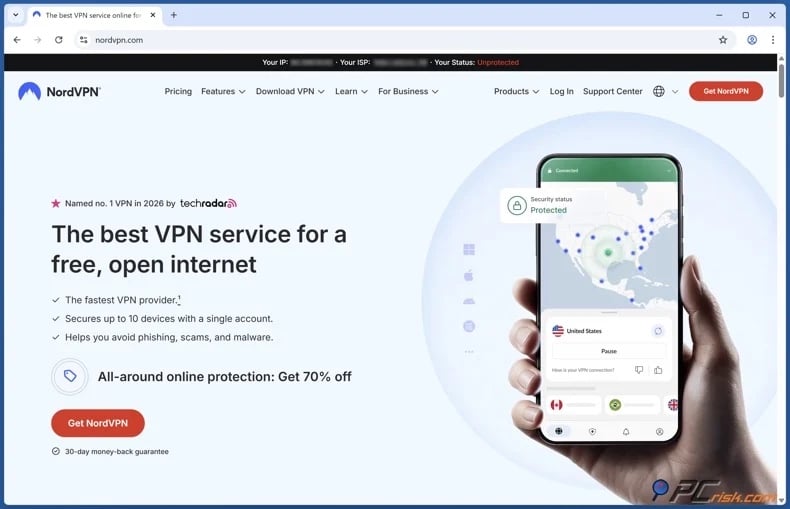
1. Choose a reputable VPN provider. For Binance, look for strong speeds, modern protocols, a proven privacy record, and applications compatible with your devices. In 2026, we recommend NordVPN due to its balanced performance, coverage, stability, and ease of use.
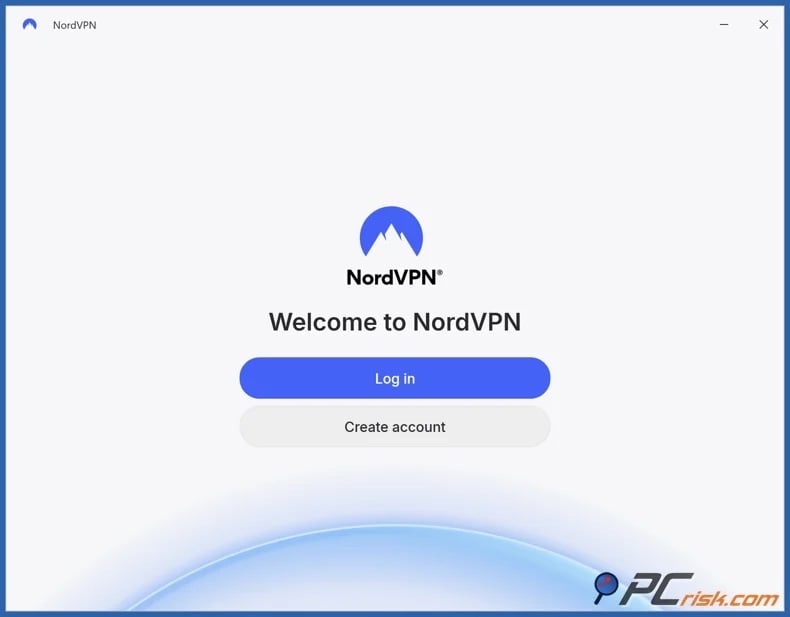
2. Install the VPN app on your laptop, desktop, and/or phone and sign in. Leading services support Windows, macOS, Linux, Android, iOS, and other platforms. Typically, a single subscription can cover multiple devices, which is important if you access Binance from several devices or while traveling.
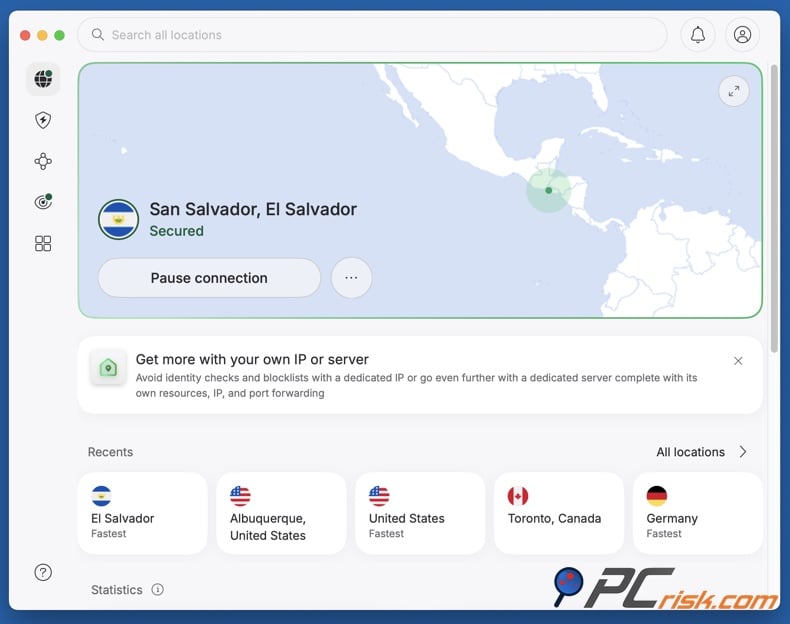
3. Connect to a server aligning with your use case. For public Wi-Fi security or bypassing local network blocks, select a nearby server for lower latency. When traveling, choose a location compatible with your account eligibility and residence. Shorter distances usually result in faster page loads and fewer interruptions.
4. Open Binance only after the VPN connection is active. If Binance is loaded before enabling the VPN, conflicts may arise from existing cookies, sessions, or cached geolocation data. Use a private window or clear website data to remove outdated session information before signing in. After signing in, verify that the features you need are supported for your account. On crypto platforms, a successful website load does not guarantee full account functionality. Funding, staking, derivatives, stock trading, and withdrawals may be restricted by local regulations or account checks.
It must be reiterated that a VPN cannot guarantee access to Binance or that the cryptocurrency exchange will accept or maintain your session, or allow use of all its products.
Best VPNs for Binance
The top VPNs for Binance offer fast, stable performance, strong privacy policies, broad server coverage, and reliable apps across devices. Speed and consistency are essential for exchange access, as Binance requires quick page loads, stable log-in sessions, and predictable interfaces, especially when traveling or switching networks.
Based on our research and in-house testing, we have picked our Top 5 VPNs for 2026:
1. NordVPN is our top overall recommendation. This VPN ranks first due to its strong balance of speed, extensive server network, independently audited no-logs policy, kill switch support, and broad device compatibility. In February 2026, NordVPN announced it had passed its sixth independent no-logs audit, further reinforcing its privacy credentials. For Binance users, these features deliver fast chart loads, reliable connections, and easy installation on both laptops and phones.
2. Surfshark is our recommendation for users with multiple devices. Its unlimited simultaneous connection policy allows one subscription to cover all phones, computers, tablets, and household devices. This is especially useful for those who monitor Binance on mobile but use a desktop for more in-depth activity. Surfshark also provides broad server coverage and strong speeds, providing responsive exchange interfaces.
3. Mullvad VPN is our leading recommendation for privacy. While it is not the most aggressive at unblocking content, it appeals to privacy-minded users. An example of this is requiring no personal information for registration (not even an email address), instead using anonymous numbered accounts and not traditional usernames or passwords. For those who want to minimize personal data shared with the provider, Mullvad VPN is the best choice.
4. Proton VPN is our recommendation for transparency and entry-level users. It provides a reputable paid service and one of the most respected free tiers available. Proton's free plan has no data limits, no ads, and no activity logging. For Binance, paid plans are preferable due to greater server selection and more stable speeds, but Proton VPN is a strong recommendation for users seeking a security-focused brand with a functional free tier.
5. ExpressVPN is our recommendation for an intuitive option. This VPN offers a polished interface and ease of troubleshooting. This is valuable for users who access Binance while traveling and prefer a stable, straightforward application over one with extensive features. ExpressVPN remains a strong premium choice for users seeking simplicity and reliability.
To summarize, NordVPN is the best all-around choice, Surfshark excels for multiple devices, Mullvad is ideal for privacy prioritizers, Proton VPN is best for transparency and cautious first-time users, and ExpressVPN suits those who value usability. While none can guarantee Binance access in restricted jurisdictions, each offers strong privacy, travel, and network reliability.
Can you use a free VPN to access Binance?
A free VPN may suffice for basic connectivity tests, but it is generally unsuitable for financial platforms. Cryptocurrency exchanges require stable, fast connections to support log-ins, KYC prompts, CAPTCHA tests, pricing panels, and funding flows. Frequent connection drops, IP changes, or routing through congested nodes can quickly degrade the user experience.
Top VPN ReviewsExclusive dealsExpert-tested · hands-on reviews→
The following are some of the main limitations and risks associated with free VPNs:
Limited and overcrowded server networks: free VPNs typically provide fewer locations and servers, resulting in congestion, higher latency, slower page loads, and increased connection instability. While these issues may be inconvenient for streaming, they are more problematic on exchange dashboards, where delays and reloads have greater impact.
Weaker trust models: while some free VPNs are reputable, many lack transparency, engage in aggressive upselling, or questionable data practices. These concerns are especially significant for services involving finance, identity verification, or asset access. Furthermore, free VPNs from untrustworthy providers can monetize user data and pose serious privacy threats. What is more, a "free VPN" is not an uncommon disguise for malware and other harmful software.
Limited support and troubleshooting: paid VPNs generally offer better support, more reliable applications, and additional tools for resolving log-in issues, poor routing, or dropped sessions. Free VPNs frequently lack these recovery options, which can be problematic if a Binance session fails or location checks are inconsistent.
Higher detection risk and session instability: exchange platforms often flag heavily reused data center IPs as high-risk. Free VPN exit nodes are more likely to be crowded, abused, or previously flagged. As a result, you may encounter more CAPTCHAs, increased log-in friction, and unstable session continuity.
If you require a free VPN, the free plan from Proton VPN is the most reliable option. Proton VPN states that its free tier has no data limits, no ads, and no activity logging, making it one of the few free VPNs without considerable concerns. However, a reputable paid VPN is still recommended for regular Binance use due to superior speed, location options, and support.
Common issues and solutions when accessing Binance with a VPN
Even with a reputable VPN, Binance access may be inconsistent. This does not necessarily indicate a poor VPN. Often, issues arise from conflicts between VPN routing, exchange risk controls, cached session data, or account eligibility. As a regulated financial service, Binance enforces stricter detection and compliance controls than typical web platforms.
The following are some of the main issues and solutions:
Site loads, but trading or funding does not work: this issue may occur if Binance detects inconsistencies between your VPN location, browser data, account region, or payment method. While the website may load through the VPN, trading, deposits, withdrawals, or certain products can fail if cookies, cached data, browser fingerprints, or app data indicate a different region. Additionally, Binance may restrict features based on your verified account residence, so using a VPN alone may not grant access to all services.
Potential solutions:
- Connect to a different VPN server, ideally in the country or region you wish to access.
- Clear cookies, cache, and site data for Binance, then open the site in a new browser session or private window.
- For the mobile app, clear the app cache or reinstall it.
- If available, test for DNS, WebRTC, or IP leaks.
- If available, try a different VPN protocol (some work better on certain networks).
- Try a different browser.
- If possible, try a different device.
- Confirm that the feature you want to use (e.g., fiat funding, spot trading, staking, futures, withdrawals, etc.) is available in your verified account region.
Frequent CAPTCHAs, log-in prompts, or security checks: issues that may result from reused VPN IPs, sudden location changes, or outdated browser session data. Connecting to the VPN after Binance is already open can also trigger inconsistent signals.
Potential solutions:
- Connect to the VPN before opening Binance.
- If possible, use a nearby server for a more natural-looking connection path and lower latency.
- Clear cookies and cached site data, or retry in a private browsing window.
- Switch servers if the current exit IP appears to be flagged or overloaded.
Pages load slowly or connection drops: exchange dashboards are sensitive to lag. A faraway VPN server, server congestion, or relying on weak Wi-Fi or unstable mobile data can disrupt Binance access even if the website is technically reachable.
Potential solutions:
- If possible, use a nearby server, especially if the goal is connection security rather than changing locations.
- Check your base Internet speed.
- If possible, use a wired connection or stronger Wi-Fi.
- If applicable, pause unrelated bandwidth-heavy activity, such as streams, downloads, background apps, or similar.
- If possible, use a premium VPN known for higher speeds and stable apps.
Mismatch between account status and VPN location: one of the most common Binance-specific problems. A VPN may make your traffic appear to come from one country, while your account profile, KYC record, funding method, or supported region indicates another.
Potential solutions:
- Ensure your account details are current and match.
- If you changed residence legitimately, update your personal information through the platform's official process.
- Remember that changing IP location does not change account eligibility.
Binance blocks your session entirely: sometimes the answer is not technical; it may simply be that your location or product is unsupported, or that the exchange may have imposed restrictions due to local laws or regulatory changes.
Potential solutions:
- Check current Binance region notices and official support pages.
- If you are in a restricted market, use the local Binance entity if one exists and is supported for you, such as Binance.us.
- Contact support rather than repeatedly trying to log in.
It is worth noting that reputable VPN providers generally offer superior troubleshooting resources and customer support compared to free VPNs. This is important because many access issues can be resolved if you can identify whether the problem relates to speed, stale cookies, account eligibility, or regional restrictions.
How to access Binance without a VPN?
Web proxies and the Tor Browser are common alternatives, but neither fully replaces a reliable consumer VPN for routine exchange access.
Web-based proxy
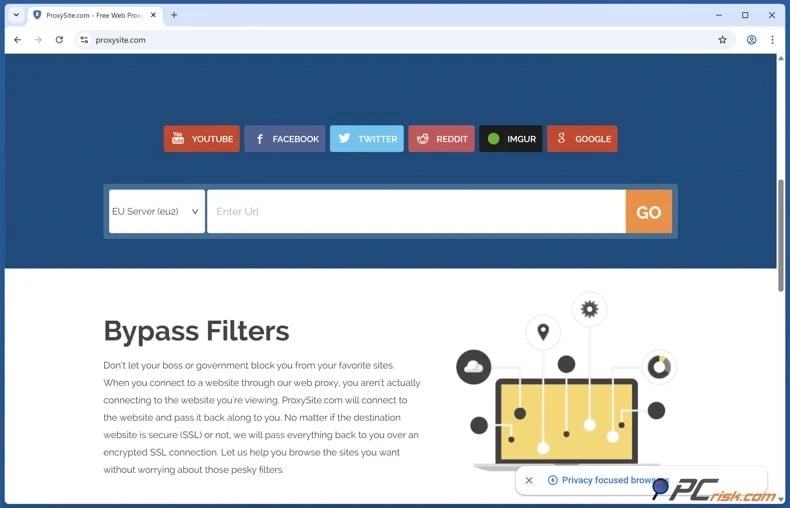
A web-based proxy acts as an intermediary between you and the website you visit. Instead of connecting directly to Binance, your browser connects to the proxy, which then relays your request. A proxy server is an intermediate program or computer used when navigating networks; essentially, a forward proxy sits in front of clients and communicates with sites on their behalf.
Proxies are simple to use and often require no installation, which makes them suitable for quickly testing website accessibility. However, they are generally unsuitable for financial log-ins, as most only cover browser traffic and may not provide end-to-end encryption. Many proxies are also less trustworthy than established VPN providers. On Binance, this can lead to session instability, reduced privacy, and increased risk of log-in issues or restricted features.
Tor Browser
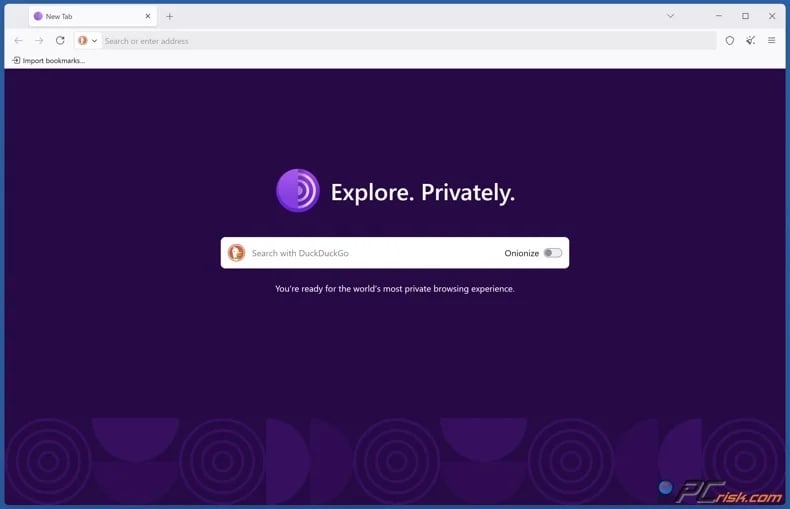
The Tor Browser is distinct in its focus on privacy. The Tor Project describes it as a browser designed to prevent tracking and surveillance and to help users bypass censorship. Instead of routing traffic through a single VPN server, Tor uses multiple relays within its network, providing stronger anonymity than standard browsing.
Tor excels at privacy and censorship resistance but lacks the speed and ease required for financial platforms. Onion routing increases latency, and many sites flag Tor exit traffic as high-risk. On Binance, this often results in slower performance, frequent CAPTCHA tests, log-in difficulties, or blocked access. While Tor is valuable for privacy-focused browsing or accessing restricted information, it is generally impractical for regular exchange use.
In summary, for consistent access to Binance while traveling or using public networks - a reputable VPN is usually the most practical option. Proxies are too limited, Tor is too slow, and both are prone to security issues on financial platforms.
Is using a VPN to access Binance legal?
In most countries, VPN use is legal. These tools are widely used for remote work, securing public Wi-Fi, protecting privacy, and safer browsing. Therefore, VPNs are standard and lawful to use in most regions. However, some countries regulate, restrict, or actively prohibit VPN use. Some notable examples include:
China - reports state that China has sought to ban non-state-approved VPNs, requiring approved services to use state network infrastructure. In practice, VPN use is heavily controlled.
Iran - reporting indicates that Iran made efforts to criminalize the use of "unauthorized" VPNs in February 2024, making VPN legality especially sensitive.
Russia - the country has continuously emphasized Internet sovereignty, and VPNs have been widely used by the population to bypass online control. Russia has previously attempted to restrict VPNs, and reporting from March 2026 indicates that Russia planned to intensify the crackdown.
Belarus - according to reports, several VPN services became inaccessible in Belarus in 2024, showing a restrictive and unstable environment for VPNs.
Iraq - 2014 reports stated that Iraq expanded Internet blocks and banned VPNs during a security crackdown. While this may not reflect the current situation, it continues as a well-documented example of state-level VPN restriction.
However, even if VPN use is legal, it does not eliminate legal responsibility. If a country bans cryptocurrency trading, restricts foreign exchanges, or prohibits a specific service - using a VPN does not make the activity lawful. What is more, a VPN does not exempt you from a platform's Terms of Service (ToS).
Some examples of countries with the most relevant Binance-specific legal risk include:
China - the country has imposed a blanket ban on cryptocurrency transactions and barred overseas exchanges from serving mainland investors online. Using Binance in China is legally risky, even if the platform is accessible.
Nepal - according to Nepal Rastra Bank, crypto trading (including Bitcoin) is illegal. Hence, using Binance in Nepal carries legal risk.
Morocco - The US Law Library of Congress notes that Morocco has a longstanding prohibition on cryptocurrency transactions under foreign-exchange rules, despite draft legislation suggesting possible future regulation.
To summarize, accessing Binance from a country where crypto trading is banned or where Binance is not authorized can result in more than a failed log-in. Consequences may include account restrictions, compliance actions, service termination, and prospective legal exposure. Therefore, the key question does not only query access possibility but also extends to whether using Binance is locally permitted.
In closing
In 2026, access to Binance is determined primarily by regulation, with technology playing a secondary role. While a VPN is capable of enhancing privacy, supporting travel, and helping bypass local network restrictions, it does not guarantee access to regulated cryptocurrency platforms. Access to Binance depends on jurisdiction, product type, account verification, and local licensing - and these are as important as your apparent IP address.
The key takeaway is simple: if Binance is legally available in your location, a reputable VPN can enhance privacy and security, particularly on public or managed networks. For 2026, NordVPN is the strongest overall choice, Surfshark is perfect for multi-device households, Mullvad VPN prioritizes privacy, Proton VPN offers the most credible free plan, and ExpressVPN is a reliable premium alternative.
Frequently Asked Questions (FAQ)
Why can't I access Binance?
You may be located in an unsupported country, US state, or jurisdiction where the Binance product you want is restricted. Access may also be limited due to account eligibility, KYC requirements, risk controls, or regulatory changes.
Where is Binance unavailable?
Availability depends on the product, but key restricted or high-risk areas include the United States (Binance.com), parts of the EU affected by 2026 service changes, the Netherlands after Binance's exit, and countries such as China, Nepal, and Morocco - where crypto or Binance use is restricted or legally risky.
How can I access Binance?
A VPN can help secure your traffic and may restore access, especially if the issue is a local network block or an unsafe public connection. However, it cannot guarantee access, as Binance enforces jurisdiction rules, account verification, and product-level restrictions.
Is it legal to access Binance with a VPN?
Using a VPN is legal in many countries, but not all. However, a VPN does not make accessing a restricted exchange lawful. If your jurisdiction bans crypto trading, restricts foreign exchanges, or prohibits certain VPN use - you may still face platform penalties or local legal consequences.
Share:
 Facebook
 X.com
X.com
 LinkedIn
 Copy Link

Karolis Liucveikis
Experienced software engineer, passionate about behavioral analysis of malicious apps
Author and general operator of PCrisk's News and Removal Guides section. Co-researcher working alongside Tomas to discover the latest threats and global trends in the cyber security world. Karolis has experience of over 8 years working in this branch. He attended Kaunas University of Technology and graduated with a degree in Software Development in 2017. Extremely passionate about technical aspects and behavior of various malicious applications.
▼ Show Discussion