
We may earn commissions from products we recommend. Learn more.
Best VPNs for online gambling in 2026 | Top 5 Picks

Best VPNs for online gambling in 2026
Online gambling and sports betting have grown rapidly, but access remains complex in many regions. In 2026, your ability to interact with these services depends on your location, the operator's licenses, and local regulations. Hence, a service that works at home - may display errors when you travel. Likewise, a casino game catalog may be available in one city but blocked in another.
This guide outlines why gambling websites are blocked, how geoblocking works, and where online betting is restricted. It also covers what a VPN (Virtual Private Network) can and cannot do, and which VPN features are important for gambling privacy.
Disclaimer: PCrisk.com neither promotes nor endorses the circumvention of gambling restrictions, geoblocks, or applicable laws. This article is intended solely for general informational purposes and does not constitute legal advice. If you choose to engage in online gambling, you are solely responsible for ensuring compliance with applicable laws and for adhering to the platform's Terms of Service (ToS).
 Our top-rated VPN
4.5/5 in our review. Our top pick of the year: almost no slowdown in our speed tests, and it unblocked Netflix, BBC iPlayer and Disney+ without trouble.
Table of Contents:
- Introduction
- Why are certain online gambling and sports betting websites inaccessible?
- Where is online gambling or sports betting illegal or restricted?
- How can a VPN help you access a gambling or sports betting websites?
- Accessing gambling and sports betting websites with a VPN in 2026
- Best VPNs to access gambling and sports betting websites
- Can you use a free VPN to access gambling and sports betting websites?
- Common issues and solutions when accessing gambling and sports betting sites with a VPN
- How to access gambling and sports betting websites without a VPN?
- Is using a VPN to access gambling and sports betting websites legal?
- In closing
- Frequently Asked Questions (FAQ)
Why are certain online gambling and sports betting websites inaccessible?
Online betting is not a single global market; it is not governed by the same rules and requirements. This sector comprises diverse laws, licensing systems, and enforcement methods that can differ significantly between countries and even regions of the same country. Therefore, if a website blocks you - it is typically due to one or more reasons outlined below.
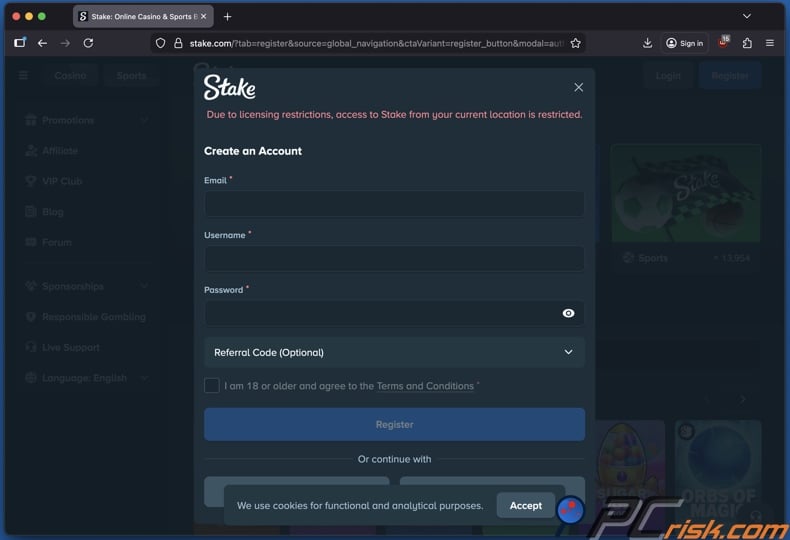
The most common reasons for gambling site unavailability are licensing requirements and market division. In regulated markets, operators must obtain a local license to legally offer betting or casino services within that jurisdiction. This defines what products can be offered, who may be served, and the consumer protection standards that apply.
Hence, accessing the same domain may be an entirely different experience depending on your location. One country may display the website's full catalog, another may offer a read-only view where users can browse but cannot sign up or place wagers. And if a service is not authorized to operate in that region, the site can be completely blocked. In regulated environments, operators must ensure that bettors are physically within the permitted jurisdiction when placing wagers. This requirement is standard in US state markets and other region-based licensing systems.
Modern geolocation enforcement often uses more than just IP addresses to determine users' locations. It can combine IP location with GPS, Wi-Fi signals, and other device/network indicators. Geolocation verification in online gambling and betting can be paramount for compliance and fraud prevention. Therefore, bypassing the geoblocks utilized by services that rely on a multitude of factors to ascertain visitors' locations can be complex and require significant technical expertise.
Identity verification (KYC), age checks, and payment controls can render a website "inaccessible", although the domain is accessible. Operators may be required to verify a customer's identity and age before allowing them to proceed. For example, this is a requirement by the UK Gambling Commission levied on online gambling businesses.
Regulator or ISP-level blocking is another approach. Some regulators detail enforcement actions or actively block unlicensed gambling sites. For example, the Australian Communications and Media Authority (ACMA) defines prohibited interactive gambling services, such as online casinos and in-play online sports betting, and maintains lists and procedures for blocking illegal gambling websites. In France, the Autorité nationale des jeux (ANJ) defines limited legal categories of online gambling and details illegal offerings, including a non-exhaustive list of administratively blocked sites.
Website availability can also be limited by network or policy restrictions that are unrelated to gambling law. Workplaces, schools, hotels, and public Wi-Fi networks often block gambling services as part of their acceptable use policies.
Where is online gambling or sports betting illegal or restricted?
Online gambling regulations frequently change, and enforcement differs by country. Some countries ban most betting but permit state lotteries or specific channels, while others allow sports betting but prohibit casino games. Online gambling might be monopolized or follow a narrow licensing model, with authorities actively targeting unlicensed operators through payment restrictions, platform compliance requirements, or ISP-level blocking.
The following are some countries where online gambling is prohibited or heavily restricted:
Brunei - the Common Gaming Houses Act prohibits gambling by criminalizing the operation, management, and participation in gaming houses and lottery activities. The law is applicable to both operators and participants, and potential punishments for violations range from fines to imprisonment. Basically, it is a near-total ban on gambling, including most online variations.
United Arab Emirates (UAE) - gambling (including digital iterations) is also prohibited. The UAE Penal Code imposes criminal penalties for participation and facilitation in the form of fines and imprisonment.
The following are some countries where online gambling is limited by category or licensing:
Australia - the ACMA enforces restrictions on certain gambling services, including online casinos and in-play sports betting. It also provides enforcement information on blocked illegal gambling websites.
Denmark - the Danish Gambling Authority (Spillemyndigheden) requires operators to obtain a license to offer online casino or betting services and specifies the available license types.
France - the ANJ authorizes only specific online gambling categories, such as sports betting, horse racing betting, and poker through licensed channels. Online casinos are prohibited.
Singapore - the Gambling Regulatory Authority of Singapore (GRA) allows limited and controlled licensing for betting, lottery, and gaming activities under the Gambling Control Act 2022.
United States (US) - the laws governing online gambling and sports betting vary state-by-state. Specific categories that are legal or illegal, regulations and requirements differ depending on the state.
To elaborate, online casino legality in the US is determined by each state. Some legalize and regulate to generate tax revenue and protect consumers. Others prohibit them due to concerns about gambling addiction, social impact, or conflicts with land-based and tribal gaming. Hence, there are only a few states where online casinos are regulated but fully legal.
US states where online casinos are legal:
| Connecticut | New Jersey | West Virginia |
| Delaware | Pennsylvania | |
| Michigan | Rhode Island |
Sports betting is legal in 39 states and Washington, D.C. However, there is a difference between retail (in-person) and online/mobile sports betting. As of early 2026, the latter is legal in 31 states and Washington, D.C.
US states where online/mobile sports betting is legal:
| Arizona | Louisiana | Ohio |
| Arkansas | Maine | Oregon |
| Colorado | Maryland | Pennsylvania |
| Connecticut | Massachusetts | Rhode Island |
| Delaware | Michigan | Tennessee |
| Florida | Missouri | Vermont |
| Illinois | Nevada | Virginia |
| Indiana | New Hampshire | West Virginia |
| Iowa | New Jersey | Wyoming |
| Kansas | New York | Washington, D.C. |
| Kentucky | North Carolina |
US states where sports betting is legal but online/mobile sports betting is tightly limited or unavailable:
| Mississippi | New Mexico | Washington |
| Montana | North Dakota | Wisconsin |
| Nebraska | South Dakota |
US states where sports betting is illegal:
| Alabama | Hawaii | South Carolina |
| Alaska | Idaho | Texas |
| California | Minnesota | Utah |
| Georgia | Oklahoma |
It must be mentioned that the legality of online gambling and sports betting is constantly changing - with new laws, regulatory changes, and market developments emerging across jurisdictions. Therefore, staying informed about local laws and regulatory updates is crucial for both operators and users.
How can a VPN help you access a gambling or sports betting website?
VPNs (Virtual Private Networks) operate by encrypting and routing your Internet traffic through a VPN server. These tools can mask your IP address and change your apparent location - thus, minimizing what your ISP (Internet Service Provider) and local network can perceive about your browsing.
VPNs are particularly effective when bypassing network-level restrictions. For example, if a workplace, school, hotel, or public Wi-Fi blocks gambling-related websites - a VPN can often restore access by preventing the network from inspecting or filtering your traffic.
VPN services may also function as a geoblock workaround since many online gambling and sports betting platforms restrict access using IP-based geolocation. In some instances, by routing your connection through a server in another region, a VPN may enable access to sites that would otherwise be unavailable.
VPNs also enhance privacy and security. When accessing betting accounts, handling personal information, or making transactions on public or unsecured networks - VPN encryption reduces exposure to monitoring by ISPs, network administrators, and malicious actors.
However, websites may block IP addresses associated with VPNs, and some use additional methods to check visitors' locations (such as GPS or Wi-Fi data). Therefore, no VPN service can guarantee access to any given site. It must also be emphasized that using a tool like a VPN does not change applicable laws or eliminate legal responsibility. Hence, users should remain aware of local regulations and use these tools responsibly.
Online gambling and sports betting is associated with a variety of risks. Imitator pages, malicious sites, and fake applications can endanger the integrity of your device. Combo Cleaner can protect your system by detecting and removing unwanted software and malware.
 Made by RCS LT, the company behind PCrisk
- Detect malware already on the device
- Block phishing pages once you open them
- Remove adware or browser hijackers
- Scans for free and shows what it finds
- Removes it with a licence, 7-day free trial
- Blocks scam and phishing sites in the browser (Windows)
Accessing gambling and sports betting websites with a VPN in 2026
When using a VPN for gambling-related browsing, consider it primarily as a tool for enhancing your privacy and securing your connection. Most licensed gambling and sports betting platforms implement geoblocking, identity checks, and location verification to comply with regulations - hence, a VPN may not always successfully grant you access. Nonetheless, VPNs are effective security tools that can strengthen the safety of your browsing data, especially on shared and public networks.
The standard step-by-step VPN setup guide is as follows:
1. Pick a reputable VPN provider. For betting, prioritize modern encryption, a "kill switch", and DNS leak protection. Broad server coverage and strong speeds will give you the best odds at bypassing geoblocks/geo-restrictions and having a smooth browsing experience. We recommend NordVPN - our Top VPN Choice for 2026.
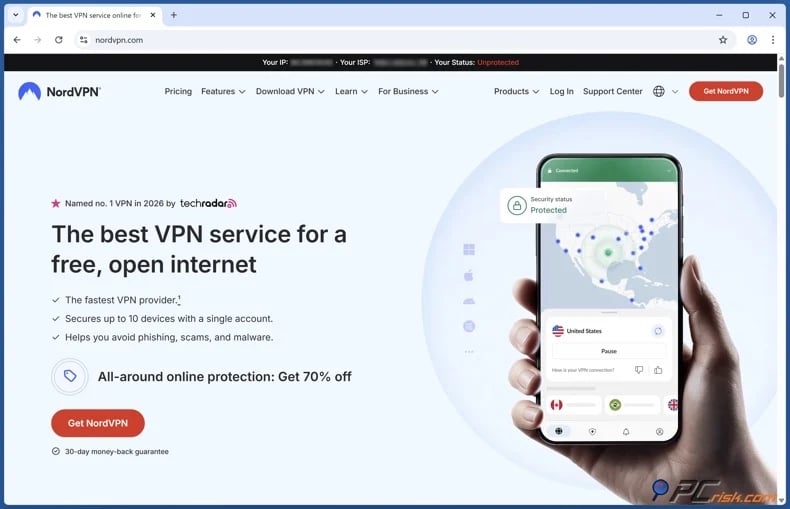
2. Download and install the VPN app and log in. Major services support multiple devices and platforms on one subscription (Windows, macOS, iOS, Android, etc.). Sports betting is often done on phones, while other gambling is more commonly engaged in on desktops. Ensure that your VPN supports the devices you are planning to use.
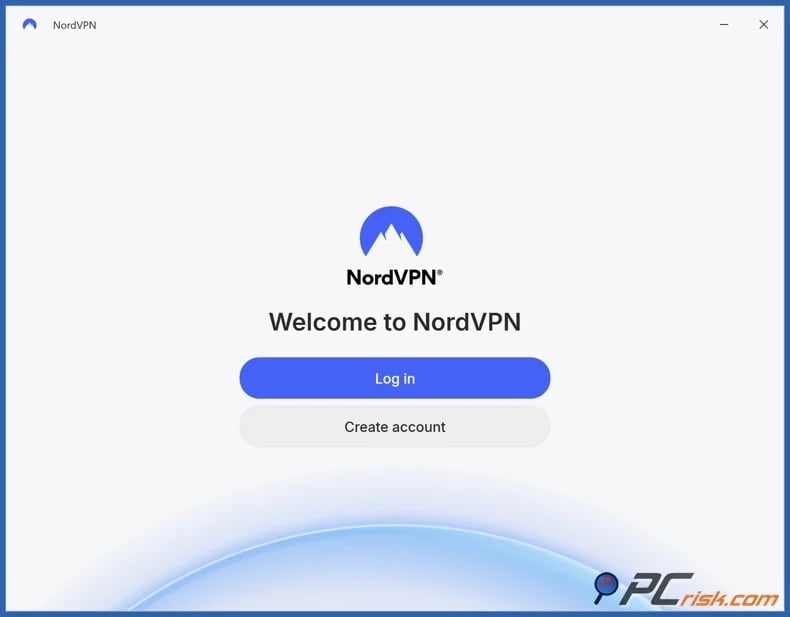
3. Select a sensible server location. If you are traveling and want to bet legally with improved privacy, choose a nearby server within the same country to maintain speed and minimize latency. Latency is important for live betting, and even fast VPNs may add delays based on distance and routing.
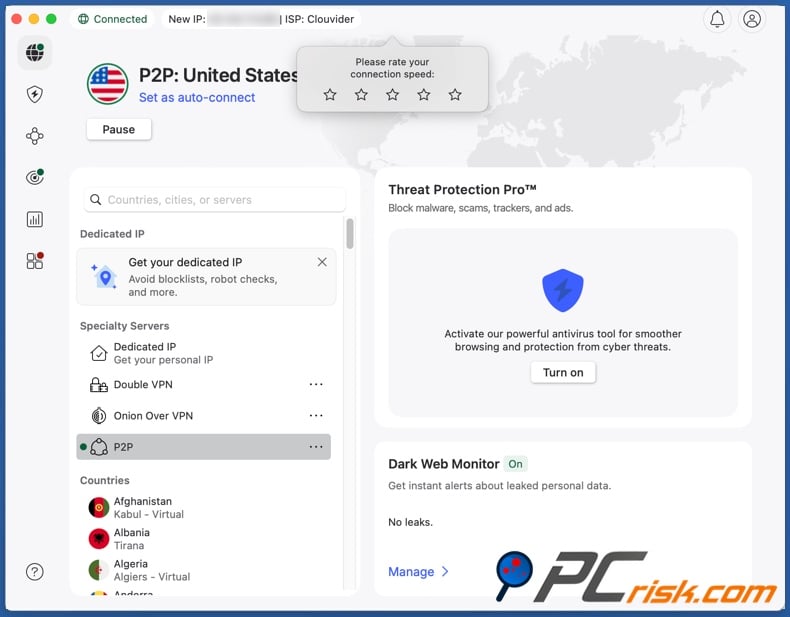
4. Open the website and begin browsing. Note that betting sites may store session and location data. If you connect to a VPN after loading the webpage, stored cookies, cached routing, or session flags may persist. Therefore, clear cookies/cache and use a private browsing window before trying to access the website again.
Browse before proceeding to account actions. Many sites enforce stricter controls at log-in, deposit, or withdrawal. VPN detection and KYC controls are most likely to activate at these stages. If the platform detects your VPN, avoid repeated attempts to bypass restrictions. Frequent location changes and failed checks may appear as indicators of account takeover or fraudulent activity.
Best VPNs to access gambling and sports betting websites
We determined our top five VPN services for 2026 based on the following criteria - security, privacy controls, performance, and overall reliability. For an in-depth comparison of these services, read our dedicated article.




1. NordVPN
This VPN is our top choice for its reliable performance, extensive server network, speed, and security. NordVPN has more than 9,000 servers in over 167 countries.
2. Surfshark
This VPN is known for its value and flexible device policy, making it ideal for households. Surfshark does not limit device connections on its 4,500-server network, which covers over 100 countries.
3. Mullvad VPN
This VPN is renowned for its privacy-first stance. Mullvad VPN has a strict no-logs policy, registration does not require personal details, and the service offers anonymous payment options. However, this VPN's server network is smaller than its competitors - 580 servers in 50 countries.
4. Proton VPN
This VPN emphasizes security and transparency. Its free plan is noteworthy; there are no data caps, but the server selection is limited. The paid tier network covers over 18,000 servers in 134 countries.
5. ExpressVPN
This VPN is an easy-to-use premium service. While pricier than many competitors, ExpressVPN has a large network of over 3,000 servers in 105 countries and offers high speeds and excellent security.
It must be stressed that no VPN service can guarantee access to restricted platforms, as providers may block these connections. Using online gambling or sports betting services where they are illegal may result in account suspension, financial loss, or legal penalties - including fines and even imprisonment.
Can you use a free VPN to access gambling and sports betting websites?
Free VPN services are rarely suitable for accessing online gambling or sports betting platforms, as they typically lack the performance and security required. Having consistent access to reputable regulated operators is difficult with a free VPN.
These services tend to use shared, frequently flagged IP addresses and may not offer sufficient data protection. Therefore, they are more appropriate for basic browsing privacy than enabling access to platforms that enforce strict geographic and compliance controls.
Free VPNs have inherent limitations, often tied to the provider's business model:
Data caps - monthly or daily data limits that can be restrictive even with moderate use. Activities like live betting, streaming odds, or keeping a session open for long periods can quickly use up available bandwidth.
Speed limits - speed reduction can be used to manage server load and encourage users to upgrade to paid plans. Reduced speeds can cause slow page loads, delays in placing bets, and poor responsiveness.
Small server networks - unlike premium services, free VPNs typically offer a smaller number of server locations. This reduces flexibility and increases the likelihood that available servers will be flagged or blocked by gambling platforms.
Overcrowded servers - these servers are often congested, which can result in unstable connections, frequent disconnects, and inconsistent performance. Overcrowding also increases the chances of flagged or blocked IPs.
What is more, free VPNs are associated with serious risks:
Data exposure and logging practices - some VPN providers log browsing activity, inject ads, or include unwanted components (even spyware), thus compromising user privacy.
Malicious or poorly maintained apps - free VPN apps may include trackers, weak encryption, or even malware.
Credential and financial risk - accessing gambling accounts through untrusted VPNs increases the risk of data interception or misuse, especially if encryption standards are poor.
If you have decided to use a free VPN service, choose a reputable provider. We recommend the free tier of Proton VPN. However, remember that even leading providers might be unable to bypass regulatory controls. Gambling platforms are built to detect and block location masking, and the technical, financial, and legal risks can outweigh the potential benefit.
Common issues and solutions when accessing gambling and sports betting sites with a VPN
In many cases, VPN problems with accessing gambling and sports betting websites are not technical issues. Issues typically arise from intentional safeguards on regulated platforms. Licensing obligations require operators to verify user location, and they often rely on systems that go beyond IP address checks.
Common technical limitations:
Advanced geolocation checks - operators use IP intelligence, GPS data (mobile devices), Wi-Fi triangulation, browser fingerprinting, and timezone analysis. Hence, conflicting signals may result in flagged/denied access.
IP reputation and blocklists - VPN IP ranges (especially shared or public addresses) are monitored and added to databases used by betting platforms. Once flagged, these IPs may be subjected to repeated CAPTCHA challenges or blocked.
Account verification (KYC requirements) - licensed platforms require identity verification (e.g., ID documents, proof of address, payment method checks, etc.). Therefore, even if a VPN provides temporary access, mismatched personal data may lead to account suspension or disrupt fund withdrawal.
Payment and withdrawal restrictions - deposits may be accepted, but withdrawals are subject to stricter review. If discrepancies in location or identity are found, funds may be frozen pending investigation.
Connection instability - VPN routing can cause latency, packet loss, or sudden IP changes. In live betting, this may lead to missed bets, rejected wagers, or odds changing before confirmation.
The following are some of the common issues users encounter when accessing gambling and betting sites with a VPN:
Website continues to show your actual country - may occur if the site relies on more than just your IP address for geolocation. Cookies, cached data, account history, browser fingerprinting, and device signals can all disclose your region.
Potential solutions:
- Connect to your VPN before opening the website.
- Clear cookies and cache before accessing the website.
- Use a private or incognito browser window.
- Ensure your device timezone matches the VPN region.
- (If available) Enable DNS-leak protection in your VPN app.
Website loads but blocks log-ins, deposits, or withdrawals - some platforms permit basic browsing over VPN connections but use stricter checks for log-ins and financial transactions. Hence, at this stage, you may encounter identity verification (KYC), payment validation, or other checks.
Potential solutions:
- Do not switch servers mid-session.
- Ensure your account details match your location and identity.
- Avoid mismatches between payment method and account region.
App states that you are "outside the permitted area" - usually, this means that the platform is using GPS or Wi-Fi-based geolocation rather than solely your IP address. Mobile apps often require precise physical location data.
Potential solutions:
- (If the app permits it) Disable location services.
- Use the browser version instead of the app.
Repeated CAPTCHA prompts or continuous verification screens - these challenges can indicate that the VPN's IP address may be flagged as "suspicious". Shared VPN servers are commonly linked to automated traffic or misuse.
Potential solutions:
- Switch to a different server in the same region.
- Avoid rapidly reconnecting or changing IPs.
- (If this data is available in your VPN) Connect to a less crowded server.
- Clear cookies and cache.
- (If available) Set a dedicated IP to avoid shared-IP reputation issues (note that this may reduce anonymity).
Your account got flagged for "suspicious activity" - sudden changes in log-in location (especially across countries) can resemble account takeover attempts. VPN usage can serve as a fraud signal, leading to additional verification checks, temporary account restrictions, or blocked transactions.
Potential solutions:
- Use a consistent VPN setup and server location.
- Avoid frequent server switches.
- Contact platform support if your account is locked.
Connection is too slow for live betting - VPN usage entails some speed loss due to encryption and routing through remote servers. Distance and network congestion can exacerbate the issue.
Potential solutions:
- Connect to a geographically closer server.
- (If this data is available in your VPN) Use a less crowded server.
- Avoid peak server usage times.
- (If available) Try a different VPN protocol (certain ones work better on some networks).
- Check your base Internet speed.
It is worth mentioning that reputable VPN services offer reliable customer support that may be able to resolve any issues you experience when accessing gambling or sports betting websites.
Additionally, keep in mind that gambling platforms are designed to detect and prevent location masking. The technical, financial, and legal risks may outweigh any perceived benefits of accessing these websites from a restricted location.
How to access gambling and sports betting websites without a VPN?
Open (web-based) proxies and the Tor browser are two alternatives to VPNs. However, they have significant limitations, especially when accessing regulated gambling and sports betting platforms. These tools are generally less reliable than VPNs and may introduce additional security and access risks.
Open proxies (web-based proxies)
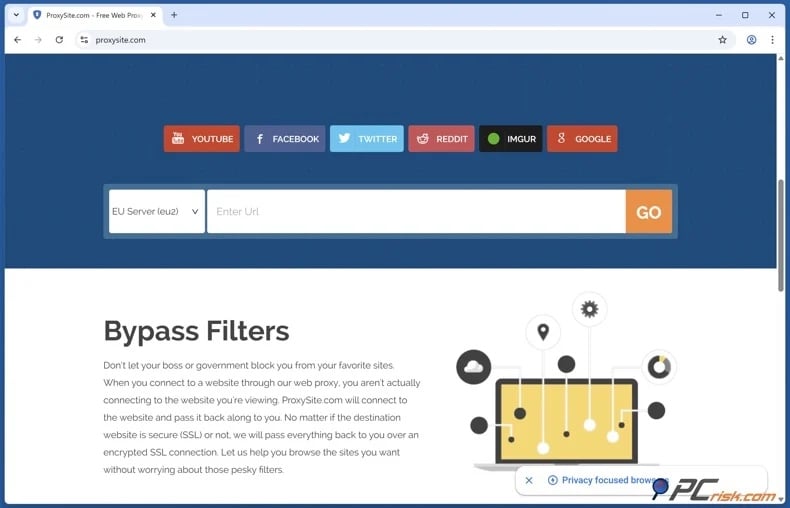
An open proxy serves as a "middleman" between your device and the destination website. Rather than connecting directly, your traffic is routed through a third-party server that forwards your requests and returns the responses. However, this setup raises several concerns:
Limited or no encryption - many open proxies do not provide end-to-end encryption. Hence, the proxy operator or any intermediary may monitor, log, or modify your traffic. It is noteworthy that there is often no transparency concerning user data handling.
High abuse rates and blocked IPs - open proxy IP addresses are widely used and commonly linked to spam, scraping, and other automated activities. Gambling platforms typically block these IP ranges by default or require strict verification.
Unreliable performance - free web-based proxies can be slow, unstable, and prone to disconnections. This makes them unsuitable for activities that require consistent connectivity, such as live betting or account management.
Security risks - open proxies are usually operated by unknown parties, and that carries with it threats of data interception, malicious content injection, and credential exposure.
Tor Browser
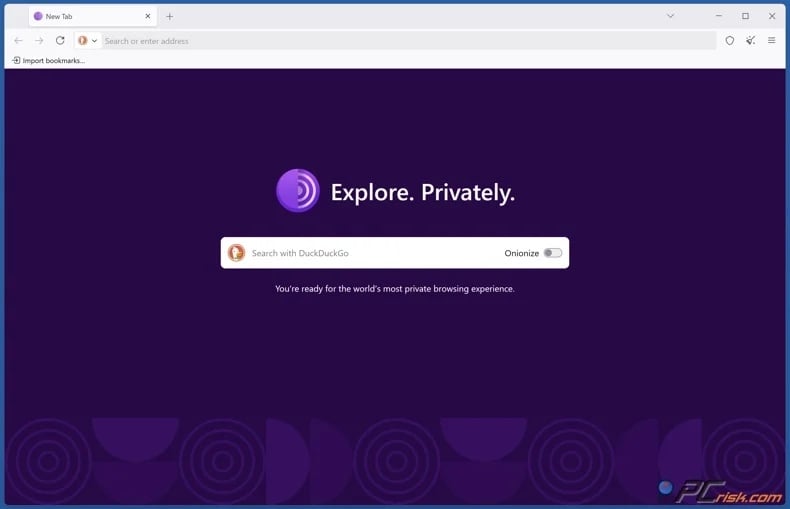
The Tor Browser provides strong anonymity by routing traffic through multiple relays in a distributed network. Although Tor offers valuable privacy benefits, it poses several challenges for gambling and betting platforms:
Slower connection speeds - Tor routes traffic through several relays that are commonly located in different countries. Naturally, this process entails speed reduction, which can negatively affect time-sensitive activities such as live betting.
Blocked exit nodes - many websites, including gambling platforms, block Tor exit nodes because these IP addresses are publicly known and often linked to abuse or automated activity.
Incompatibility with verification systems - gambling platforms depend on geolocation checks, identity verification (KYC), and fraud detection. Tor obscures location data, which conflicts with these requirements and often leads to restricted access or failed verification.
Frequent CAPTCHA and access challenges - because of shared exit nodes or previous misuse, users may face persistent CAPTCHA prompts, limited functionality, or complete denial of access.
Monitored or malicious exit nodes - traffic leaving the Tor network passes through an exit node, which may observe unencrypted data. This is especially risky when accessing gambling and sports betting sites, the accounts on which can contain personal or financial information.
To summarize, while open proxies and the Tor browser can hide your IP address, they are usually ineffective for accessing regulated gambling platforms. Open proxies are insecure and often blocked, while Tor sacrifices performance and compatibility for anonymity. Reputable VPNs are a better solution for accessing services that require stable connections and performance.
Is using a VPN to access gambling and sports betting websites legal?
There is a difference between the legality of VPNs and online gambling or sports betting. More information on the latter is available in the "Where is online gambling or sports betting illegal or restricted?" section of this article. Whether using a VPN is legal is dependent on your actual location. VPN services are completely legal in many countries; however, using these tools for illegal activity does not remove legal accountability.
Below are some of the countries where VPN use is restricted, regulated, or subject to government control. Enforcement and practical accessibility can vary.
Belarus - VPN services and anonymity tools such as Tor have been restricted since 2015 to limit access to blocked content. While VPN access may still be possible in some instances, it is often disrupted and monitored.
China - VPN usage is regulated under cybersecurity laws. Only government-approved VPNs are allowed for business or official use. Unauthorized VPNs are routinely blocked.
Egypt - VPNs are not explicitly banned, but many VPN services and related websites are blocked. Enforcement is inconsistent, and access is often unreliable.
Iran - VPN use is widespread but regulated. Only government-approved VPNs are officially permitted, and authorities periodically block unauthorized VPN traffic, especially during political unrest.
Iraq - VPN restrictions occur intermittently, particularly during exams or periods of unrest when Internet controls are tightened.
Kazakhstan - authorities have implemented measures to intercept encrypted traffic and have disrupted VPN services during periods of political tension.
North Korea - Internet access is highly restricted. Although legal details are scarce, unauthorized tools such as VPNs are effectively prohibited.
Oman - VPN use is legal for businesses with authorization. Home users may face penalties for misuse, especially when accessing restricted services or content.
Russia - VPN use is not explicitly illegal, but providers must comply with government restrictions. Efforts are made to limit the availability and promotion of non-compliant VPNs.
Turkey - VPNs are not illegal, but authorities periodically block access to certain services and Tor, particularly during political events or unrest.
Turkmenistan - VPN use is heavily restricted, and access to external Internet services is tightly controlled by the state. Attempts to use VPNs may result in penalties or service disruptions.
United Arab Emirates (UAE) - VPN use is legal, but using a VPN to commit or conceal illegal activity, including accessing restricted services (such as gambling), can result in fines or penalties. Enforcement depends on what a VPN is used for rather than the technology itself.
It must be reiterated that even where VPN usage is legal, illegal activities carry the same legal repercussions. Laws regarding these tools and online gambling and betting may change. Therefore, always keep up-to-date with current law.
In closing
In 2026, access to gambling and sports betting websites is determined by licensing frameworks, geo-blocking, and compliance systems that verify user location and identity. Therefore, a VPN remains a valuable tool, especially for enhancing cybersecurity. It encrypts Internet traffic, protects data on public or unsecured networks, and may help with some network-level restrictions. However, access to regulated betting platforms often requires multiple verification steps, including geolocation and anti-fraud measures, which can affect VPN reliability.
Our top pick of the year: almost no slowdown in our speed tests, and it unblocked Netflix, BBC iPlayer and Disney+ without trouble. $3.39/mo on the 2-year plan or $4.99/mo on the 1-year plan, 30-day money-back guarantee. Compare all three
For users who bet legally and seek additional privacy, a reputable VPN provider can offer significant benefits. Features like DNS-leak protection and a "kill switch" feature help secure data, and a consistent connection setup can minimize interruptions. VPNs should be used to enhance online security and privacy, while remaining mindful of platform policies and regional regulations.
Frequently Asked Questions (FAQ)
Why can't I access a gambling or sports betting website?
Access is typically restricted because the service is not licensed in your location. Most sites use geoblocking and possibly other methods to check visitors' locations. Another reason for the platform's unavailability could be because your network is blocking gambling content.
How can I access a blocked or restricted gambling or sports betting website?
If your local network blocks access, a VPN may help. However, if the site is restricted due to legal or licensing issues in your region, using a VPN might not suffice or change its legal stance.
Is it legal to access gambling or sports betting websites using a VPN?
VPNs are legal in many countries, though some impose restrictions. Even where VPNs are permitted, using one does not change the legality of online gambling in your region or your compliance with the website's Terms of Service (ToS).
Share:
 Facebook
 X.com
X.com
 LinkedIn
 Copy Link

Karolis Liucveikis
Experienced software engineer, passionate about behavioral analysis of malicious apps
Author and general operator of PCrisk's News and Removal Guides section. Co-researcher working alongside Tomas to discover the latest threats and global trends in the cyber security world. Karolis has experience of over 8 years working in this branch. He attended Kaunas University of Technology and graduated with a degree in Software Development in 2017. Extremely passionate about technical aspects and behavior of various malicious applications.
▼ Show Discussion