
We may earn commissions from products we recommend. Learn more.
Best antivirus software with built-in VPN in 2026 | Top 5 picks

Best antivirus software with built-in VPN in 2026 | Top 5 picks
In 2026, choosing antivirus software and a VPN (Virtual Private Network) service is a different experience - the distinction between these tools has blurred. Many security suites now combine both technologies in a single subscription, thereby simplifying setup, reducing app clutter, and providing solid protection across Windows, macOS, Android, and iPhone.
However, not all "antivirus with VPN" packages offer the same value. Some provide only limited VPN access, others reserve full VPN features for premium tiers, and some include them as a separate module under the same brand. This article overviews the usefulness of antivirus and VPN software, as well as highlights products by evaluating them specifically for security and VPN quality, and overall practicality for daily use.
Table of Contents:
- Introduction
- Do I need an antivirus?
- What security threats can antivirus software protect me from?
- Do I need a VPN?
- Best antivirus with built-in VPN comparison
- Best antivirus apps with built-in VPN in 2026
- How we test antivirus software
- Will an antivirus app with built-in VPN slow down my devices?
- In closing
- Frequently Asked Questions (FAQ)
Do I need an antivirus?
Antivirus software remains important, despite modern devices having built-in defenses and browsers providing stronger security. Google Safe Browsing reports protecting over five billion devices and warns users about dangerous websites or downloads. However, threats such as credential theft, malicious attachments, malware, scam pages, and exploit-driven attacks remain widespread. According to Verizon's 2026 DBIR (Data Breach Investigations Report), 31% of breaches begin with software vulnerabilities, 48% involve ransomware, and mobile-focused lures are becoming increasingly effective. Reputable antivirus software is crucial because it offers behavior monitoring, web filtering, real-time malware detection, ransomware protection, and cleanup tools that browser and operating system protections may not fully address.
Antivirus software is a critical component of a layered security model, but it is not a complete solution. The Federal Trade Commission (FTC) continues to recommend automatic updates for security software, regular device updates, enabling multi-factor authentication (2FA/MFA), and maintaining backups. Quality antivirus supports this approach by detecting malicious files, blocking harmful domains, and providing warnings before threats can endanger device integrity or user safety.
Even if you merely browse, stream, shop online, or occasionally open email attachments - you remain a target. Attackers do not target enterprises exclusively; they also pursue individuals with saved passwords, payment cards, cloud log-ins, tax documents, and social media accounts. Due to this, consumer security suites remain essential.
What security threats can antivirus software protect me from?
Viruses, scams, and related threats remain current concerns, not just issues from the early Windows era. The Cybersecurity and Infrastructure Security Agency (CISA) continues to classify malware, phishing, and ransomware as persistent mainstream threats. Similarly, Google's Safe Browsing highlights ongoing risks, including malware, phishing, social engineering, malicious browser extensions, and harmful downloads across multiple platforms. Therefore, the attack surface has expanded rather than diminished.
The following are some of the most common threats:
Traditional malware: covers malicious software such as worms, file-infecting malware, loaders, and backdoors. While many infections now begin with phishing or scam websites, oftentimes the end goal is malware delivery. Effective antivirus solutions can detect and quarantine or remove malicious code before or soon after it reaches your device.
Ransomware: a prevalent malware type with one of the most damaging consequences. Typically, ransomware works by encrypting files and rendering them inaccessible. In some cases, especially when this malware is leveraged against large entities, it also steals sensitive data from compromised networks. The purpose of these infections is to extract payment - a ransom - for file recovery. In instances involving data theft, it is used as a double extortion tactic - to pressure victims into paying under threat of leaking the extracted information. Basically, for home users, a ransomware attack can result in access loss to photos, personal projects, work files, and backups. It is expressly advised against complying with the ransom demands, as that not only results in potentially significant financial loss but also supports the criminal activity. In addition to signature-based detection, antivirus suites with robust anti-ransomware features employ behavioral monitoring and protected folders to protect systems from this malware.
Phishing and scam sites: phishing scams frequently rely on emails, DMs/PMs (Direct/Private Messages), and SMSes to obtain passwords, account numbers, debit/credit card details, and other personal information. Refund scams and other types of schemes are spread through these messages as well. Deceptive webpages often imitate official or legitimate-looking log-in pages and payment forms. Fake threat alerts are also prevalent, particularly for tech support scams. Due to the prevalence of these threats, modern antivirus solutions go beyond file scanning and include features such as blocking malicious links, warning about spoofed pages, and providing browser or DNS-level web protection to reduce the risk of credential theft.
Trojans, spyware, and infostealers: specially designed malware focused on stealing browser cookies, saved passwords, cryptocurrency wallet data, session tokens, and account credentials - rather than causing obvious system disruptions. Credential theft is a significant risk in both phishing and malware attacks. Antivirus software mitigates these threats by scanning downloads, monitoring suspicious activity, and blocking known malicious payloads before data can be exfiltrated.
Malicious attachments and downloads: many attacks begin with a document, archive, installer, or script that looks harmless. Phishing messages frequently direct users to malicious links or files. High-end antivirus suites extend protection beyond the browser by scanning local files, email attachments, scripts, USB content, and application installers.
Potentially unwanted applications, adware, and browser hijackers: not every threat is a high-risk ransomware. Ad injectors, fake optimizers, unwanted extensions, and bundled PUAs can disrupt browsing, compromise data, and increase vulnerability to more serious threats. Effective antivirus software can detect and remove this software before it can begin causing continuous redirects, fake alerts, or privacy breaches.
Mobile scams and cross-device abuse: mobile devices are not exempt and are just as much a target for scams and malicious apps. Reporting indicates that mobile-focused attack lures are generating higher click rates. Many premium antivirus suites now include coverage for phones and tablets as well as desktops - thus allowing households to protect all major devices under a single license.
To summarize, a reputable antivirus does not eliminate risk or replace careful habits, regular updates, or backups. However, it significantly improves your protection by providing an additional layer between user errors and serious harm. The importance of antivirus software is not overstated, as modern threats are fast, rely heavily on social engineering, and increasingly target user identity and finances.
Do I need a VPN?
While a VPN (Virtual Private Network) is not as universally essential as antivirus software, it is an incredibly useful tool. Basically, a VPN creates a secure "tunnel" linking your device to the VPN provider and, in the process, conceals your IP address and encrypts your Internet traffic. VPNs offer a level of anonymity, and their common uses include safer public Wi-Fi browsing, remote work, and bypassing Internet restrictions.
A VPN is valuable for three main reasons. First, it strengthens privacy by hiding your IP address from websites and services, which makes it more difficult for others on the same network to access your traffic. Second, it is useful on managed or filtered networks, such as those at schools, workplaces, hotels, or airports, where traffic may be monitored or restricted. Third, it may enable access to certain sites or services that are geoblocked or otherwise restricted by routing your traffic through a different region. Access and security are the primary promotional points for VPN services.
It is noteworthy that a VPN is not your only line of defense on public networks. Additionally, these tools do replace antivirus software, prevent phishing, or make you "invisible" online. This is why the "antivirus plus VPN" model is effective - an antivirus protects against malicious code and scams, while a VPN secures your connection and conceals your network identity.
Whether a built-in VPN is worth the additional cost depends on your usage. If you travel frequently, use public Wi-Fi, seek a simple privacy solution, prefer unified security management, or want a single dashboard for malware and network protection - a bundled VPN can be beneficial. Many users find antivirus suites with built-in VPNs to be a valuable compromise. However, if you require advanced VPN features, such as router support, specific streaming capabilities, or particular privacy jurisdictions - a standalone VPN may be more suitable. We have previously researched and tested standalone VPNs and have narrowed down our Top VPN Picks for 2026.
Best antivirus with built-in VPN comparison
For this comparison, we place greater emphasis on VPN performance than in a typical antivirus review. Products with strong malware protection may rank lower if their VPN is limited, lacks features, is poorly packaged, or is not well integrated. Hence, our rankings here reflect VPN quality, bundle value, and practical usability, not just antivirus protection.
| Product | PCrisk score | Best for | VPN position in suite | Main strength | Main limitation |
| Bitdefender | 4.5 | Overall antivirus with VPN | Unlimited VPN is tied to Bitdefender Premium Security rather than the standard antivirus tiers. | Strong antivirus protection, polished apps, and a more complete VPN bundle at the right plan level. | Lower-tier plans may include a capped VPN, so users must choose the correct package. |
| Norton | 4.1 | All-round "suite first" alternative | Norton Secure VPN is included in Norton 360 tiers. | Strong family-style bundle with antivirus, VPN, parental controls, cloud backup, and identity-related extras depending on plan. | The product lineup can feel complex, and the suite is less streamlined than simpler alternatives. |
| ESET | 4.4 | Control and cleaner interface | VPN availability depends on the HOME Security tier, plan size, and market. | Lightweight protection, strong configurability, and a less cluttered user experience. | Current storefront and support documentation do not always align perfectly on VPN availability. |
| Malwarebytes | 4.3 | Simple privacy add-on | Malwarebytes Privacy VPN is included in higher plans or available as an add-on. | Simple interface, focused protection, and an easy upgrade path for users who want antivirus plus VPN without a heavy suite. | Fewer traditional suite extras. |
| Avast | 4.2 | Familiar free-to-paid upgrade plan | VPN access varies across Avast One, Avast Ultimate, and SecureLine depending on region and bundle. | Strong mainstream recognition, broad platform support, and a familiar ecosystem for users moving from free protection to paid privacy tools. | Packaging can be confusing, and users should check exactly which VPN entitlement is included before buying. |
In this article, a "built-in VPN" may refer to a VPN module within a higher suite tier, a separate companion app, or a privacy add-on included with the same subscription. Since vendors package these tools differently, users should review the current local plan page before purchasing. ESET is a good example - its main feature table and VPN help pages list ESET VPN as part of ESET HOME Security Ultimate and ESET Small Business Security, while some regional storefront pages also advertise VPN access with ESET HOME Security Premium.
Best antivirus apps with built-in VPN in 2026
The following are our top 2026 choices for antivirus software with VPN features or add-ons. The context for this ranking was the consideration of VPN functionality. For an in-depth review of antivirus suites from a security perspective, read our dedicated article.
1. Bitdefender
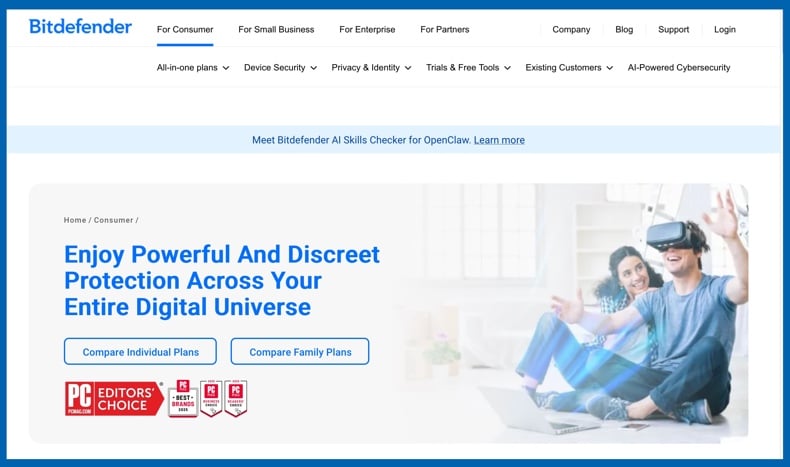
Bitdefender is our top choice for its strong combination of reliable malware protection and a robust VPN (on the appropriate plans). It has earned its 4.5 PCrisk rating due to excellent detection rates, a comprehensive feature set, and minimal performance impact. However, lower tiers restrict VPN functionality, and this limitation is significant. Choosing the Premium Security or Ultimate Security package makes Bitdefender a highly recommended antivirus and VPN combo suite.
Bitdefender's VPN offers unlimited encrypted traffic on up to 10 devices, a strict no-traffic-logs policy, access to over 3,000 servers in more than 100 countries, AES-256 encryption, WireGuard support, and compatibility with major platforms (Windows, Mac, Android, iPhone, Android smart TVs, and Fire TV devices). However, the Total Security tier limits VPN usage to 200 MB per day, which is insufficient for regular browsing, not to mention streaming. Therefore, Bitdefender is an excellent choice only if you select a tier that provides full VPN access. If you need a single suite to replace both your antivirus and daily VPN subscriptions, higher Bitdefender tiers are the most comprehensive all-in-one options on this list.
2. Norton
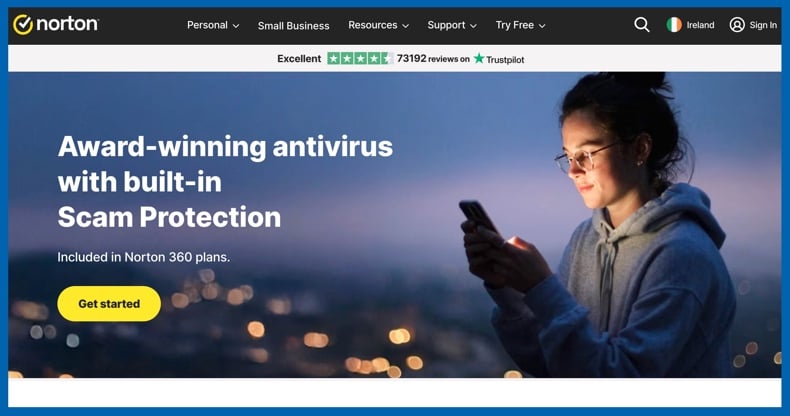
Norton is a comprehensive household security suite with integrated VPN access at lower product tiers. PCrisk rates Norton at 4.1, highlighting its feature-rich, cross-platform, and user-friendly design. Norton 360 Deluxe contains Secure VPN, dark web monitoring, parental controls, and cloud backup. In fact, all Norton 360 tiers offer a built-in VPN. Thus, Norton is appealing to buyers who want VPN access without upgrading to the highest tier.
Norton's VPN has a robust feature set for a bundled suite. Official support pages list a kill switch, DNS leak protection, split tunneling, access to local devices, and Wi-Fi security features on mobile. Norton highlights its no-log policy and actively promotes the VPN in its streaming and privacy marketing. The VPN is a major part of Norton's consumer platform. However, Norton can appear more commercial and focused on upselling compared to simpler suites, and renewal pricing is a common concern. If you are looking for strong protection and integrated VPN access free from complex tiering, Norton is a quality choice.
3. ESET
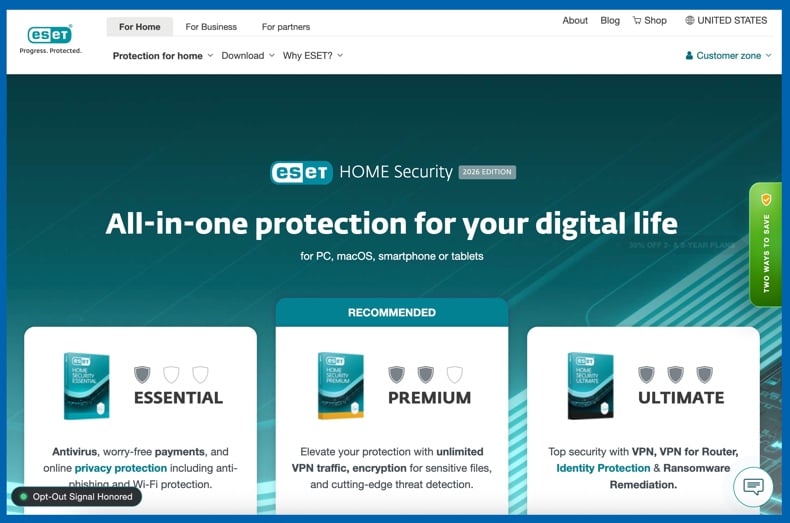
ESET is well-suited for users seeking a discreet security suite, advanced technical control, and a feature-rich VPN that offers more than just basic IP masking. Its 4.4 PCrisk rating emphasizes ESET's quiet background operation, strong detection rates, and customization options. According to its official VPN pages, ESET offers no-logs, unlimited bandwidth, support for WireGuard and OpenVPN, DNS leak protection, MAC spoofing protection, a kill switch, split tunneling, proxy settings, and access to geo-restricted content.
ESET stands out for providing more in-depth information on its VPN configurations than many competitors. Its storefront indicates that Premium and Ultimate plans include a VPN, but the number of VPN activations and available countries vary by plan and tier. The current US VPN page shows that Premium users can activate the VPN on fewer devices and access fewer countries than Ultimate users. This transparency is valuable, though the overall packaging can be confusing due to outdated support documentation referencing a different entitlement model. This complexity is the main reason ESET ranks behind Bitdefender and Norton. While ESET is a capable suite, buyers should review plan details carefully before purchasing.
4. Malwarebytes
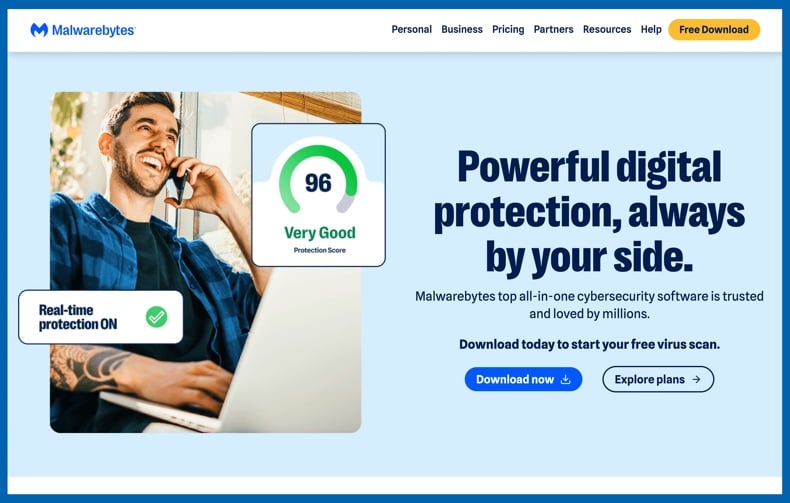
Malwarebytes is ideal for users seeking a streamlined security solution with reliable privacy features. PCrisk rates Malwarebytes 4.3 for its strong real-time protection, lightweight installation, fast scanning, and multi-platform support. The VPN offering is more powerful than often recognized. According to Malwarebytes' official Privacy VPN page, the service uses WireGuard, 256-bit ChaCha20 encryption, and has a strict no-logs policy. The infrastructure has undergone an independent third-party audit.
Malwarebytes positions the VPN as part of its higher-value multi-device packages. It ranks lower because the integration is not as seamless or feature-rich across all platforms compared to leading dedicated VPN bundles, and some features differ by operating system. However, if you value simplicity, privacy, and an uncluttered antivirus experience, Malwarebytes remains a strong option.
5. Avast
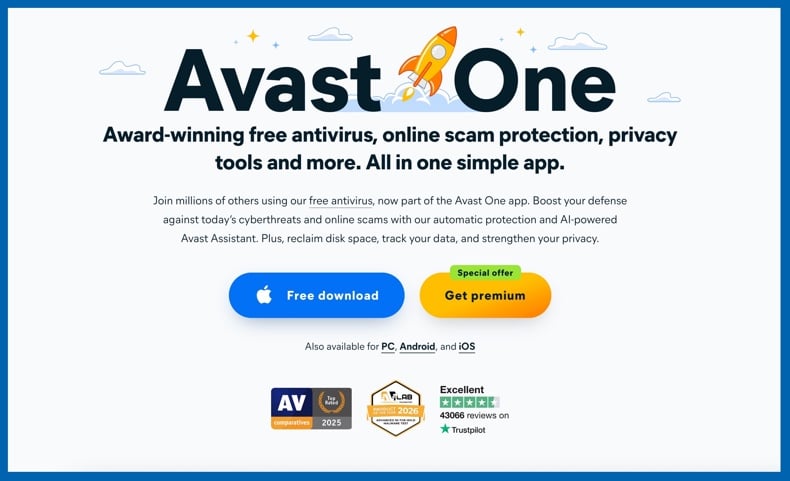
Avast has a strong antivirus engine and a broad ecosystem that offers multiple bundled privacy features. Avast's 4.2 PCrisk ranking notes its effective detection rates, generous free tier, and intuitively designed interface. However, its plan structure is less straightforward. Avast One combines antivirus, privacy, and performance tools in one app, and the free version includes basic privacy features, while fuller VPN access is typically handled through paid Avast One upgrades, Avast SecureLine VPN, or bundles such as Avast Ultimate.
The VPN offers solid features, including a kill switch, split tunneling, auto-connect, local device access or bypass, multiple protocol options, and the ability to select country and city locations. Some of the drawbacks include potential confusion between plan naming since Gen Digital now owns both Avast and Norton. The distinction between free and paid VPN entitlements has changed over time and can vary by region. Past privacy controversies may still concern some buyers. Avast remains a viable option, particularly for its free-first approach and familiar upgrade path, though it is not the clearest packaged antivirus and VPN suite.
Editor's Choice - Combo Cleaner
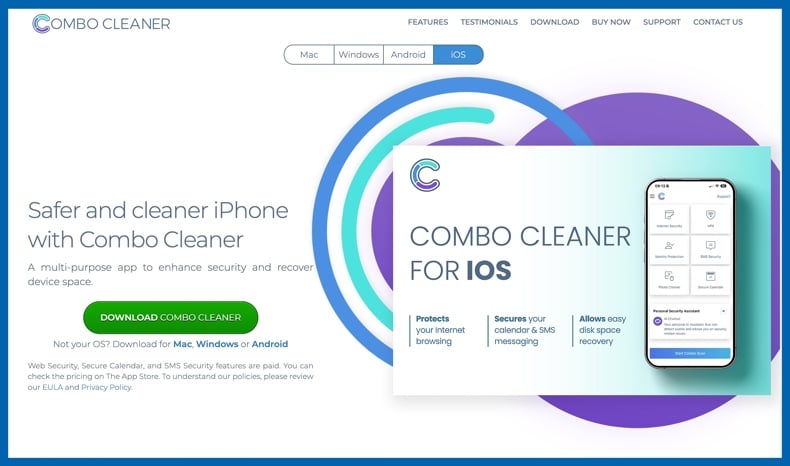
If a built-in VPN is not your priority and you would rather use separate products, we recommend Combo Cleaner for your security needs. It warrants mention for its quality cross-platform security and cleanup tool with strong anti-malware, web protection, and anti-ransomware features. It should be noted that Combo Cleaner is developed by RCS LT - the owner of PCrisk. We also recommend NordVPN - our top VPN pick of 2026. This VPN offers a broad network comprising 9,000+ servers in over 160 countries, high and stable speeds, and an independently audited no-logs policy.
How we test antivirus software
At PCrisk, we go beyond feature checklists when evaluating antivirus software. Our testing methodology assesses antivirus tools against real, recent threats in a controlled environment, concentrating on their ability to detect, block, remove, and clean up malware without causing system issues. We use real-world threat categories, such as ransomware, adware, spyware, phishing websites, infected attachments, and other live or recent samples, rather than relying on artificial test files.
For this ranking, we had an additional focus - the suite's VPN component. We evaluated not only protection but also the usefulness of the bundled VPN. Our assessment includes its pricing tier, data limits, device coverage, support for modern protocols, no-logs claims or third-party audits, platform compatibility, and the presence of features like kill switches, split tunneling, and server selection.
When ranking these products, we considered three factors: security value, VPN value, and usability. Suites with strong malware protection but limited VPN features score lower than they would in a standard antivirus review article. Similarly, bundles with strong VPNs but weak or cumbersome antivirus components are rated lower. Our goal is to recommend packages that are quality alternatives to purchasing separate tools.
Will an antivirus app with built-in VPN slow down my devices?
On a modern, well-maintained device, antivirus software typically does not cause significant slowdowns. Antivirus programs use a fraction of system resources in the background, but leading products maintain top-speed performance. Although there is some overhead, well-designed suites keep the impact minimal during routine use.
Resource usage increases during full scans, initial analyses, or brief background inspections - as is expected. Modern antivirus software may temporarily use more CPU or disk when scanning many files, analyzing suspicious activity, or updating threat intelligence. Outside these periods, quality suites are designed to remain quiet and unobtrusive.
VPNs typically affect speed because your data must be encrypted and routed through another server. Greater distances between you and the VPN server increase speed loss and latency. This can also be caused by overcrowded servers. To summarize, antivirus software rarely causes perceptible slowdowns, but VPNs can impact browsing, streaming, and gaming - especially when using distant or busy servers.
This illustrates the importance of VPN quality in bundles. If the VPN uses modern protocols, offers a wide range of servers, and allows you to connect near your actual location - slowdowns are usually manageable. However, limited server options or overloaded nodes can result in a more noticeable performance decline.
In closing
If you are looking for a straightforward recommendation, prioritize antivirus software and consider the VPN feature a bonus only if it meets your needs. Bitdefender is our top pick for its strong overall balance at the tier that includes a full VPN. Norton follows for its accessible bundled VPN in a broad suite, while ESET stands out for offering greater user control. Malwarebytes and Avast remain good options, particularly if you prefer simplicity or are already invested in their platforms.
The key takeaway is that antivirus software with built-in VPN is now a legitimate category, but the specifics vary. Some providers offer a full VPN, others limit features or data, and packaging differs by app, plan, and region. By choosing carefully, you can secure both device protection and privacy with a single subscription, avoiding the necessity for separate tools. However, when making your selection - ensure that the VPN feature offers real value and is not included solely for marketing purposes.
Frequently Asked Questions (FAQ)
Do I need an antivirus with a built-in VPN?
Not everyone needs an antivirus with a built-in VPN, but many users benefit from it. Antivirus software protects your device, while a VPN secures your connection and masks your IP address. If you travel often, use public Wi-Fi, want easier privacy protection, or prefer managing fewer subscriptions - a combined suite is a solid choice.
What kind of threats can an antivirus protect me from?
A reputable antivirus protects against malware, ransomware, phishing links, malicious attachments, trojans, spyware, infostealers, and scam-related web threats. It also provides real-time blocking and cleanup tools that basic browser warnings cannot replace.
What should I look for in an antivirus with a built-in VPN?
First, evaluate antivirus features, such as strong protection, effective web filtering, low false positives, and minimal system impact. Second, assess the VPN component by looking for unlimited traffic, modern protocols, broad server selection, a no-logs policy, device compatibility, and features like a kill switch or split tunneling. Before purchasing, confirm which subscription tier includes full VPN access.
Share:
 Facebook
 X.com
X.com
 LinkedIn
 Copy Link

Karolis Liucveikis
Experienced software engineer, passionate about behavioral analysis of malicious apps
Author and general operator of PCrisk's News and Removal Guides section. Co-researcher working alongside Tomas to discover the latest threats and global trends in the cyber security world. Karolis has experience of over 8 years working in this branch. He attended Kaunas University of Technology and graduated with a degree in Software Development in 2017. Extremely passionate about technical aspects and behavior of various malicious applications.
▼ Show Discussion