
We may earn commissions from products we recommend. Learn more.
Best antivirus software with cloud-assisted protection in 2026 | Top 5 picks

Best antivirus software with cloud-assisted protection in 2026 | Top 5 picks
Modern antivirus software no longer depends solely on local virus signature databases. Leading security products combine local scanning, behavioral monitoring, machine learning, web protection, and online threat intelligence. Cloud-assisted protection is especially valuable, as it enables antivirus solutions to classify unknown files, URLs, and behaviors without waiting for traditional signature updates.
However, not all processing occurs in the cloud. Most consumer antivirus products use a hybrid model, with key protection features operating locally and cloud services supplying reputation data, threat intelligence, and further analysis. We evaluated five leading antivirus products based on this architecture, focusing on the quality and transparency of their cloud-assisted protection, independent test results, usability, and effectiveness when offline.
Table of Contents:
- Introduction
- What is an antivirus with cloud-assisted protection?
- What security threats can a cloud-assisted antivirus protect me from?
- Comparison of best antivirus software with cloud-assisted protection
- Best antivirus software with cloud-assisted protection in 2026
- How we test antivirus software with cloud-assisted protection
- Will an antivirus with cloud-assisted protection slow down my device?
- Is free antivirus with cloud-assisted protection any good?
- In closing
- Frequently Asked Questions (FAQ)
What is an antivirus with cloud-assisted protection?
Cloud-assisted antivirus software combines local protection on your device with threat analysis performed on the vendor's servers. The local component is essential. It monitors files as they are downloaded or opened, observes running processes, detects suspicious system changes, inspects scripts, blocks malicious websites, quarantines threats, and responds to ransomware-like behavior. When additional information is needed, the antivirus can query an online service for reputation data or threat intelligence.
To elaborate on this, an antivirus may generate an identifier for a new executable and check with the vendor's cloud to see if the file is known. Legitimate applications are quickly recognized through reputation data, while rare or suspicious files may be blocked or analyzed further. Depending on the product and settings, suspicious samples or metadata can be uploaded for automated analysis.
This differs from a fully cloud-based antivirus, though the terminology can be confusing. Fully cloud-based products rely more on remote infrastructure for detection, analysis, management, and decisions. A lightweight endpoint component is still required to monitor device activity and intercept files, processes, or network traffic. Therefore, "fully cloud-based" does not mean that nothing runs locally.
Most mainstream consumer products are best described as hybrid or cloud-assisted antivirus software. They maintain local engines and protections while using cloud infrastructure as an additional layer. This model delivers protection when offline and enables effective detection of certain attacks through local monitoring. AV-Comparatives notes that URL blocking, cloud reputation, machine-learning detection, behavior monitoring, signatures, and heuristics work best as complementary layers, with cloud-based protection supplementing rather than replacing local and offline defenses.
Traditional antivirus relies mainly on locally stored signatures and local scanning. Signature-based analysis is effective for quickly identifying known malware, even when offline. However, relying exclusively on signatures can leave devices vulnerable to new or modified threats before updated signatures are distributed.
Cloud assistance reduces this delay. When a vendor identifies a file or URL as malicious, connected endpoints can benefit from this information more quickly. Collective reputation data also helps antivirus software assess previously unseen files. The main advantages of cloud-assisted antivirus are faster threat intelligence, access to larger reputation databases, more computing resources for advanced analysis, and reduced local resource use. This architecture also improves detection of new threats by combining local signals with data from many protected systems.
However, there are limitations. Cloud functions require Internet access, so disconnected devices lose immediate access to reputation lookups, remote analysis, and the latest cloud intelligence, though quality products maintain local protection. Privacy is also a concern, as some systems may submit metadata or suspicious files. Submission practices vary by vendor, feature, configuration, and file type.
For these reasons, a well-designed hybrid antivirus is the strongest approach. Cloud intelligence should strengthen detection and responsiveness without replacing essential local defenses.
What security threats can a cloud-assisted antivirus protect me from?
Cloud assistance is not a standalone form of malware protection, but it strengthens present detection layers against both common and developing threats. Reputation checks quickly identify known malicious files and sites, remote analysis assesses suspicious unknown objects, and local behavior monitoring responds when malware acts maliciously.
The following are some of the most common threats:
Viruses, worms, and other conventional malware: file scanning detects malicious executables and infected files using local signatures, generic detections, machine learning, and cloud reputation. Cloud intelligence is especially effective when a file is new to a device but has already been analyzed elsewhere.
Trojans and backdoors: often masquerade as legitimate programs while stealing data, downloading more malware, or enabling remote access for attackers. Effective antivirus solutions combine pre-execution scanning, behavioral detection, web protection, and monitoring of processes created after the initial file launches.
Ransomware: antivirus products detect known ransomware, block suspicious executables, recognize behaviors linked to mass file encryption, and sometimes protect specific folders from unauthorized changes. Cloud reputation can provide early detection of new ransomware, but local behavioral protection is still essential when a sample lacks reputation. Backups remain a necessity, as no antivirus can guarantee recovery of encrypted files.
Spyware, keyloggers, and information stealers: these threats target sensitive data such as passwords, cookies, cryptocurrency wallets, banking credentials, screenshots, and system information. Security software detects malicious files before execution and responds to suspect credential access or persistence behaviors after execution.
Rootkits: these hide malicious processes or provide privileged access while bypassing standard inspection. Effective antivirus products use specialized scanning and behavioral technologies to detect threats operating below normal application levels.
Fileless and script-based attacks: many attacks do not rely on traditional executables. Malicious PowerShell commands, scripts, macros, and misuse of legitimate administrative tools can be detected via behavior monitoring, script analysis, exploit defenses, and other local security measures. While cloud intelligence provides context, endpoint monitoring is especially important for these threats.
Phishing, malicious websites, and dangerous downloads: modern antivirus suites inspect URLs and downloaded files before malware can reach the computer. Cloud-hosted reputation databases are effective because malicious domains and download locations change frequently. Web protection also blocks fraudulent log-in pages, fake updates, scam websites, and known malware distribution infrastructure.
Potentially Unwanted Applications (PUAs): adware, browser hijackers, fake antivirus tools, questionable bundlers, rogue system utilities, and similar programs may not be as destructive as ransomware, but they can alter browser settings, collect data, display intrusive ads, or install additional unwanted software. Most established antivirus products detect at least some of these applications.
Cryptominers and botnet malware: unauthorized cryptocurrency miners use computing resources for someone else's benefit. Botnet malware can give attackers control, which may be used for spam, fraud, further malware distribution, or Denial-of-Service (DoS) attacks. Antivirus software detects these threats by scanning for malicious files, monitoring suspicious processes, and identifying abnormal system or network activity. Cloud reputation and threat intelligence further help flag new mining tools or botnet payloads before they are widely recognized.
New and previously unseen malware: cloud assistance is especially valuable for detecting new threats. Suspicious files that do not match known signatures may have a poor reputation, resemble known malware through machine learning, or be submitted for remote analysis.
It must be stressed that no antivirus offers complete protection. Operating system and app updates, unique and strong passwords, Multi-Factor Authentication (MFA), cautious downloading, limited administrator privileges, and reliable offline or protected backups are key components of a layered security strategy.
Comparison of best antivirus software with cloud-assisted protection
In this comparison, "cloud-assisted" refers to products that combine local endpoint protection with online reputation, threat intelligence, analysis, or similar security services. None of the five products merely upload every file to a remote server; local protection stays a key feature.
The PCrisk scores below reflect our overall product ratings. However, the order in this article differs because we are ranking products based on their cloud-assisted protection. A product with a higher general PCrisk score may rank lower if its cloud architecture is less transparent or less integral to threat detection.
| App | PCrisk score | Cloud model | Best for | Cloud-assisted protection strengths | Free option or trial |
| Bitdefender | 4.5 | Hybrid, cloud-heavy | Best overall | Global Protective Network performs substantial analysis in the cloud, combined with strong local behavioral, web, and ransomware protection. | 30-day trial |
| ESET | 4.4 | Hybrid | Advanced cloud reputation and configurability | LiveGrid cloud reputation and feedback, plus LiveGuard cloud analysis on eligible plans. | 30-day trial |
| Avast | 4.2 | Hybrid | Best fully free option | CyberCapture, cloud threat intelligence, behavior monitoring, and a large reputation network. | Permanent free version |
| Norton | 4.1 | Hybrid, cloud-connected | Comprehensive household security | Global reputation data, machine learning, emulation, behavioral monitoring, and strong web defenses. | Trials available |
| Malwarebytes | 4.3 | Hybrid, cloud-connected | Simple malware protection and cleanup | Real-time malware, exploit, ransomware, and web defenses with strong emphasis on behavioral protection. | Free scanner and 14-day Premium trial |
Bitdefender, ESET, Avast, and Norton each received the maximum 6 points for protection, performance, and usability in AV-TEST's June 2026 Windows 11 evaluation. This assessment used current publicly available products, allowed updates and cloud-service queries, and measured all protection layers rather than just a single scanning engine. Malwarebytes was not in this AV-TEST group, but Malwarebytes Premium was evaluated in AV-Comparatives' 2026 real-world testing.
Note that no ranking guarantees that one product will detect every threat that another may miss. Malware protection evolves continuously as vendors update engines, behavioral models, cloud systems, and web intelligence.
Best antivirus software with cloud-assisted protection in 2026
For this ranking, we prioritized cloud-assisted detection, which changed the ranking order compared to our general antivirus recommendations for 2026. The ideal cloud-assisted product should leverage effective cloud intelligence in addition to strong local defenses. An antivirus that performs well online but weakens offline does not provide balanced security.
Bitdefender - best overall cloud-assisted antivirus
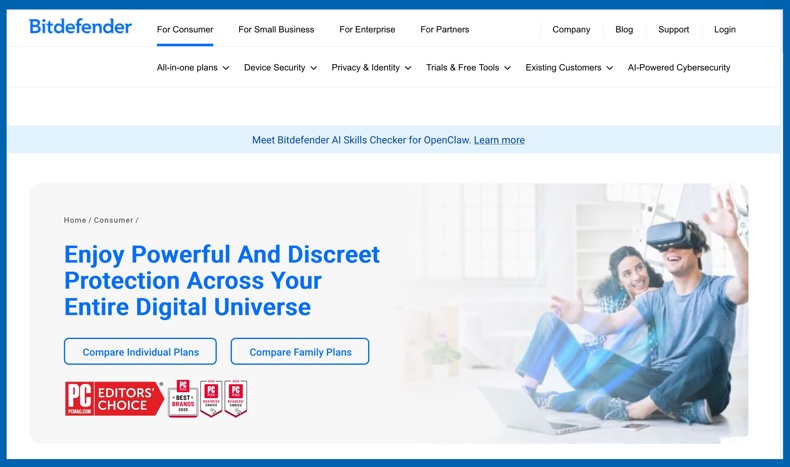
Bitdefender ranks first due to its strong and well-documented cloud architecture. Its Global Protective Network performs much of the scanning remotely, reducing the load on the user's device. Bitdefender states that this process does not upload, store, or inspect the actual contents of users' files in the cloud, which is important for those with privacy concerns.
Cloud assistance is only one aspect of Bitdefender's protection. It also includes real-time file scanning, behavioral monitoring, web filtering, ransomware defenses, and other endpoint technologies. Relying on multiple layers is preferable to depending solely on remote reputation verdicts.
The main drawback is plan complexity. Privacy, identity, VPN, and other features may be limited or differ by subscription level. These variations do not affect the core antivirus protection, but buyers should review the feature list to ensure their chosen plan meets their needs.
Bitdefender offers a full-featured 30-day Total Security trial in the US without requiring a credit card. This allows users to evaluate scans, performance, compatibility, and cloud features before purchasing.
ESET - best for configurable cloud reputation and advanced users
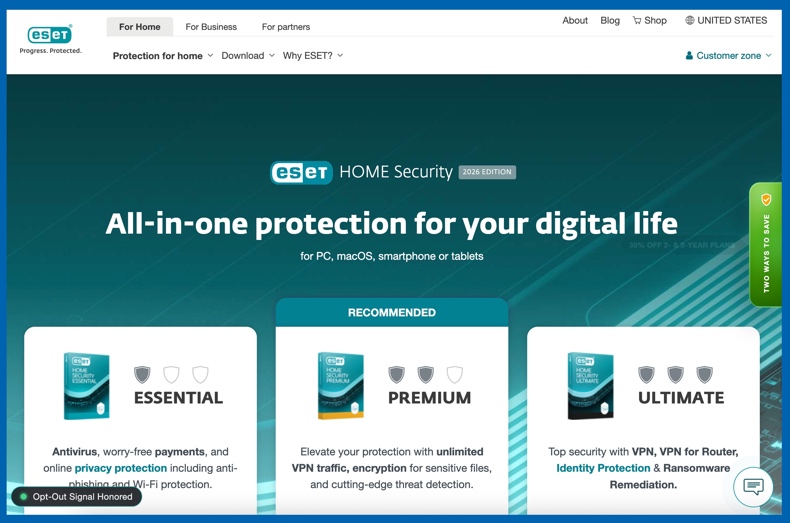
ESET ranks second due to its transparent LiveGrid infrastructure, which offers cloud-based reputation through allow-listing and block-listing. The feedback system supplies ESET with data on new threats. According to ESET, enabling LiveGrid allows products to respond to developing threats faster than conventional detection-engine updates.
Eligible configurations can use ESET LiveGuard, which submits suspicious files to ESET's cloud for analysis with additional detection engines. This is particularly useful for unknown software that cannot be confidently classified through local scanning or reputation alone. ESET gives users meaningful control over submissions. Its documentation outlines sample categories that can be submitted and allows exclusions for files or locations users do not want analyzed. This configurability is valuable for businesses and technically experienced users handling confidential material. The local security stack stays vital. ESET offers real-time malware detection, behavioral defenses, ransomware protection, anti-phishing features, and other endpoint components, assuring the product is not exclusively reliant on cloud features.
The main drawback is that advanced configuration can be more complex than in some competing suites, and features like LiveGuard depend on product configuration and subscription eligibility. However, the standard LiveGrid reputation system stays a strong cloud-assisted component.
ESET HOME Security Premium is available in the US as a 30-day trial, with no credit card required and no automatic charge at the end of the trial.
Avast - best free antivirus with substantial cloud assistance
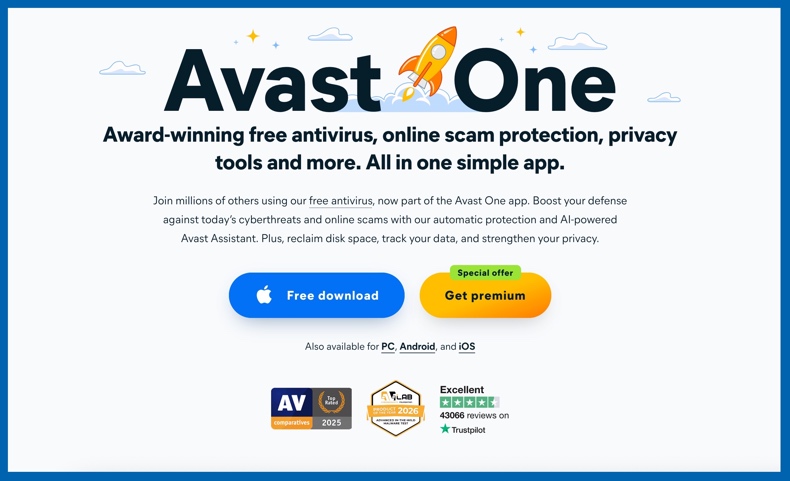
Avast ranks third in our cloud-focused evaluation, largely owing to its CyberCapture feature and comprehensive cloud-based detection architecture. When CyberCapture detects an unusual or suspicious file, it can isolate and submit the file, along with relevant metadata, for analysis in Avast Threat Labs. Avast combines cloud threat intelligence with advanced technologies to examine suspicious programs, while Behavior Shield monitors for harmful activity on the endpoint.
This combination illustrates the qualities we seek in a cloud-assisted antivirus. Reputation and remote analysis help classify rare or new files, while local behavior monitoring offers an added layer of protection against threats that may bypass initial checks. Avast sets itself apart by offering effective protection without requiring a paid subscription. Avast One with Free Antivirus delivers continuous malware protection, and Avast confirms that the free version includes real-time defenses against malware, phishing, and unsafe websites. Unlike trial software, the free edition remains available without a premium purchase, though periodic reactivation may be necessary.
The main drawbacks are commercial and trust-related, not related to detection performance. Free users will encounter prompts for paid features, and Avast's past privacy controversies may be a concern for those who prioritize vendor history.
For users who do not wish to add another subscription, Avast remains our recommended free antivirus. Its cloud technologies are more advanced than those found in many basic free scanners.
Norton - best for cloud-assisted protection in a larger security suite
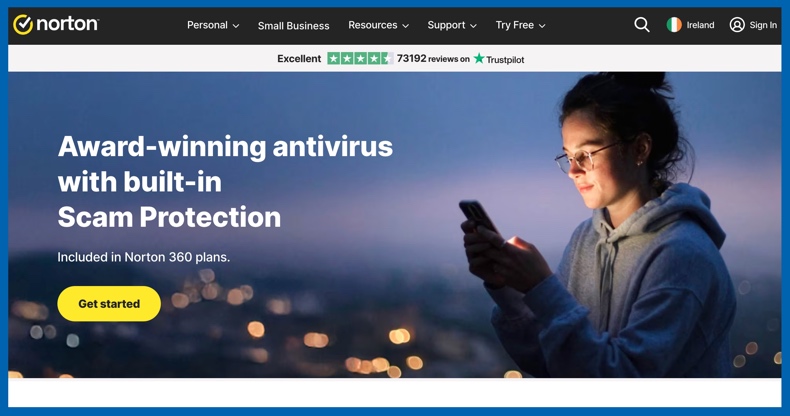
Norton ranks fourth for providing a strong cloud-connected reputation system that supplements its broad suite of endpoint and online protections. Norton's Reputation Protection, or Insight, classifies application files using global reputation data. Its Windows protection incorporates machine learning, emulation, behavioral monitoring, network intrusion prevention, and web defenses, enabling multi-layered assessment of suspicious programs beyond simple signature matching. This hybrid approach enables early classification with reputation data, deeper analysis using machine learning and emulation, and intervention via behavioral monitoring.
Norton is well-suited for households seeking antivirus as part of a larger security package. Depending on the plan, features may include firewall protection, password management, VPN access, web protection, and additional privacy or account security tools.
The main drawback is complexity, as features, trial periods, device limits, subscription tiers, and renewal terms differ by plan. Norton currently offers free trials, but users should review the terms before providing payment information or enabling automatic renewal.
For greater transparency in cloud scanning, we recommend Bitdefender or ESET. However, Norton is a strong cloud-connected option for those wanting a comprehensive security suite.
Malwarebytes - best for uncomplicated malware defense and cleanup
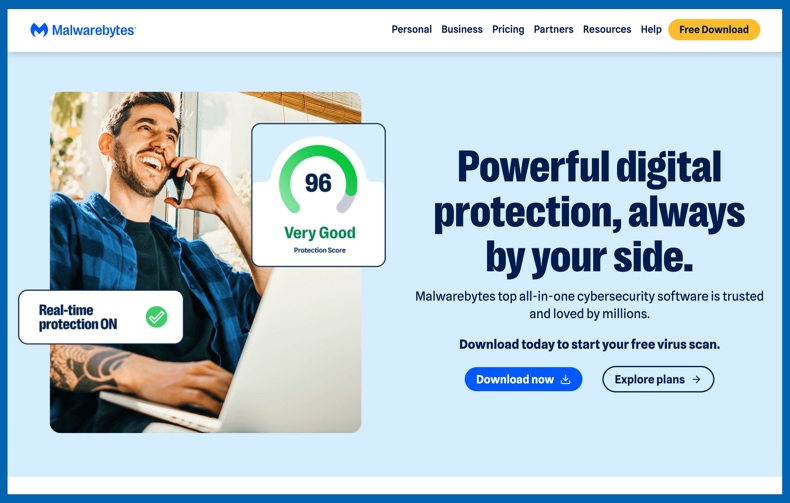
Malwarebytes ranks fifth, even though its overall PCrisk score is higher than some products listed above. This ranking is for specific criteria and does not diminish its antivirus capabilities.
Malwarebytes Premium offers real-time protection against malicious files, suspicious activity, ransomware, exploits, and dangerous websites. The free edition is an effective on-demand malware scanner and removal tool, while the Premium version adds constant monitoring.
The main drawback is that Malwarebytes' public consumer documentation is less clear about cloud-reputation or cloud-sandbox features compared to Bitdefender, ESET, Avast, or Norton. Users looking for well-documented cloud-assisted functionality may find better options higher on this list.
Simplicity is a key advantage. Users who prefer a streamlined interface without excessive suite components may find it appealing. Malwarebytes also offers a free scanner, and the current download includes a 14-day Premium trial.
Editor's choice: Combo Cleaner
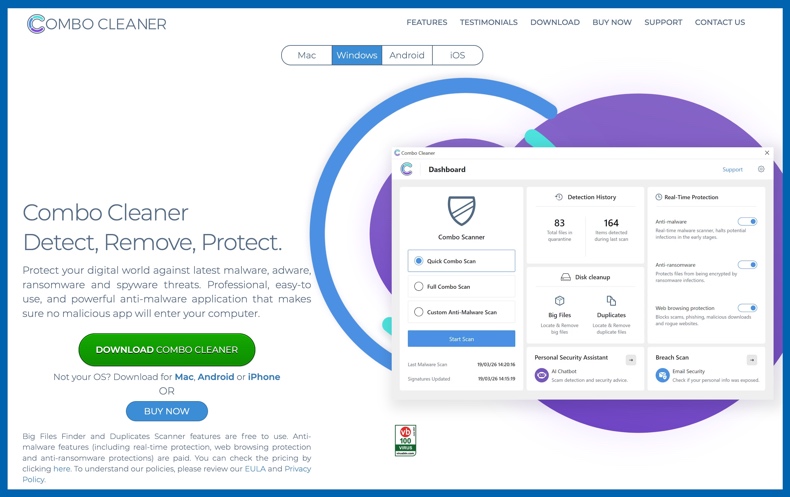
Combo Cleaner is our Editor's Choice for effective malware scanning and protection. Combo Cleaner is developed by RCS LT, which also owns PCrisk.com. Hence, it is not included in our independently ranked top five.
On Windows, Combo Cleaner offers on-demand scanning, real-time anti-malware protection, anti-ransomware features, and web protection against phishing, scams, rogue sites, and malicious downloads. In our in-house test, it detected 19 of 20 Trojan and information-stealer samples, all 20 ransomware samples, and 17 of 20 malicious email attachments.
For Combo Cleaner, it is important to highlight frequent malware definition updates, ongoing malware research, real-time endpoint scanning, and web protection. It is not positioned as a fully cloud-based antivirus, as it receives scheduled daily online threat updates. We recommend it as a general security product.
How we test antivirus software with cloud-assisted protection
Testing cloud-assisted antivirus involves more than scanning a folder of malware samples. Since cloud assistance aims to improve the detection of new, uncommon, or developing threats, tests must assess product performance both with and without cloud connectivity.
We use current product versions, up-to-date definitions, default or recommended security settings, and a controlled test environment. Testing includes known malware, rare samples, malicious downloads, scripts, ransomware, information stealers, potentially unwanted applications, and threat-distributing URLs.
The principal areas we consider are:
Online detection - how effectively the product uses its reputation systems, web intelligence, and other cloud resources while fully connected.
Offline detection - the level of protection when cloud communication is unavailable. Hybrid antivirus solutions should maintain effective local signatures, heuristics, machine learning, and behavioral defenses.
Unknown-file handling - whether unusual files are allowed, blocked, checked by reputation services, analyzed further, or monitored after execution.
Behavioral protection - whether malware that passes initial checks can be stopped during attempts at persistence, process injection, credential theft, suspicious script execution, mass encryption, or other malicious actions.
Web and phishing protection - whether the antivirus blocks malicious URLs, fraudulent login pages, scam domains, and dangerous downloads before they reach the endpoint.
False positives - cloud reputation should not cause the antivirus to be overly aggressive toward rare but legitimate software. Blocking clean applications can be as disruptive as performance issues.
Privacy controls - we review what data the product may submit, whether sample submission can be disabled, and if exclusions exist for confidential files.
Performance and usability - we consider scanning speed, CPU and disk usage, application launches, downloads, browsing, notifications, quarantine management, settings, exclusions, and the clarity of cloud-related options.
Independent laboratories add essential scale. AV-Comparatives' March 2026 malware methodology scans the same malware offline and online, then executes samples that remain undetected with cloud access. This approach distinguishes file detection from overall infection prevention.
Real-world methodology reflects how modern antivirus products operate. Protection may include URL filtering, cloud reputation, machine learning, behavior monitoring, conventional signatures, and heuristics. AV-Comparatives cautions against relying exclusively on cloud-dependent technologies, as computers can encounter malware from sources that do not require an active Internet download.
AV-TEST offers another perspective. Its May-June 2026 Windows evaluation used current public versions in default configurations, allowed updates and cloud queries. It scored protection, performance, and usability separately.
We do not base recommendations on a single laboratory result. Antivirus products and cloud models change frequently, and different sample sets test various detection layers. Our rankings also consider architecture, usability, false positives, endpoint protection, transparency, trial availability, and our practical experience.
Will an antivirus with cloud-assisted protection slow down my device?
Established antivirus software typically does not create noticeable slowdowns during normal use. All real-time security products use some CPU, memory, disk activity, and network bandwidth, as system monitoring requires resources. However, modern antivirus solutions are optimized to avoid repeated analysis of known-safe files. Features such as cloud reputation, caching, and prioritization help minimize unnecessary local processing.
Cloud-based antivirus is not entirely resource-free. The local component still intercepts files, monitors processes and behavior, communicates with remote services, maintains caches, and responds to detections. Higher CPU or disk usage is expected during the initial full scan, after installation, when processing large archives, or during major updates. Older computers, especially those with limited RAM, slower processors, or mechanical hard drives, are more likely to be affected.
Users can minimize performance issues by allowing the initial scan to finish, scheduling intensive scans at convenient times, keeping the operating system updated, and avoiding multiple real-time antivirus programs. Running two products simultaneously can cause duplicate scanning, conflicts, confusing alerts, and increased resource usage.
Is free antivirus with cloud-assisted protection any good?
A reputable free antivirus can offer effective protection, and "free" does not mean the malware-detection engine is weak. For example, Avast's free antivirus tested well in 2026 and received top scores for protection, performance, and usability. The current free version also benefits from Avast's extensive threat-detection network. Nevertheless, completely free security software can involve compromises:
Limited real-time protection - some free malware removal tools only scan when started manually. They can remove existing infections but offer less protection for future threats.
Fewer advanced protection layers - features such as behavioral monitoring, anti-ransomware controls, exploit defenses, advanced cloud analysis, and remediation tools are often limited to paid subscriptions.
Reduced web protection - basic scanners may detect malicious files after download, but commonly lack full protection against phishing pages, scam sites, or malicious URLs.
Advertising and upgrade prompts - free software frequently serves to promote paid subscriptions. Although reputable vendors are transparent about these offers, frequent upgrade notifications can be distracting.
Limited tech support - paid customers usually receive direct support, while free users regularly rely on documentation, automated help, or community forums.
Fewer devices and security extras - features like VPN access, password management, identity monitoring, parental controls, backup, premium firewalls, and multi-device protection are typically reserved for paid plans.
Another important consideration is the product's origin. Avoid unfamiliar "free antivirus" applications promoted through aggressive pop-ups, bundled installers, or scare tactics. Because security software has deep access to your device, the vendor's reputation and transparency are critical.
For a permanently free option, we recommend Avast. Trials are a better choice if you are considering a paid antivirus but are unsure how it will perform on your device. Bitdefender offers a 30-day Total Security trial without a credit card, ESET provides a 30-day Premium trial in the US without automatic billing, and Malwarebytes includes a 14-day Premium trial with its free download. Norton also offers antivirus trials, though conditions vary by product and offer.
In closing
Cloud-assisted protection is now a key element of modern antivirus solutions. Leading products combine endpoint scanning and behavioral monitoring with online reputation, global threat intelligence, machine learning, and remote analysis. The most effective solutions also maintain strong offline protection, avoiding reliance on a constant Internet connection.
Bitdefender is our top choice for cloud-assisted antivirus in 2026 due to its quality integration of cloud processing and robust local defenses. ESET is a close second, featuring transparent LiveGrid and LiveGuard technologies. Avast provides excellent value as our preferred free option. Norton stands out for household security, while Malwarebytes is a reliable solution for malware detection and cleanup. Remember that while cloud intelligence enhances response to new threats, it does not replace the need for secure browsing, regular updates, strong account security, and reliable backups.
Frequently Asked Questions (FAQ)
Why do I still need an antivirus in 2026?
In 2026, you should use anti-malware protection, either from your operating system or a reputable third-party provider. Modern antivirus solutions offer file scanning, behavioral monitoring, web protection, and increasingly, cloud-assisted intelligence.
What kind of threats can cloud-assisted antivirus protect me from?
Depending on the product, cloud-assisted antivirus can protect against viruses, Trojans, ransomware, spyware, credential stealers, rootkits, malicious scripts, unwanted apps, cryptominers, botnet malware, phishing sites, malicious downloads, and new or unknown threats. Cloud reputation and remote analysis provide extra protection, while local scanning and behavior monitoring remain important.
What should I look for in a cloud-assisted antivirus?
Choose a product with strong independent protection results, real-time scanning, behavioral detection, cloud reputation, and protection against malicious websites. Consider good offline detection, low instances of false-positives, minimal system impact, frequent updates, and transparent privacy controls for telemetry or sample submission. The product should remain effective even if cloud services are temporarily unavailable.
Is Combo Cleaner a good option for a cloud-assisted antivirus?
Combo Cleaner is a solid choice for general malware protection. The Windows version offers on-demand and real-time scanning, anti-ransomware protection, web filtering, and regular malware definition updates.
Share:
 Facebook
 X.com
X.com
 LinkedIn
 Copy Link

Karolis Liucveikis
Experienced software engineer, passionate about behavioral analysis of malicious apps
Author and general operator of PCrisk's News and Removal Guides section. Co-researcher working alongside Tomas to discover the latest threats and global trends in the cyber security world. Karolis has experience of over 8 years working in this branch. He attended Kaunas University of Technology and graduated with a degree in Software Development in 2017. Extremely passionate about technical aspects and behavior of various malicious applications.
▼ Show Discussion